Every November 6, boats leave the ports along this stretch of the Sea of Japan before dawn, and by evening the first matsuba crabs of the year are being auctioned a few kilometers from Kinosaki's canal. For the next four and a half months the town runs on crab. Ryokan build their winter menus around it, room rates rise to meet it, and travelers who planned in August eat very well while travelers who planned last week watch them. The town does not treat this as a food season so much as a civic identity: the association's own visitor programs run under the banner かに王国 (Kani Ōkoku, "the Crab Kingdom"), complete with a 浴衣とかに王国パスポート (Yukata & Crab Kingdom passport) program and season events down to a crab-themed shouting contest on the calendar. ⚠️ Verify current program scope. A town that crowns itself a kingdom over a crustacean has told you how seriously to take the next four and a half months — and how completely November 6 reorganises everything from menus to room rates to the posture of the man at the fish counter. The pages of this site that intersect here — winter, best-time, where-to-stay, budget — all point at this one for the mechanics, so this is the deep file: the animal, the law, the tags, the calendar, the menus and the booking play, in that order, so a single read leaves you equipped to book, order and eat like someone who has done this before.
What matsuba crab actually is
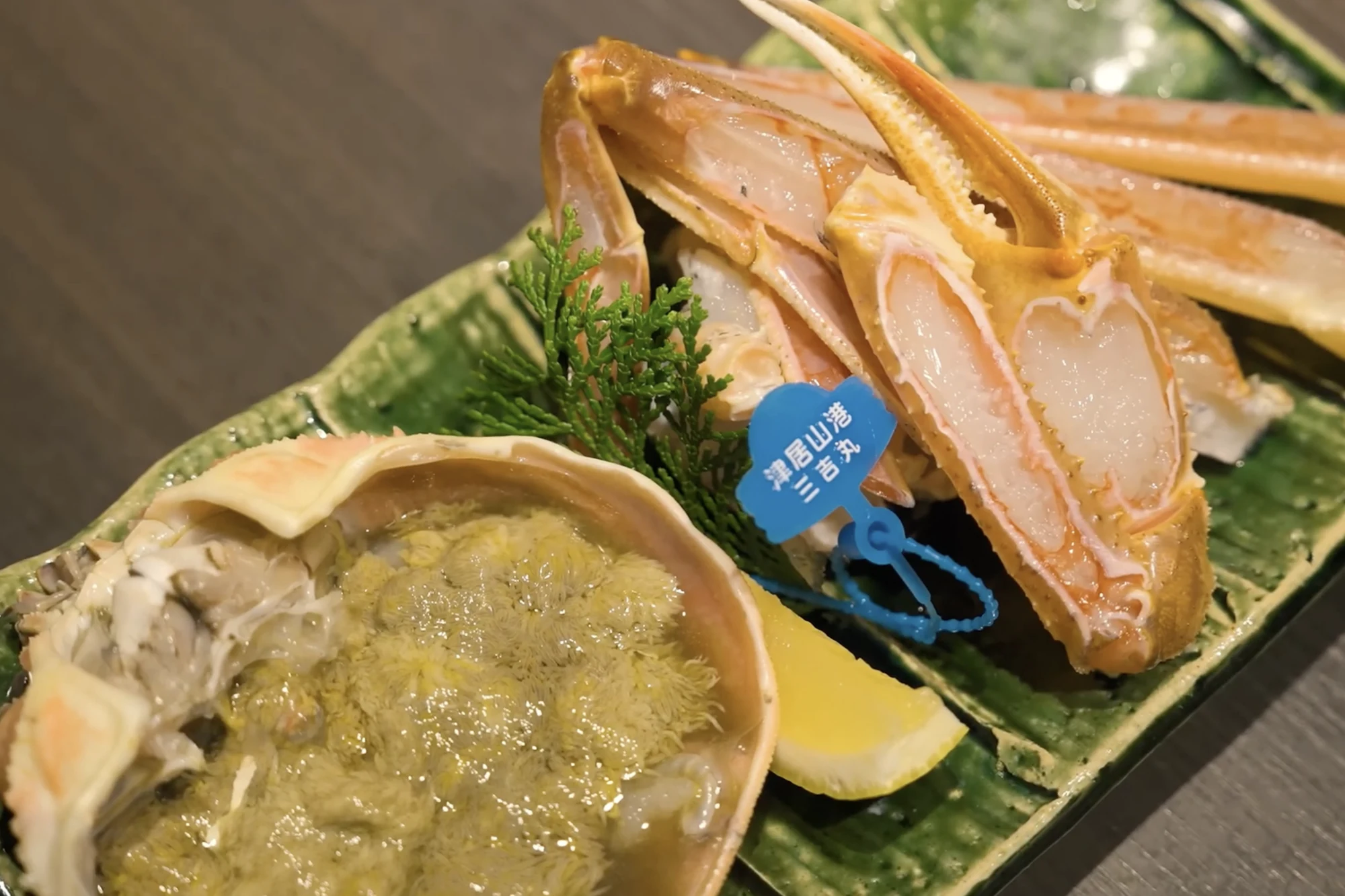
Matsuba-gani is the San'in coast's name for the male zuwai-gani, the snow crab, taken from the cold deep water off this shore in winter. The species is fished all around the Sea of Japan under different regional names; Fukui's echizen-gani is the same animal with a different passport. What matters on your plate is provenance and condition, and this coast formalized both with a tag system. Crabs landed at each local port carry a colored tag on the claw naming their harbor: Tsuiyama, the port at the mouth of Kinosaki's own river, tags in blue ⚠️, and neighboring Shibayama runs its own tag. A tagged local crab has been graded for fullness and sold through the port auction, which is why it costs what it costs. The female of the species gets her own season and her own following. Sekogani are small, inexpensive by comparison, and prized for the two kinds of roe packed under the shell. Their window is short, November 6 to December 31, set tighter for conservation, and locals treat the six weeks accordingly. The name itself is worth thirty seconds: matsuba (松葉) means pine needles, the usual explanation pointing at the slender legs' resemblance — one of those etymologies the region repeats warmly and documents variously. ⚠️ Keep as folk etymology. What is documented precisely is the fishery itself: licensed boats, regulated seasons, port auctions and the tag system — a supply chain formal enough that the romance of the name can afford to stay soft.
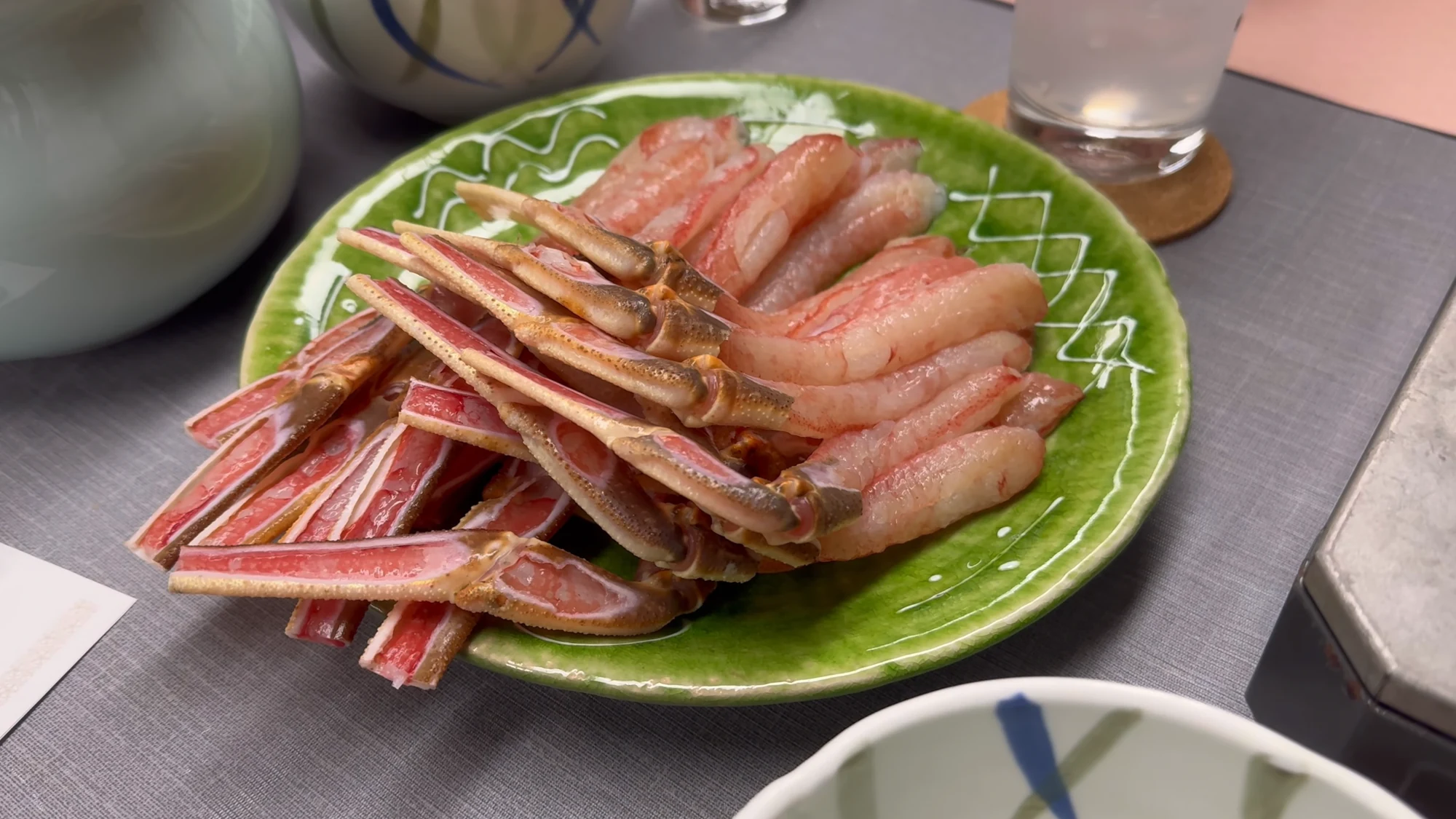
Matsuba, echizen and zuwai are one species wearing three regional names around the Sea of Japan.
The calendar, honestly
November 6 through late November. Opening weeks. Excitement is high and so are prices; the first auctions make national news and early-season crab trades at a premium. Menus are at full strength from the first week.
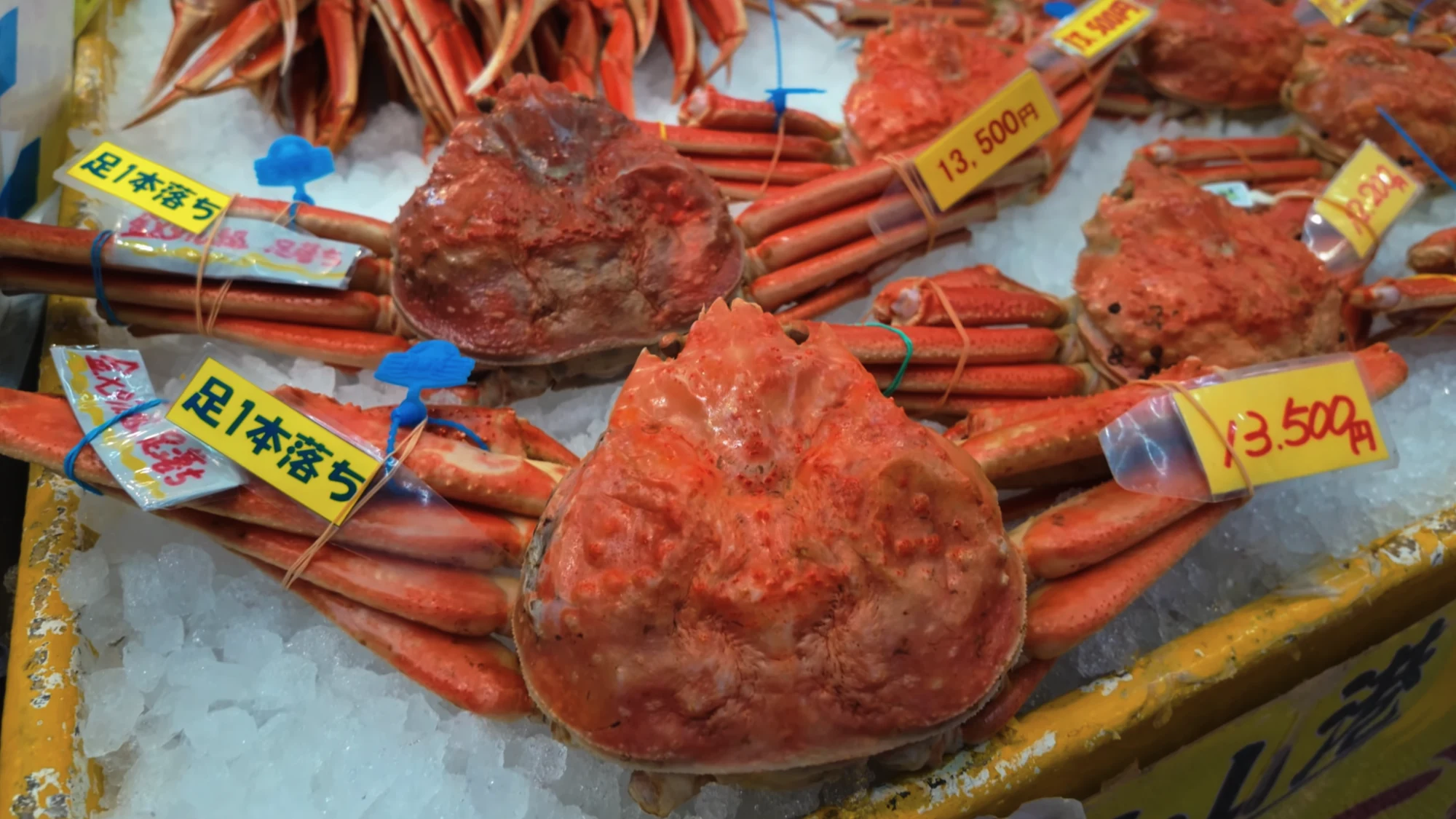
Males run November 6 to March 20; females close December 31. Season boundaries are conservation law. ⚠️
December. Peak demand. Sekogani are still legal, year-end groups fill the inns, and weekend rooms with crab plans are the scarcest commodity of the town's year.
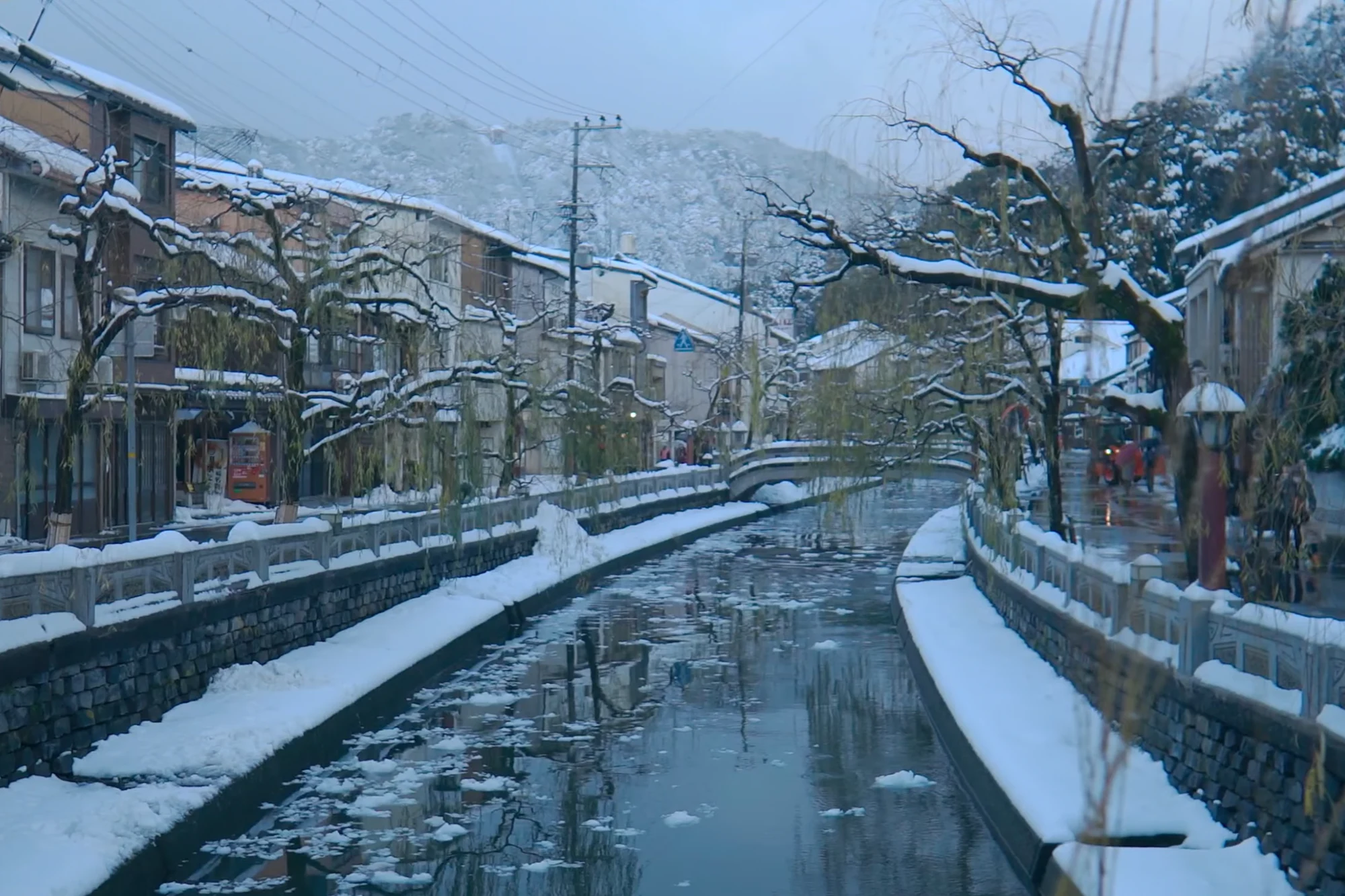
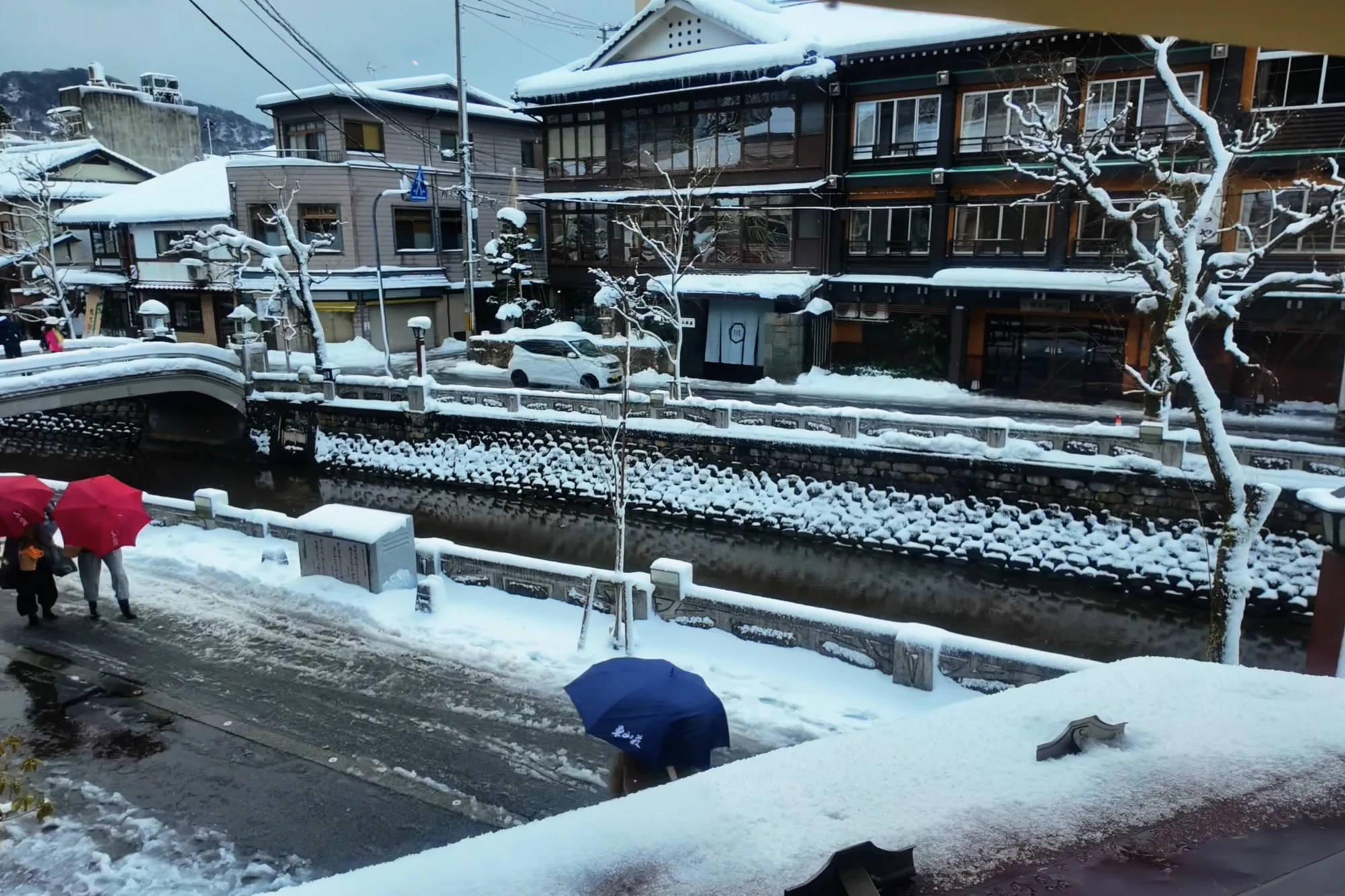
January and February. The connoisseur's window. Cold sharpens, the water is at its coldest, the crab is full, and weeknights are meaningfully easier to book. Snow on the canal is most likely now, which settles the question of when the postcard photograph gets taken.
March 1 to March 20. The quiet close. Availability improves as the season winds down toward the March 20 boundary. The final weeks are a legitimate value play for travelers who care about the plate more than the calendar.
Two calendar footnotes complete the honest picture. The season's final weekend gets a public send-off: in 2026 the association served free かに雑炊 (kani zōsui, crab rice porridge) and barrel sake in front of the station over March 20–22 — the Crab Kingdom formally closing its year, at the correct price of zero. ⚠️ Held yearly in some form; confirm dates. And the November 6 opening is worth experiencing once as an event in itself: first-auction news, tagged claws appearing in shop windows through the day, and the town's menus turning over almost visibly by dinner. (The four phases also map neatly onto budgets: opening premium, December peak, January–February connoisseur value, March close-out — pick your phase and the price follows.)
How the ryokan serve it
A full crab kaiseki, the kani full course, is a single animal argued five ways. A typical progression runs crab sashimi, the raw leg meat flowering in cold water; boiled crab, the benchmark preparation, eaten with nothing but concentration; grilled crab over charcoal, where the shell perfumes the meat; kani-suki, the hotpot; and finally zōsui, rice simmered in the pot's accumulated broth, which regulars will tell you is the best course of the night. Kanimiso, the innards eaten from the shell, appears somewhere in the sequence, often grilled with a splash of sake. Plans differ mainly in how much of the meal is crab and whether the crab is tagged local stock, and both facts are printed in the plan description. ⚠️ (typical plan structures; verify phrasing against current inn menus by category, no named menus) Lunch is the day visitor's entry point. Restaurants in town and around the station serve crab dons and set lunches in season at a fraction of the kaiseki commitment ⚠️, and the fish markets toward Tsuiyama sell boiled crab to carry off. Category advice only: anywhere posting a tagged crab with a port name is selling the local article; a suspiciously cheap all-you-can-eat is not. One structural tip for choosing between plans: count the crabs, not the courses. Plans are typically graded by how much animal reaches the table — half a crab across the meal, one full tagged crab, up to the top plans' multiple — and that single variable moves the price more than the room does. The course NAMES vary by house; the crab arithmetic is the comparable number. ⚠️ Category-level; verify against current plan descriptions.
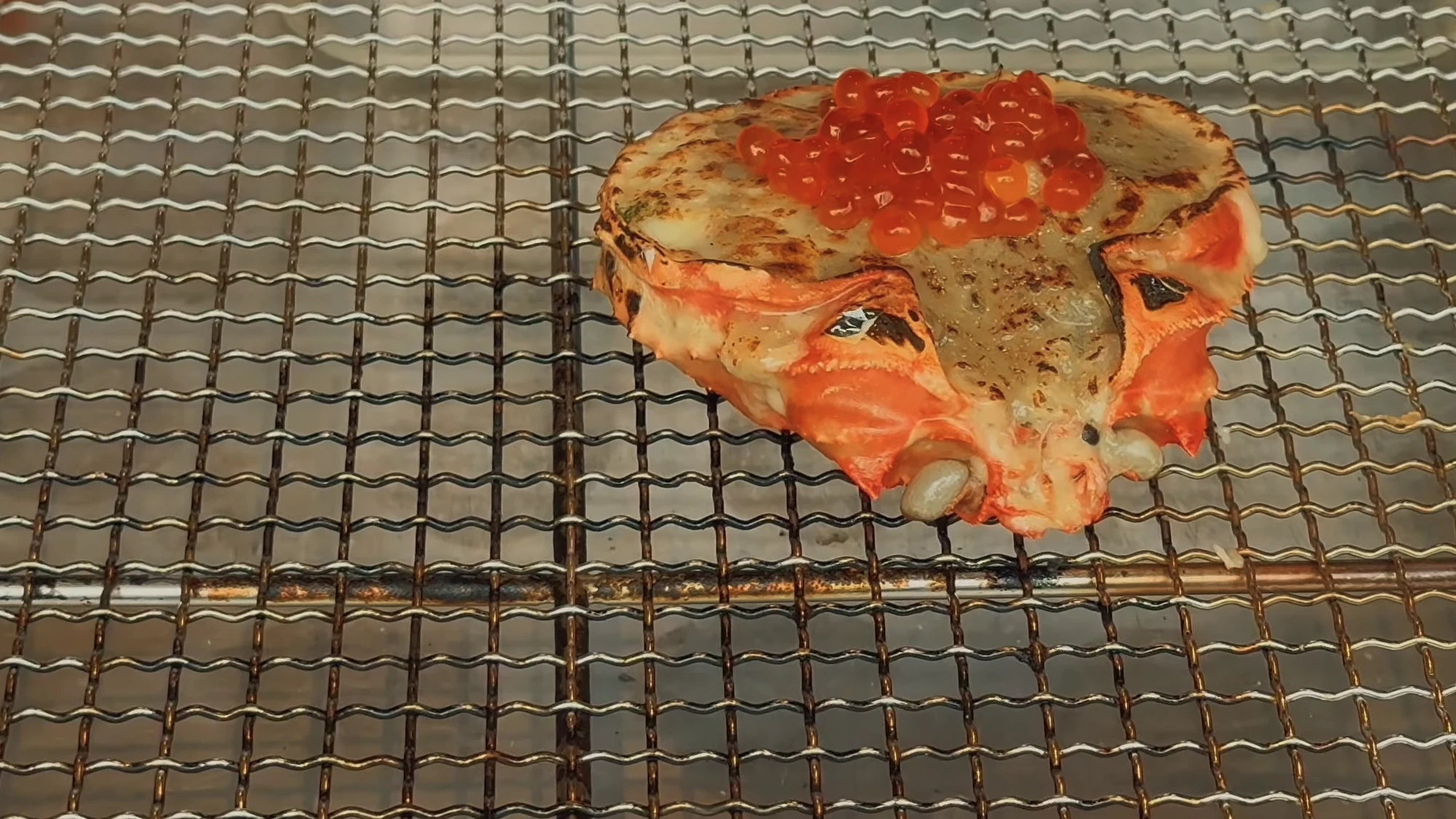
A full crab kaiseki runs sashimi, grilled, boiled and hotpot, finishing with rice cooked in the stock.
What it costs, and the one honest warning
Exact prices move with the auctions, so treat any number as provisional. ⚠️ The structure is stable: room-with-crab-kaiseki plans price well above the same room in summer, tagged local crab commands a clear premium over untagged, and the top full-course plans at the famous kitchens are the most expensive nights of the town's year. The warning is about the bottom of the market. Not every "crab plan" in the region is local matsuba; imported or frozen zuwai fills out cheaper menus, legally and openly. Read the plan text for a port name or the word taggani, and when in doubt, ask the inn directly which crab is served. An honest budget answer exists: one tagged crab dish added to a standard kaiseki costs far less than the full course and delivers the essential experience. The warning has a positive corollary worth stating: the tag system makes Kinosaki one of the easiest places in Japan to verify what you are eating. Elsewhere, "local crab" is a menu adjective; here it is a physical object on the claw naming a port you can walk toward. Set expectations in dollars too: the spread between an untagged budget crab plan and a full tagged kaiseki can run from roughly ¥15,000 to ¥50,000+ (about US$100–330+) per person for the night — wide enough that knowing the tag system pays for the reading time many times over. ⚠️ Bands indicative; verify seasonally.
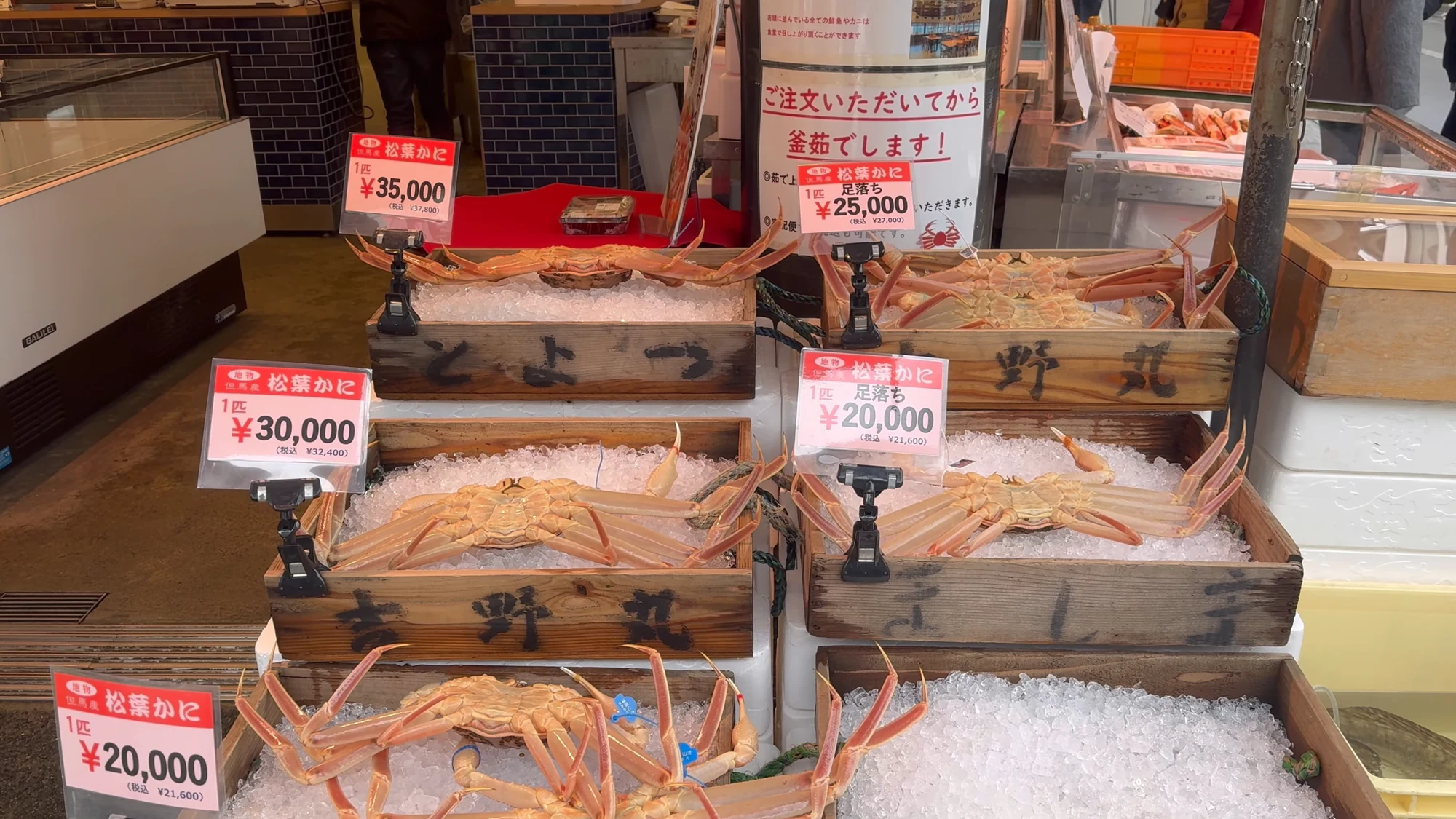
Shop-window crab runs roughly ¥10,000 to ¥35,000 a head by size and grade; inn prices move with it. ⚠️
Booking strategy
Book rooms with crab plans as early as your dates firm up; several months ahead is normal for November–March weekends, and December is the pinch point. Weeknights in late January and February combine the best crab, the likeliest snow, and the sanest prices. Specify the crab plan at booking, since kitchens buy at auction against their confirmed covers. Travelers on a day trip should aim for lunch service and accept that the full progression belongs to overnight guests. One line of expectation-setting for first-timers: a crab kaiseki is a long, hands-on, quietly competitive meal. Bibs are provided, tools are provided, and conversation drops noticeably around the second course. It is the correct response. For overnight guests, one pairing habit completes the season: the bath before dinner matters more in crab months than any other time. The kaiseki runs long and the houses close at 23:00 (11 pm), so the pre-dinner soak is the one you can count on — take it at 16:30, arrive at the table warm, and treat any post-crab bath as a bonus rather than the plan. Day-trippers get one more insider window: weekday lunch in late season, when the sets are at their calmest prices, the town is quiet, and the same tagged animal that anchored a December weekend's ¥50,000 dinner appears on a lunch tray for a fraction. The crab does not know what day it is; only the calendar of demand does, and this whole page is really instructions for standing on the right side of that calendar.
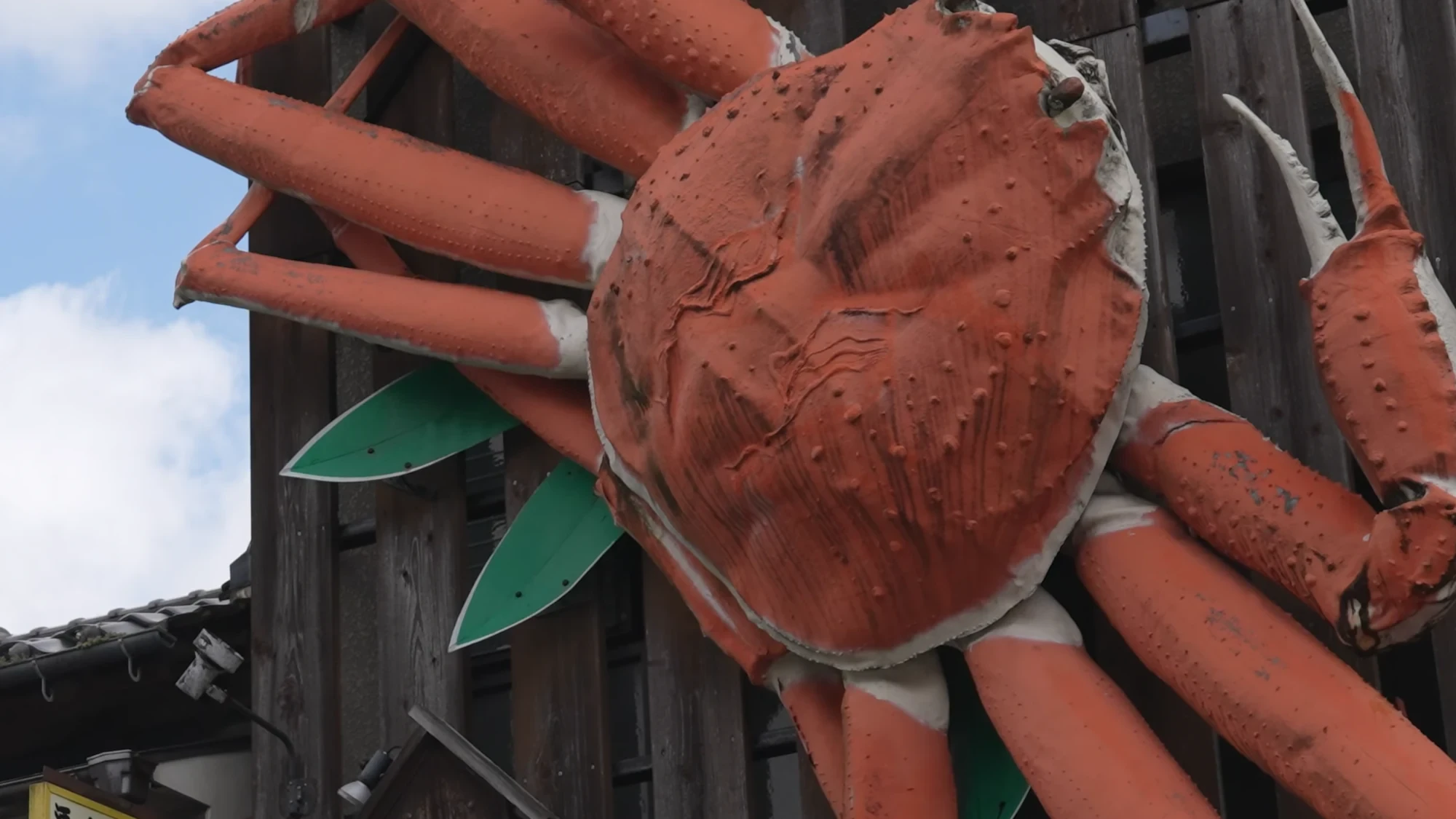
Weekends from late November to February sell out three to six months ahead at the famous houses.
Why the crab and the bath belong to the same town
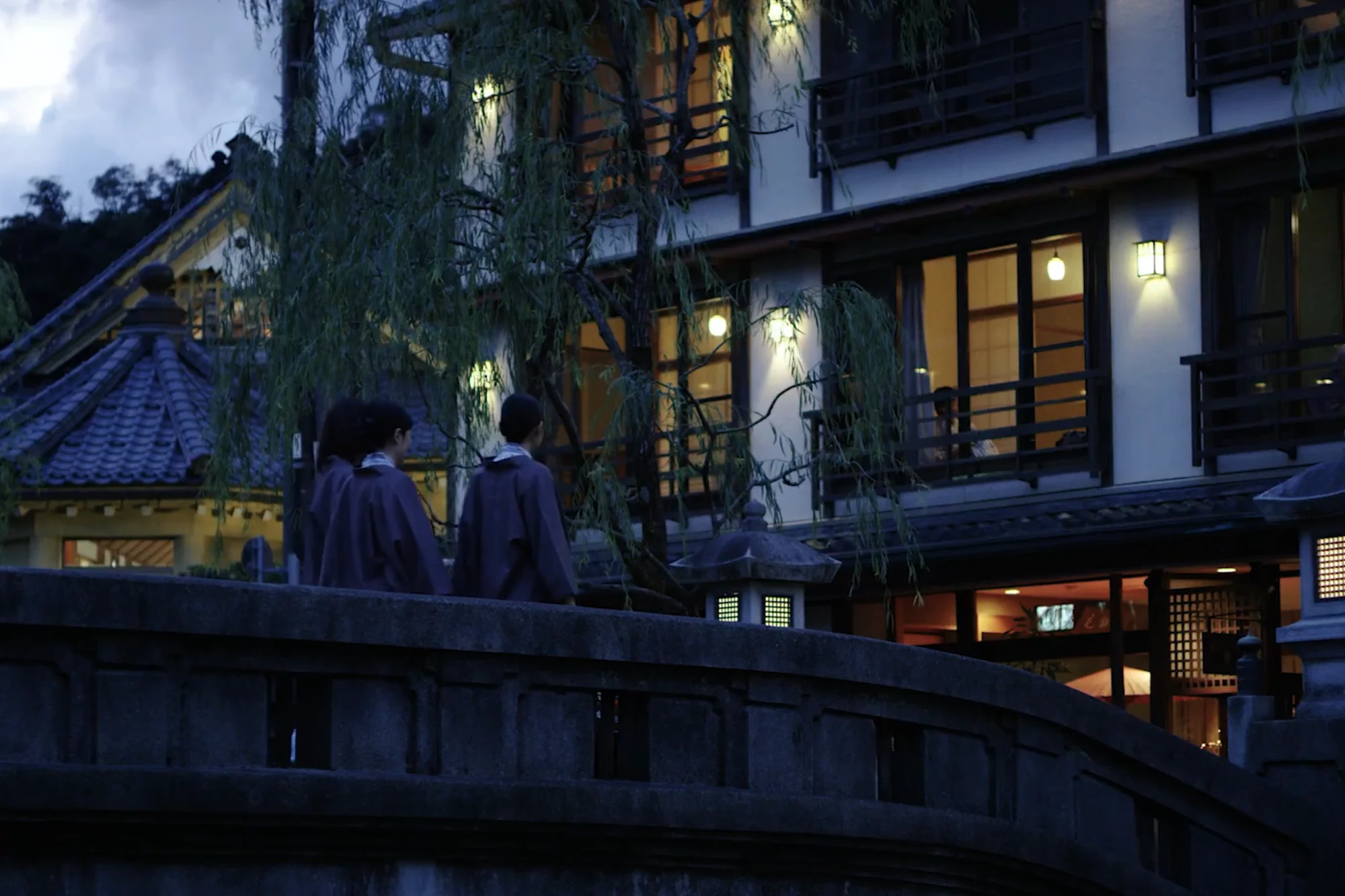
The pairing that defines winter Kinosaki is not a coincidence of geography; the two halves amplify each other in ways regulars can articulate precisely. The bath first: Kinosaki's chloride water is the warming type — dissolved salts slow evaporation off the skin, so the pre-dinner soak's heat genuinely accompanies you to the table — and the town's evening rhythm, bathe-then-dine-then-stroll, was built centuries before the crab trade industrialised, ready-made to receive it. The crab second: a kaiseki that runs ninety unhurried minutes suits a town whose entire evening entertainment is walking and soaking, with no showtime to miss and no last train to catch. Then there is the sensory argument, which sounds romantic until the first cold evening proves it mechanical. Crab season and bath season share a cause — the same Sea of Japan cold front that fills the crab fattens the pleasure of hot water — so the season's signature hour assembles itself: snow threat in the air, steam off the canal, a tagged crab waiting at the inn, and the walk between them conducted in a warmed yukata. November 6 is not two openings that happen to coincide; it is one climate, served two ways. The practical takeaway for planners is the pairing's arithmetic: a crab trip that skips the baths overpays for dinner, and a bath trip that skips the crab (in season) leaves the town's other half on the table. The plans that work — and the ones this site's itineraries build — treat the two as one product: book the crab plan with the room, guard the pre-dinner bath, and let the town run its winter machine as designed. It has had, by the calendar of the ports, quite enough practice.
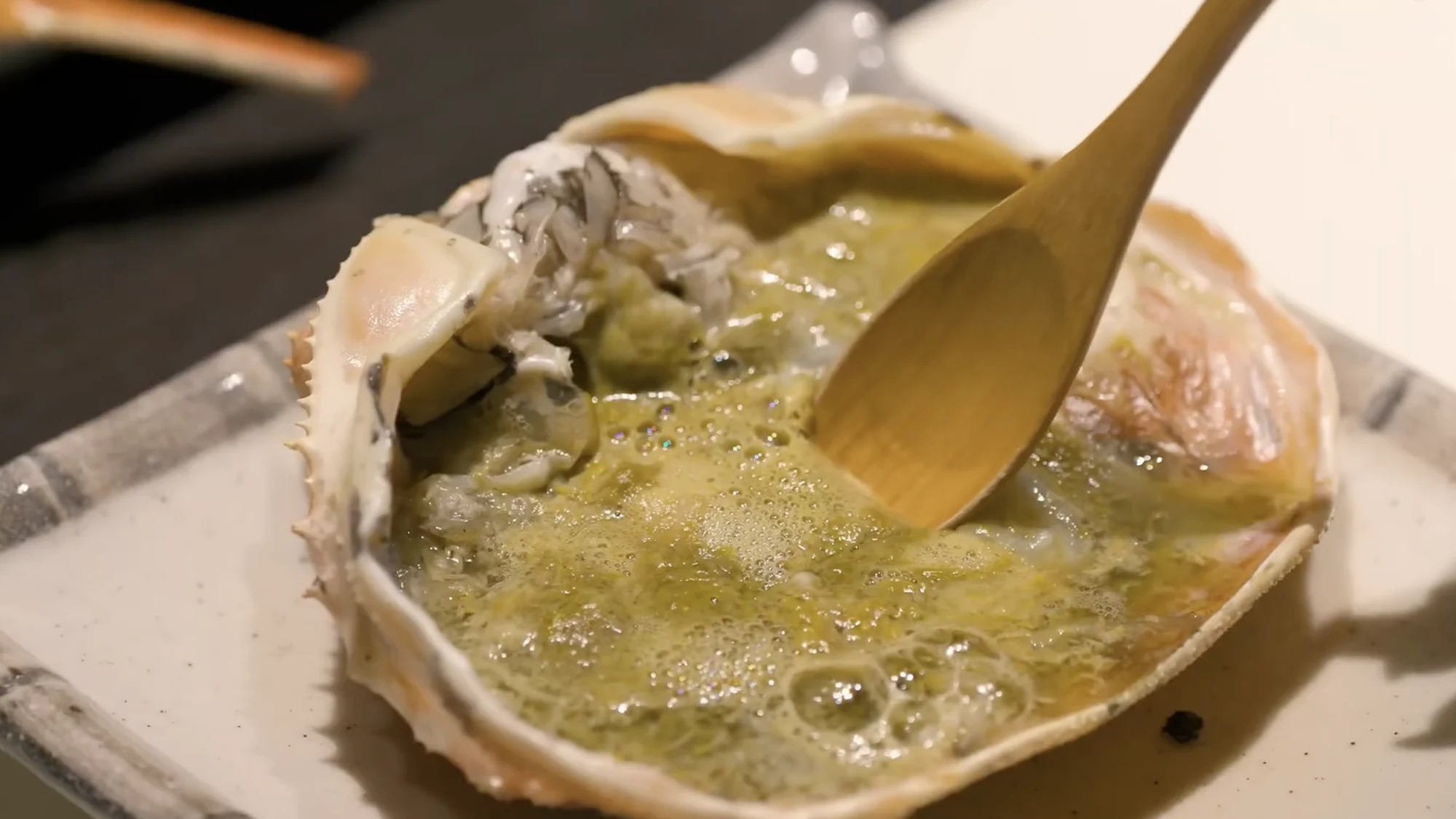
The season opens as the cold arrives. The crab and the bath share a start date, which is not a coincidence.
Tips
Attach the crab plan when you book the room — kitchens buy at auction against confirmed covers.
Late-January and February weeknights: best crab condition, likeliest snow, sanest prices.
Read the plan text for a port name or tag reference; suspiciously cheap all-you-can-eat is not the local article.
Budget answer: one tagged crab dish added to a standard kaiseki delivers the essential experience at a fraction of the full course.
Verified by The Japan Onsen Society
Show all sources
Drafted July 2, 2026; the Crab Kingdom programs, season-close event and bath-pairing facts verified September 22, 2026. Primary Japanese sources:
イベント情報 — 城崎温泉観光協会 (Kinosaki Onsen Tourism Association — かに王国 events, the 2026 season-closing zōsui event, 浴衣とかに王国パスポート): [https://kinosaki-spa.gr.jp/event/](https://kinosaki-spa.gr.jp/event/)
外湯 — 城崎温泉観光協会 (chloride classification behind the warming-bath pairing): [https://kinosaki-spa.gr.jp/about/spa/](https://kinosaki-spa.gr.jp/about/spa/)
温泉地詳細〔城崎温泉〕 — 日本温泉協会 (Japan Spa Association — spring classification): [https://www.spa.or.jp/search_p/detail_p/?F_ID=280880&pg=0](https://www.spa.or.jp/search_p/detail_p/?F_ID=280880&pg=0)
Related guides
When to Visit
Kinosaki complete guide
Seven public bathhouses, one shared spring, and a law that keeps them the centre of town. Start here.
When to Visit
Best time to visit
Crab from November, snow in January, willows in April. There is no wrong month, only different ones.
When to Visit
Winter
Snow on the willows, crab on the table, and seven hot baths to walk between. Kinosaki's best case.
When to Visit
Worth it?
A day trip shows you the seven bathhouses. A night buys the yukata, the streets and the morning after.