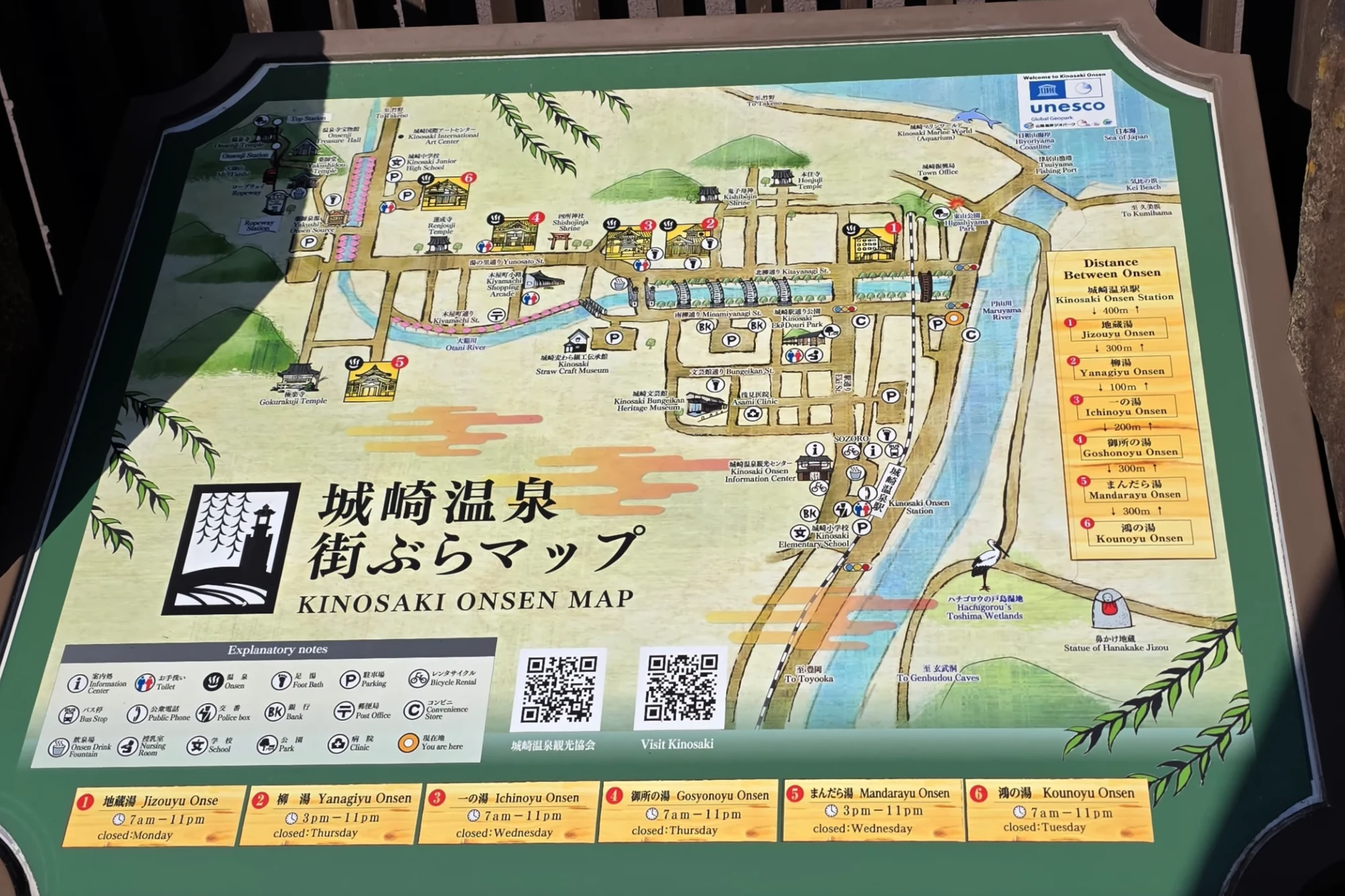
Overview
Kinosaki is the clearest case in Japan of a bathing culture running on rules rather than sentiment. A cap on private baths, a publicly held spring with a published supply list, and a reconstruction that prioritised the commons over private property. This page explains the machine the yukata stroll runs on, and is honest about the one document we have not been able to read.
The cap that creates the crowd
Every visitor notices the same thing within an hour of arriving, usually before they have unpacked. The streets are full of people in bathrobes walking somewhere. Not a few — everyone, all evening, in both directions, in the rain, in the snow, clogs on stone, small towels in hand. No other onsen town in Japan manages this at Kinosaki's density, and the reason is not that its visitors are more enthusiastic. It is that the alternative has been legislated away. A municipal ordinance limits how large a bath a ryokan may build for its own guests. Toyooka City's tourism authority states it directly. The consequence is arithmetic: if no inn can build a bath that competes with the public bathhouses, then no inn has a reason to keep its guests indoors, and every inn's best move is to send them out. The commons stay funded because they are the main event. The streets stay animated because they are the corridor between events. Compare this with what happens everywhere the rule does not exist. The standard modern trajectory of a Japanese onsen town is that inns compete on private bath scale, guests stay in, the public bathhouses lose their customers, the shared streets empty out, and eventually the town becomes a row of self-contained resorts that happen to share a postcode. That has happened in a great many places. It is the default outcome of ordinary commercial logic, and it destroys the thing people came for. Kinosaki's slogan — まち全体がひとつの旅館 (*machi zentai ga hitotsu no ryokan*), the whole town is one ryokan, with the station as its entrance, the streets as its corridors and the sotoyu as its grand bath — is usually quoted as poetry. It is better understood as a description. The station really is the entrance because that is where you arrive and change into a yukata. The streets really are corridors because the rule ensures you have to walk them. The sotoyu really are the grand bath because the law made sure nothing else could be.
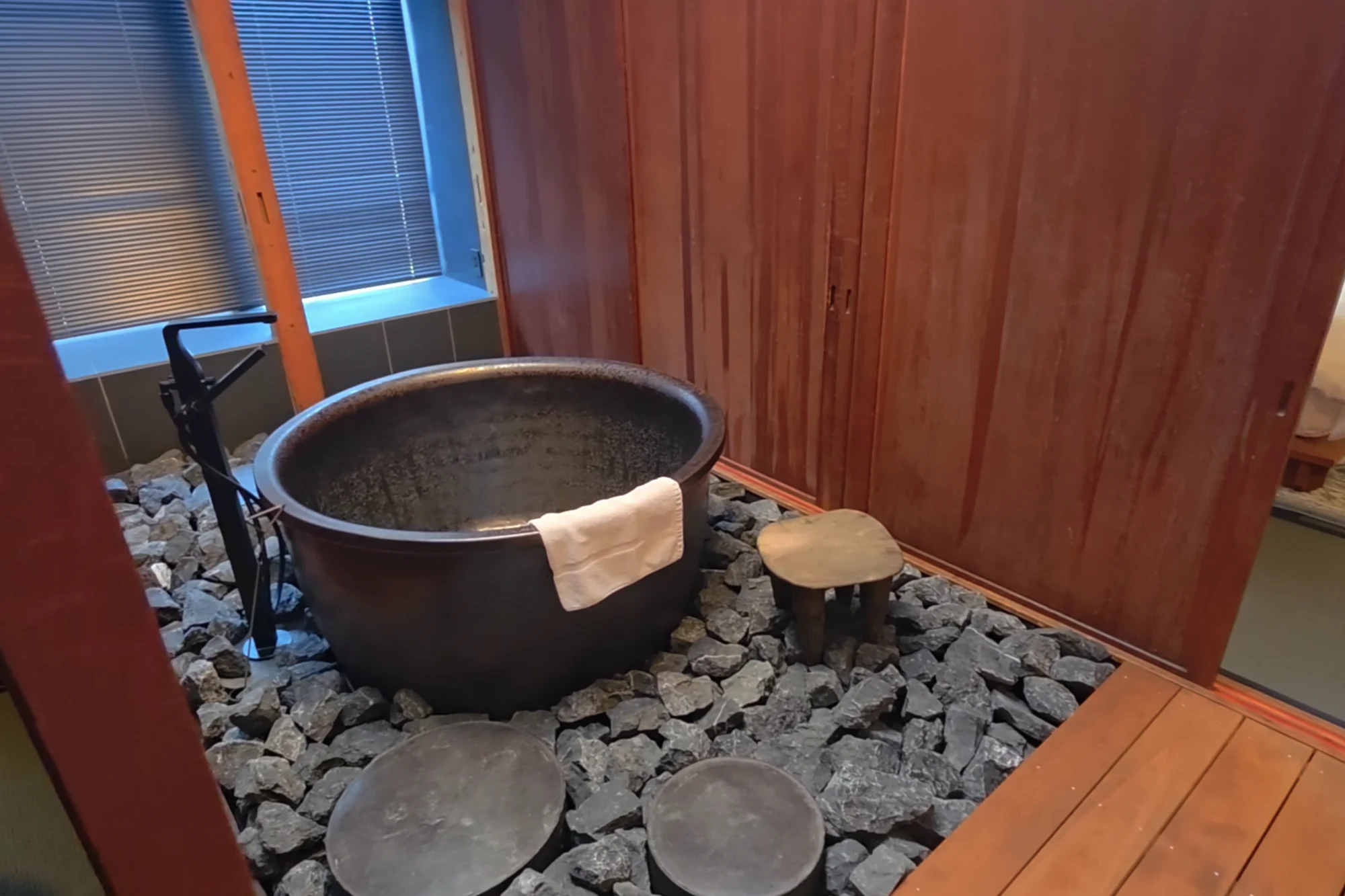
A municipal ordinance caps how large an inn's own bath may be. This is the rule made visible.
Who actually owns the water
The cap on inn baths is the visible half. The invisible half is ownership, and it is older and stranger than most visitors imagine. Kinosaki's spring is not owned by the city, and it is not owned by any company. It is held by the Kinosaki-chō Yushima Zaisanku (城崎町湯島財産区) — a *property ward*, a legal form in which a defined community collectively owns a common resource. Property wards are survivals: they exist because when Japan's modern municipalities were assembled in the Meiji period, some communities had assets — forests, grazing land, hot springs — that predated the new administrative boundaries and were not surrendered to them. The community kept title. So the water underneath Kinosaki belongs, in a real legal sense, to the community above it. Not as a metaphor, and not as a heritage designation. As property. This is the foundation everything else stands on. A cap on private baths is enforceable in a way it could never be if each inn drilled its own well and owned what came up. A supply list is possible because there is a single supplier with the standing to refuse. The whole architecture of the commons depends on the fact that nobody in Kinosaki can privately own a piece of the spring, because the spring was collectively owned before there was a municipality to sell it.
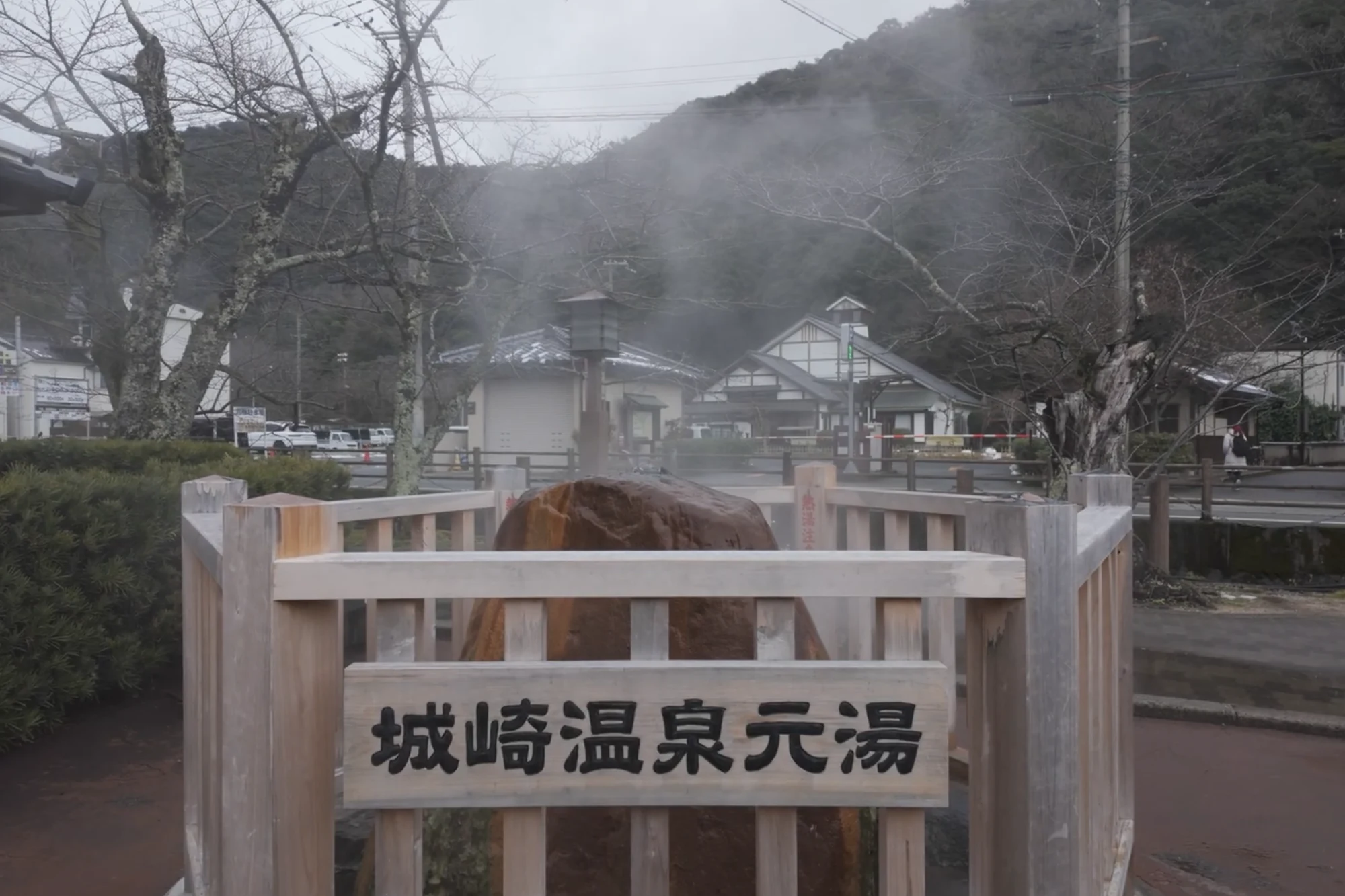
The spring is municipally held. No inn owns it, and no inn may draw more than its allocation.
The list of everywhere the water goes
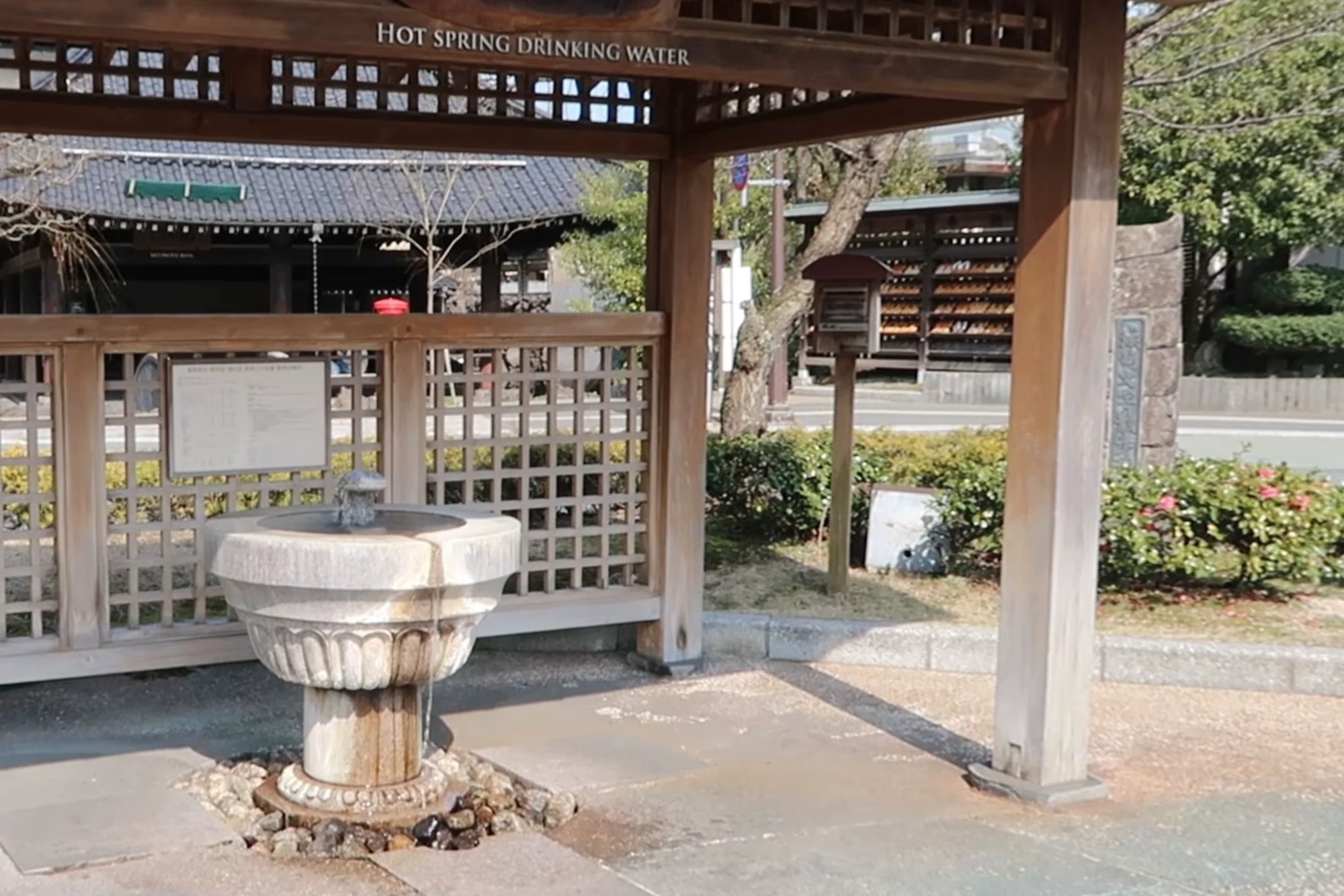
The springs authority publishes the complete inventory of what it supplies. It is short enough to read in full, and reading it is the fastest way to understand the town. One. The seven sotoyu. Two. Bathing facilities at ryokan and other lodgings, within the Yushima, Momoshima and Imazu districts of Kinosaki — and explicitly not to any inn's footbath. Three. Footbaths and drinking fountains installed by the ward and the city: five footbaths, beside Ichi-no-yu, at Yanagi-yu, at Sato-no-yu, at Yakushi Park near the ropeway, and at the Kinosaki Bungeikan literary museum. Three drinking fountains, at the station rotary, at Yakushi Park, and at the Ō-bashi bridge in front of Ichi-no-yu. That is the entire list. The authority publishes it because products have appeared for sale implying they contain Kinosaki onsen water, and it wanted to state on the record that it supplies no one outside those categories. Read what that list is actually doing. It is geographic — three named districts, and if your inn is outside them it does not get the water regardless of what it is willing to pay. It is categorical — lodging baths yes, an inn's decorative footbath no, which is a distinction fine enough that somebody argued about it. And it is defensive — the warning exists because the pressure to commodify is real and the answer has been no. Since December 2023 the ward has also issued a 天然温泉配湯の証 (*tennen onsen haitō no akashi*), a certificate of natural hot spring supply, distributed to facilities that genuinely receive the water so they can display it. If you want to know whether the bath in your inn is fed from the town spring, look for it on the wall. The certificate exists because the question is worth being able to answer, which tells you the town expects to be asked.
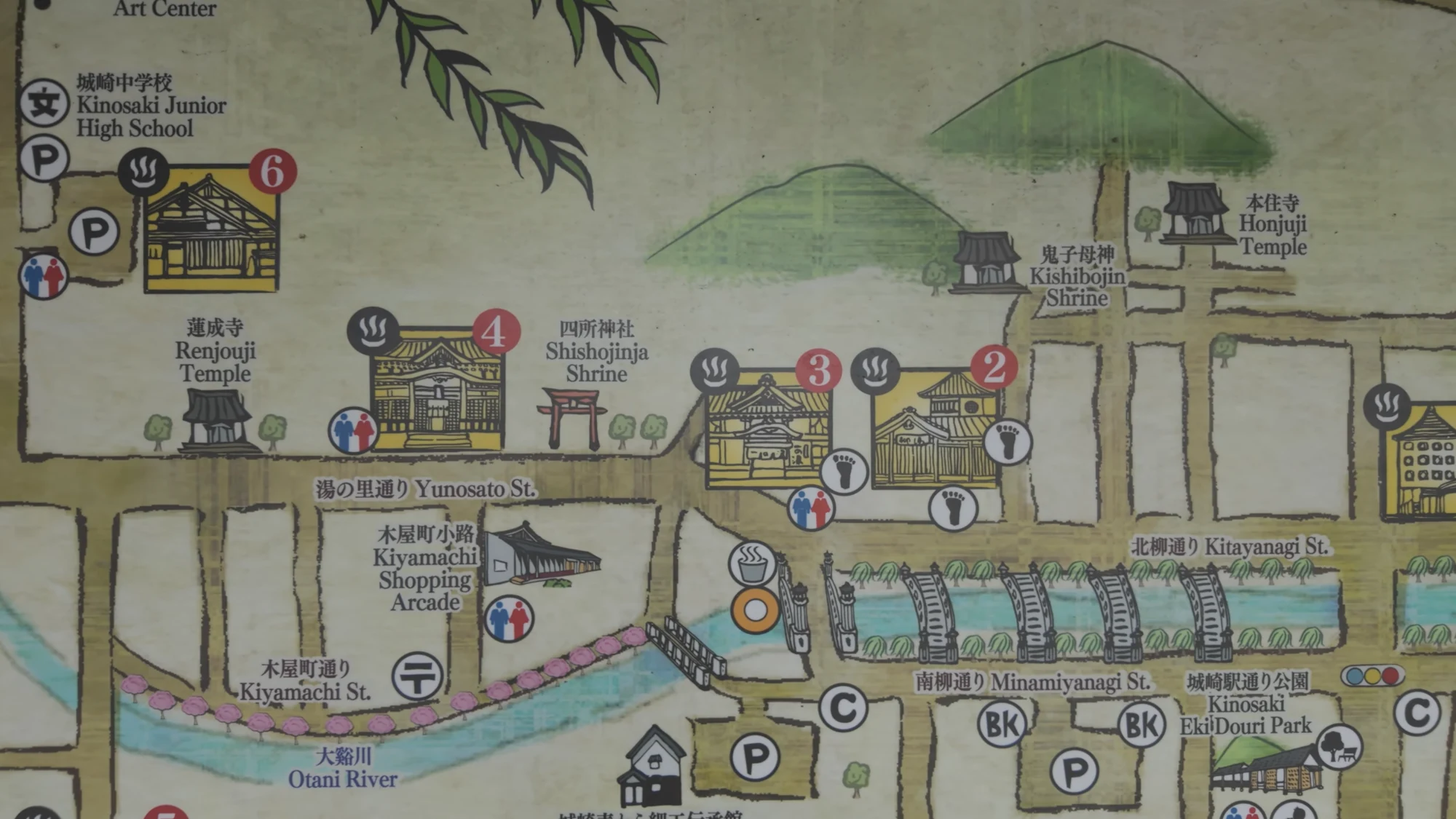
The supply list is short: seven bathhouses, lodgings in three named districts, five footbaths, three fountains.
The 1925 test
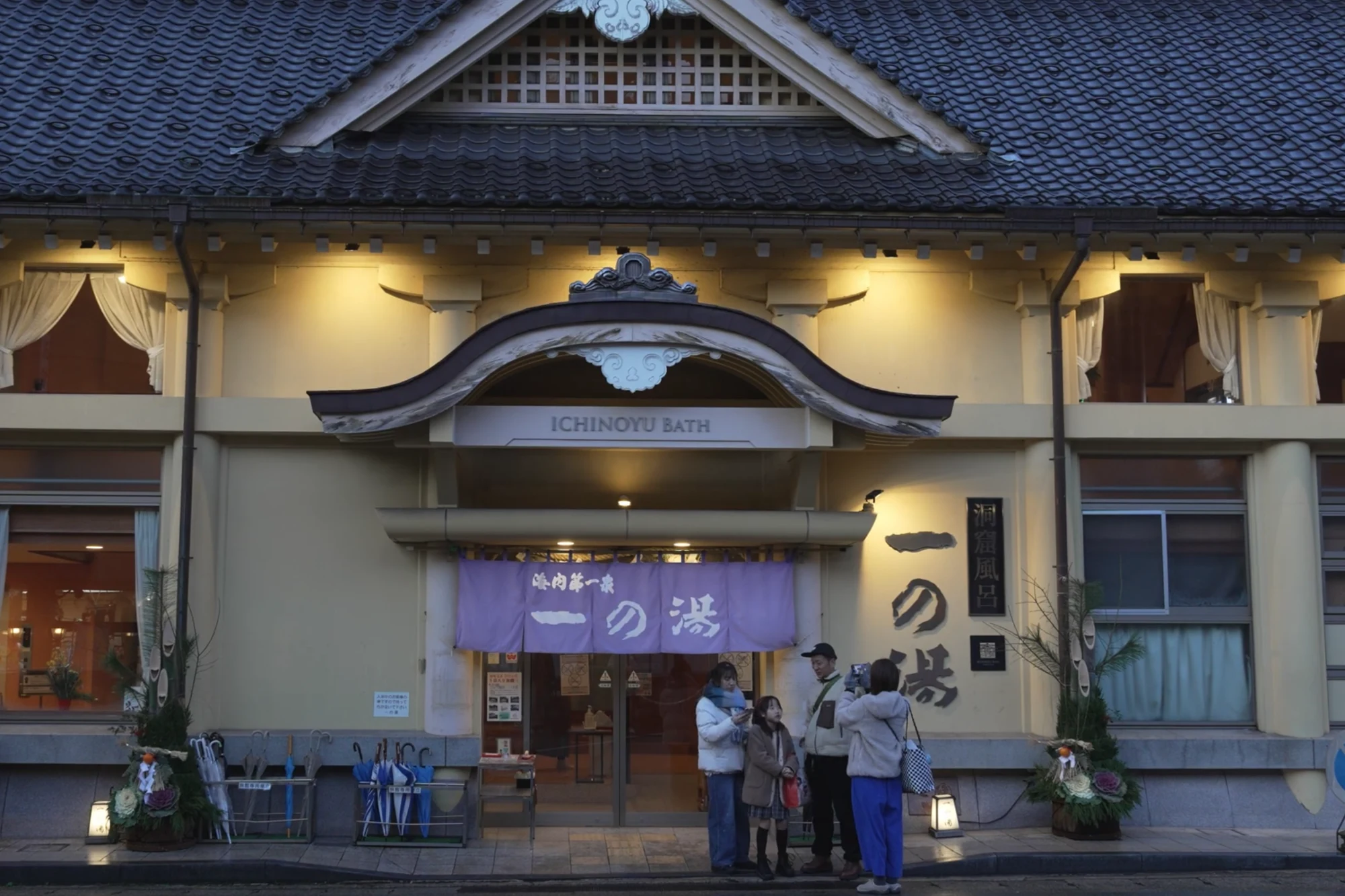
A system is a claim until something tries to break it. On 23 May 1925 the Kita-Tajima earthquake struck the coast, and the fires that followed finished what the shaking started. Kinosaki was destroyed. Not damaged — the wooden town that had accumulated around the springs across twelve centuries was gone. The springs survived. And the town faced the question that every disaster asks of a community: when you rebuild, what do you rebuild first? Under mayor Nishimura Sahei (西村佐兵衛), Kinosaki rebuilt the public bathhouses before the private businesses. Six sotoyu went up between 1926 and 1932. A land readjustment reorganised the streets around them. By 1935 the framework of the townscape visitors photograph today was complete. Ichi-no-yu was rebuilt in reinforced concrete, deliberately, as a firebreak — the lesson of the fire written into the material of the replacement. The building standing there now is a 1999 rebuild that keeps that façade, so the current structure is a quotation of the structure that was itself a response to the disaster. Consider the position those people were in. No homes, no businesses, no income, a coastal winter coming, and a decision about where to put scarce labour and scarce money. They chose the baths that belonged to everyone. Not because they were sentimental, but because they understood, correctly, that the commons was the asset and their individual businesses were downstream of it. A town that rebuilds its public baths before its private property has told you exactly what it thinks it is. And a century later the bet has paid returns that no individual inn could have generated alone.
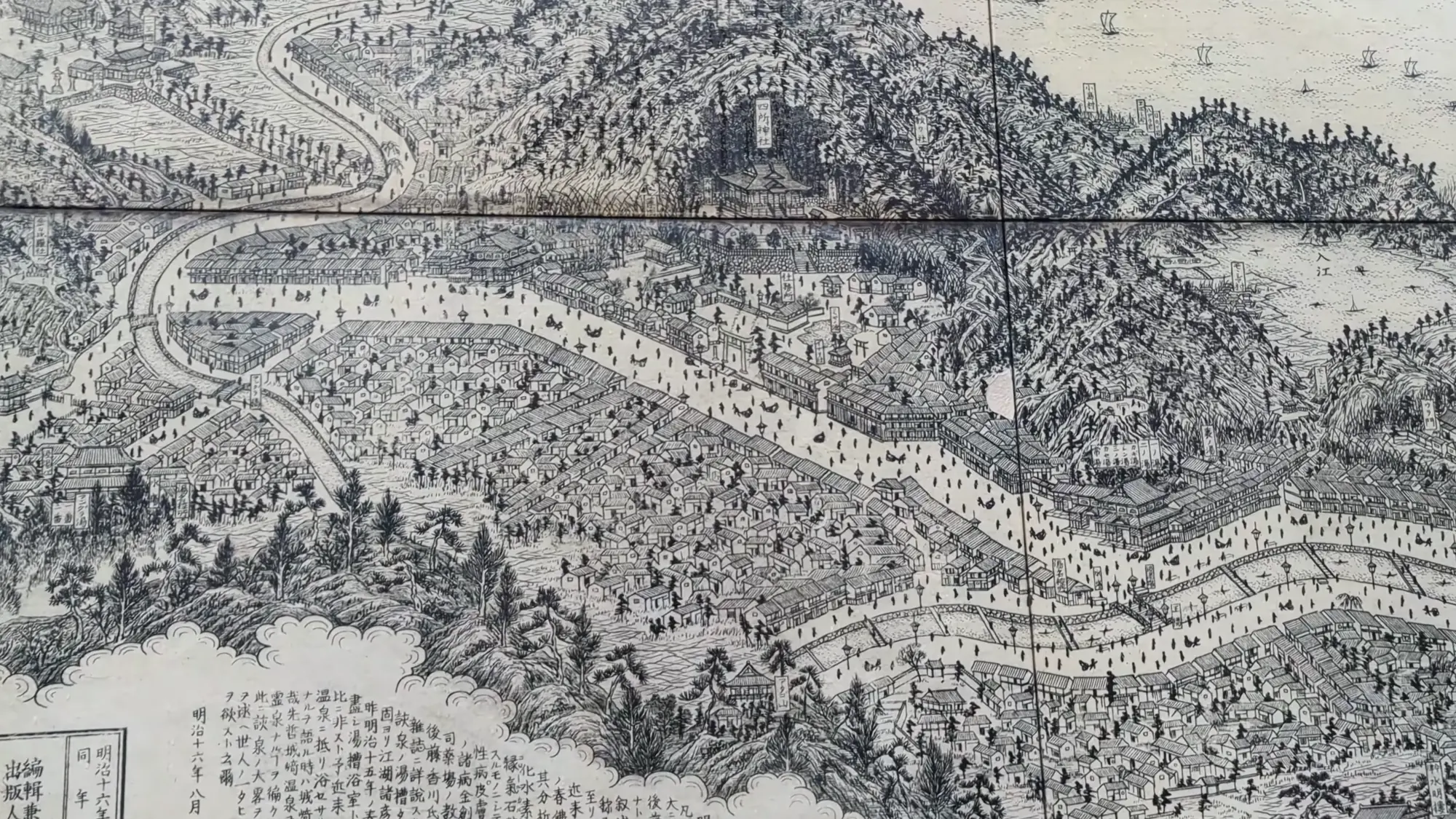
The 1925 earthquake destroyed the town. The rebuild put six bathhouses up between 1926 and 1932, before the inns.
What the system costs, and who pays
The commons is not free, and Kinosaki is unusually transparent about the price. A single bath costs ¥800 for an adult and ¥400 for a child (about US$5.30 and US$2.70). A one-day pass — the *Yumepa* (ゆめぱ) — is ¥1,500 and ¥750 (about US$10 and US$5). Prices logged as of 2026; ⚠️ confirm before travel. If you stay overnight, most inns issue you a free 外湯めぐり券 (*sotoyu-meguri-ken*), a bathhouse circuit pass, typically valid from check-in until 13:00 the following day. Note what that window means in practice: it runs past normal check-out, so the morning after your stay you can still bathe. The town is not finished with you when your room is. The economics are the point. The inn is not competing with the bathhouses; the inn is a gateway to them, and it buys your access as part of your stay. So an inn's incentive is aligned with the commons rather than against it. Every guest an inn brings to town is a guest who uses the sotoyu, and the sotoyu are what made them want to come. This is why judging Kinosaki ryokan by bath scale is a category error. The law made that trade on your behalf a long time ago. Judge them on the room, the meal, the building and the service, which is where Kinosaki inns actually compete, and let the town handle the bathing.
What this means for your visit
Inn baths are modest by design. If you want a large private bath experience, Kinosaki is structurally the wrong town and no amount of budget fixes it. That is not a failing; it is the system declaring its priorities. Stay overnight if you possibly can. The day-tripper buys a pass and sees the bathhouses. The overnight guest gets the circuit pass, the yukata, the evening streets and the morning after — which is to say, membership rather than admission. The difference is the whole product. Walk the circuit around 19:00 to watch the rule work. Every lane carries yukata traffic in both directions, and you can see an ordinance producing an atmosphere in real time. The current closures dent the circuit without touching the system. Kō-no-yu is closed for life-extension works with reopening expected November 2026; Sato-no-yu has been closed since April 2024. Five houses still carry the commons. ⚠️ Confirm both before travel. Stand across the street from Ichi-no-yu and read the façade. A 1999 building quoting a 1926 building that was itself an argument about fire. The whole logic of the rebuild is legible from the pavement.
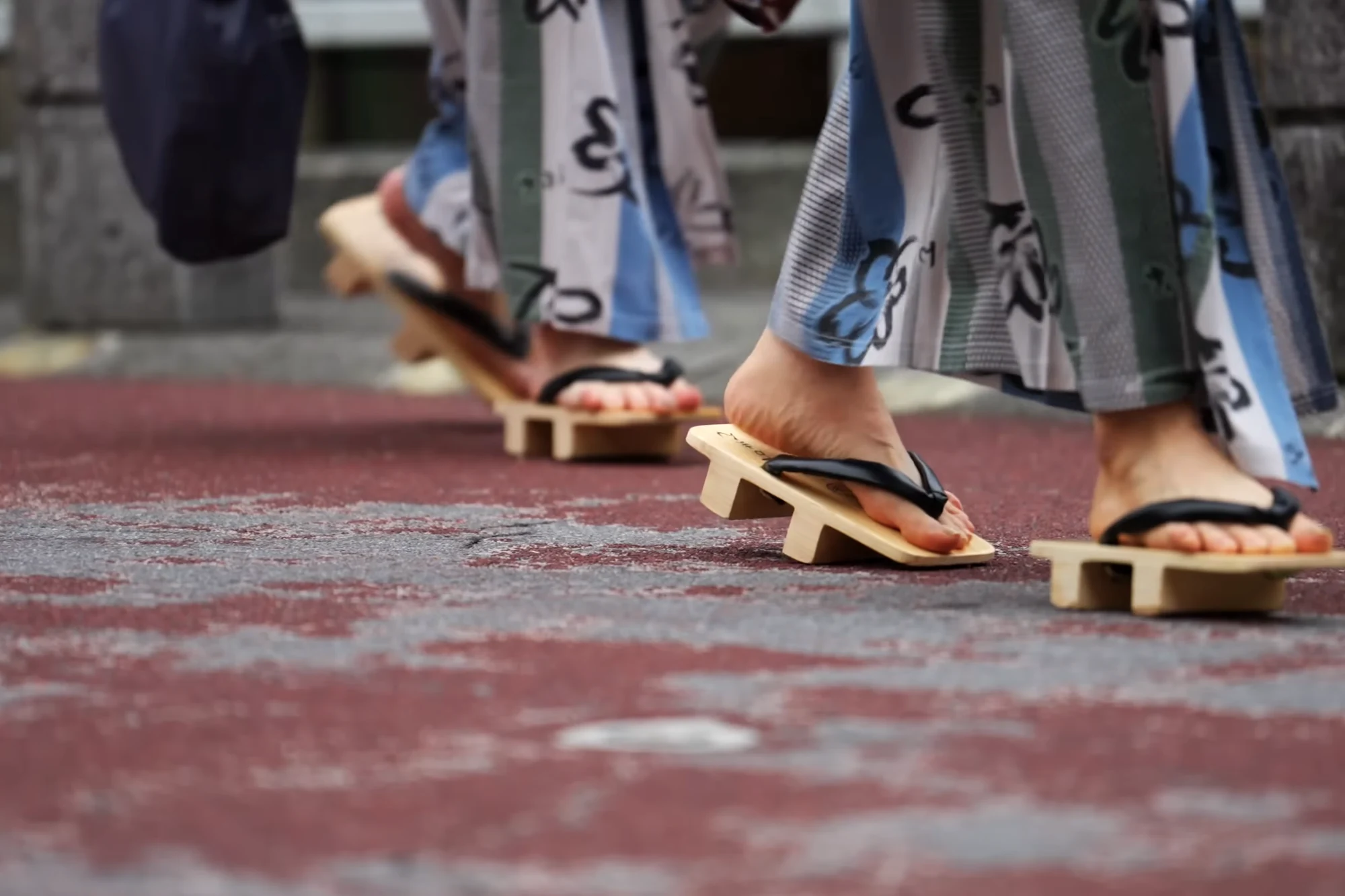
Because the baths are public, the street between them is the corridor — which is why yukata is street dress here.
The network comparison
Among the onsen towns we document, three have solved the same problem in three different ways, and the comparison is instructive. Kurokawa runs on the *tegata* (手形) — a wooden pass agreement under which competing inns open their baths to each other's guests. The mechanism is a voluntary contract between rivals, and it works because everyone understood that the visit is worth more than the room. Gero manages its water centrally and distributes it, solving the commons problem through infrastructure and administration. Kinosaki is the only one where the arrangement runs on municipal law and collective ownership together. The cap is regulatory; the spring is a property ward's asset; the supply list is a public commitment. That combination is why this page exists and why Kinosaki is the reference case for the whole idea. All three are versions of the same insight, which is the most important thing an onsen town can understand about itself: the product is the system, not any individual tub.
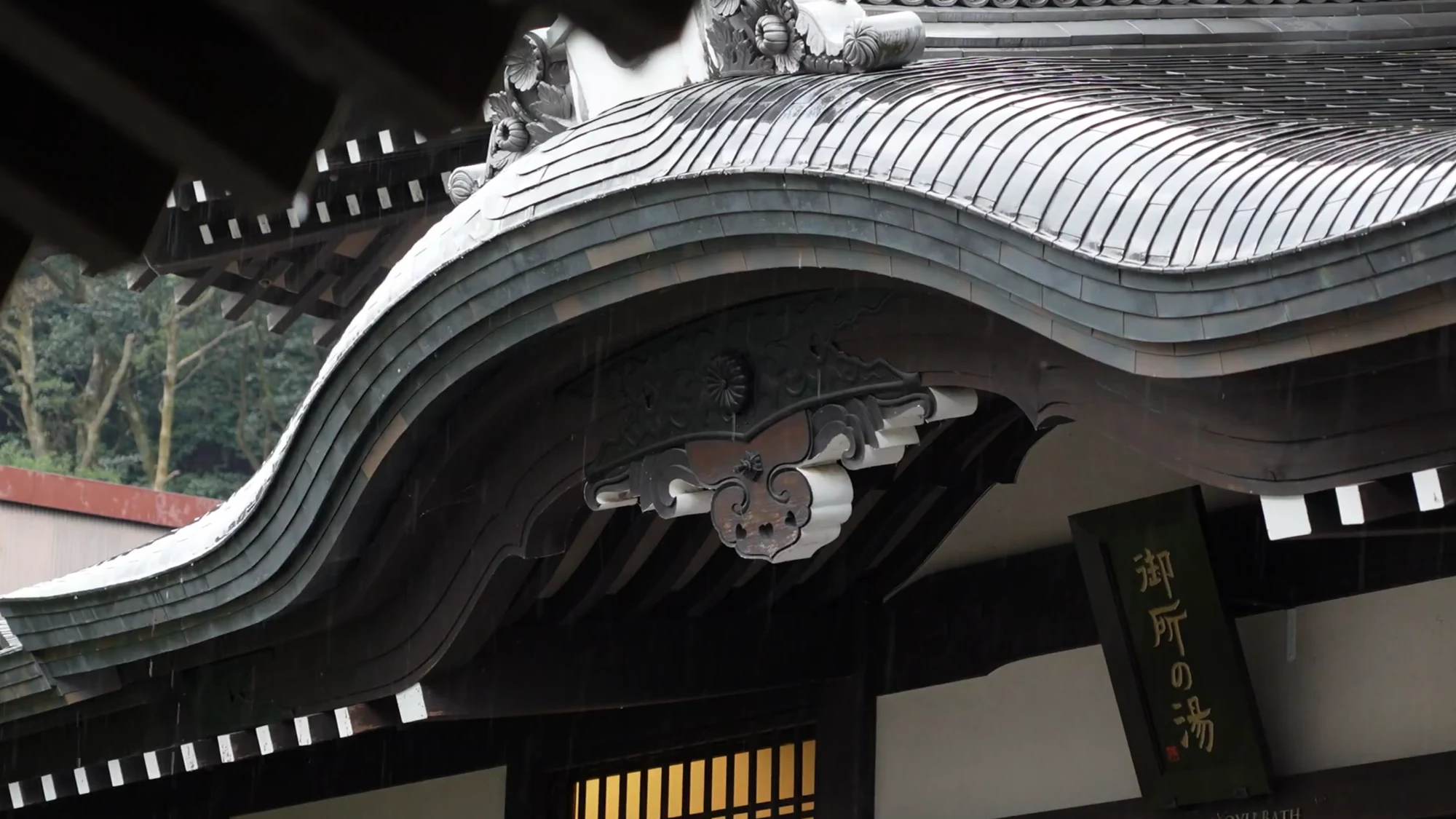
Goshono-yu: opens 7am, closes Thursdays. The roof is modelled on a Kyoto palace gate.
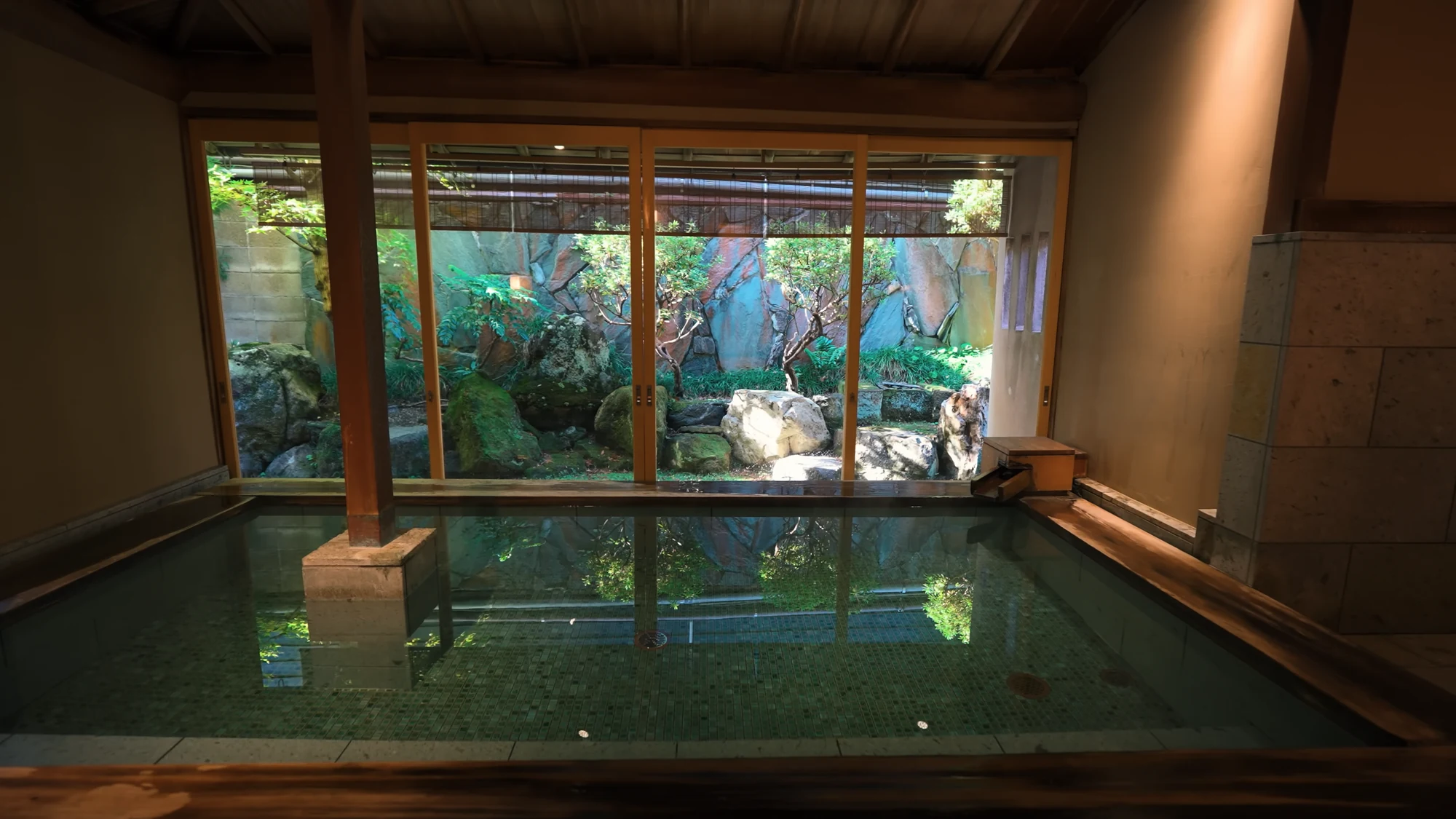
Most onsen towns sell the bath with the room. Kinosaki sells the room and lends the town.
What we cannot yet cite
One thing on this page is thinner than the rest, and it is better to say so than to let the page's confidence outrun its sources. We have not read the ordinance. Toyooka City's tourism authority states that a municipal ordinance caps the size of ryokan in-house baths, and that statement is from the city and is citable. But the instrument itself — its name, its number, its date, its text — is not published anywhere we have been able to reach, including on the springs authority's own site. So this page describes a rule on the authority of the city describing it, rather than on the authority of the rule. Everything else here is documented at the source: the supply list, the certificate, the property-ward ownership, the 1925 chronology, the prices, the pass window. We are pursuing the instrument through the Yushima Zaisanku and Toyooka City's hot spring division. If we obtain it, it will appear here with its number and its date, and this paragraph will say so. Until then, the honest description is that the cap is real, stated by the city, and visible in its effects on every street in town — but that we are reporting it, not quoting it.
Tips
**Judge inns by rooms and meals, not bath scale.** The law made that trade for you.
**Stay a night rather than day-tripping.** The circuit pass runs to 13:00 the day after, so you get a morning bath after check-out.
**Walk the streets at 19:00** to see the ordinance working.
**Look for the 天然温泉配湯の証 certificate** if you want to confirm your inn's bath is the real supply.
**Read the 7 Bathhouses page next** for the blessings and the architecture. This page is the plumbing beneath it.

Verified by The Japan Onsen Society
Show all sources
内湯 ordinance · 外湯めぐり発祥の地 claim · 1925 chronology · Nishimura Sahei · 1926–32 rebuild · 1935 framework · Ichi-no-yu reinforced concrete and 1999 rebuild · guest circuit-pass window → 外湯巡り発祥の地!温泉天国★城崎温泉 (豊岡市観光公式サイト, Toyooka City tourism, updated December 2024) → [toyooka-tourism.com/recommend/onsen/kinosaki_sotoyu/](https://toyooka-tourism.com/recommend/onsen/kinosaki_sotoyu/) → verified July 7, 2026
The enumerated supply list · the public warning on products claiming to use the water · five footbaths and three fountains · the 天然温泉配湯の証 certificate from December 2023 · Kō-no-yu life-extension works with November 2026 reopening · Sato-no-yu closed from April 1, 2024 → 城崎町湯島財産区 (Kinosaki-chō Yushima Zaisanku, the springs authority) → [kinosaki-onsen.wixsite.com/kinosaki-onsen](https://kinosaki-onsen.wixsite.com/kinosaki-onsen/) → clicked and read September 23, 2026
Per-bath and Yumepa prices · bath name origins · hours and closing days → 外湯 (城崎温泉観光協会, Kinosaki Onsen Tourism Association) → [kinosaki-spa.gr.jp/about/spa/](https://kinosaki-spa.gr.jp/about/spa/) → clicked and read September 22, 2026
The ordinance instrument itself — name, number, date, text → not located on any primary source. Described by the city tourism authority above; not quoted here. Pursuing via Toyooka City hot spring division and the Yushima Zaisanku.
*Verified July 7 – September 23, 2026.*
Related guides
The Town and Its Baths
The 7 bathhouses
Same water in all seven houses. What changes is the room, the story, and the blessing on the door.
The Town and Its Baths
The water
One spring feeds all seven baths, five footbaths and three fountains you can drink from. Nothing else.
The Town and Its Baths
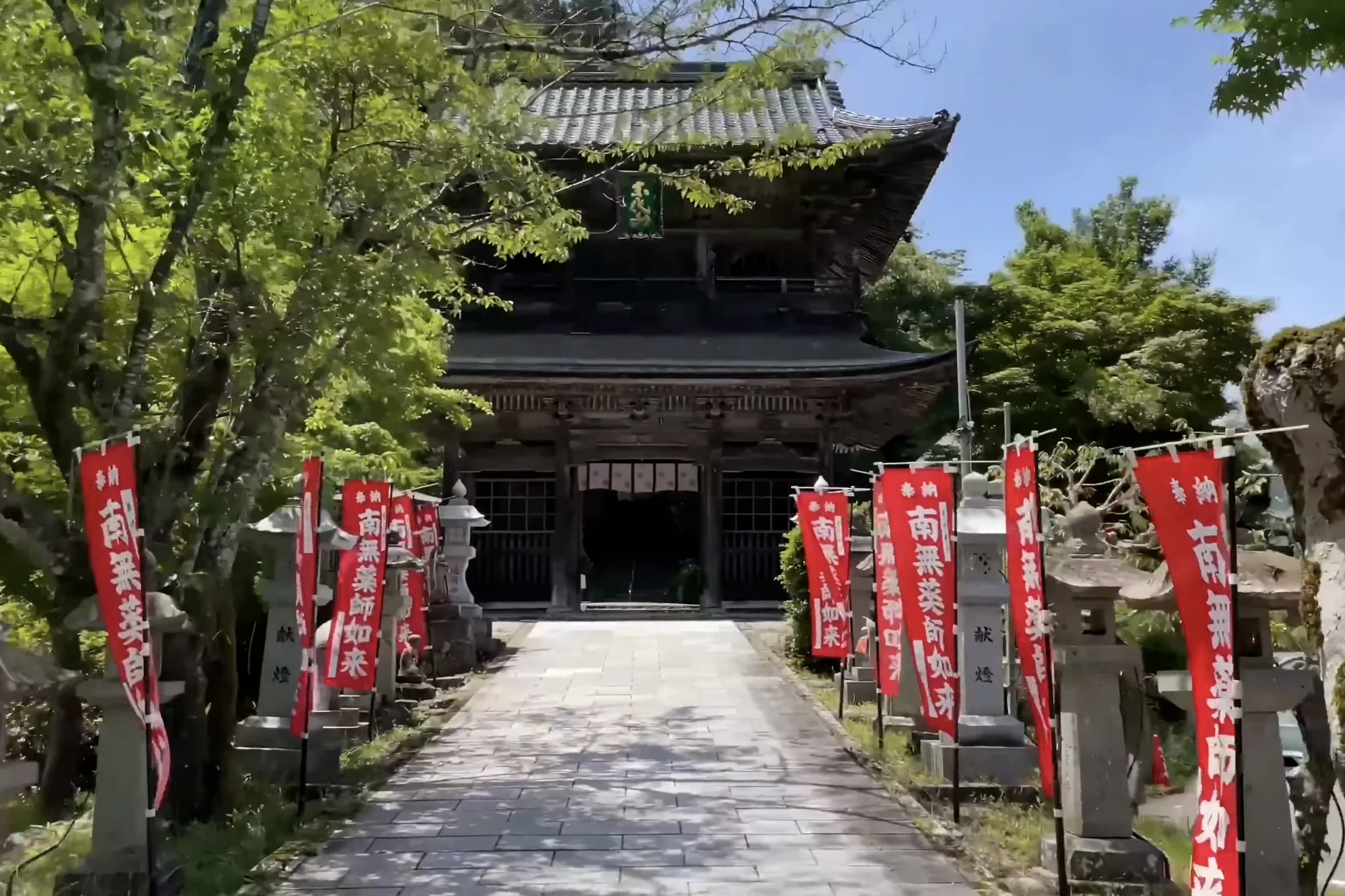
Founding history
Two stories, both published by the town: a monk's thousand days in 717, and a stork that healed first.
The Town and Its Baths
Wearing yukata
Yukata are worn in the street here, not only inside your room. Here is how to tie one and walk in it.

The Town and Its Baths
Etiquette
Wash before you get in, keep the small towel out of the water, and nobody will look at you twice.