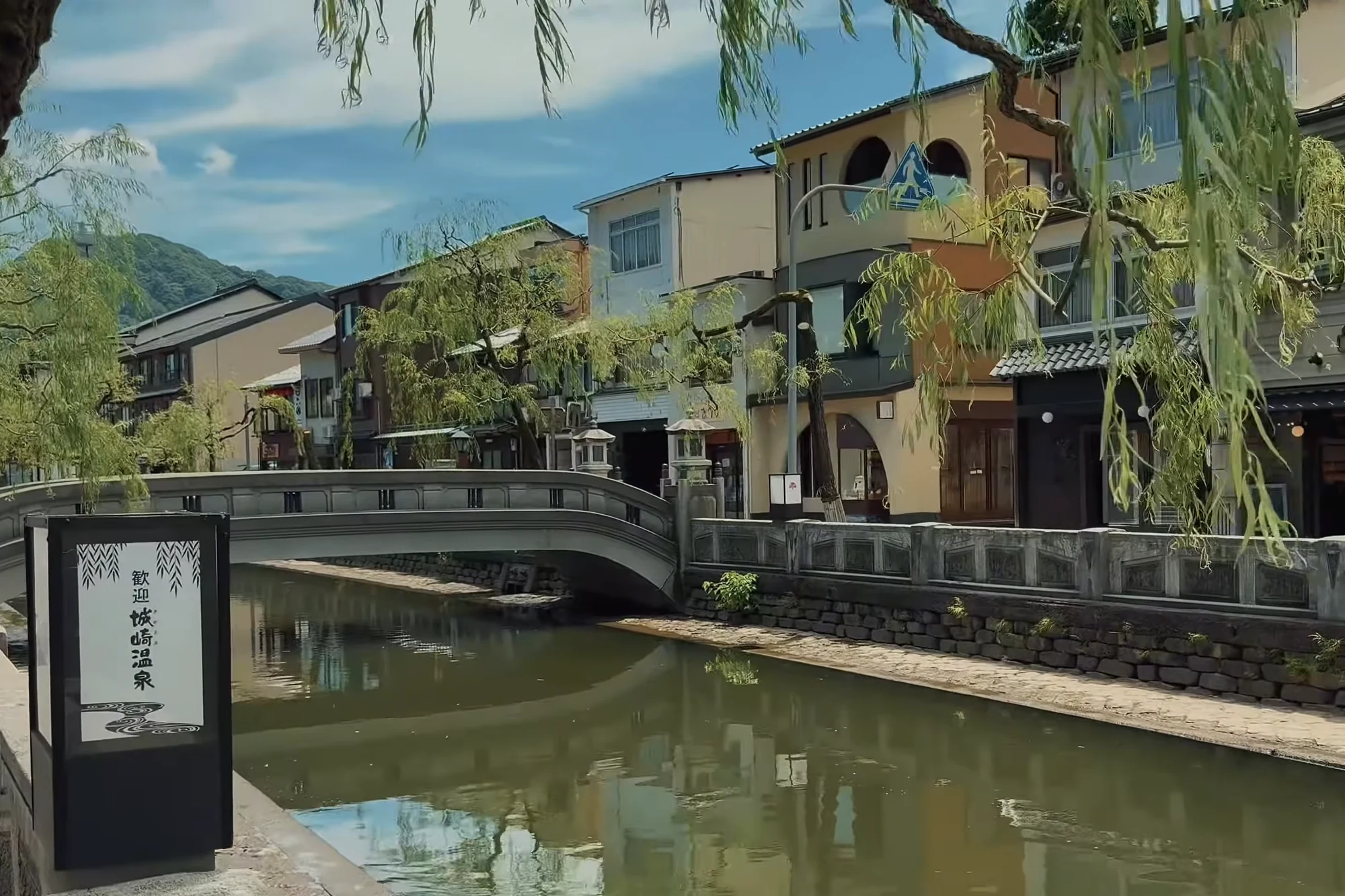
Kansai's two great onsen names sit on opposite answers to the same question: what is a hot-spring town for? Arima — tucked behind Mt. Rokkō, minutes from Kobe — answers: the water. Kinosaki — out on the Sea of Japan side of Hyōgo — answers: the town. Neither answer is wrong, but they build very different days, and travelers keep choosing between them with the wrong map in hand. Here is the honest comparison, category by category. One more orientation before the categories, because it reframes them all: these two towns are not two versions of one product. Arima is a WATER with a town attached — you go to bathe in something singular and leave. Kinosaki is a TOWN with water running through it — you go to live a particular evening, and the water is the medium the evening is conducted in. Every category verdict below falls out of that split, which is why the same traveller can rationally love both and why "which is better" is really "which product are you buying this trip." The comparison also has different stakes by direction: choosing Arima when you wanted Kinosaki costs you the evening you travelled for; choosing Kinosaki when you wanted Arima costs you one singular bath you can still collect on a later half-day. Asymmetric risks deserve asymmetric caution, and this page weighs them accordingly, category by honest category, before the verdict weighs them together.
The waters
Arima wins this one, and it isn't close. Arima is among the oldest documented hot springs in Japan — it appears in the earliest national chronicles — and its two waters are genuinely singular: kinsen, the "gold water," an iron-and-salt brew that comes out of the ground clear and oxidizes to rust-brown opacity, dense with minerals; and ginsen, the "silver water," a clear carbonated-radium spring. Nothing at Kinosaki looks or feels like kinsen — Kinosaki's waters are gentle, clear, sodium-calcium chloride springs, kind to the skin and unremarkable in the tub. Traditional bathing culture credits both towns' waters with the usual rōtenburo catalogue of benefits (the tōji tradition of tekiōshō — conditions the waters are traditionally taken for — covers fatigue, circulation, and skin complaints, with the standard cautions, kinkishō, for acute illness and pregnancy); none of this is medical advice, and the honest summary is that Arima's water is the event while Kinosaki's is the medium. ⚠️ Kinosaki's honest counter is not chemistry but candour and access: the town openly states that all seven of its bathhouses share one municipally distributed spring, posts a 天然温泉配湯の証 (natural hot-spring distribution certificate) at participating doors, and even lets you drink the water — three public 飲泉所 (insenjo, drinking fountains) serve the ~57°C (135°F) source with a published dosage register. Arima's water is the better spectacle; Kinosaki's is the better-documented system. Neither town publishes per-spring analysis certificates for its public houses, incidentally, so both "water wins" rest on classification and reputation rather than lab sheets. ⚠️
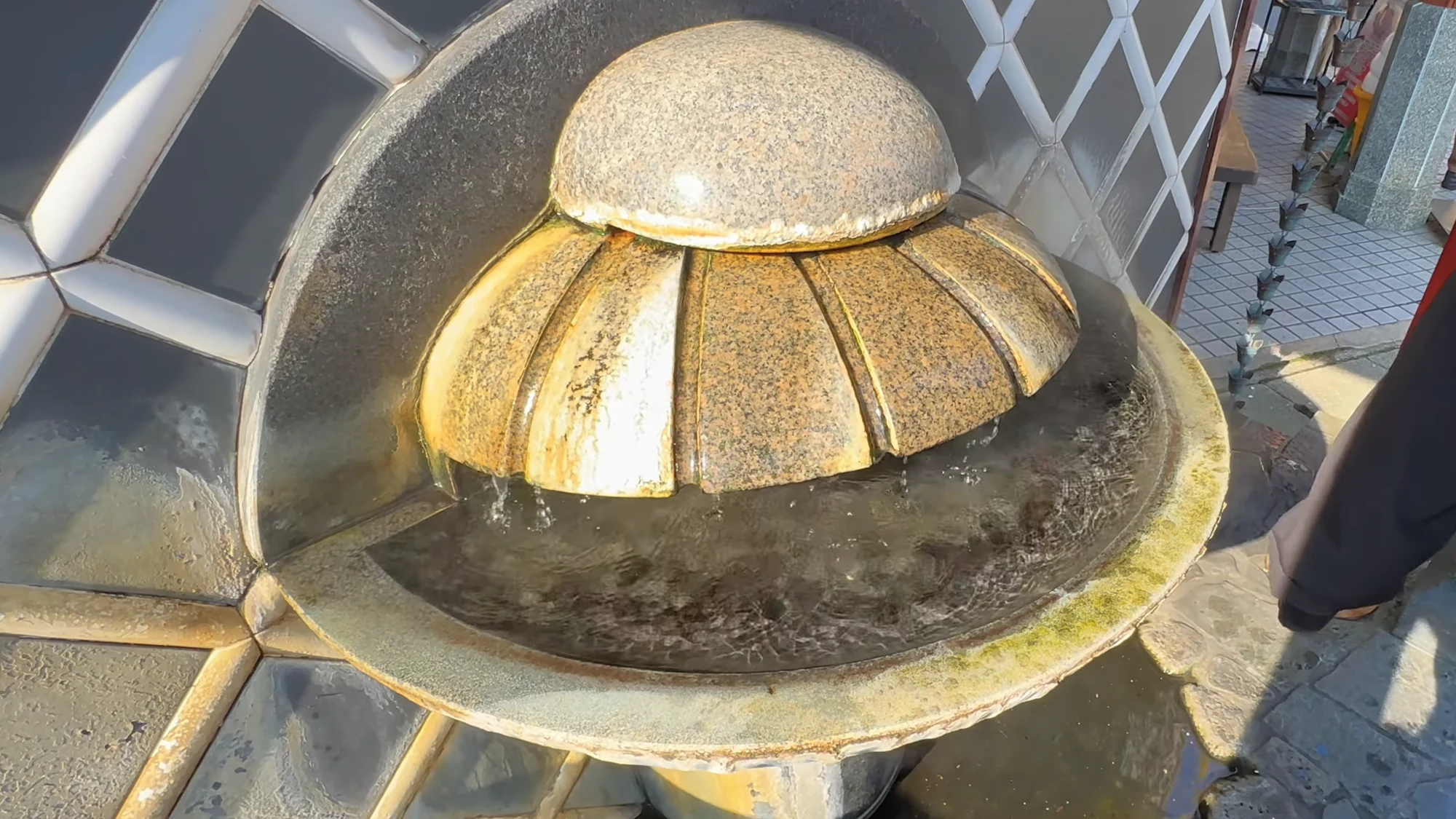
Arima's gold water oxidises to rust-brown. Kinosaki's is a clear sodium-calcium chloride spring. ⚠️
The town
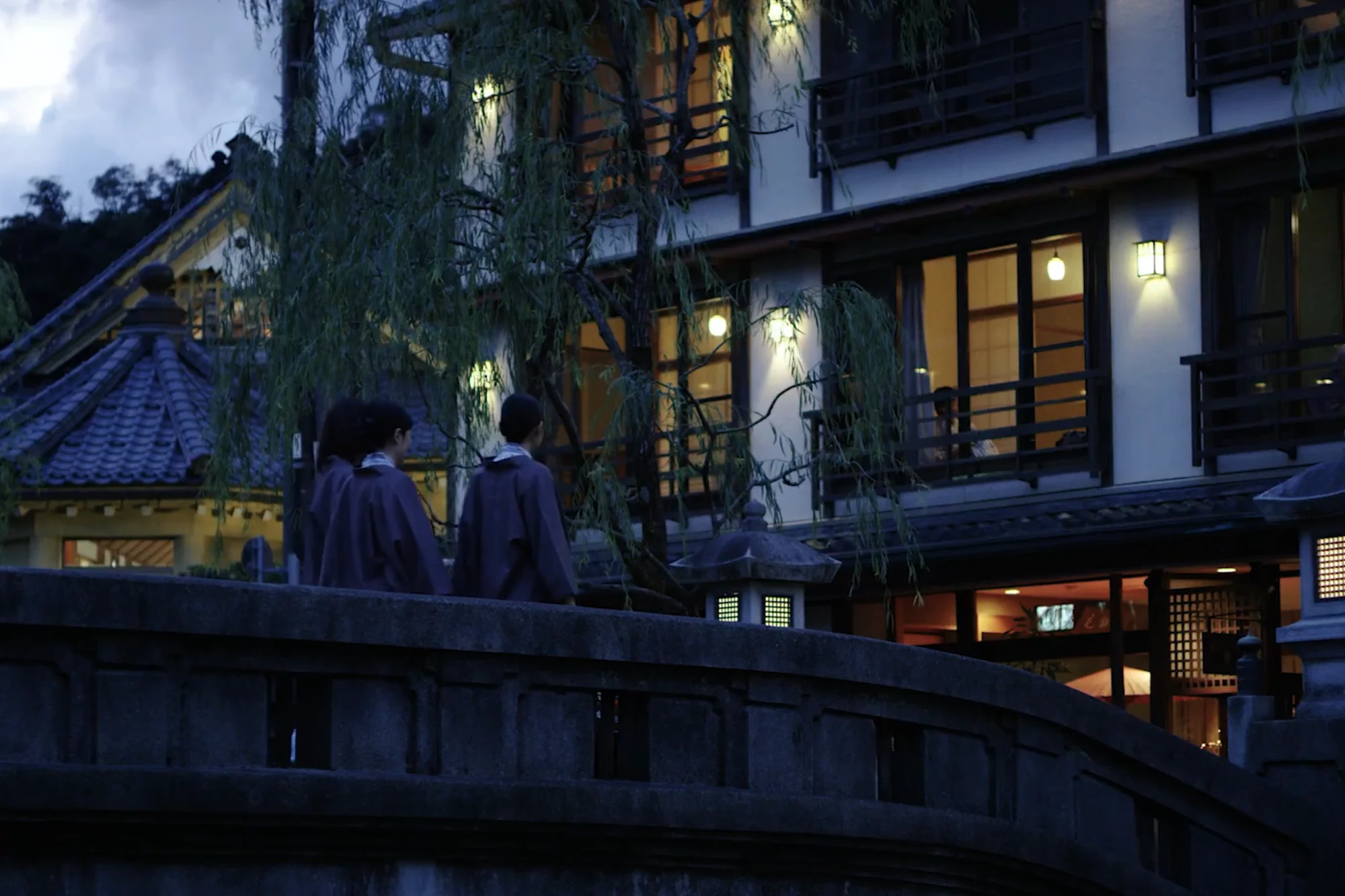
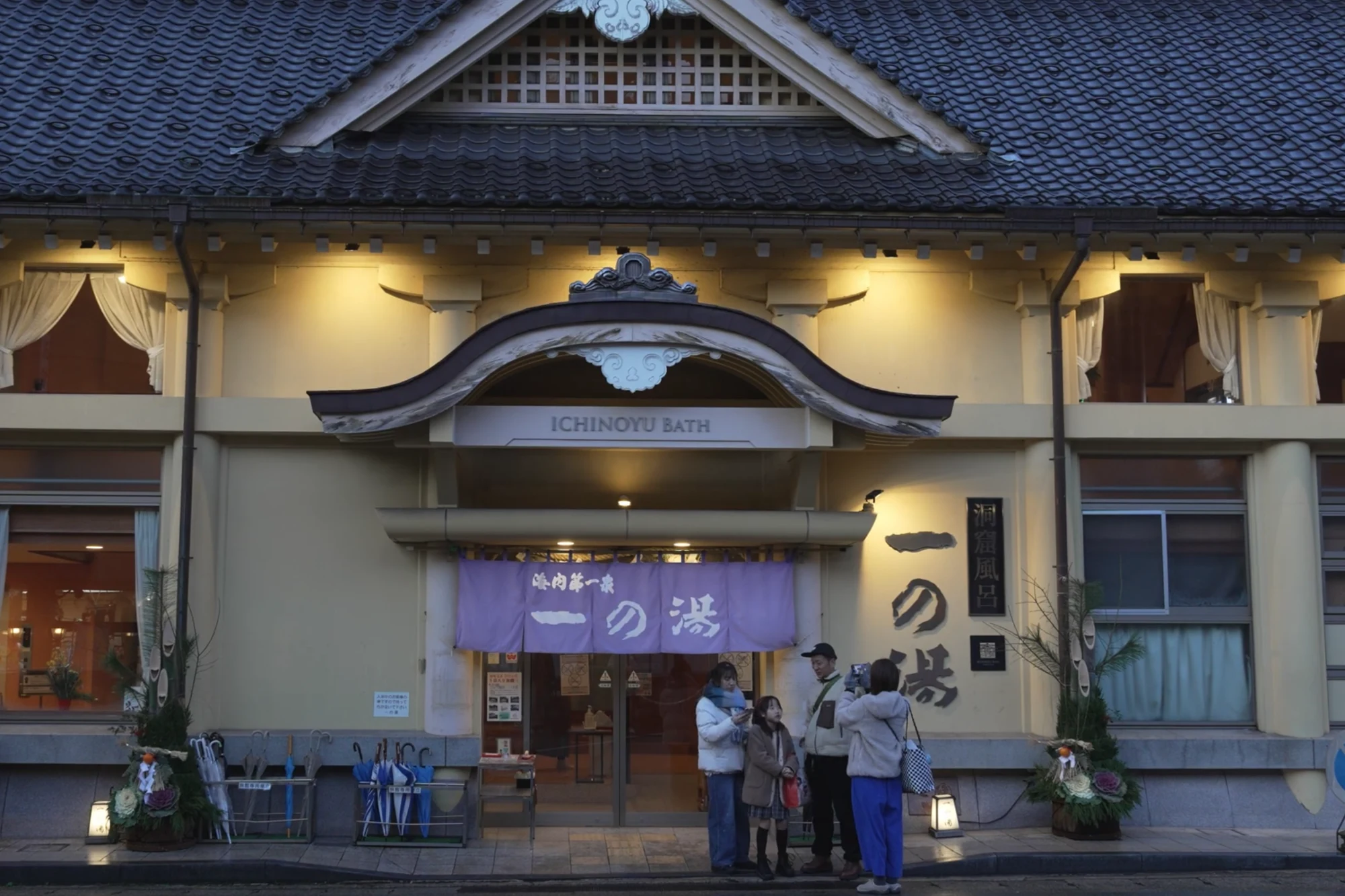
Kinosaki wins this one by more. Kinosaki is a purpose-built piece of theater: one flat kilometer (about half a mile) of canal, stone bridges, willows, seven public bathhouses, and a townwide social contract that everyone — everyone — walks it in yukata and geta from their inn. It is Japan's most complete surviving onsen-town streetscape, and evening on the canal is the reason the town exists on itineraries. Arima, by contrast, is a steep, dense hill town: atmospheric lanes at its old core (and a genuinely charming few blocks they are), but wrapped in mid-rise hotels, tour-bus infrastructure, and day-trip crowds up from Kobe and Osaka. Yukata strolling exists but is not the town's operating system. There are exactly two public bathhouses — Kin no Yu for the gold water, Gin no Yu for the silver — versus Kinosaki's seven. As a place to *be* for eighteen hours, Arima doesn't compete. The structural reason for the gap has a name, and it is the subject of this page's closing section: a municipal ordinance caps Kinosaki's inn baths, which is why its seven public houses stayed the centre of town life while other towns' public baths withered. The evening tide compounds it — Kinosaki's day visitors drain out at dusk exactly as the lantern circuit begins, so the town's best hours are also its calmest. Seven working public bathhouses on one lantern-lit kilometre against two amid the hotels: the count is the townscape argument compressed into a single line of arithmetic.
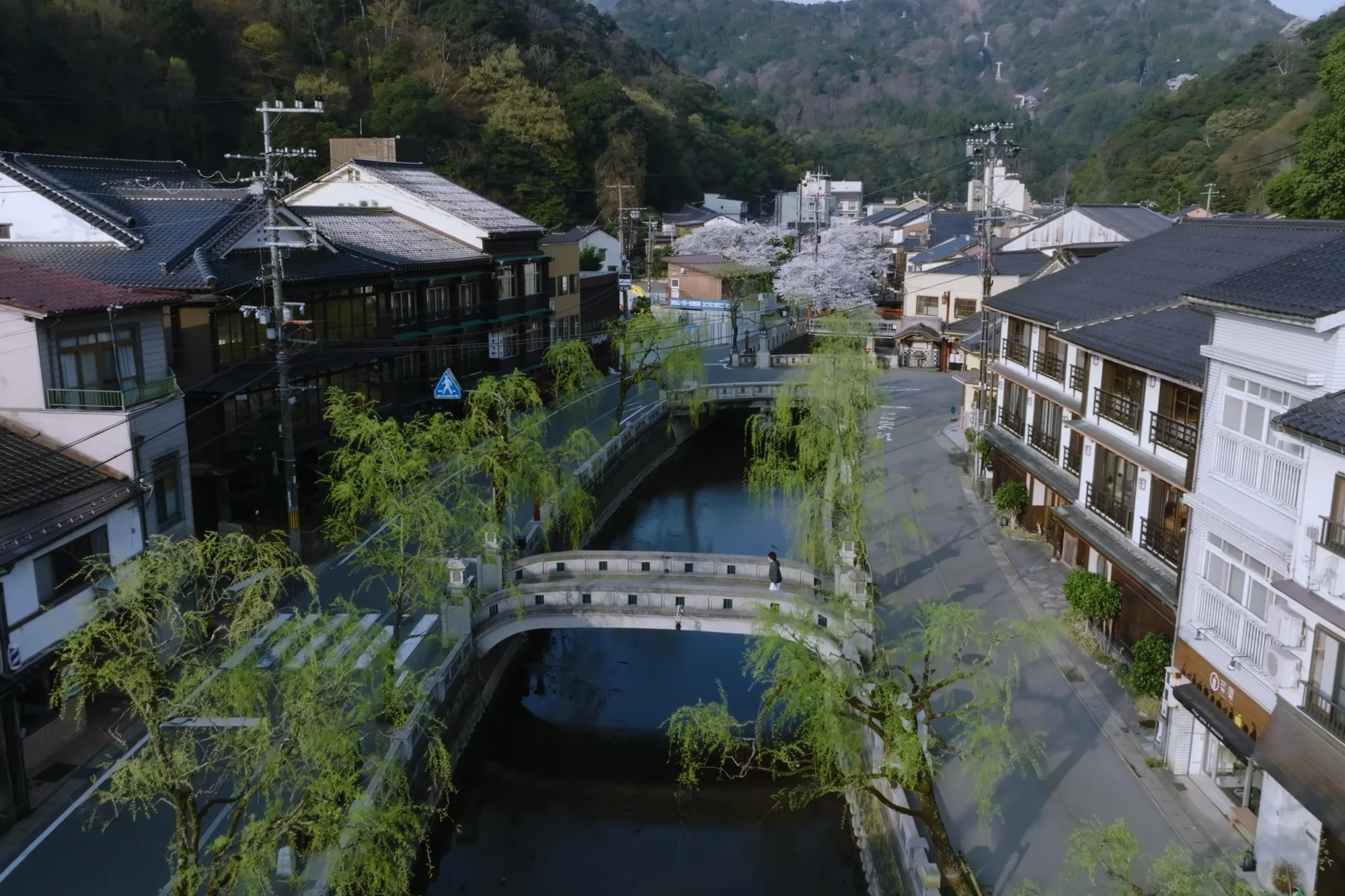
Seven public bathhouses against two. The comparison is not really about water.
Access
Arima, decisively. From Osaka or Kobe, Arima is roughly 30–60 minutes by direct bus or train connections — an effortless half-day. Kinosaki is about 2.5 hours from Osaka or Kyoto on the JR limited express (a reserved seat runs about ¥6,140, roughly US$40–45, each way ⚠️). If your itinerary cannot spare the better part of a day in transit, Arima is the possible one, and that's a legitimate reason to choose it. Two routing notes soften the access gap. Kinosaki pairs naturally with the western Kansai run — from Himeji the same line arrives direct in roughly 1 hour 50 minutes ⚠️, castle in the morning and baths by dusk — so for itineraries already heading west, the 2.5-hour figure from Osaka overstates the real detour. And the do-both plan is genuinely practical because the two towns anchor opposite corners of the same prefecture: Arima as the half-day from the Osaka/Kobe end, Kinosaki as the overnight, in either order, with neither leg wasted. Rail-pass holders should note the asymmetry: the JR expresses to Kinosaki are covered, while Arima's private-line-and-bus approaches largely are not ⚠️ — which quietly flips the cost comparison for pass travellers. For travellers basing in Kyoto rather than Osaka, the calculus tilts slightly further toward Kinosaki: the direct Limited Express Kinosaki leaves from Kyoto itself, while the Arima approach adds a cross-Osaka transfer. Neither is difficult; one is a single seat, booked once, with the gorge scenery included in the ticket. Time your Kyoto departure around the five-a-day timetable and the access category shrinks to a footnote.
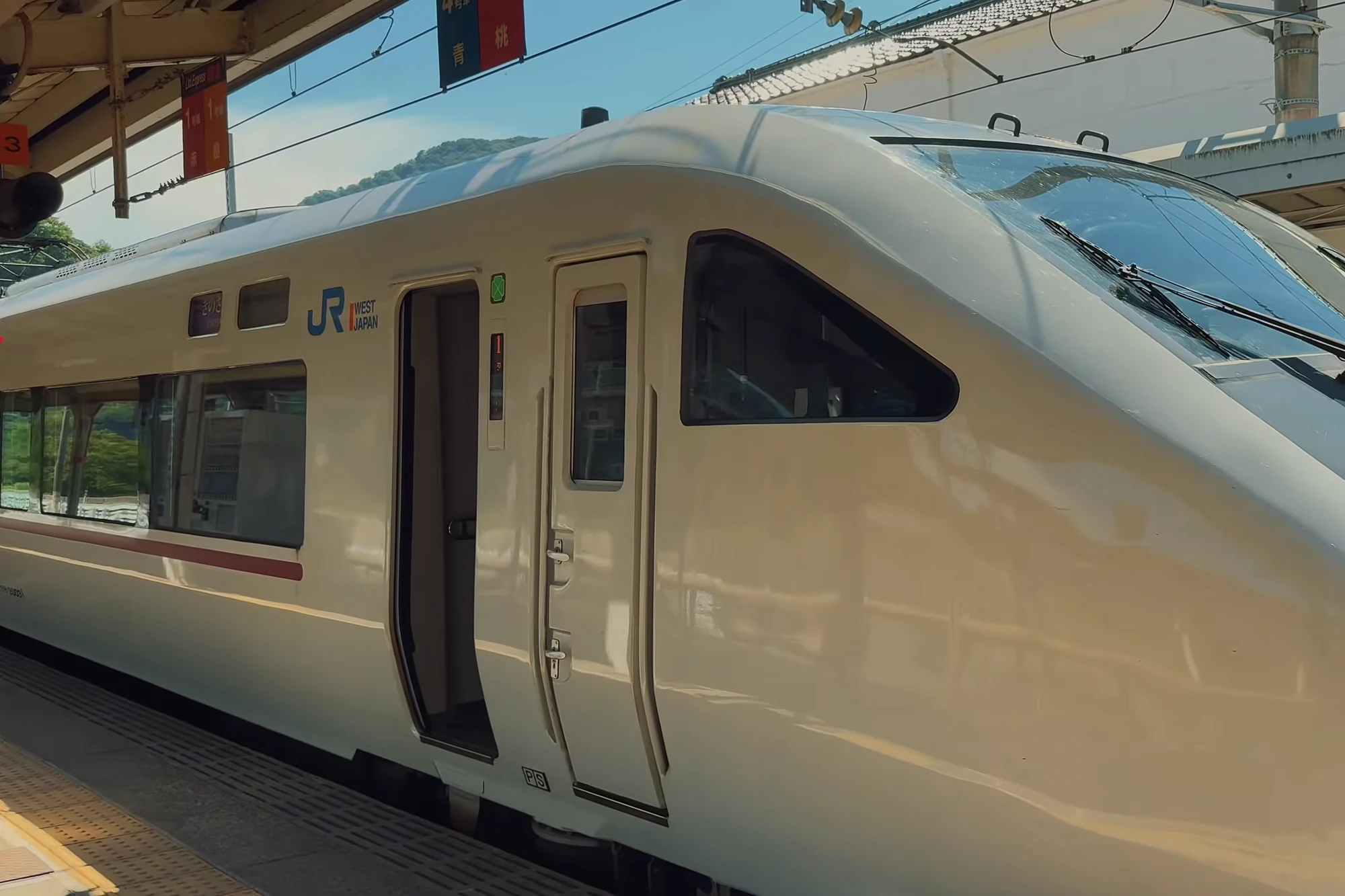
Arima is under an hour from Osaka. Kinosaki is two and a half — and that distance is why it survived intact.
Bathing logistics and tattoos
Kinosaki's seven sotoyu admit day visitors (about ¥800 (about US$5.30) per bath or a ¥1,500 (about US$10) day pass ⚠️) and — rare among storied onsen towns — welcome tattooed bathers across the board, as policy. Arima's two public baths are inexpensive (Kin no Yu around ¥650–800 (about US$4.30–5.30) depending on day, Gin no Yu around ¥550 (about US$3.70), a two-bath ticket about ¥1,200 (about US$8) ⚠️) and are generally reported to admit tattooed bathers as well ⚠️, though Arima's ryokan baths run more conservative. For guaranteed tattoo-friendly bathing at scale, Kinosaki remains the safer plan. A 2026 status note for fairness: two of Kinosaki's seven houses are currently out of service — Kou-no-yu closed for renovation works, reopening expected November 2026, and Satono-yu closed since April 2024 — so today's working comparison is five houses to Arima's two. ⚠️ Re-check both before travel. The texture of the count matters as much as the number: Kinosaki's five span a cave bath, a waterfall rotenburo, a lantern-shaped locals' bath, the town's origin-point spring and its hottest little tub — five different rooms of one house — while Arima's two are one ticket each to its two waters. The association also publishes a live congestion page for its houses, which is the kind of infrastructure a town builds only when public bathing is the whole point. Families should note the operational difference too: Kinosaki's pass covers children at half rate with the same freedom of movement, while Arima's per-bath tickets price a family's multi-bath curiosity door by door, child by child, curiosity by curiosity.
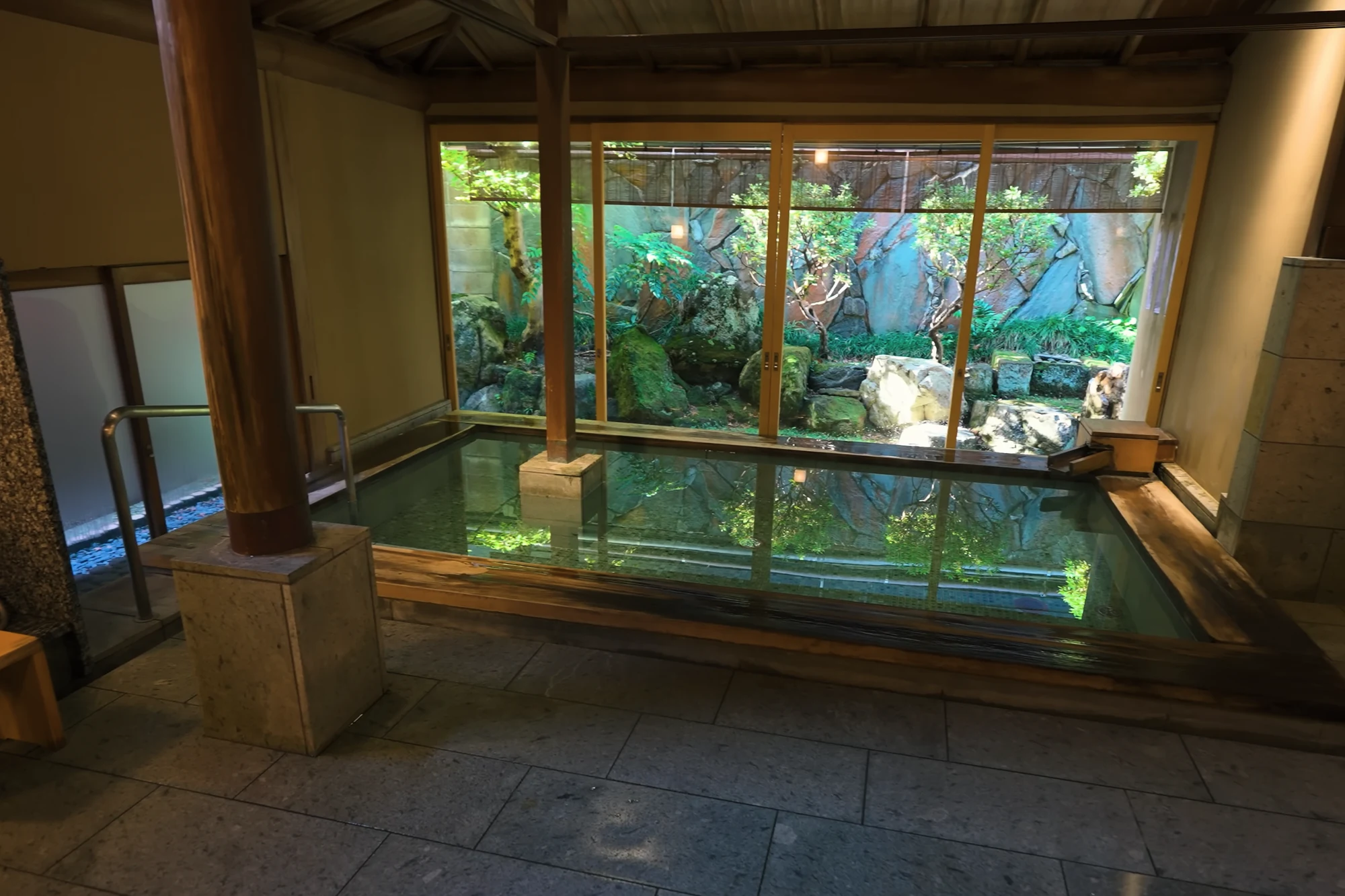
All seven Kinosaki houses admit tattoos as policy. Arima's two do not make the same guarantee. ⚠️
Food
Kinosaki in winter holds the trump: matsuba crab season, November 6 to about late March, when the town's kitchens run the Sea of Japan's best table. Arima counters with proximity to Kobe beef country and its famous carbonated-water senbei crackers — pleasant, not a pilgrimage. Outside crab season this category tightens; inside it, Kinosaki is playing a different sport. The Kinosaki trump deserves its dates and its paperwork: 松葉ガニ (Matsuba-gani) season runs November 6 to March 20 by fishery regulation, the local catch lands at Tsuiyama at the mouth of the town's own river, and tagged claws name the port — provenance printed on the animal. ⚠️ Verify dates against current notices. The female sekogani runs her shorter window to December 31, and the season closes with free crab zōsui and barrel sake at the station over the final weekend (2026 instance verified). Arima's food story is genuinely pleasant — Kobe beef country adjacency and its carbonated-water senbei — but it is a side-dish story. Reserve a crab plan and the food category also becomes the booking category: in season, dinner is attached to the room, which is why the crab argument and the accommodation argument land together on Kinosaki's side of the ledger from November through March — one booking, both arguments settled. Arima's counter-season, if it has one, is high summer, when its shaded hill lanes hold their own.
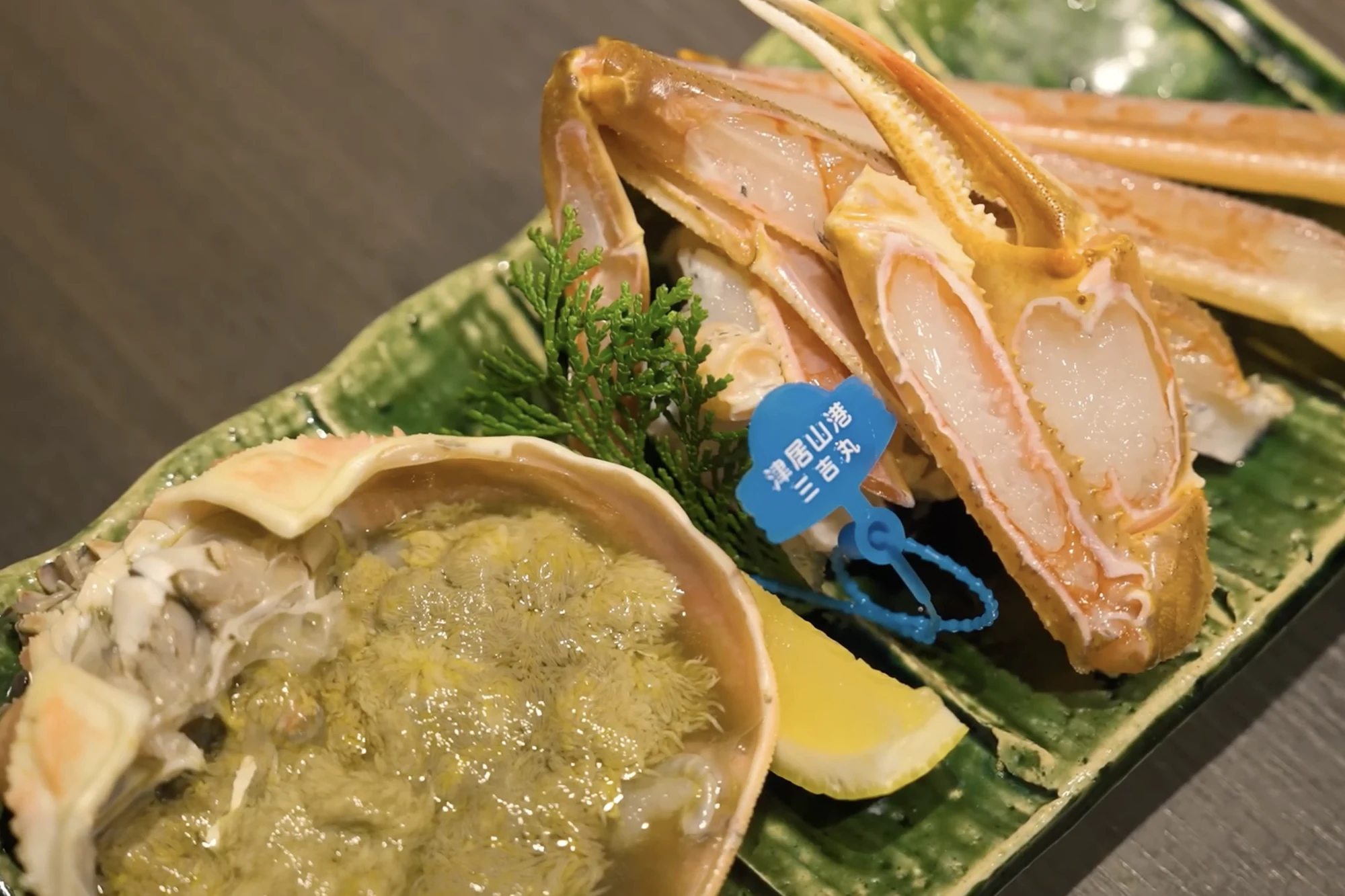
Kinosaki eats from the Sea of Japan an hour away. Arima eats from Kobe.
Cost and crowds
Arima's fame plus Kobe-adjacency pushes its classic ryokan into some of Kansai's steepest rates, and its daytime crowds are the heaviest of any onsen town in the region — weekends especially. Kinosaki spreads across more inns at more price points (see our budget and luxury guides), and its crowd rhythm inverts: busy at midday, calm by dusk when the day-trippers leave and the town reverts to its guests. Value verdict: Kinosaki, unless you're buying Arima's water specifically. Price the two towns in their own units and the comparison sharpens. Kinosaki quotes per person with kaiseki dinner and breakfast — a bundled evening — and its ordinance guarantees the headline bathing is free at every price tier, so its budget floor (roughly ¥12,000–15,000 / about US$80–100 per person with meals) buys the complete experience. Arima's crowd curve also runs opposite to Kinosaki's: heaviest exactly when you are there, at midday, because the town is built for day-trippers. The one Arima value play is the public-bath-only visit — under ¥1,500 (about US$10) soaks Kansai's most dramatic water — which is precisely the excursion this page recommends it for. The honest summary of the money: for a bathing visit the towns are comparable and cheap; for an overnight, Kinosaki's bundled night simply buys more — bed, kaiseki, breakfast and unlimited bathing in one per-person line that Arima's unbundled equivalent, at its steeper base rates, struggles to match.
The verdict
One night to spend on an onsen town: Kinosaki, and it isn't a difficult call. The overnight ritual — seven baths, yukata, kaiseki, the canal at dusk — is the complete experience Arima doesn't offer.
Half a day from Osaka or Kobe: Arima. Soak in kinsen at Kin no Yu, walk the old lanes, eat a carbonated senbei, done — a legitimately excellent excursion Kinosaki's distance can't match.
Serious bathers chasing distinctive waters: Arima's kinsen is the singular tub in Kansai. Go once, even if the town around it underwhelms.
Winter travelers who eat: Kinosaki, November 6 to late March. Book early.
Do both if the itinerary allows — they don't duplicate each other, which is the entire point of this page. One seasonal override outranks the whole rubric: in crab season a first-time visitor choosing between the two should not deliberate. And one pairing note for families and couples split on priorities: Arima's compact two-bath visit suits short attention spans and tight schedules; Kinosaki's evening asks for and rewards surrender — choose the one whose demands match your travellers, not just your route. Last tiebreaker, for the traveller who will genuinely only ever do one: pick by what you will still be describing in five years. Arima survivors describe a bath; Kinosaki survivors describe an evening. Both are worth having, but only one of them is a story with you in it, in cotton, on a bridge, with the next bath already chosen and the lanterns doing the lighting.
The structural difference: one of these towns passed a law
Underneath every category above sits a single divergence of governance, and it is the honest explanation of why the two towns feel so different. Kinosaki passed a municipal ordinance capping the size of its inns' private baths, so no ryokan could ever pull bathing indoors — the seven public houses kept the whole town's bathers, the street kept its evening, and the yukata stayed street clothing because the bath stayed on the street. Arima never bound itself that way: its inns built grand in-house baths, its guests bathed indoors, and its two surviving public houses became attractions to visit rather than the town's living room. Same country, same century, same pressures — one legal choice apart. The often-quoted remoteness paradox is the other half of the story. Arima's convenience to Osaka and Kobe made it valuable enough to redevelop, and mid-rise hotels followed the money upward; Kinosaki's 2.5-hour distance kept the land cheap enough to preserve, and the 1925 earthquake reconstruction — bathhouses first, townscape framework complete by 1935 — rebuilt it deliberately as the bathing town it remains. Convenience industrialised one skyline; remoteness plus law conserved the other. For the traveller, the practical translation is the one this page opened with. Arima is what a famous onsen becomes when the market decides: superb water, private comfort, a visitable heritage core. Kinosaki is what one becomes when a town decides otherwise, in writing, and holds the line for a century. Neither is a museum piece — both are working towns — but only one of them will hand you a pass, dress you in cotton, and give you its streets for the evening. That is not a difference in charm. It is a difference in constitution.
One of these towns passed a law capping inn baths. That is the whole structural difference.
Tips
One night to spend: Kinosaki, and it isn't a difficult call.
Half a day from Osaka or Kobe: Arima — kinsen at Kin no Yu, the old lanes, done.
Serious bathers: go to Arima once for the kinsen even if the town underwhelms.
Do both if the itinerary allows — they anchor opposite sides of Hyōgo and don't duplicate each other.

Verified by The Japan Onsen Society
Show all sources
Drafted July 2, 2026; the ordinance framing, closures, event dates and drinking-fountain facts verified September 22, 2026. Primary Japanese sources (Kinosaki side):
外湯めぐり発祥の地!温泉天国★城崎温泉 — 豊岡市観光公式サイト (Toyooka City Official Tourism Site — the ordinance and sotoyu system): [https://toyooka-tourism.com/recommend/onsen/kinosaki_sotoyu/](https://toyooka-tourism.com/recommend/onsen/kinosaki_sotoyu/)
外湯 — 城崎温泉観光協会 (Kinosaki Onsen Tourism Association — prices, closures, shared spring): [https://kinosaki-spa.gr.jp/about/spa/](https://kinosaki-spa.gr.jp/about/spa/)
城崎温泉の【飲泉】 — 豊岡市観光公式サイト (drinking fountains, ~57°C): [https://toyooka-tourism.com/recommend/onsen/kinosaki_insen/](https://toyooka-tourism.com/recommend/onsen/kinosaki_insen/)
Related guides
Plan Your Visit
Kinosaki complete guide
Seven public bathhouses, one shared spring, and a law that keeps them the centre of town. Start here.
Plan Your Visit
Worth it?
A day trip shows you the seven bathhouses. A night buys the yukata, the streets and the morning after.
Plan Your Visit
The 7 bathhouses
Same water in all seven houses. What changes is the room, the story, and the blessing on the door.
Plan Your Visit
Crab season
Matsuba crab season opens on November 6 and runs to March. It is why winter rooms disappear early.
Plan Your Visit
Tattoo-friendly
All seven public baths admit tattoos, no cover-up required. Almost nowhere else in Japan does this.