How eating works in this town
Kinosaki's food scene has an architecture, and the same law built it that built everything else here. Because the ordinance keeps guests walking between public baths, the town's eating splits into two registers: the seated, ceremonial register of the inn — kaiseki at an agreed hour, the kitchen's whole argument for your room rate — and the walking register of the main street, where counters sell hand food to people in yukata between soaks. There is a third, seasonal register: the crab restaurants that serve day visitors and lunch crowds the tagged Matsuba article without the overnight commitment. The practical consequence is that "where should we eat dinner?" is usually answered at booking, not in town. Most rooms sell with dinner and breakfast attached, the kitchens plan against confirmed covers days ahead, and the independent evening options — good as the daytime street is — thin dramatically once the inns begin serving around 18:00 (6 pm). Book dinner-inclusive unless you have a specific researched alternative, and treat the street as what it is: the world's most pleasant snack corridor, not a substitute supper. Read this page in that order. The kaiseki section covers the main event and how to shape it; the crab section points to the deep file; the street section maps the grazing; the beef and sake sections cover the other local flags; and the budget section shows how to unbundle the whole system when the famous-house dinner is not in the plan. Every price and vendor claim here is category-level and seasonal — ⚠️ verify near travel — but the structure is stable, because the law that built it is.
Kaiseki at your inn: the main event
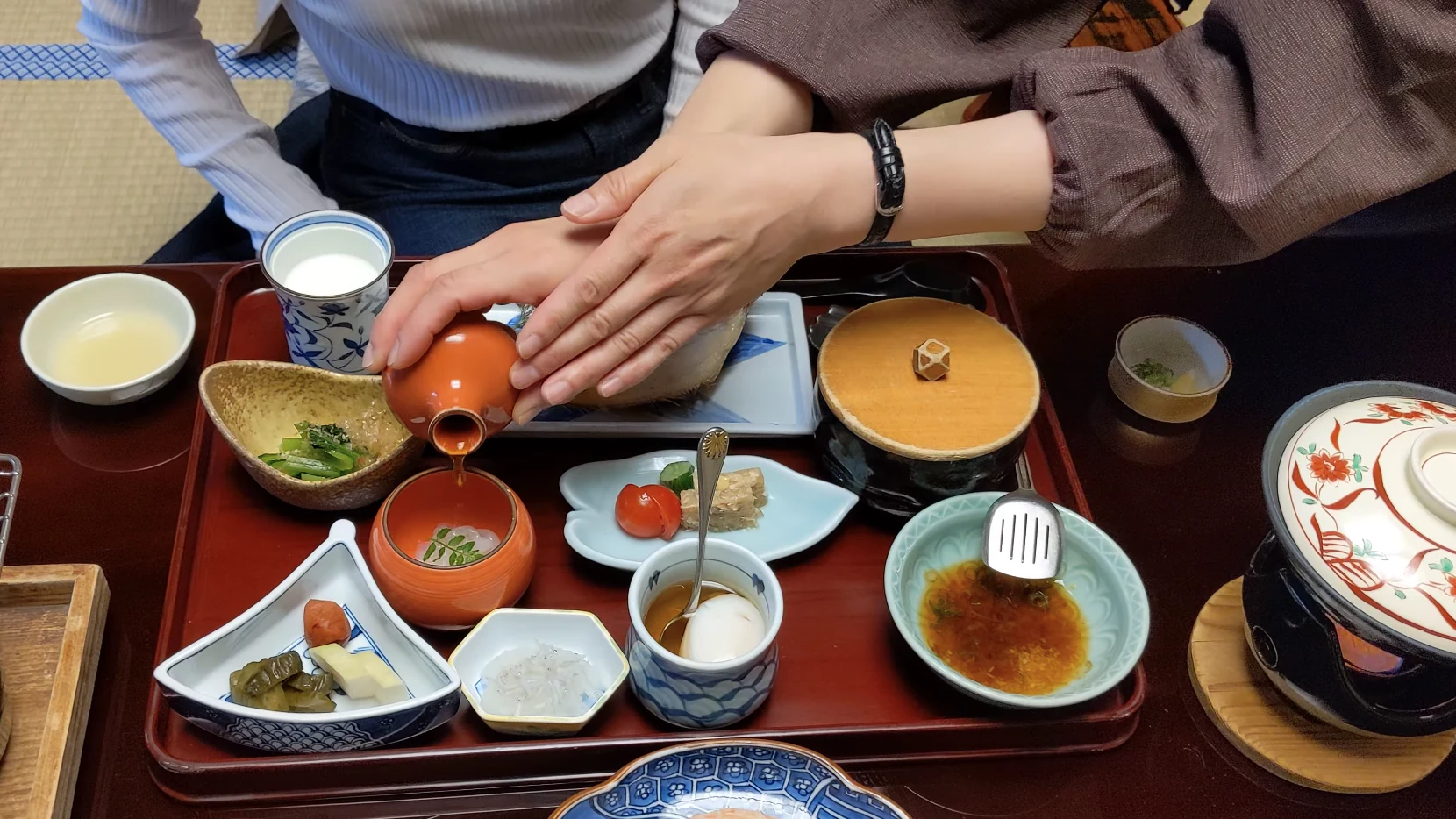
The inn dinner is a procession, not a meal: eight to a dozen small courses arriving in sequence at your agreed hour, built from the season — crab in winter, spring vegetables and firmer fish after March, summer's lighter register, autumn's 松茸 (matsutake, pine mushroom) and mountain vegetables. It runs a genuine ninety minutes, it is priced into the room, and it is the reason this site keeps repeating that a Kinosaki rate is dinner-and-lodging, not a hotel room. The correct posture is unhurried surrender: be roughly on time, eat at leisure, and let the kitchen drive. Two decisions shape the experience more than the inn's tier does. First, the hour: the earliest sitting your inn offers buys the longest lantern evening afterward, which matters most in winter when the crab courses run long and the bathhouses close at 23:00 (11 pm). Second, the plan: kitchens sell tiered menus — in crab season, tiered literally by how much crab reaches the table — and the plan text, not the room photos, is where the dinner is actually chosen. Dietary needs are a booking-message matter, never a table matter: kaiseki is planned days ahead, one clear written sentence per restriction works in any language, and true vegetarian or vegan service exists only at inns that explicitly offer it — 出汁 (dashi, fish stock) is otherwise pervasive down to dishes that look plant-based. ⚠️ Category-level; per-inn menus vary. Breakfast follows the same contract in miniature: an agreed hour, a laid spread, grilled fish and rice done properly, and a politely cold reception for the guest who drifts in forty minutes late.
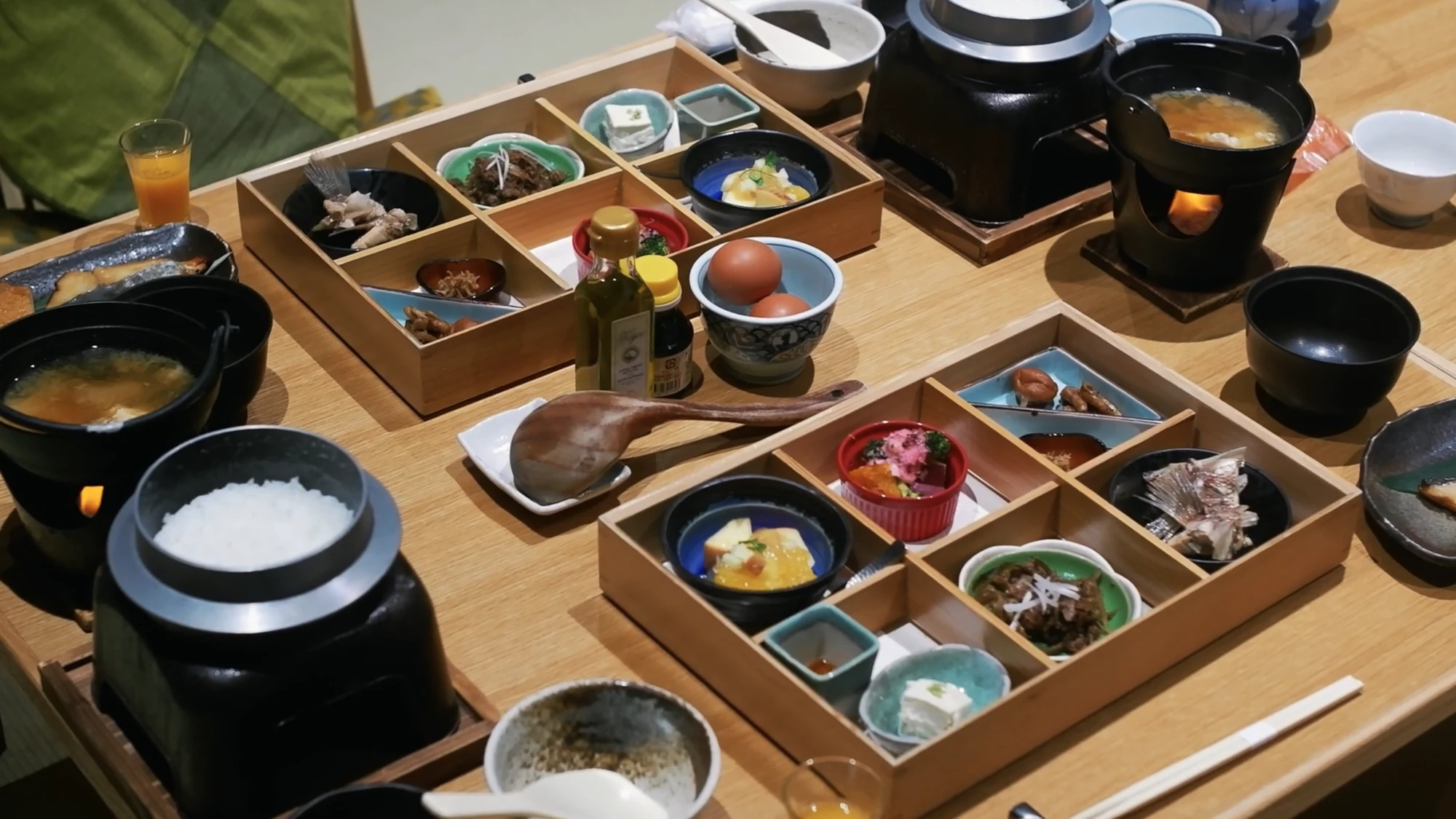
Dinner is early by design; breakfast is served after the morning bath, not before it.
Crab, briefly — the deep file is elsewhere
No Kinosaki food page can skip the crab, but this one defers the depth to our dedicated crab-season guide, which carries the tag system, the calendar and the booking play in full. The load-bearing facts: 松葉ガニ (Matsuba-gani, "pine-needle crab"), the male snow crab of this coast, runs November 6 to March 20 by fishery regulation; the female sekogani runs her roe-prized window to December 31; local landings at Tsuiyama — the port at the mouth of the town's own river — carry claw tags naming the harbor, which is the provenance guarantee the menus trade on. ⚠️ Dates and tag details to current notices. For dinner planning the crab compresses to one rule: decide crab first, room second. The crab plan determines the winter price tier, the booking lead and often the inn itself, and kitchens buy at auction against confirmed covers — the plan must be attached at booking, not requested at the door. For lunch, the town's restaurants serve crab sets and dons in season at a fraction of kaiseki prices, and a tagged crab dish added to a standard dinner is the honest budget version of the season. The one warning worth repeating from the deep file: not every "crab plan" is local Matsuba — imported and frozen zuwai fill out cheaper menus, legally and openly. Read for a port name or tag reference, ask when unsure, and let the suspiciously cheap all-you-can-eat go to someone else. In a town that tags its crabs like passports, verifying dinner takes thirty seconds.
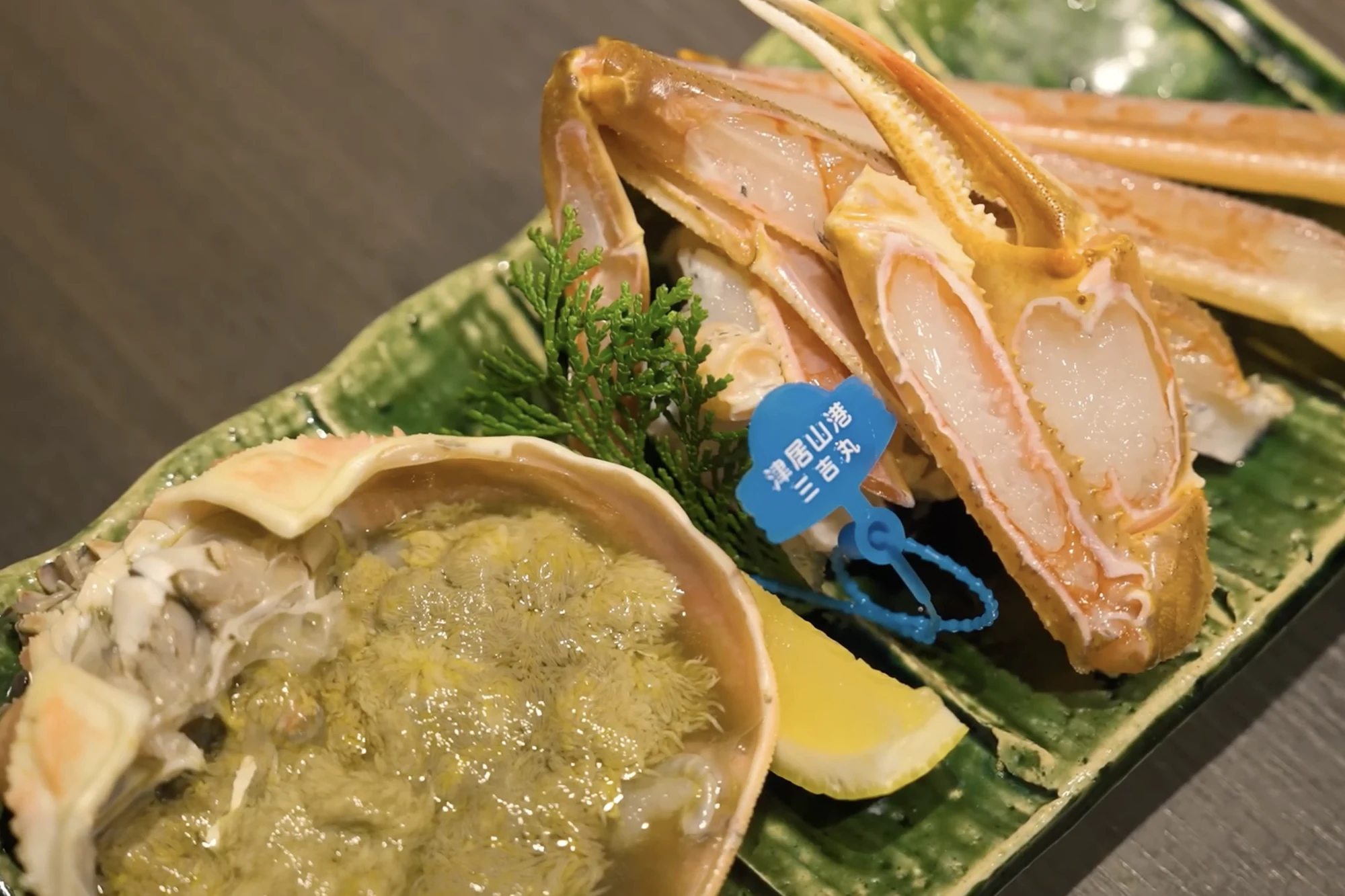
Matsuba crab runs November 6 to about March 20; the deep file is in our crab-season guide. ⚠️
The snack street, counter by counter
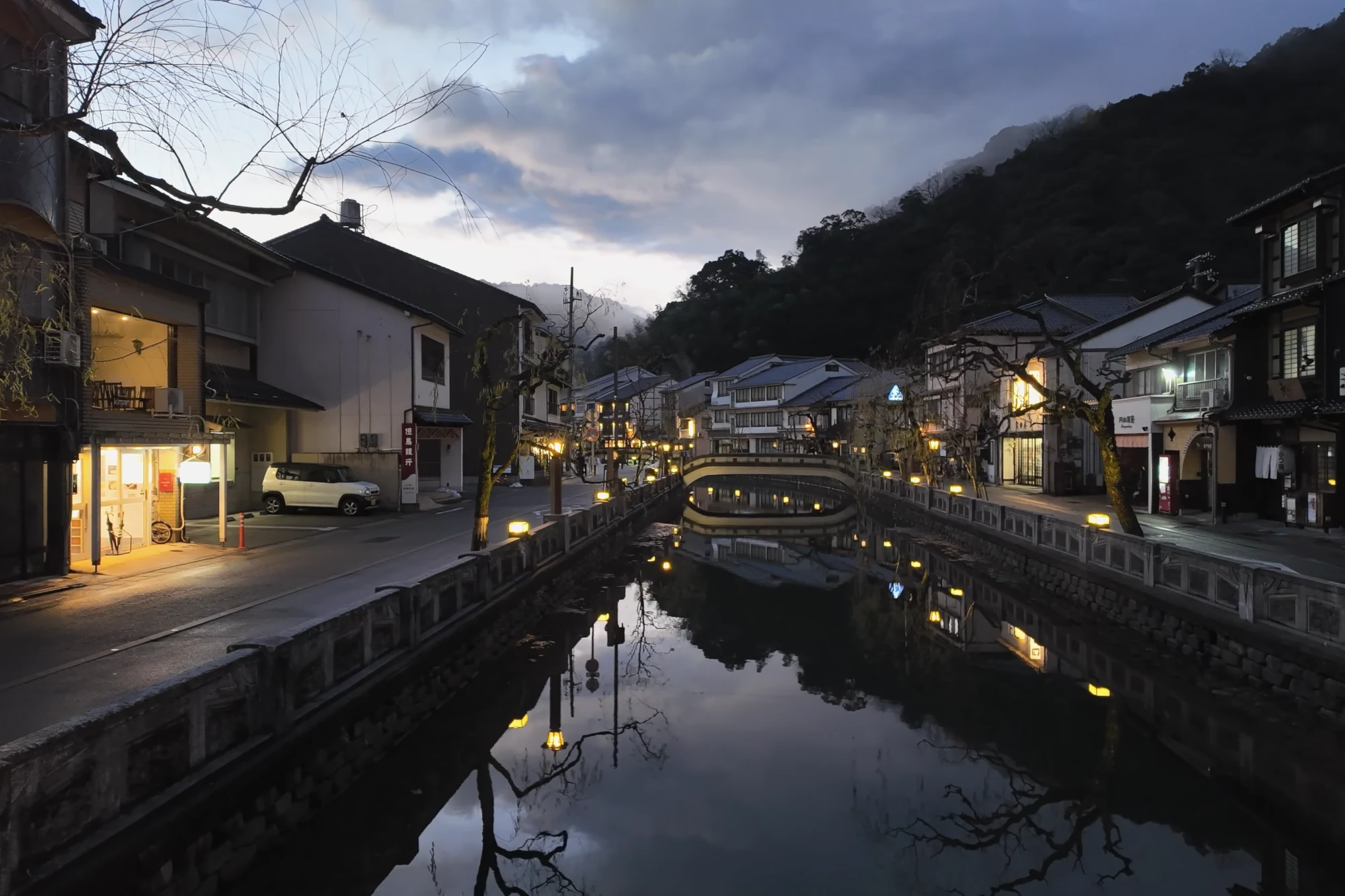
Between baths, the main street runs a standing buffet, and grazing it in yukata is structurally encouraged — the ordinance walks every guest past every counter several times a night, and the counters evolved to feed exactly that traffic. The seasonal register (⚠️ categories only; vendors change): crab croquettes and crab buns own the cold months; soft-serve and chilled cucumbers take the summer shift; sake by the cup at the brewery-linked shops and 但馬牛 (Tajima-gyū, Tajima beef) buns work year-round; pudding in jars and the coffee stands fill the gaps. The one counter with its own ritual is the onsen-egg station: buy the raw eggs, lower them into the source basin, and wait out the cooking time with the ~57°C (135°F) spring water doing the work — the town's water preparing the town's snack, which is as close as street food gets to a thesis statement. Timing the graze matters more than choosing it: the golden window is the early evening gap after the day visitors drain out and before your own dinner sitting, when the counters are calm and the appetite is earned. Etiquette is short and visible: eat standing near the shop or on its bench rather than strolling with food, carry small cash because the tiniest counters may not take cards, and count the graze as part of the circuit's pacing — the town's own answer to seven baths' worth of appetite. Nothing on the street will ruin dinner; everything on it was portioned by people who know exactly what you booked for 18:30 (6:30 pm).
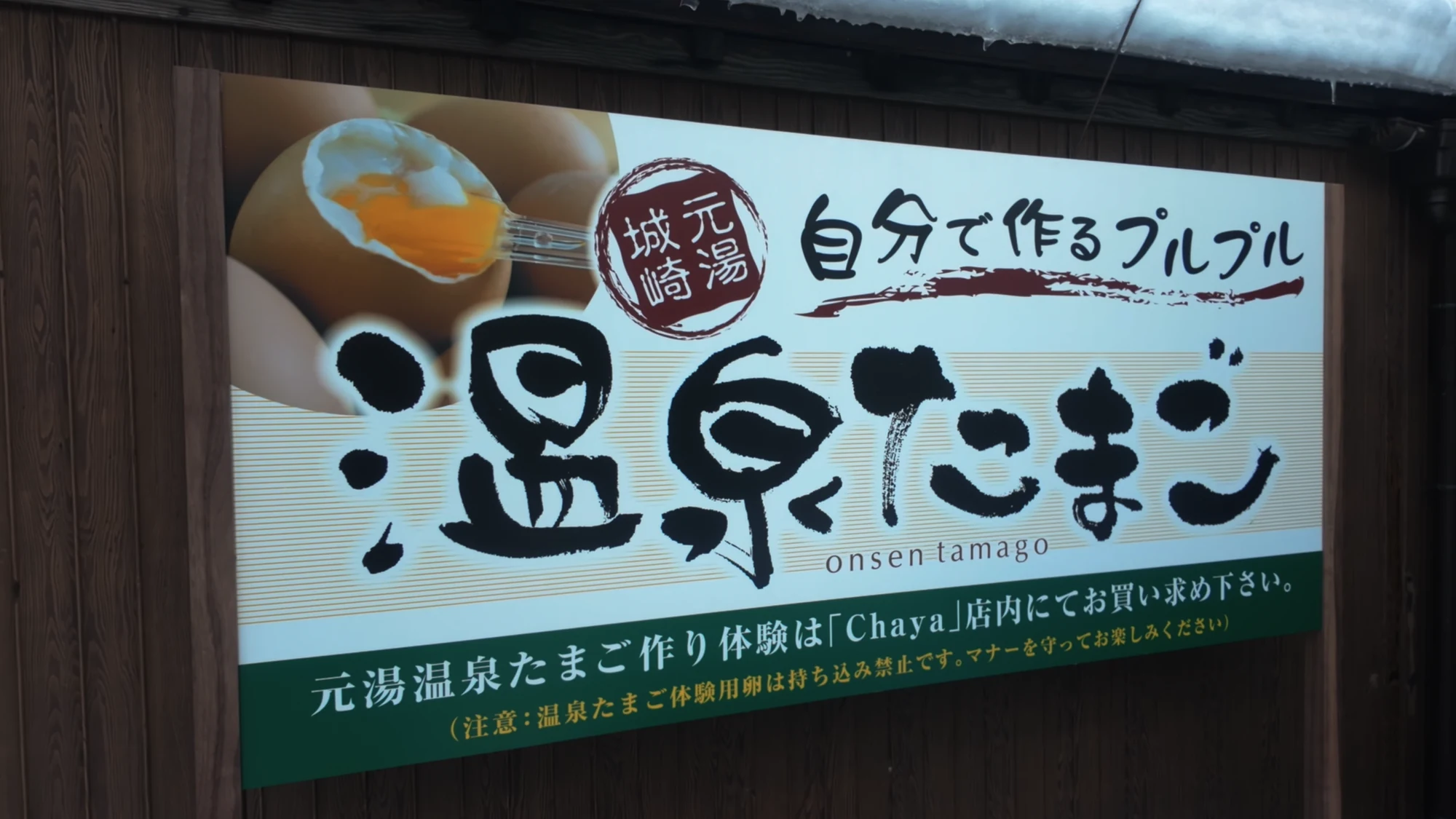
Buy the eggs at the shop beside the vent; the boiling is yours to do.
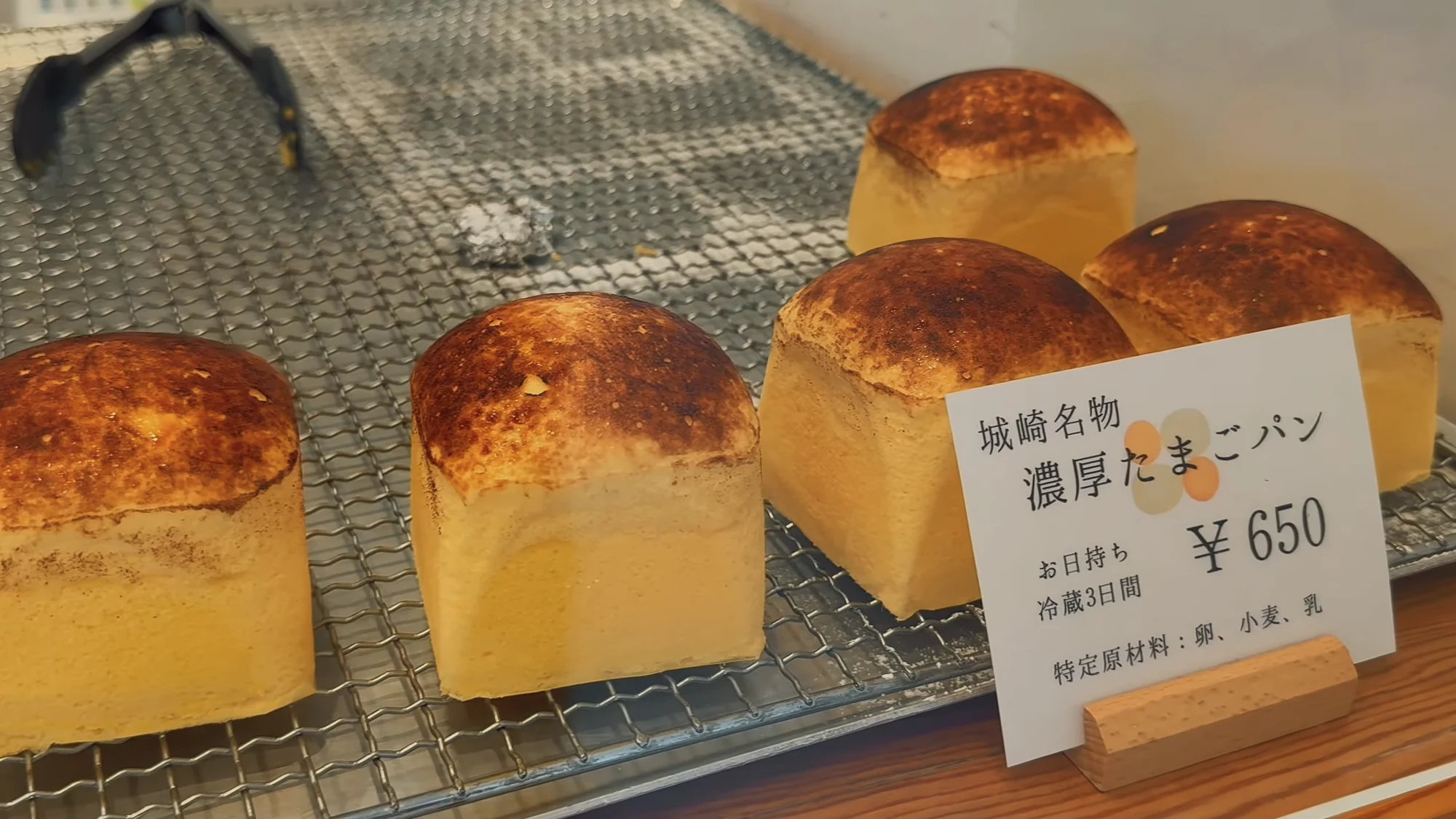
The snack street runs on soft-serve, croquettes, egg bread and the onsen egg you boil yourself. ⚠️
Tajima beef: the other local flag
Kinosaki sits in Tajima, and 但馬牛 (Tajima-gyū) is the region's quiet claim to the top of Japan's beef hierarchy: the ancestral bloodline from which Kobe beef is certified — Kobe is, formally, Tajima cattle meeting the Kobe brand's criteria — which makes eating it here a trip to the source rather than the showroom. ⚠️ Phrase-check the certification relationship at publish. On Kinosaki tables it appears as a kaiseki course (often the non-crab menu's centrepiece), as the street's beef buns, and on the specialty plans some inns run outside crab season. Its practical role in trip planning is as the answer to two questions. For the April-to-October visitor wondering what replaces the crab: this, and the answer is not a consolation prize — a Tajima beef course in a quiet green-season dining room is many travellers' best plate of the trip. And for the mixed party where someone cannot or will not eat crab in season: most kitchens offer a beef alternative within the same dinner service, requested — like everything — in writing at booking. ⚠️ Availability per inn. The honest calibration: this is not a beef-pilgrimage destination the way the crab months are a crab pilgrimage, and the town does not pretend otherwise. It is the region's excellent everyday flag, served close to home at closer-to-home prices, and the traveller who orders it here can afterward say something few Kobe-beef diners can: they ate it in Tajima, where the cattle and the name both come from — a provenance story told at the source, in the dining room of an inn a short walk from the pastures that wrote it.
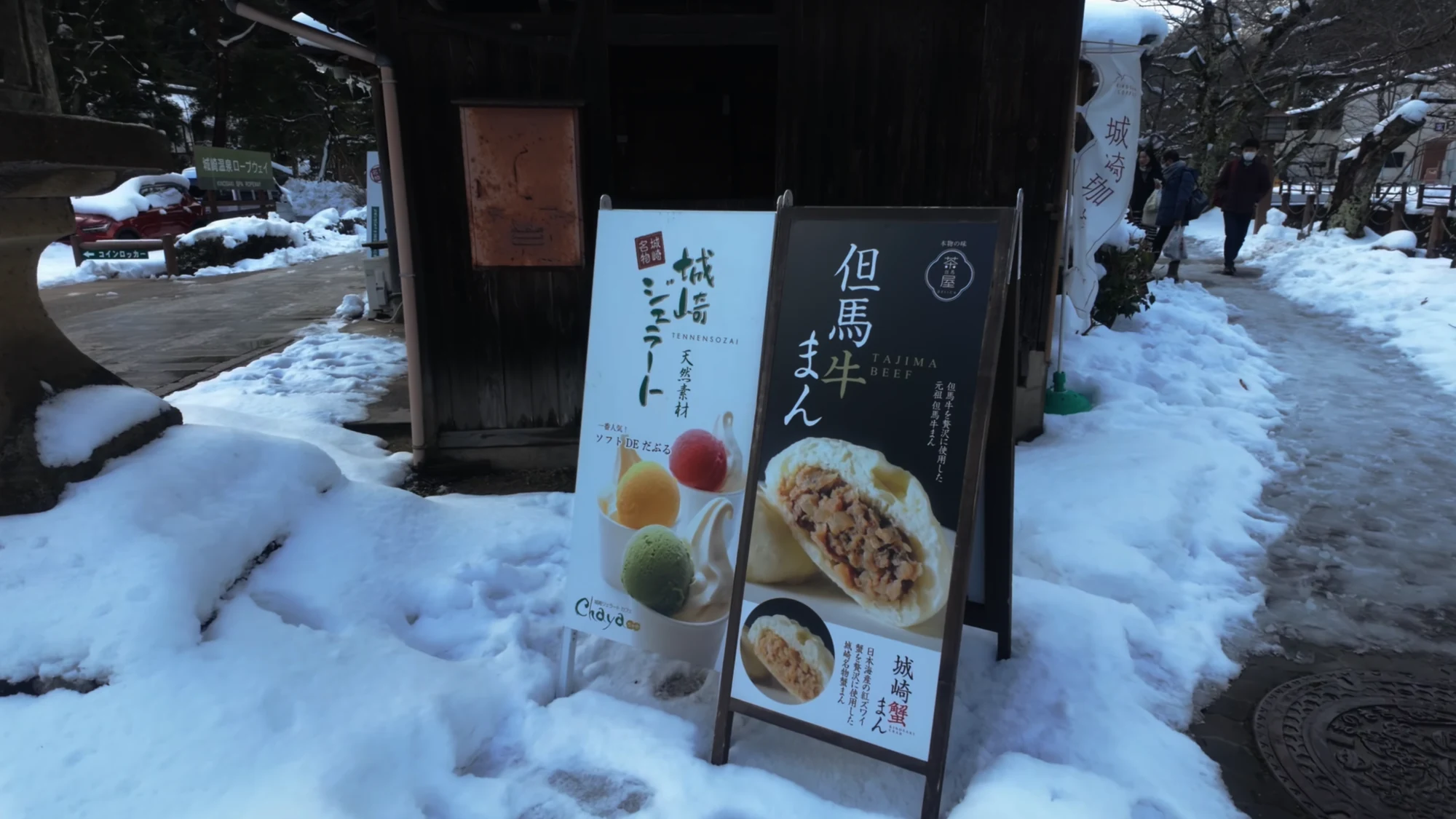
Tajima cattle are the ancestral stock behind Kobe beef, and they are raised in this prefecture.
Sake, tea and the drinking hours
The town's drinking runs on the same tide as everything else. Before dinner, the street's sake counters pour local cups to yukata traffic — the civilised aperitif register, one cup between baths, small cash. Dinner brings the inn's own list, where regional sake is the correct pairing for both crab and beef and the staff's recommendation is genuinely the local knowledge it sounds like. After dinner the picture thins: Kinosaki is an early town by design, a scatter of small bars and izakaya serve the night-owl minority, and the beer-on-a-bench-by-the-canal move — vending machine, bridge, lantern light — is the town's own nightcap format. ⚠️ Venue categories only. Sequence matters more here than in towns with fewer tubs: the pleasant cup between baths is custom, but serious drinking and hot-spring bathing refuse to mix, so run the evening bathe-then-drink or keep both moderate — the etiquette guide carries the plain-sentence version. Coffee and tea hold the daytime: canal-side cafes for the between-bath sit, the inn's room tea as the arrival ritual, and — the local touch — the drinking fountains' warm mineral water as the town's original beverage, free at three points along the street. None of this needs planning beyond one rule already given: never arrive at 19:00 (7 pm) hungry and unbooked. The town feeds its own first, magnificently, and walk-ins negotiate with what remains. Book the dinner, graze the street, drink in the town's order, and the food side of Kinosaki runs itself — which, by now, you will recognise as this town's signature move.
Independent dinner options thin out once the inns start serving. Never arrive at 7pm without a plan.
Eating well at every budget
The unbundling strategy from our budget guide applies to the whole food system. The premium version — famous-house crab kaiseki, in-room service — is the town's top table and priced like it. The smart middle buys a mid-range inn's dinner plan and adds one street-level indulgence a day. And the budget version sleeps cheap, eats the kaiseki's greatest hits à la carte — a tagged crab lunch set in season, a beef bun, the onsen eggs — and loses remarkably little of the experience, because the town's food, like its bathing, was never fully privatised: the street is everyone's. Day visitors eat best at lunch, when the crab restaurants and soba counters serve without the room requirement, and worst at dinner, when the inns absorb the kitchens. Families do well here — the street food is child-calibrated, the inns handle children's meals with notice, and the fish-market end toward Tsuiyama makes an educational detour of dinner's supply chain. ⚠️ Category-level. The closing arithmetic mirrors the town's: the memorable meals concentrate where the booking decisions were made early — the dinner plan, the crab tier, the dietary sentence sent in writing — and the free pleasures fill everything between. A rough seasonal calibration helps set expectations: in crab months the food budget IS the trip budget, and the gap between a modest plan and a famous-house one can exceed the room cost itself; from April to October the same town eats excellently at half the ceremony and a fraction of the anxiety. ⚠️ Category-level. Decide the few paid things at booking, let the street improvise the rest, and Kinosaki will feed you the way it bathes you: generously, communally, and on its own well-tested schedule.
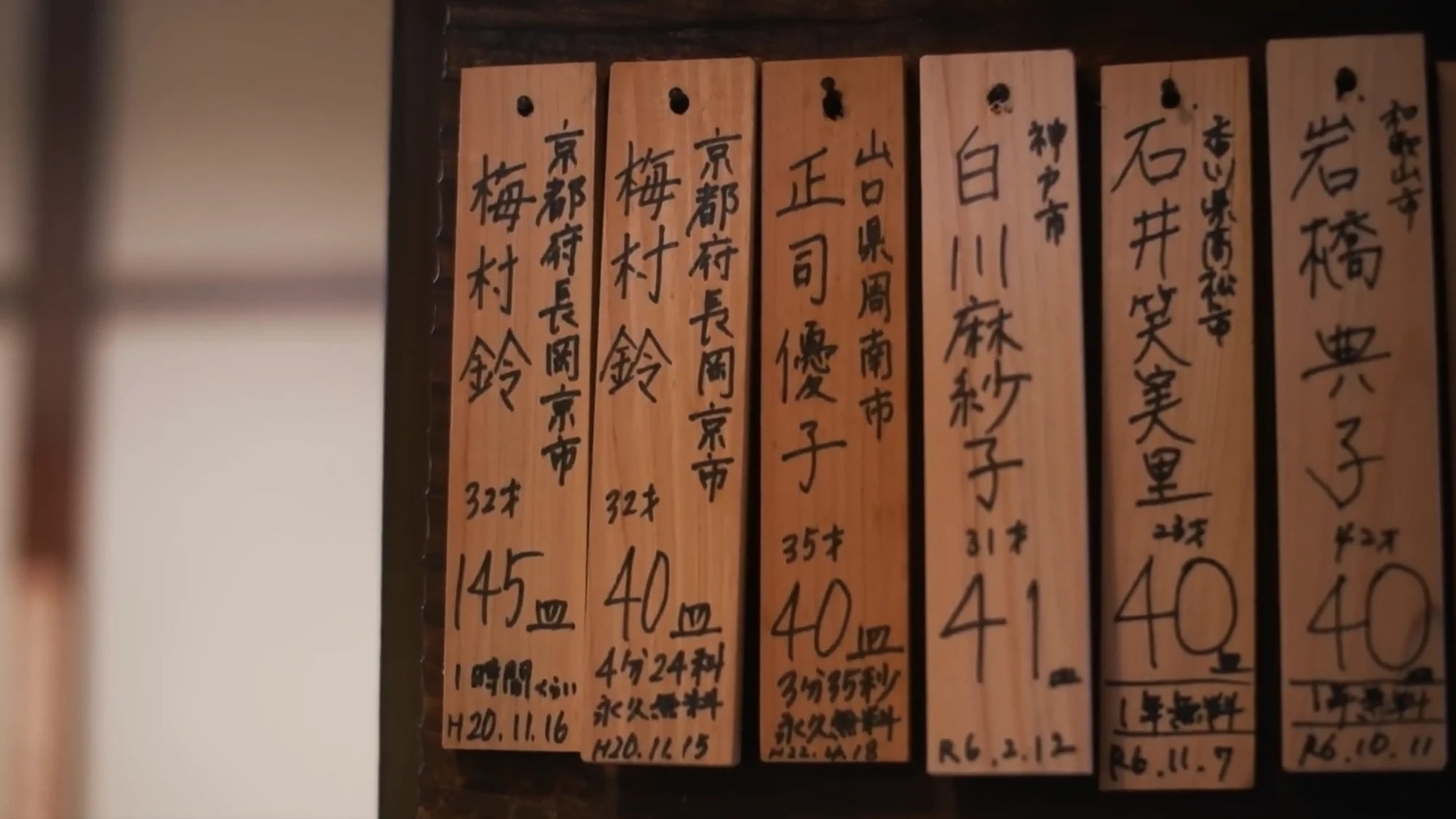
Eating well at the bottom of the budget means eating on the street, which is no hardship here.
Tips
Take the earliest dinner sitting your inn offers — every minute of kaiseki after 18:00 (6 pm) comes out of the lantern evening
In crab season, read plans for a port name or tag reference; suspiciously cheap "crab" is usually imported zuwai, not Matsuba
Carry small cash for the street counters; the smallest may not take cards
Send dietary restrictions in writing at booking — one clear sentence per need works in any language
Bathe before serious drinking, never after — the etiquette guide carries the full sequence

Verified by The Japan Onsen Society
Show all sources
Verified July 7–16, 2026; event calendar and bathhouse hours verified September 22, 2026. Primary Japanese sources:
外湯めぐり発祥の地!温泉天国★城崎温泉 — 豊岡市観光公式サイト (Toyooka City Official Tourism Site — the sotoyu system, ordinance, prices): [https://toyooka-tourism.com/recommend/onsen/kinosaki_sotoyu/](https://toyooka-tourism.com/recommend/onsen/kinosaki_sotoyu/)
イベント情報 — 城崎温泉観光協会 (Kinosaki Onsen Tourism Association — the event calendar: Onsen Matsuri, autumn festival, Crab Kingdom season events): [https://kinosaki-spa.gr.jp/event/](https://kinosaki-spa.gr.jp/event/)
外湯 — 城崎温泉観光協会 (Kinosaki Onsen Tourism Association — bathhouse hours, closing days, current closures): [https://kinosaki-spa.gr.jp/about/spa/](https://kinosaki-spa.gr.jp/about/spa/)
温泉地詳細[城崎温泉] — 日本温泉協会 (Japan Spa Association — spring classification and the 適応症/禁忌症 register): [https://www.spa.or.jp/search_p/detail_p/?F_ID=280880&pg=0](https://www.spa.or.jp/search_p/detail_p/?F_ID=280880&pg=0)
Related guides
Plan Your Visit
Crab season
Matsuba crab season opens on November 6 and runs to March. It is why winter rooms disappear early.

Plan Your Visit
Etiquette
Wash before you get in, keep the small towel out of the water, and nobody will look at you twice.
Plan Your Visit
1-Night Itinerary
One night in Kinosaki, hour by hour, from the train door to the last bathhouse before closing time.