The story: a near-death, a hot spring, and three small deaths
The premise of 「城の崎にて」 ("At Kinosaki") is the author's own: a writer, struck by a train in Tokyo and told his injuries could have killed him, comes alone to Kinosaki's hot springs to recover, and spends his convalescence noticing deaths smaller than the one he escaped — a bee lying still on a roof; a rat thrown into the river with a skewer through its neck, struggling; a newt the narrator kills by accident with an idly thrown stone. That is the whole apparatus: no plot, no romance, a man and three animals and the water. Out of it Shiga built roughly a dozen pages that Japanese schools, anthologies and critics have treated for a century as close to the formal perfection of the 私小説 (shishōsetsu, the "I-novel," Japan's autobiographical fiction tradition). Why it endures is worth one paragraph of actual criticism, because it explains why the town matters to the text. The story's engine is convalescent attention: a mind slowed by injury and hot water, noticing with terrible clarity what healthy minds hurry past. The bee's stillness is restful; the rat's struggle is unbearable precisely because it is futile; the newt's death implicates the narrator himself, and the story closes on the flat, famous register of a man who no longer feels entitled to conclusions about mortality — only to the noticing. Generations of Japanese writers learned economy from those pages; Shiga's peers called him 小説の神様 (shōsetsu no kamisama, "the god of the novel") in large part for prose exactly this unadorned. ⚠️ The accident and convalescence are the story's stated premise and the town's account; precise biographical dating varies by source, and this page follows the town's own materials. Kinosaki is not a backdrop to this but a precondition: the town's whole format — enforced slowness, walking, soaking, the canal's small wildlife at close range — is the story's method, in architecture. Which is why the literary pilgrimage here works better than most: the town still administers, nightly, to any guest, the exact treatment that produced the text. An English translation is widely anthologized (the story's Japanese text remains under copyright until the 2040s, so no free authorized full text circulates ⚠️); read it on the train in, and the first lantern-lit walk becomes an annotated edition.
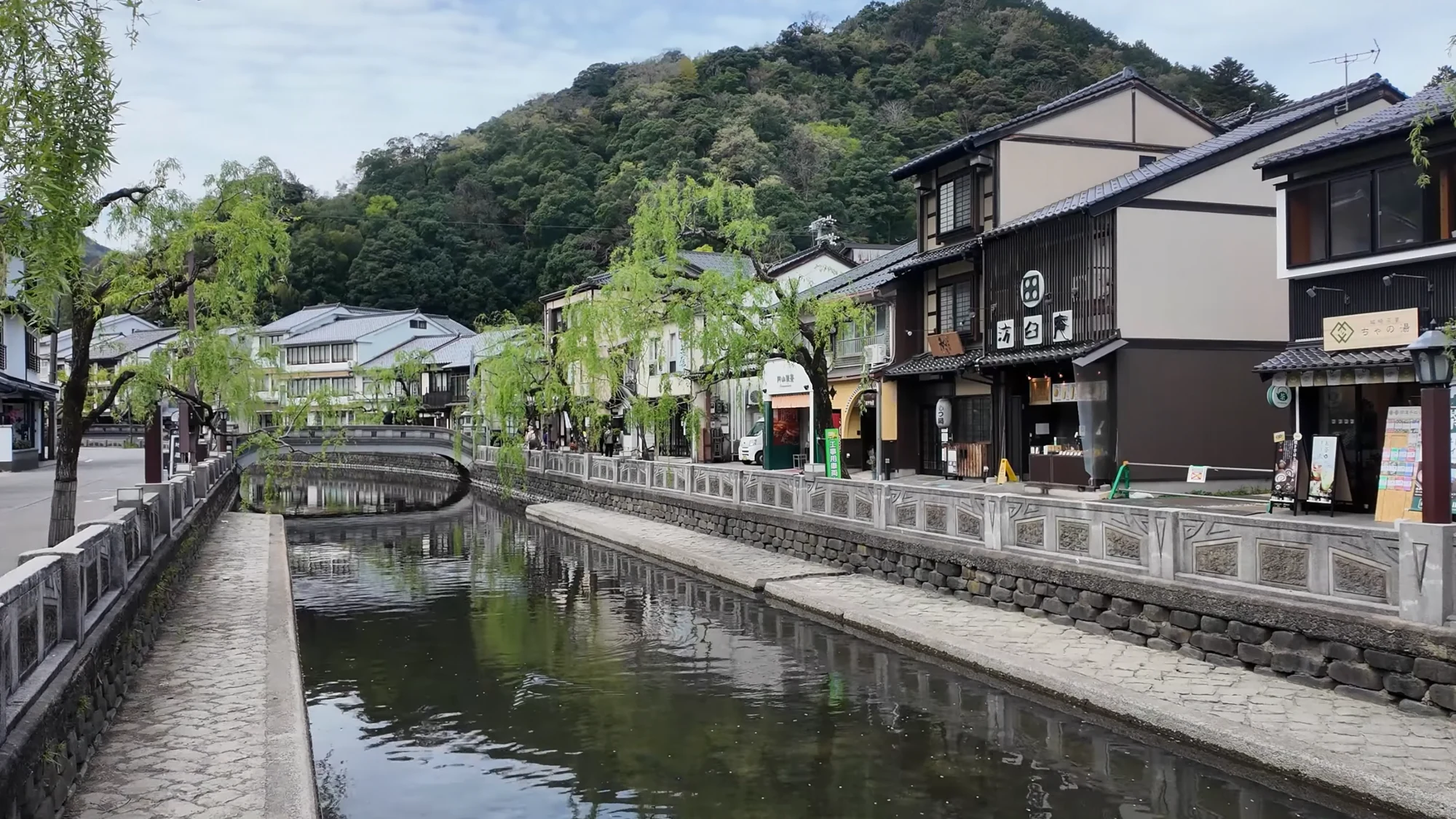
Shiga came here in 1913 to convalesce after being hit by a train in Tokyo. The story came four years later.
Mikiya: the inn that kept the room
The pilgrimage's anchor is 三木屋 (Mikiya), the ryokan where Shiga stayed — a house the town's materials date to roughly 300 years' operation (創業300年), its wooden main building carrying a national tangible-cultural-property registration (国登録有形文化財, kuni tōroku yūkei bunkazai), and, remarkably, still a working inn rather than a museum. Shiga returned across the decades, and the room associated with him — the association's materials and the inn's own present it as 志賀直哉ゆかりの客室 (the guest room connected to Shiga Naoya) — is bookable by any guest with ordinary money and better-than-ordinary lead time. ⚠️ Room and rate details per the inn's current listings; book direct and name the room explicitly. What makes Mikiya the real thing rather than a plaque with beds is continuity of function: the house has done, without interruption, the exact work Shiga used it for — received the tired, fed them formally, sent them down the street to the water. A guest in the Shiga room keeps the writer's own schedule involuntarily: the same dusk decision between bath and dinner, the same lantern walk, the same canal. Literary lodging rarely offers more than proximity; this offers reenactment. Practical notes, briefly. The inn is a historic wooden building with a historic building's realities — stairs, thresholds, sound — and its cultural-property status is a reason to choose it, not a promise of hotel convenience; our where-to-stay guide's old-house counsel applies in full. For non-guests, the house's exterior joins the monument walk below (respect the working inn; no wandering in for photographs). And for travellers deciding whether the room itself is worth the booking effort over any comparable classic house: it is the difference between reading about the story and sleeping inside its premise, and this site considers that the best literary-travel purchase in the region.
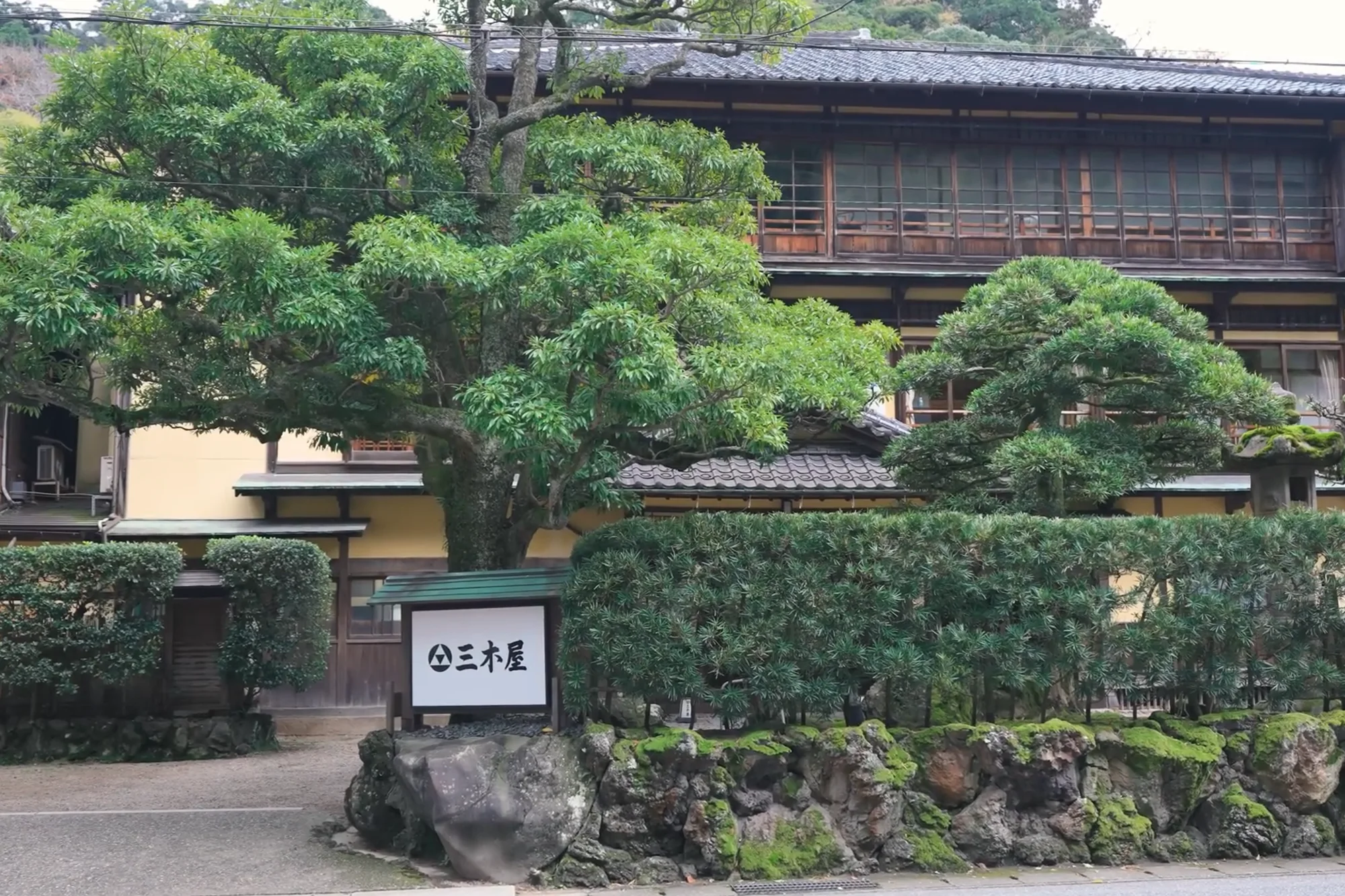
Mikiya was founded roughly 300 years ago and is nationally registered; Shiga's room can still be booked.
The stone the writer signed himself
Of the 23 literary monuments (文学碑, bungakuhi) threaded through Kinosaki's lanes and slopes, one outranks the rest, and the town's literary association makes the distinction precisely: the Shiga Naoya monument is the only one bearing the writer's own signature — self-signed, in his hand, rather than carved posthumously by admirers. The rest of Japan's monument culture is commemoration; this stone is closer to an autograph on the town itself, the author countersigning the place that produced his most famous pages. ⚠️ Location and inscription details per the association's literary-walk materials; the walk below is the way to find it. The self-signature matters beyond trivia because it certifies the relationship from the writer's side. Towns claim authors constantly, and the claims are usually one-directional — a famous guest, a plaque, a package tour. Shiga's stone is the reverse direction: the author, in his lifetime, acknowledging the town. Paired with his return visits and the inn's kept room, it makes Kinosaki's literary claim one of the best-evidenced in Japanese travel — no embellishment required, which suits both the writer's style and this site's. Standing at the stone, the recommended reading is the story's ending — the narrator leaving the town changed in no dramatizable way, only quieter — because the monument's setting delivers the same register: no plaza, no spectacle, a stone among stones in a town going about its bathing. Photograph it if you like; the more Shiga-appropriate response is the one the town has been prescribing for thirteen centuries, available at the nearest of seven doors.
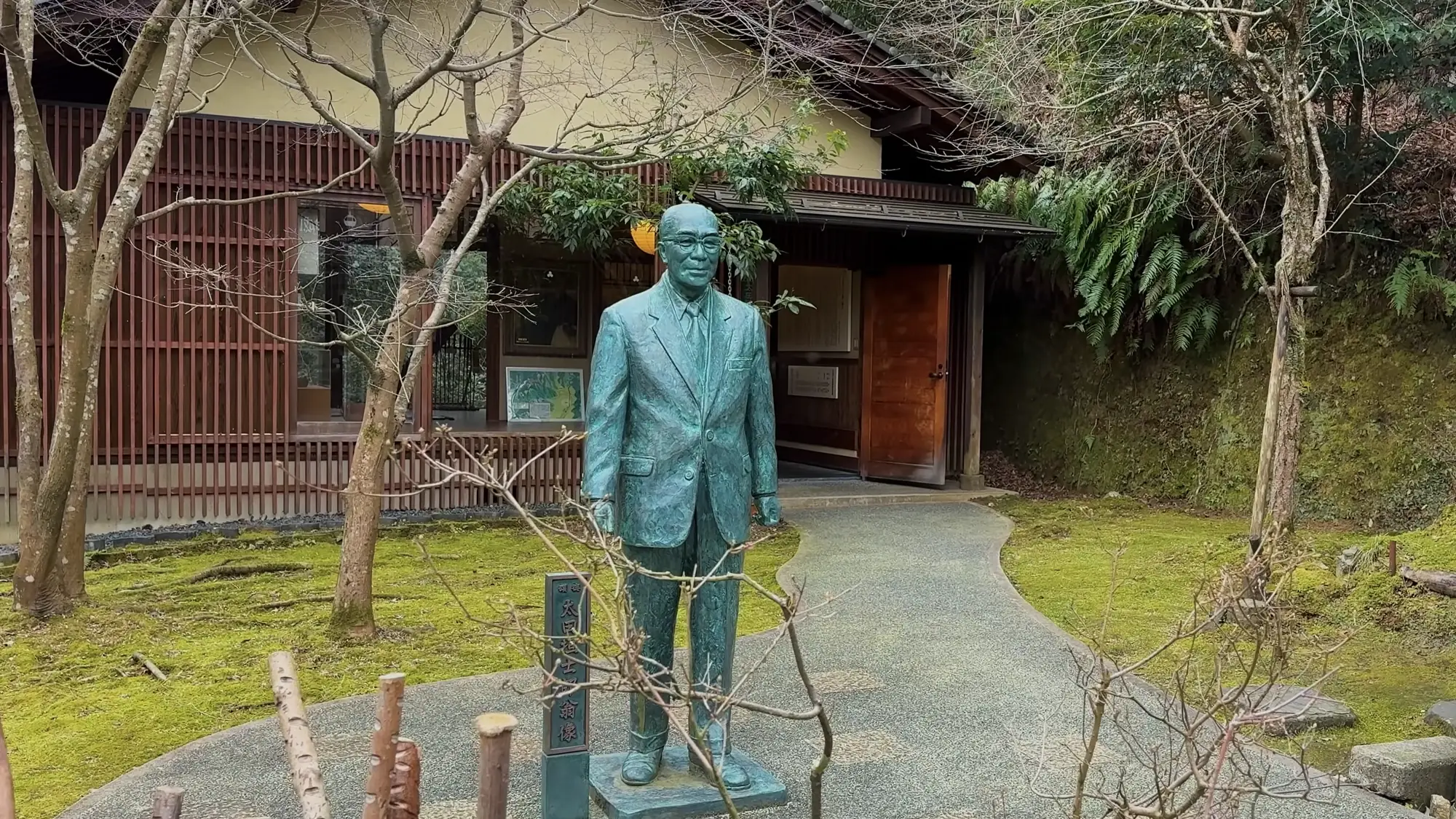
The town memorialises its writers in bronze and stone rather than in plaques.
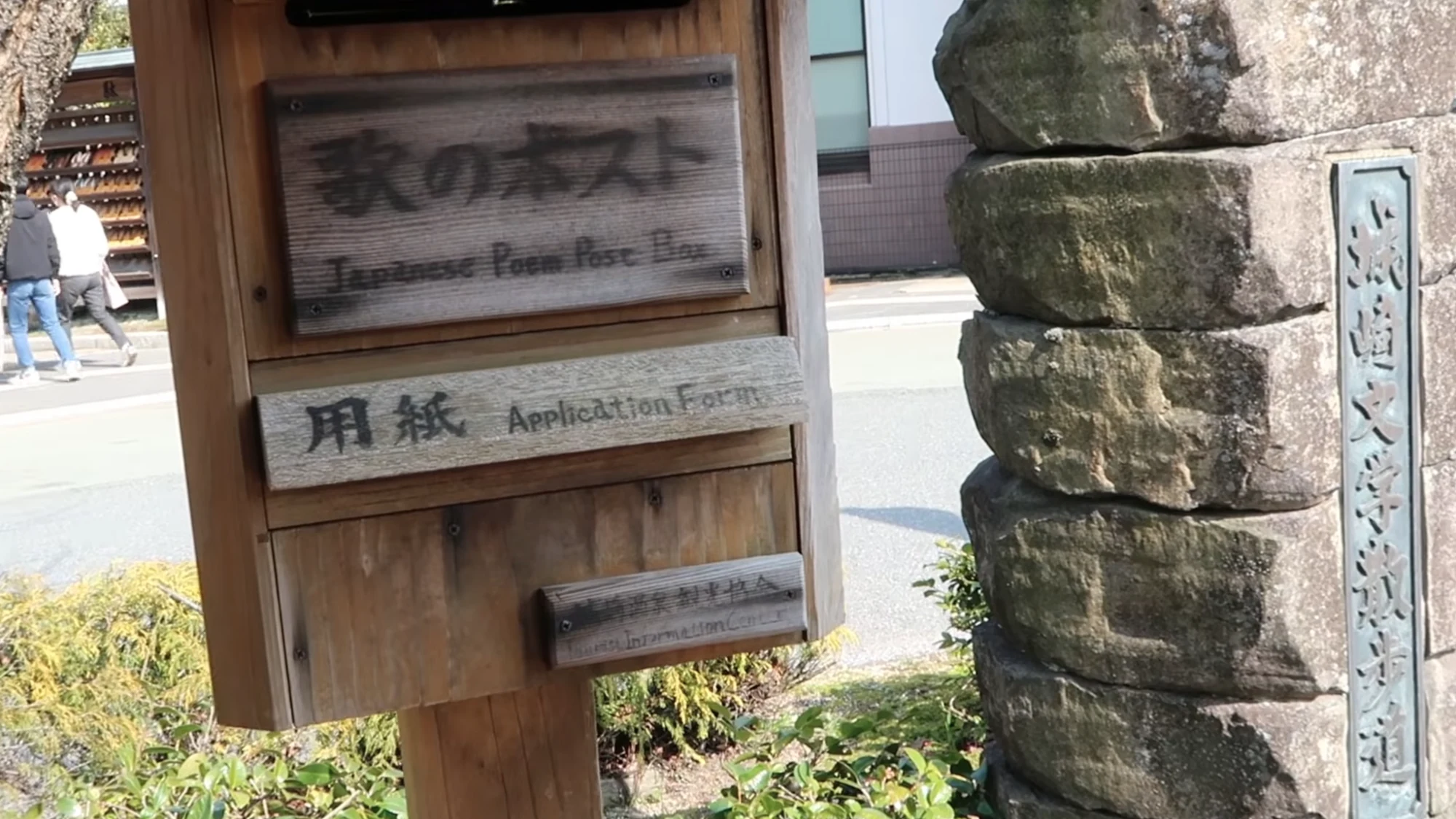
Of the twenty-three stones in town, one carries the writer's own signature.
KINOBUN and the Books & Onsen shelf
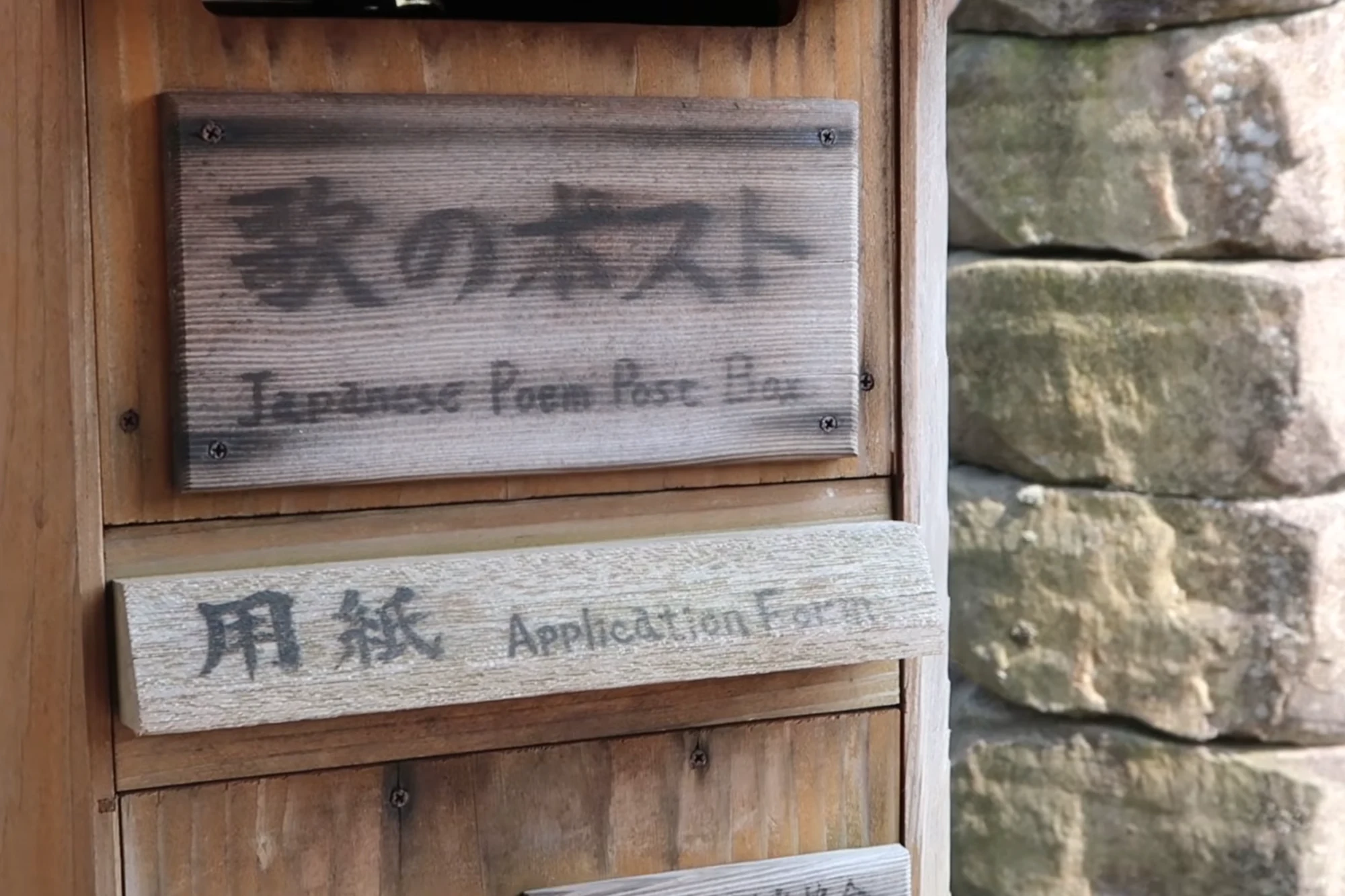
The institutional home of all this is the 城崎文芸館 (Kinosaki Bungeikan), branded KINOBUN — the town's literature museum, opened in 1996 and renewed in 2016, holding the Shiga materials and the wider story of the writers the springs collected. ⚠️ As of September 2026 the museum carries a temporary-closure notice; verify current status before routing a trip around it. When open, it is a compact hour: manuscripts, the writers' web of connections to the town, and rotating exhibits that treat the literary tradition as living rather than embalmed. The clearest proof of "living" is the publishing project the town runs under the Books & Onsen banner: commissioning contemporary writers to produce new Kinosaki work, sold in editions designed as objects. 万城目学 (Makime Manabu)'s 『城崎裁判』 (Kinosaki Saiban, "The Kinosaki Trial") comes bound in stone paper that survives being read in the bath, with a towel-fabric cover; 湊かなえ (Minato Kanae)'s 『城崎へかえる』 (Kinosaki e Kaeru, "Returning to Kinosaki") wears a jacket textured like crab shell; the picture book 『ユノマトペ』 (Yunomatope) by tupera tupera renders the town's bathing in onomatopoeia for children. A century after Shiga, the town is still commissioning literature about itself — and printing it to be read in the water. ⚠️ Titles and editions per the project's current catalogue; sold in town. Two smaller institutions complete the ecosystem. The 歌のポスト (uta no posuto, "poem post"), a postbox for visitor-written verse, judged each March with straw-craft prizes — the town inviting its guests into the tradition rather than only exhibiting it. And the monument walk itself, KINOBUN's outdoor collection: 23 stones as a self-guided route. The next section walks it.
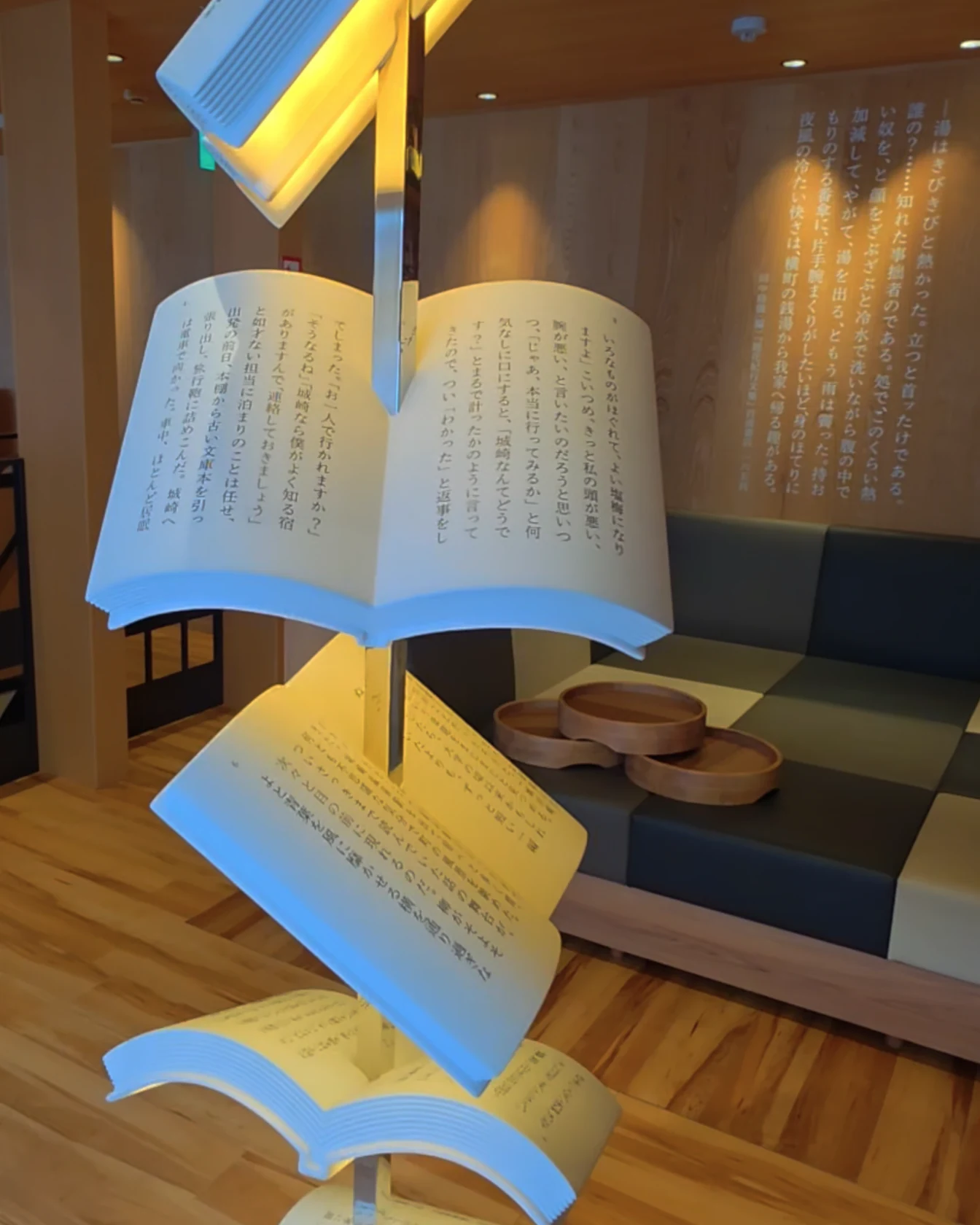
The museum sits on the main lane, a few minutes from the station.
Walking the 23 stones
The monument walk is the literary visit's spine, and it needs no museum hours, no ticket and no Japanese: 23 stones distributed along exactly the routes a bathing guest walks anyway — the canal axis, the temple slope, the lanes between bathhouses. The association publishes the route map; the town's scale keeps the full circuit within an easy afternoon, and the practical method is not a completionist march but an overlay: carry the map for two days and let the circuit's normal traffic — bath to bath, dinner to bridge — deliver the stones in passing. ⚠️ Route and stone details per the association's current literary-walk map. The roster beyond Shiga rewards the walk: the springs collected a remarkable share of modern Japanese letters — poets and novelists who came, as writers reliably do, for subsidized quiet and hot water — and the stones carry their lines at the sites that produced them. Reading Japanese multiplies the payoff but is not required; the stones' presence is itself the datum. A town that has erected twenty-three monuments to visiting writers, and zero to visiting generals or magnates, is telling you its self-image plainly, in granite. For pacing, three stations make the short version when a full circuit will not fit: the self-signed Shiga stone (the collection's crown), Mikiya's frontage (the working artifact), and whichever stone your own circuit passes at lantern hour, read under the light the writers actually worked by. That trio takes an evening's margin, no planning, and delivers the tradition's whole argument in miniature.

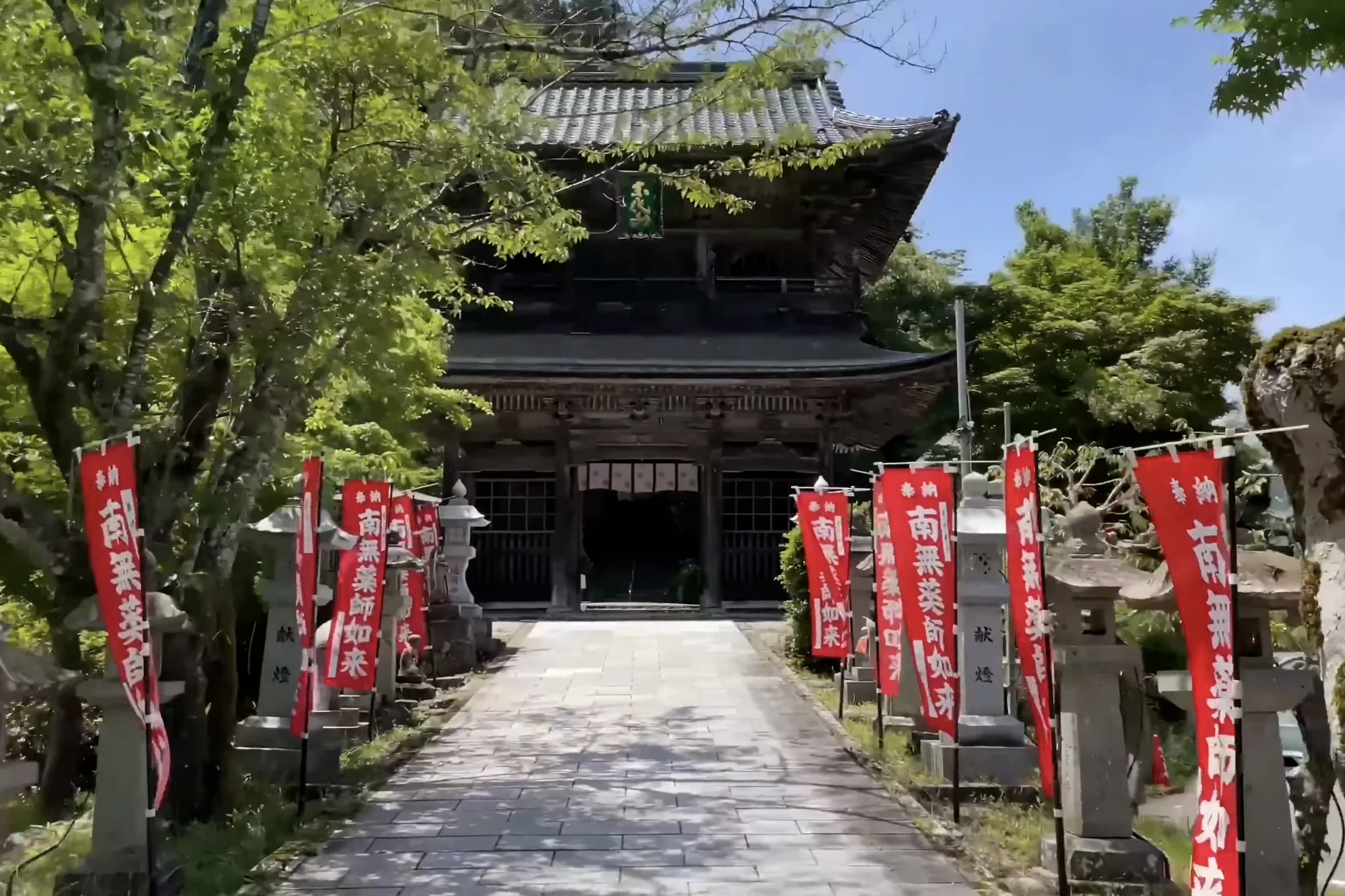
The station's own stamp calls it the station of the hot spring town loved by writers.
Why writers kept coming — and what to take from it
The pattern behind the names is the useful part. Writers came to Kinosaki for the same reasons they have always gone anywhere: it was reachable (the rail line from the Kansai cities), affordable in long stays, formally hospitable to solitude — an inn feeds you and leaves you alone by design — and organized around walking and soaking, the two activities most reliably correlated with finished manuscripts. The convalescent case, Shiga's, is the famous one, but the town's registers fill with the merely tired: the springs sold recovery, and exhaustion is the writer's occupational condition. What distinguishes Kinosaki from Japan's other literary onsen is that the therapeutic format survives intact. The towns that modernized into resort strips can show you where writers stayed; Kinosaki still operates the machine that made them write — the enforced evening walk, the seven appointments with hot water, the absence of urgent alternatives. The 湯治 (tōji, the hot-water cure) tradition this whole site keeps returning to is, among its other faces, a residency program: subtract the deadline, add the canal, and attention returns. The literature is simply the documentation that it works. Which makes the literary visit's real souvenir a practice rather than a photograph: do one Shiga evening properly. Phone in the room, one small notebook in the yukata sleeve if you like, a slow bath at a small house, and the canal walked at the pace of a man recently reminded he is mortal. Watch what the town puts in front of you — a heron hunting the shallows, steam, strangers' laughter from a bathhouse door — and notice it with the whole of your attention. That is the entire method of one of Japanese literature's most celebrated pages, it requires no talent to attempt, and Kinosaki will administer it to anyone with one night and the sense to stay off the schedule. The writers kept coming because it works. It still does.
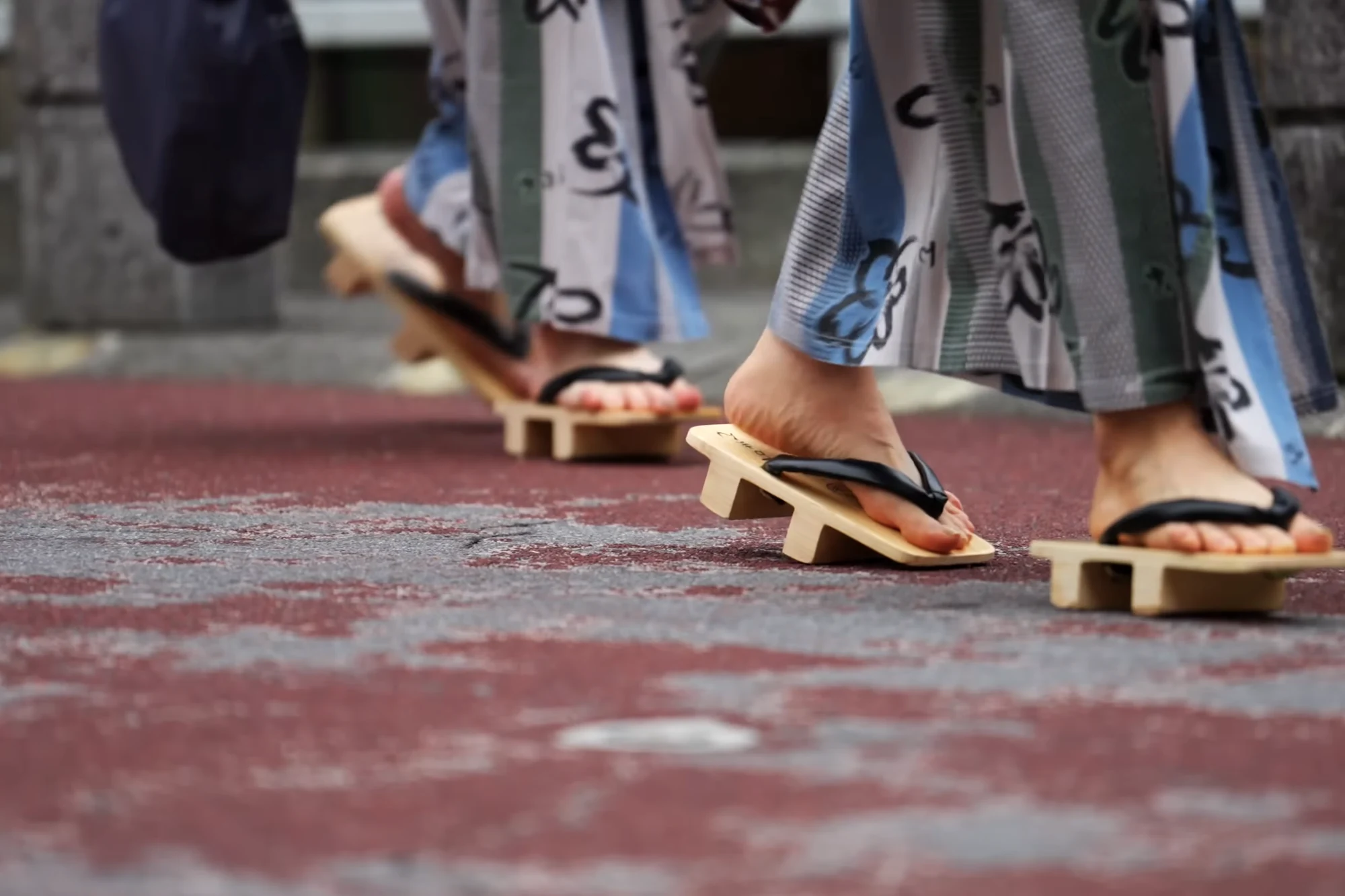
Writers kept coming because the town gives you a robe, a circuit and nothing urgent to do.
Tips
Read "At Kinosaki" on the train in — the first lantern walk becomes an annotated edition
Book the Shiga room direct and name it explicitly; lead times run long
Carry the literary-walk map for two days and collect the stones in passing, not on a march
Check KINOBUN's status before planning around it ⚠️
Do one Shiga evening properly: phone in the room, one slow bath, the canal at walking pace

Verified by The Japan Onsen Society
Show all sources
Verified September 2026. Primary Japanese sources:
文学のまち — 城崎温泉観光協会 (Kinosaki Onsen Tourism Association — the 23 literary monuments, the self-signed Shiga Naoya monument, KINOBUN, Books & Onsen, the poem posts): [https://kinosaki-spa.gr.jp/about/writer/](https://kinosaki-spa.gr.jp/about/writer/)
三木屋 公式サイト — Mikiya official site (創業300年 / national registered tangible cultural property; the bookable Shiga-associated guest room): [https://kinosaki-mikiya.jp/](https://kinosaki-mikiya.jp/)
外湯めぐり発祥の地!温泉天国★城崎温泉 — 豊岡市観光公式サイト (Toyooka City Official Tourism Site — the sotoyu system, ordinance, prices): [https://toyooka-tourism.com/recommend/onsen/kinosaki_sotoyu/](https://toyooka-tourism.com/recommend/onsen/kinosaki_sotoyu/)
Related guides
The Town and Its Baths
Founding history
Two stories, both published by the town: a monk's thousand days in 717, and a stork that healed first.
The Town and Its Baths
Things to do
Beyond the baths: a ropeway, a mountaintop temple, a literary museum and a stretch of wild coast.
The Town and Its Baths
1-Night Itinerary
One night in Kinosaki, hour by hour, from the train door to the last bathhouse before closing time.
The Town and Its Baths
The sotoyu system
The whole town is one ryokan. That is not a slogan about atmosphere. It is a description of the law.