Where to stay in Kinosaki: the houses, honestly compared
A local rule caps how big an inn's own bath can be. So choose your ryokan on the room and the meal.
Quick answer
Every ryokan in Kinosaki Onsen includes the yumepa (ゆめぱ) pass to all seven public bathhouses, so the real choice is the house, not the access. The grand name is Nishimuraya Honkan, about 160 years old with 34 rooms and rates from roughly ¥40,000 to ¥180,000 (about US$265–1,200) per room with kaiseki; the history pick is Sennen no Yu Koman, founded in 717 and among Japan's oldest inns; the literary pick is Mikiya, where novelist Naoya Shiga wrote. Mid range and budget houses cluster along the canal from about ¥15,000 (about US$100) per person with meals. Crab season (November to March) books out months ahead. ⚠️ verify rate bands at booking.
Overview
Kinosaki flattens the usual hotel question in one move: the town's defining amenity, the seven sotoyu (外湯) and the pass that opens them, comes with every booking from the grandest house to the simplest. What your money buys instead is the building you return to between baths, the dinner waiting there, and in winter, the grade of crab on the table. That makes choosing easier and more honest than in most destinations, and this guide takes it the way the decision actually runs: the three famous houses, the strong middle, the sensible floor, and who should pick which. Hold two lenses while you read. Prices here are quoted per person with dinner and breakfast, not per room — a ¥25,000 (about US$167) rate is one person's full evening, meal included, which makes hotel comparisons kinder than they first look. And the calendar moves cost more than the nameplate does: the same room can nearly double between an October Tuesday and a December crab Saturday. Choose the house for the stay you want; choose the date for the price you want. The guide runs from the top of the market to the floor, then the calendar, then the mechanics of booking from abroad. The seven-bath pass, the yukata and the lantern streets come with every option that follows — which is why this page spends its words on dinner, wood and location, the only three things your money is actually negotiating. None of it can cost you the baths; the ordinance section explains why.
Why your inn sells you a room and a dinner, not a bath
Everywhere else in Japan, choosing a ryokan means auditing its baths — the size of the rotenburo, the view from the tub, whether the water is really from the source. In Kinosaki that audit is beside the point, and the reason is written into municipal law. A town ordinance caps the size of the 内湯 (uchiyu, the bath inside an inn), precisely so that no house can out-bath the town's shared system: the seven 外湯 (sotoyu, public bathhouses) are the main event by statute, and every inn's own bath is, by design, the warm-up. The city's tourism office is plain about the purpose — the cap protects both the shared bathhouses and the spring itself, which is drawn and distributed collectively by a municipal body, 城崎町湯島財産区 (the Kinosaki-chō Yushima property ward), rather than tapped inn by inn. This is why the free pass exists, and why it is universal. An inn that is legally prevented from offering you a grand bath compensates by buying you seven — the yumepa comes with every booking in town, from the grandest house to the simplest, because the ordinance makes every inn's guests the bathhouses' guests. It is also why "which inn" is a smaller, calmer decision in Kinosaki than anywhere else in Japan: the thing that usually separates a great ryokan from an ordinary one — the bathing — has been deliberately equalised. What is left to choose is the building you return to between baths, the kitchen, the service, and the address. Real differences, honestly priced, but none of them can cost you the main event. So read every listing on this page through that lens. When a house advertises its own baths — and the fine ones do have lovely small ones, plus reservable private baths for families and couples — you are reading about a pleasant extra, not the reason you came. The town has already made the biggest decision for you, and made it in your favour: wherever you sleep in Kinosaki, you have already booked the best bath in town, seven times over.
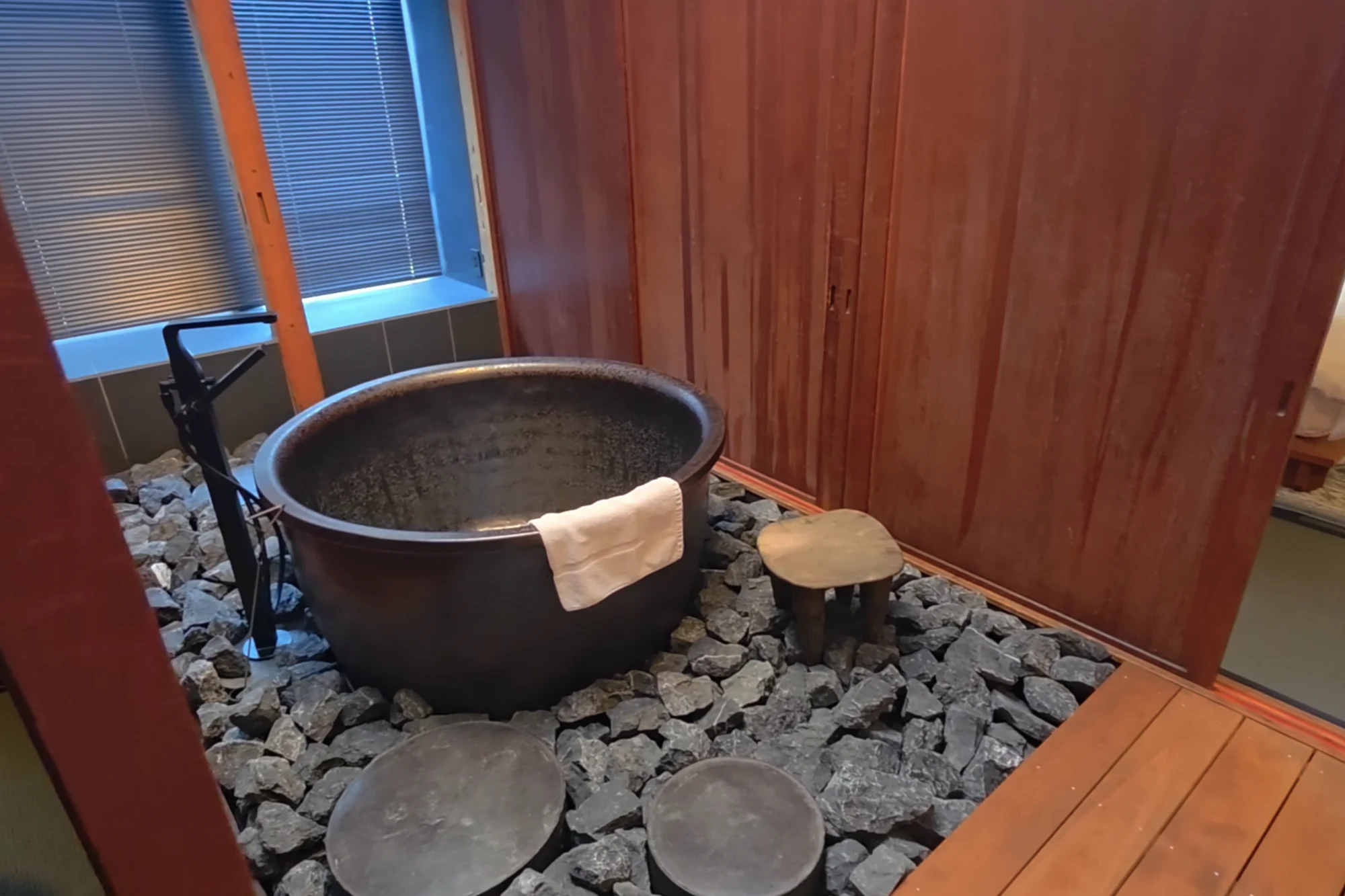
An ordinance caps how big an inn's own bath may be. You are booking a room and a dinner, not a bath.
The pass, from the guest side
The mechanics are worth thirty seconds, because they quietly reorganise your stay. The yumepa (ゆめぱ) is issued at check-in — a card or wristband — and works from that moment, not from evening: early arrivals can drop bags and take a first bath before their room is ready. It runs until 13:00 (1 pm) on checkout day at most inns, per the city's tourism office, which means the final morning's soak is included in your night and the midday train home is the correct one. Towels can be rented or bought at every bathhouse door, so no bath needs planning; the whole system is engineered for impulse. Two current caveats. The circuit is five houses as of this writing — Kou-no-yu has been closed for renovation works, reopening expected November 2026, and Satono-yu, the house beside the station, has been closed since April 2024 — so the pass presently opens five doors, not seven, and the association's live bath-status page is worth a glance before you promise anyone a particular bath. ⚠️ Re-check closures near travel. And the day-visitor comparison, for anyone weighing a stay against a stop: the same access costs a day visitor ¥1,500 (about US$10) for one day, with single baths at ¥800 (about US$5.30) at the door — so the pass alone returns a real fraction of a budget room's cost, before the dinner, the yukata or the evening enter the ledger. One habit worth copying from the locals: use the pass at odd hours. The 7:00 (7 am) opening at Ichi-no-yu, Goshono-yu or Jizō-yu, taken before breakfast at your inn, is the single best argument for having slept in town — and it costs you nothing at all.
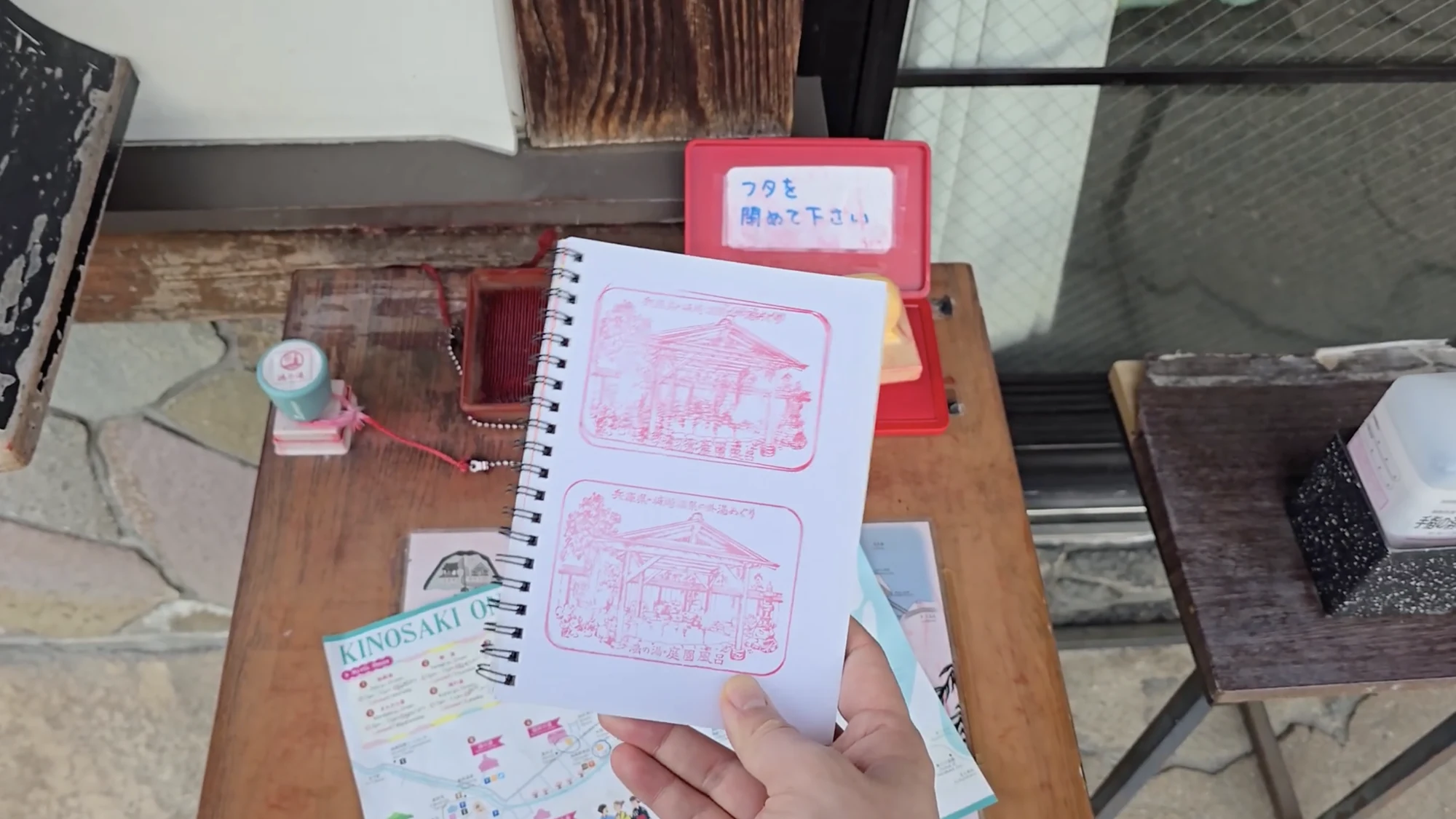
The pass comes free with any overnight stay and runs from check-in to 1pm the next day.
Where in town to sleep
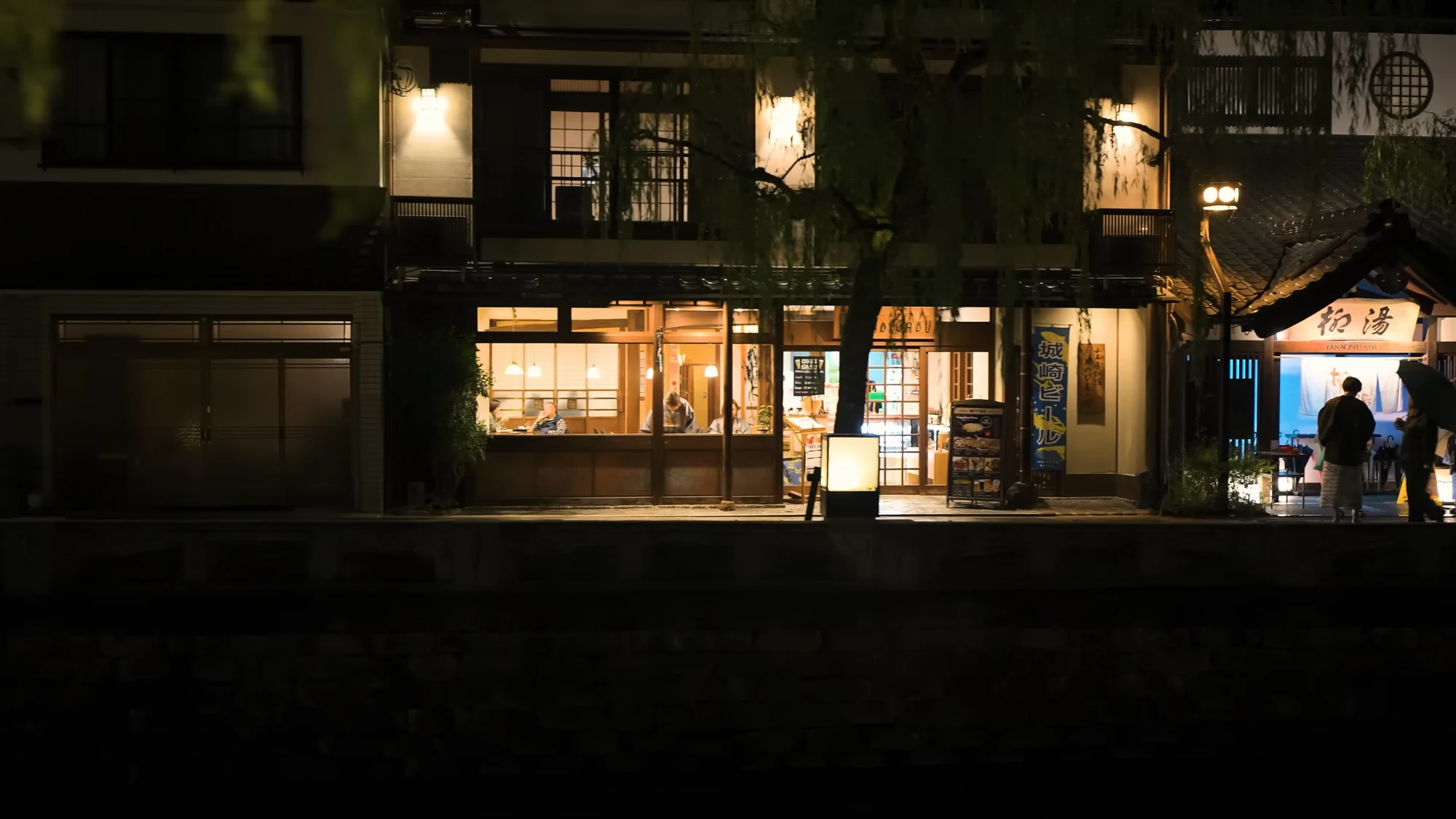
The geography is one walkable kilometre, so no choice is wrong, but the ends differ. The station end is practical: closest to the train, to Satono-yu, and to the shops, with the least atmosphere after dark. The canal center is the postcard: willow branches over the water, lantern light, the highest concentration of famous houses, and the most foot traffic. The western end near Kou-no-yu and the ropeway is the quiet retreat, a slightly longer walk from everything and the better sleep for it. Luggage moves by inn shuttle or the station's delivery counter, so distance is a preference, not a burden. Put numbers on it: the whole street runs about one kilometre (0.6 mi), a 12–15 minute end-to-end stroll in geta, so "far" in Kinosaki means seven minutes. Light sleepers should weight the ends over the centre — the canal heart carries foot traffic and geta-clatter into the late evening, charming at 21:00 and less so at 23:00 — while the western end's quiet has deepened further during Kou-no-yu's renovation closure (through about November 2026). The station end earns its keep on departure day: bags at the counter, one last coffee, and the platform two minutes away. Three concrete pairings to make it real: morning-bath devotees sleep mid-canal or west, nearest the 7:00 trio of Ichi-no-yu, Goshono-yu and Jizō-yu; families lean station-end for the short first walk with bags and children; photographers take the canal centre and accept the evening noise as the price of shooting the lanterns from their own doorstep. In short: sleep where your mornings are, not your evenings.
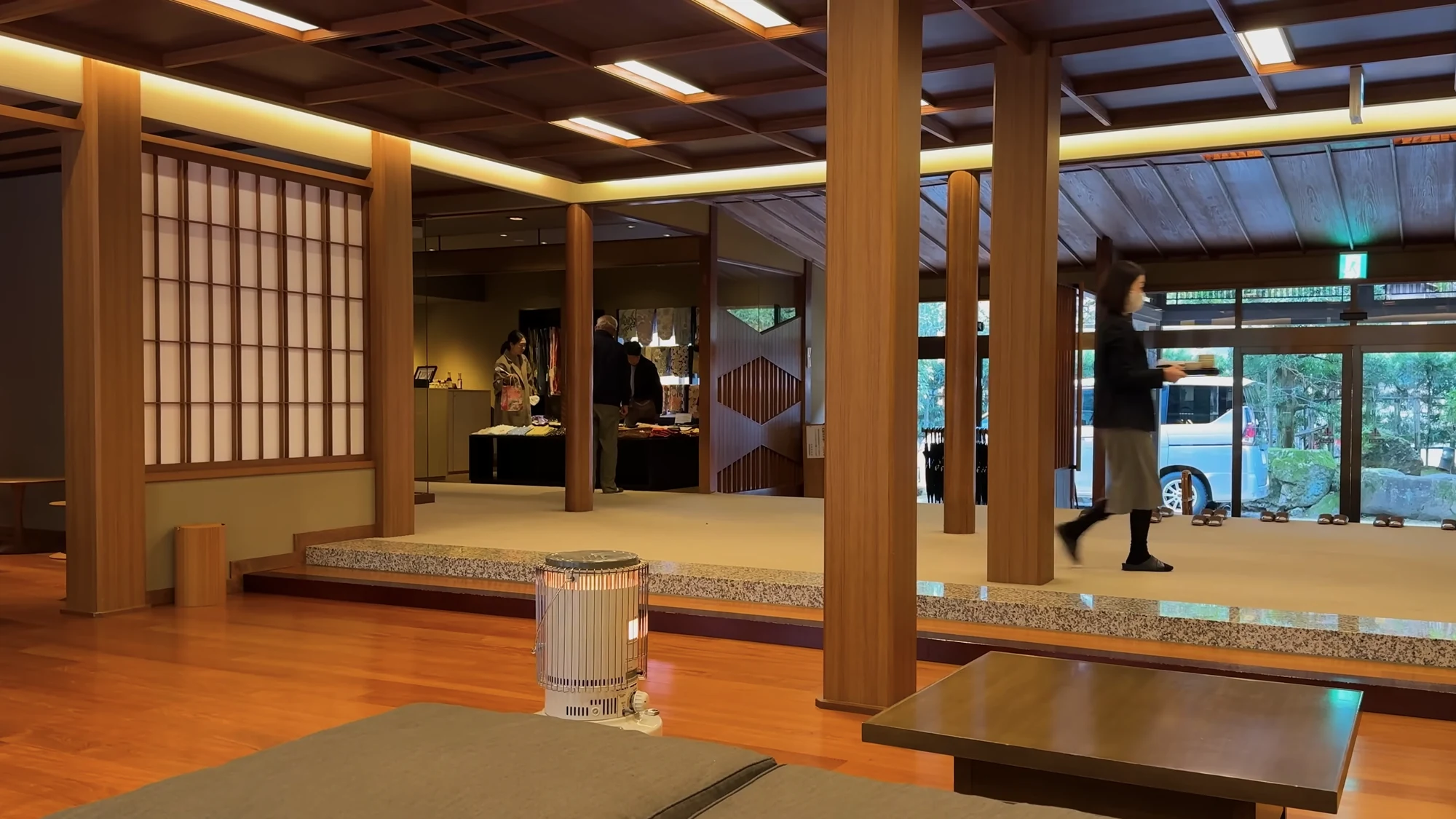
Check-in is usually from 3pm, and the bath pass is issued at the desk with the room key.
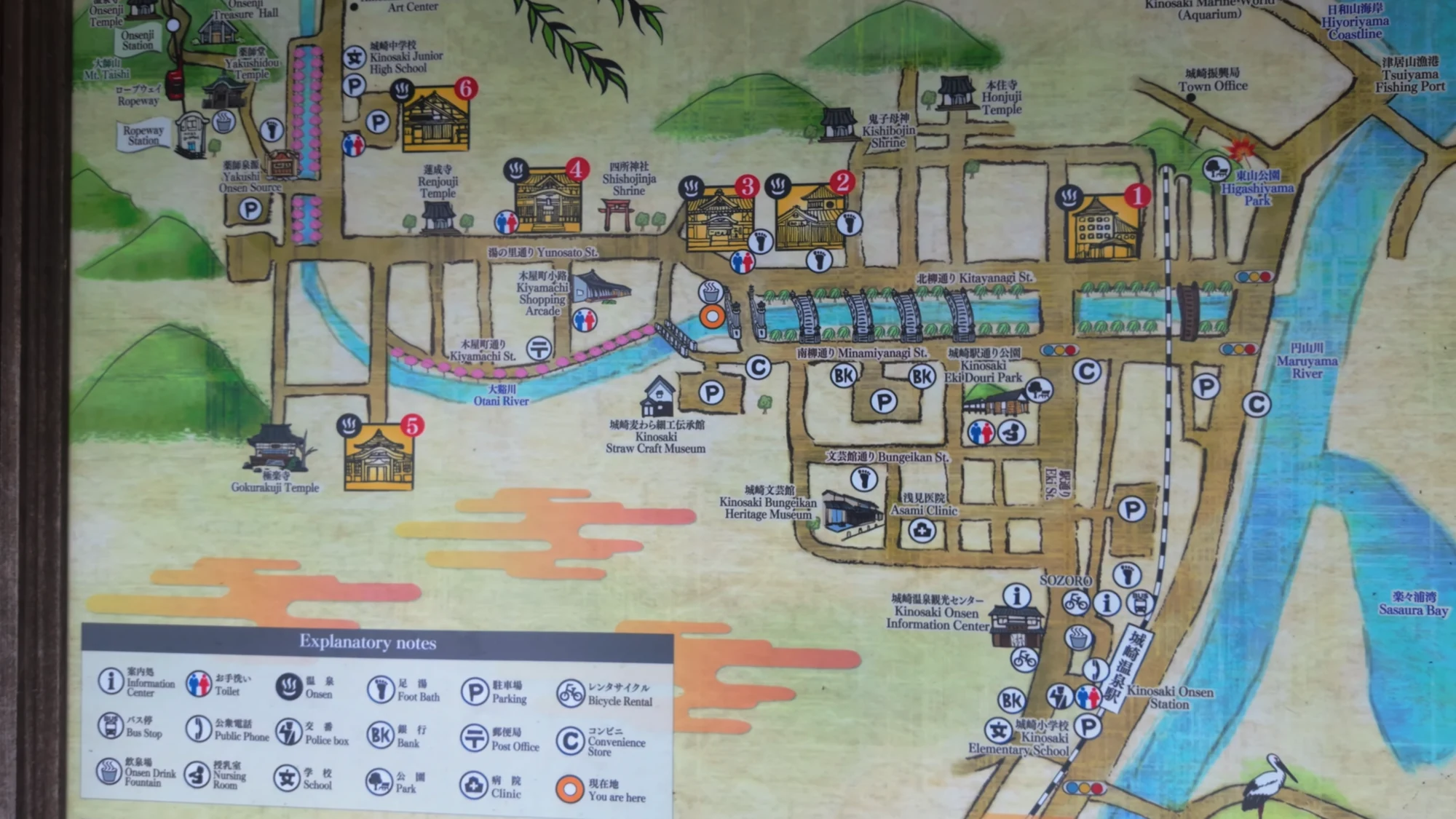
Anywhere on the canal is within ten minutes of every bathhouse. Location matters less here than anywhere.
Nishimuraya Honkan: the grand house
If Kinosaki has one name travelers arrive knowing, it is Nishimuraya. The Honkan, the original house, has hosted guests for around 160 years and remains the town's benchmark: 34 rooms arranged around interior gardens, corridors of dark polished wood, kaiseki that defines the local standard, and baths of its own on top of the seven outside. Suites with private open-air baths occupy the top of the range. Expect roughly ¥40,000 to ¥180,000 (about US$265–1,200) per room per night with meals depending on room and season, with crab season at the summit. ⚠️ verify current rates. The honest note: this is classical luxury, formal and quiet, at its best for couples marking something. Travelers who want the livelier yukata-street energy may be happier mid-town. Its modern sister property, Nishimuraya Hotel Shogetsutei, trades heritage for space and facilities at a gentler price, and suits families better. Booking note: the Honkan's crab-season weekends are the first inventory in town to vanish — treat the six-month lead as literal — while its weekday shoulder-season rates are the quiet way to afford the benchmark. The dinner deserves its own sentence: this kitchen is the reference point the rest of the town's kaiseki is measured against, and in crab season it is the hardest reservation in Kinosaki — the room is how you secure the table. And if the formality gives you pause, remember what the ordinance guarantees: the town's best bathing is already yours on the pass, so the Honkan premium is buying wood, gardens and the kitchen — judge it on those.
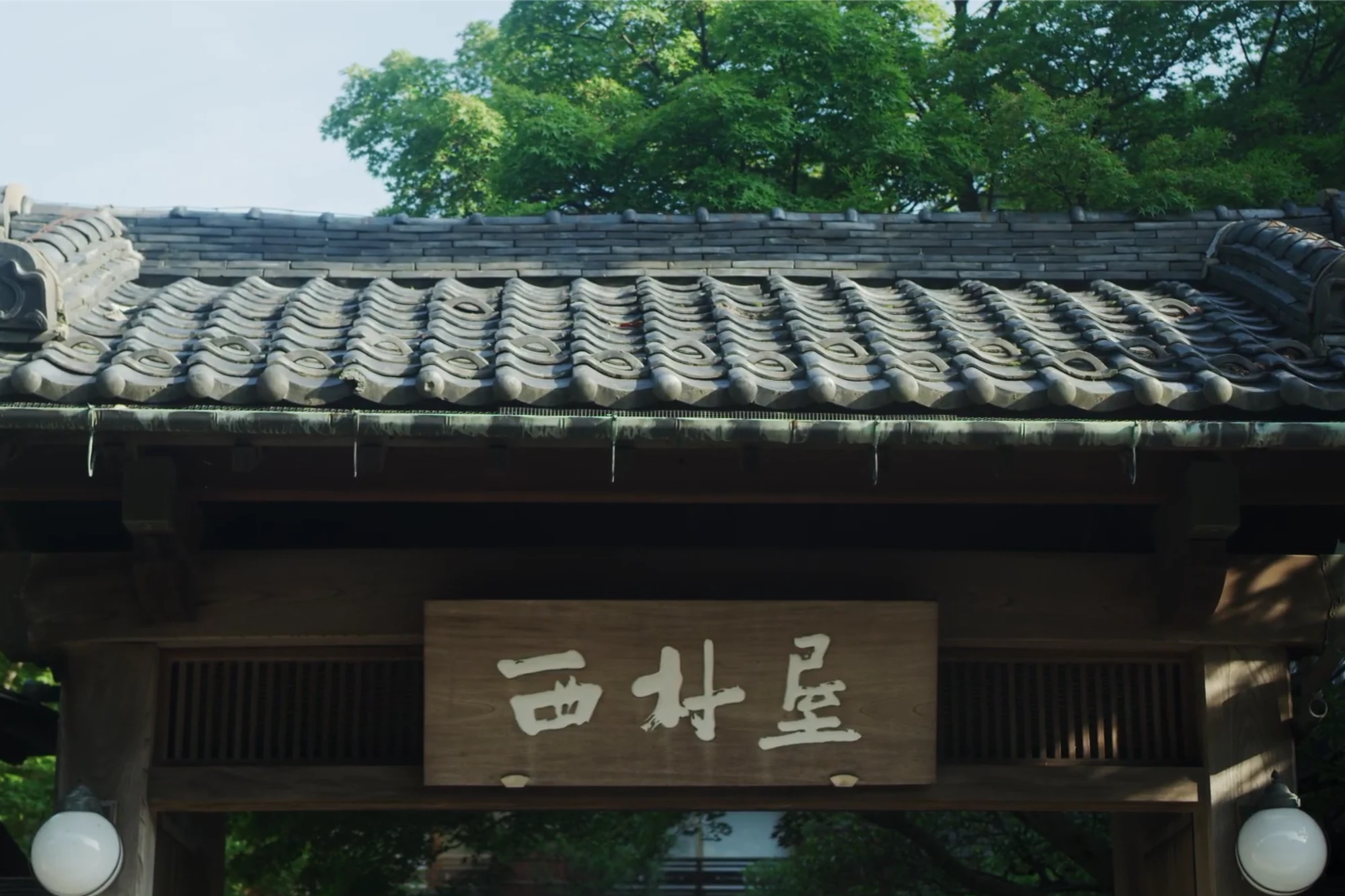
Nishimuraya Honkan, about 160 years old and 34 rooms. ⚠️
Sennen no Yu Koman: the thousand-year house
Koman's claim is written into its name, "the thousand-year hot water." Founded in 717, it is tied to the town's origin story, the legend of Dochi Shonin's thousand-day prayer, and counts among the oldest continuously operating inns in Japan. The current house, around 30 rooms by the canal, wears the history with surprising lightness: comfortable rather than museum-like, with its own baths and a kitchen that takes crab season seriously. For travelers who choose hotels the way they choose books, by the story, nothing in town outranks it. ⚠️ verify room count and rates. The claim deserves its context, which the town's own record supplies: 717 is the year the founding account has the monk Dōchi Shōnin beginning his thousand-day prayer, and 2020 was marked as 開湯1300年 (kaiyu 1300-nen, thirteen centuries of the spring). An inn tracing its name to that origin story is selling continuity no renovation can fake. Scope the superlative honestly — "among the oldest" is the defensible phrasing, and the one we use — but no other house in town sleeps you this close to the founding legend, and in a destination whose product is time, that is a real amenity. Practically, its canal-side position also puts it within a few minutes of most of the open bathhouses — history at the front door, the circuit out the back — and for repeat visitors it is the house that most rewards a second look. ⚠️ The founding-year tie is inn tradition; verify against the inn's own materials at publish.
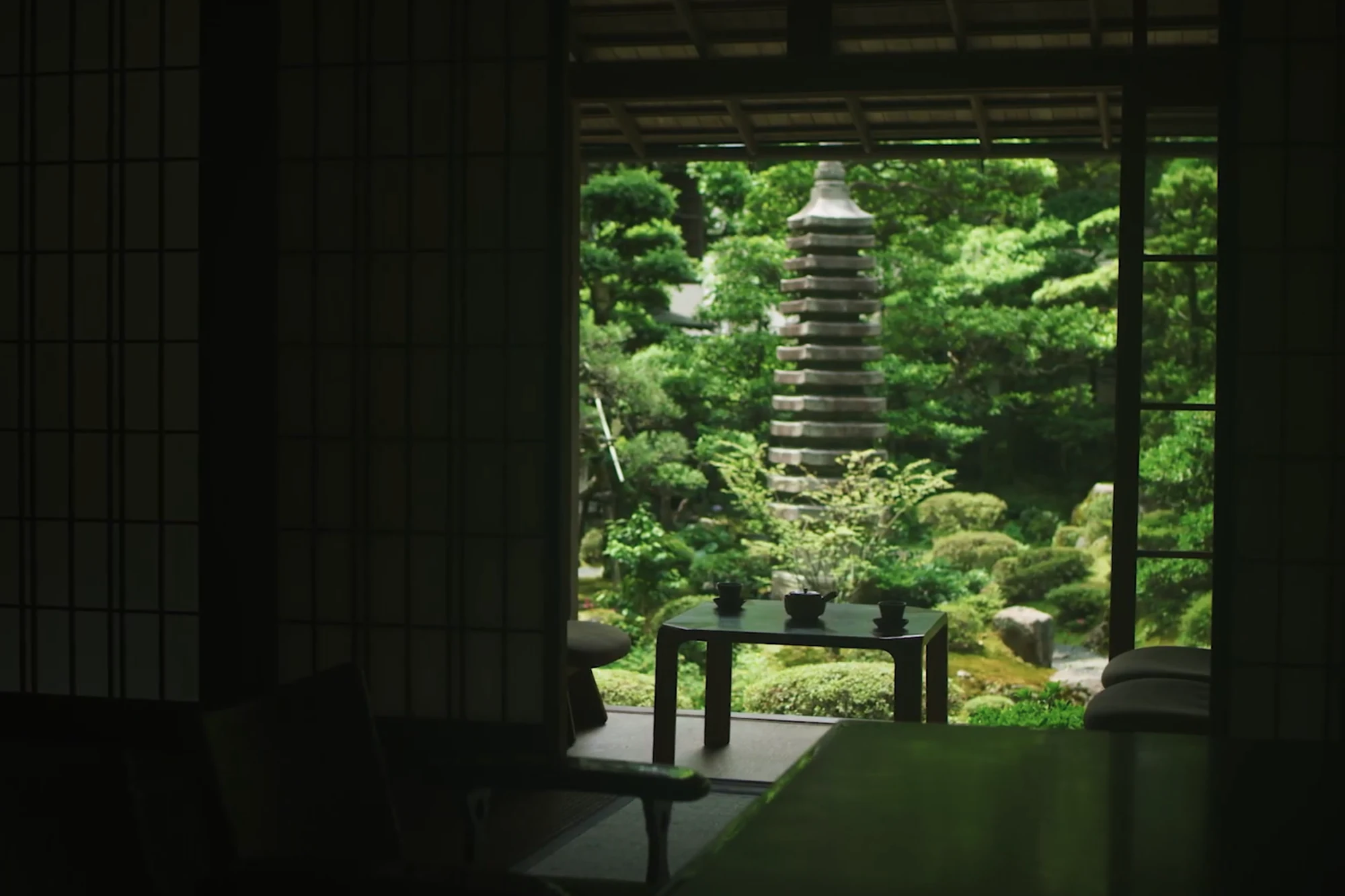
Sennen no Yu Koman traces its founding legend to 717, which is the same date the town claims. ⚠️
Mikiya: the novelist's inn
Mikiya is roughly 300 years old and would deserve a place on this page for its gardens and quiet alone, but its fame is literary: Naoya Shiga recuperated here after a near-fatal accident and turned the stay into "At Kinosaki" (城の崎にて, Kinosaki nite), one of the most read short stories in modern Japanese literature. The inn keeps the connection with grace rather than gimmick, and a stay here is the closest the town comes to sleeping inside its own cultural history. Mid-to-upper pricing, well below Nishimuraya's summit. ⚠️ verify rates. For literary pilgrims the pairing writes itself: the 志賀直哉 (Shiga Naoya) monument — the only one in Japan bearing the author's own signature — stands in front of the 城崎文芸館 (Kinosaki Bungeikan) literary museum a couple of minutes' walk away, and the town's Books & Onsen editions, printed bath-proof on stone paper, are the correct souvenir for anyone sleeping at the writer's inn. (⚠️ The museum posted a temporary-closure notice in September 2026 — check status.) Even guests who have never read a line of him tend to leave understanding the appeal: quiet rooms, an old garden, and a town that treats convalescence as an art form. Practical notes: mid-canal position, gardens best in the green months, and a house style that favours quiet over service theatre — bring a book, ideally his. Of the three famous houses it is the one whose premium is smallest against the mid-range, and the one with the most distinct identity — which is exactly what the middle of a market usually lacks.
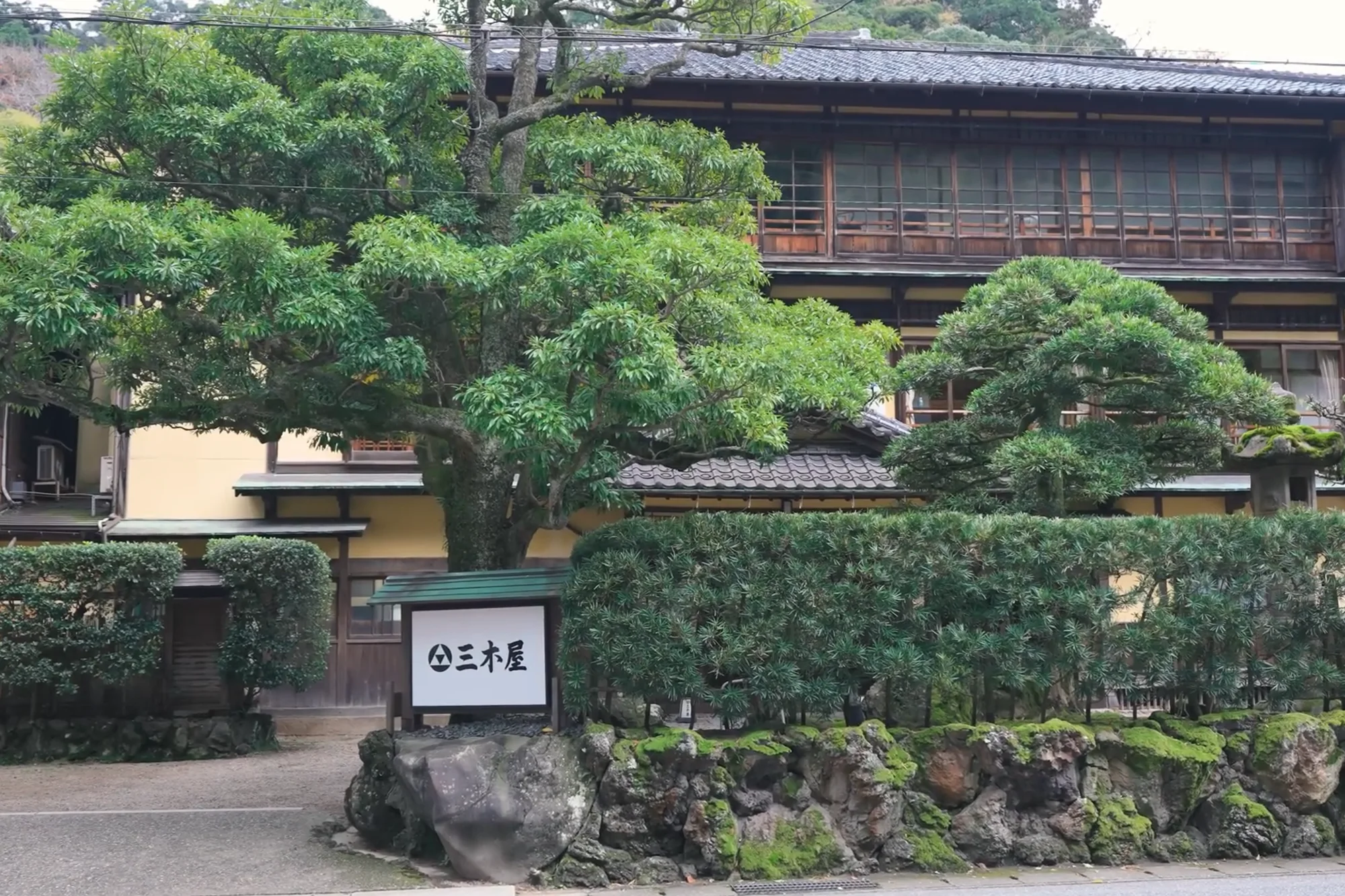
Mikiya is nationally registered, roughly 300 years old, and the writer's room can still be booked.
The strong middle and the sensible floor
The canal center is lined with mid-range houses in the high teens to twenties per person with two meals, where the trade-offs are small and the formula constant: tatami rooms, yukata, dinner built around the season, and the pass at check-in. Tsubakino, a small modern ryokan with a women-friendly design sensibility and private reservable baths, is a representative strong pick; Kawaguchiya's riverside houses are the crab-season specialists. ⚠️ verify individual details before publish. The floor, around ¥12,000 to ¥15,000 (about US$80–100) per person with meals at family houses and pension-style inns toward the station, gives up polish but keeps every part of the experience that matters: the same seven baths, the same lantern streets, the same yukata. In a town whose best amenities are communal, the budget tier is a genuinely good deal rather than a compromise. One selection habit serves this tier well: choose by kitchen and closing distance rather than by photos, which at this price band all show the same handsome tatami square. A mid-range house whose dinner reviews mention crab handling, two minutes from your preferred morning bathhouse, beats a prettier lobby every time. The middle tier is also where the design-led and women-friendly options cluster — Tsubakino's reservable private baths being the representative example — and where crab plans are priced most transparently, house by house, grade by grade. If you are comparison-shopping anywhere in Kinosaki, shop here: the famous houses sell identity and the floor sells arithmetic, but the middle is where the town actually competes.
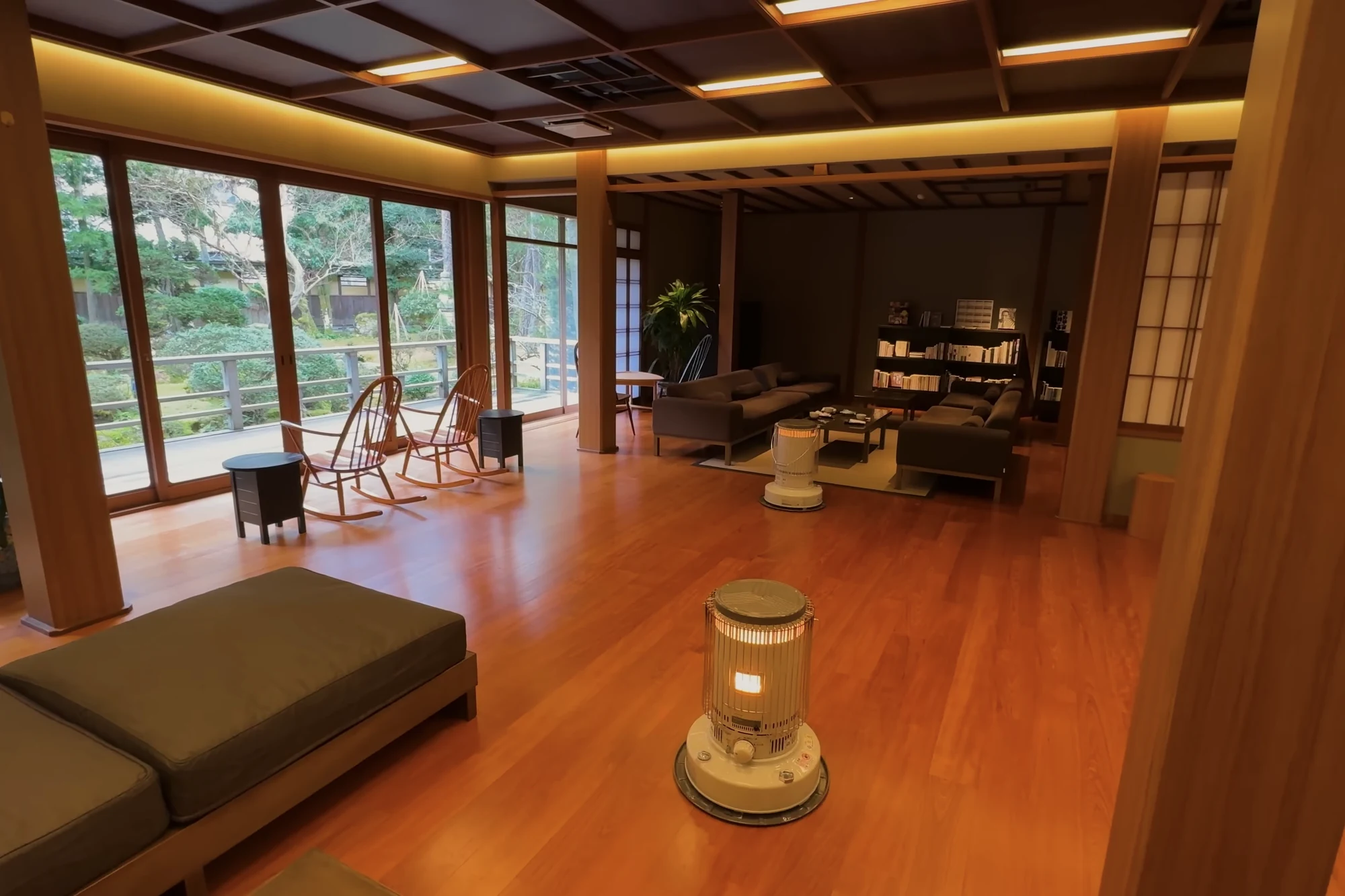
The strong middle tier buys space and a garden rather than a bigger bath, which is capped anyway.
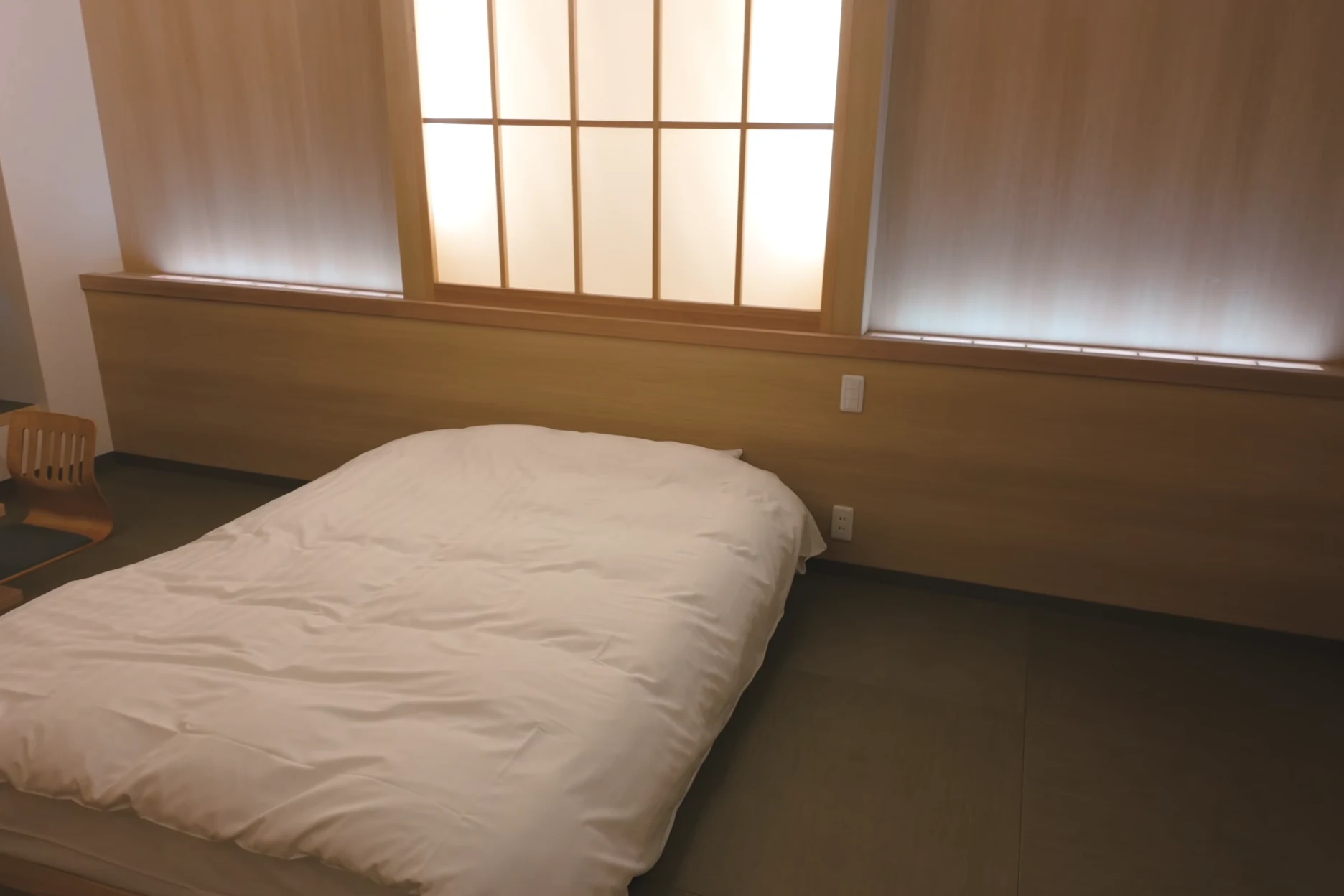
The sensible floor is a clean tatami room and the same pass as the grandest house on the street.
Choosing by temperament, and the crab caveat
The anniversary: Nishimuraya Honkan, top room you can justify. The history romantic: Koman. The reader: Mikiya. The first-timer who wants the town at the door: any canal-center mid-range. The budget purist: the station-end family houses, with the savings spent on one spectacular crab dinner. Couples celebrating pick the west end for the quiet; families do better mid-town, close to everything short legs need; solo travellers fit anywhere, because the evening's social life happens in the bathhouses, not the lobby. Groups of friends should look at the larger mid-range houses with multiple room types rather than the intimate famous ones — the evening circuit is the entertainment, so proximity beats prestige. And whoever you are, if the trip is specifically for the crab, let the kitchen outrank every other criterion on this page. Whoever you are, the calendar matters more than the house: from November to late March, Matsuba crab (松葉ガニ) season, dinner-inclusive rates rise sharply and weekends at the famous houses sell out three to six months ahead. The same rooms in October or April, with excellent non-crab kaiseki, cost dramatically less. Midweek shoulder season is the connoisseur's window, and our best time guide breaks the year down month by month.
When to book, and when the same room costs half
The calendar moves Kinosaki prices more than the house does, and it moves them on knowable dates. The premium engine is 松葉ガニ (Matsuba-gani) season, November 6 to late March: dinner-inclusive rates step up across every tier, and weekends at the famous houses sell out three to six months ahead. Within the season, the November opening weeks and the December weekends carry the peak; January and February midweeks buy the identical winter — cold, crab, steam — at a real discount; and late March adds the season-closing send-off at the station (free crab zōsui and barrel sake over the 2026 closing weekend) as a bonus for the patient. ⚠️ Rates and sell-out patterns shift yearly; treat the pattern as the fact. Outside crab season, the same rooms fall to their honest level, and three short windows fill the town anyway: the blossom week of early April along the canal, Golden Week, and the fixed festival dates — the Onsen Matsuri every April 23–24, and the autumn festival in mid-October (October 14–15 in 2026), when the float clash at Ō-hashi bridge fills every room in earshot. October outside the festival days remains the connoisseur's window: peak-comfort weather, no crab premium, rooms on a week's notice. The practical rule collapses to one sentence: decide first whether crab is the point. If yes, book the famous-house weekend months out or take the January midweek discount; if no, aim at October or post-blossom April, book casually, and spend the savings on the room upgrade — which, in the one town where every inn shares the same baths, is the upgrade you will actually feel.
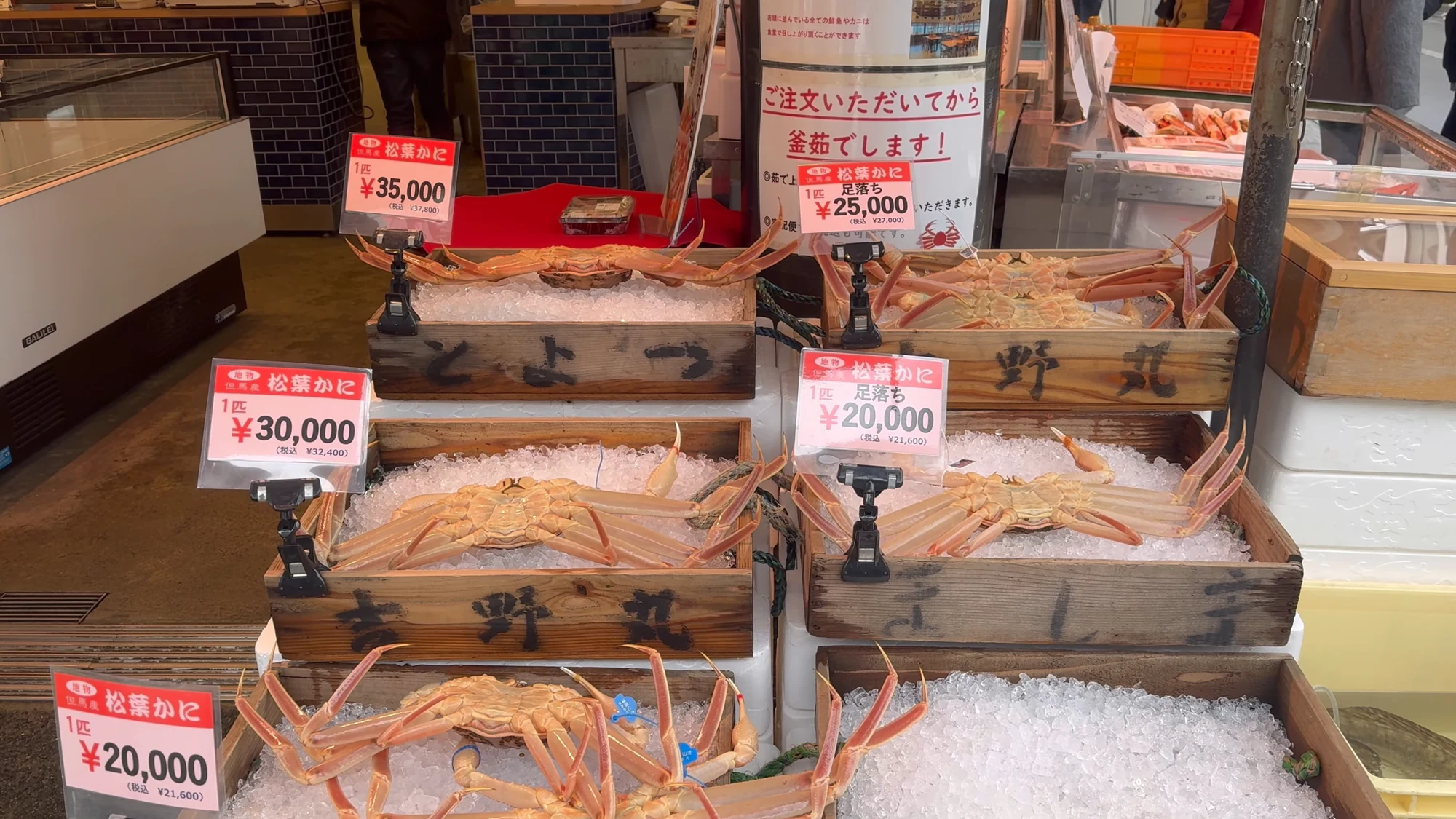
Roughly ¥15,000–50,000 per person with dinner and breakfast, with crab season at the top. ⚠️
Booking from abroad, practically
Kinosaki is among the easiest onsen towns in Japan to book from overseas, and it is worth using the town's own machinery. The tourism association runs its own vacancy search and reservation channel covering the town's inns, alongside the usual international platforms — and because every inn includes the bath pass, cross-platform comparison is genuinely like-for-like in a way it never is elsewhere. Prices are quoted per person, not per room, almost everywhere, and nearly always with dinner and breakfast attached: read "¥25,000" as one person's full evening — room, kaiseki, breakfast and the pass — not the cost of a double. Three habits make the booking better. Book the dinner-inclusive plan unless you have a firm reason not to; the inn dinner is half of what Kinosaki sells, and the town's independent dinner options thin out quickly once the inns begin serving. In crab months, book the crab plan by name — かに (kani) plans are labelled as such, and the grade of crab, not the room, is what moves winter prices. And state dietary needs at booking rather than arrival: kaiseki is a fixed procession, and kitchens handle substitutions gracefully with notice and awkwardly without. English is workable throughout — the famous houses handle it routinely, and the association's channels operate in it — so book direct where you can and say what you need plainly. ⚠️ Platform coverage and the association's booking channel details: verify at publish. One more habit: screenshot your reservation's meal plan in both Japanese and English — it is the page you will actually be asked about at check-in.
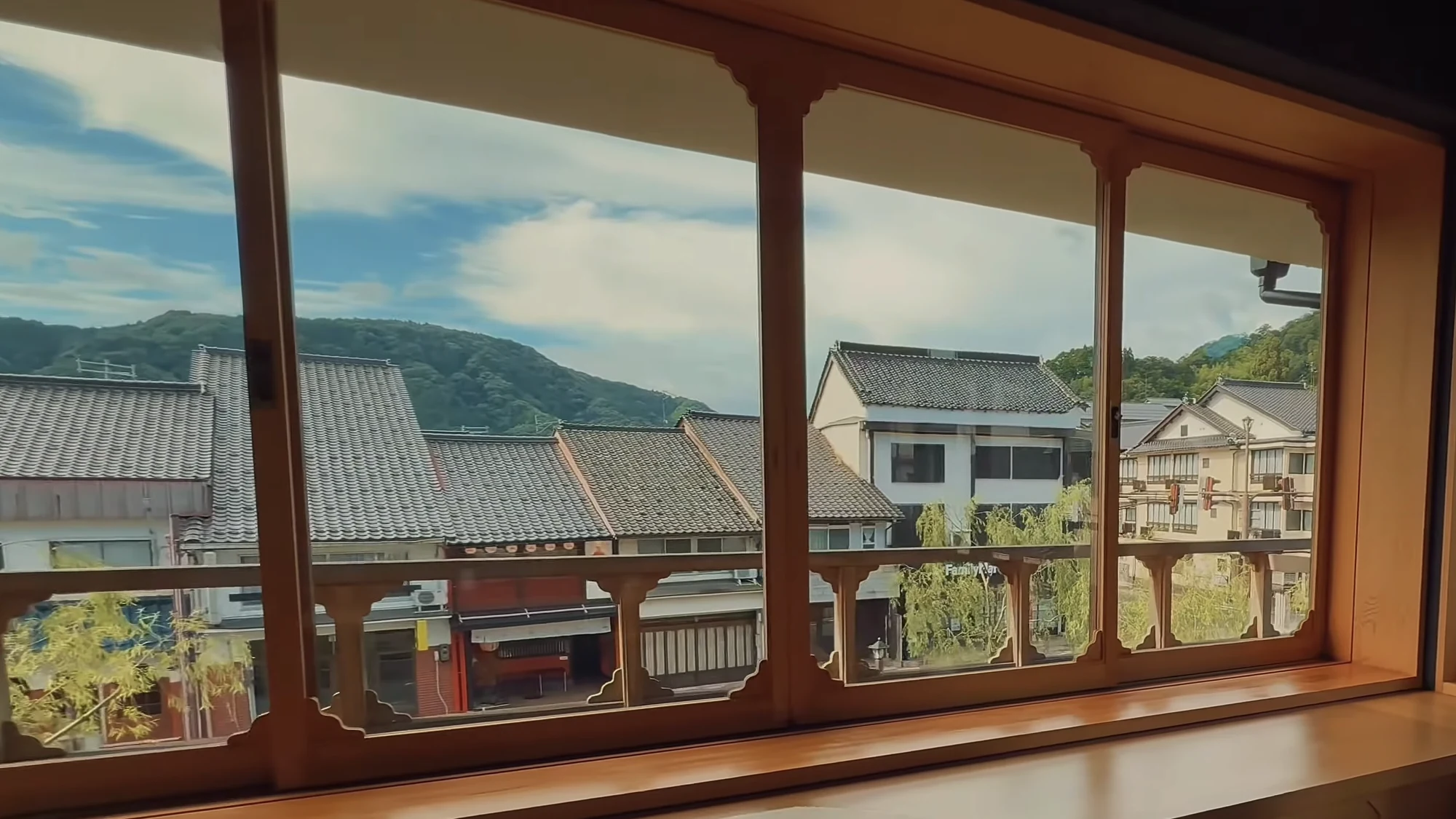
Book three to six months ahead for November to March weekends at the famous houses.
Where to Stay
Stay the night. The town is the inn. Day visitors get one bath and a pretty canal. Overnight guests get seven baths on a free pass, a kaiseki dinner, and streets that empty into lantern light by eight. Choose your room in the town-sized ryokan.
*Compare Kinosaki ryokan →*
Frequently asked questions
Are there any English-speaking ryokans in Kinosaki?
Which is the best ryokan in Kinosaki Onsen?
How much does a Kinosaki ryokan cost?
Do all Kinosaki ryokan include the bath pass?
Should I book dinner included?
Ryokan vs onsen: what is the difference?
Do Kinosaki ryokan have their own baths too?
Is it cheaper to stay outside Kinosaki and visit for the day?

Verified by The Japan Onsen Society
Verified July 7–16, 2026; the ordinance framing, pass mechanics, prices and closures verified September 22, 2026. Primary Japanese sources:
外湯めぐり発祥の地!温泉天国★城崎温泉 — 豊岡市観光公式サイト (Toyooka City Official Tourism Site — the 内湯 ordinance, guest-pass window, sotoyu system): [https://toyooka-tourism.com/recommend/onsen/kinosaki_sotoyu/](https://toyooka-tourism.com/recommend/onsen/kinosaki_sotoyu/)
外湯 — 城崎温泉観光協会 (Kinosaki Onsen Tourism Association — per-bath and day-pass prices, current closures): [https://kinosaki-spa.gr.jp/about/spa/](https://kinosaki-spa.gr.jp/about/spa/)
城崎の歴史 — 城崎温泉観光協会 (Kinosaki Onsen Tourism Association — the 717/720 founding record behind Koman's claim): [https://kinosaki-spa.gr.jp/about/history/](https://kinosaki-spa.gr.jp/about/history/)
城崎町湯島財産区 (Kinosaki-chō Yushima Property Ward — the municipal spring-management body): [https://kinosaki-onsen.wixsite.com/kinosaki-onsen/](https://kinosaki-onsen.wixsite.com/kinosaki-onsen/)