Private onsen in Kinosaki: in-room baths, kashikiri slots, and who actually needs them
Some inns keep small private baths you can reserve. The town caps their size, so book them on charm.
Quick answer
Several Kinosaki ryokan offer private onsen bathing, either as rooms with their own open-air bath or as kashikiri baths reserved by the hour. Nishimuraya Honkan's top suites carry private rotenburo, its sister Shogetsutei and mid-range houses like Tsubakino keep reservable private baths, and most inns charge roughly ¥1,000–3,000 (about US$7–20) per 45–60 minute kashikiri slot. ⚠️ verify per inn. One Kinosaki twist matters: the town's seven public bathhouses already admit tattooed bathers unconditionally, so the most common reason travelers need private baths elsewhere does not apply here.
Overview
In most onsen towns, "private onsen" is a workaround: for tattoos, for shyness, for small children, for couples who want the water to themselves. Kinosaki rearranges that logic, because its famous baths are public by design and welcoming by policy. Here, private bathing is not an escape hatch but a luxury layer, the quiet hour in your own steaming tub before dinner, between rounds of the seven-bath circuit. This guide covers both formats, names the houses that do them well, and is honest about who actually needs them in this particular town. Understand one legal fact before comparing rooms, because it sets every expectation on this page: a municipal ordinance caps the size of the bath any Kinosaki inn may build. That is why the town's public bathhouses are magnificent and its private baths are, by design, intimate — a cypress tub for two, not a resort pool with a mountain view. If your dream is a sprawling private rotenburo of the kind other onsen towns advertise, Kinosaki is structurally the wrong shop, and this page will say so honestly wherever it applies. What the town offers instead is a specific, real luxury: the small private soak as a counterpoint to the grandest public bathing culture in the country — both included in one stay, which no other famous onsen town can offer at all. Hold that frame and every price on this page reads correctly: small, additional, optional — and honest about all three, which is more than most private-onsen pages anywhere can say.
The two formats, and what they cost
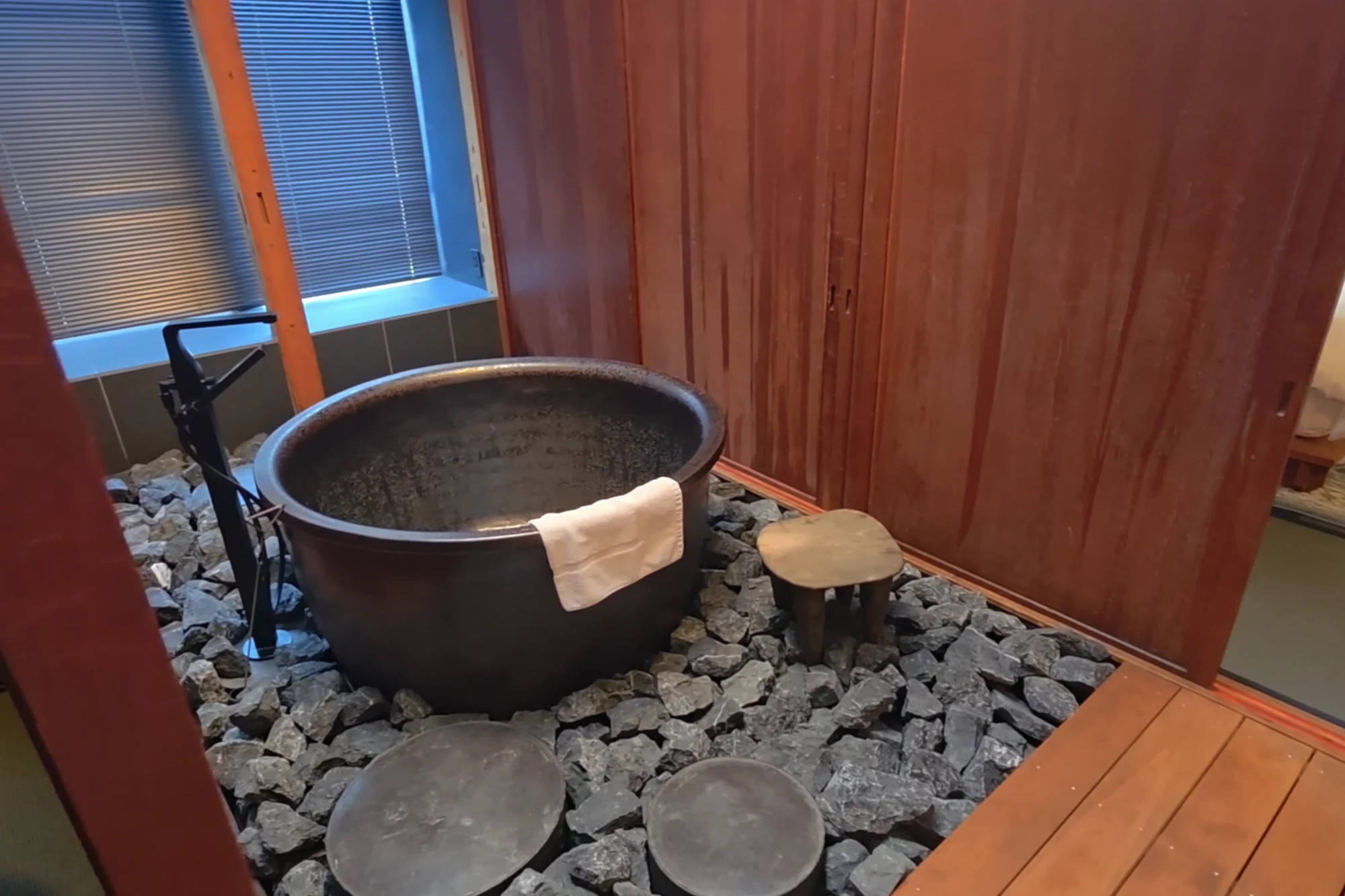
Rooms with private baths are the premium format: a cypress or stone tub on your own balcony or garden edge, fed with hot spring water, usable at 2 AM in a yukata you have stopped tying properly. In Kinosaki these concentrate at the top houses and the renovated upper rooms of mid-range inns, and they command a meaningful premium, often ¥10,000 to 25,000 (about US$65–165) per person above standard rooms. ⚠️ verify. Kashikiri (reserved) baths are the accessible format: most inns keep one or two private bath rooms that any guest can book at the front desk by the hour, typically ¥1,000 to 3,000 (about US$7–20) per slot, sometimes free at quieter houses. Same mineral water, same town outside the window, a fraction of the cost. The kashikiri mechanics reward knowing in advance: slots are typically booked at the front desk at check-in rather than online, the pre-dinner hours go first, and the standard slot is 45–60 minutes — enough for an unhurried soak, not an evening. A useful third format to watch: two of the public bathhouses themselves, Ichi-no-yu and Jizō-yu, keep family baths — private rooms inside the public system — though both are suspended pending major repairs (利用休止中) as of September 2026. ⚠️ If they reopen, they become the town's cheapest private option and need no particular inn at all. Between the two main formats, the kashikiri is the one to default to on a first visit: it delivers the private-water experience for the price of a lunch, leaves the room budget for the dinner, and requires no advance commitment beyond a word at check-in.
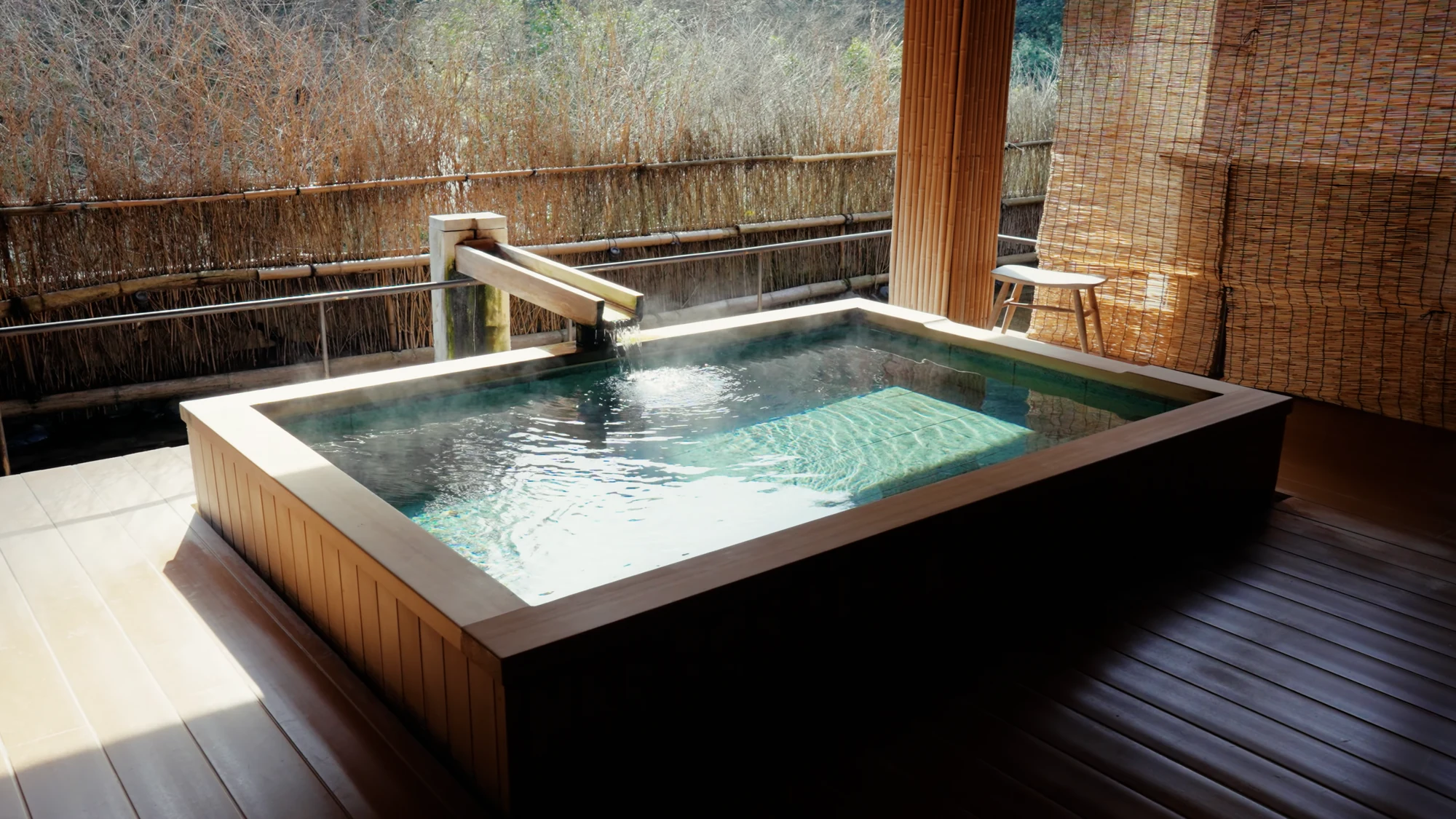
Two formats: a room with its own bath, or a kashikiri booked by the hour at roughly ¥1,000–3,000. ⚠️
The houses that do it well
Nishimuraya Honkan owns the top of this market: its best suites pair garden views with private open-air baths, the classic grand-ryokan version of the experience, at the town's highest rates (rooms roughly ¥40,000–180,000 / about US$265–1,200 with meals). ⚠️ verify. Nishimuraya Hotel Shogetsutei, the modern sister, makes the format more attainable, with open-air bath rooms and reservable private baths in a contemporary building that suits families. Tsubakino, the small canal-side house with a women-friendly design sensibility, is the mid-range pick: reservable private baths and a calm, contemporary take on the ryokan formula. ⚠️ confirm current kashikiri details per inn before publish; several other canal-center houses keep one private bath each, and the town's booking concierge can filter for them. A booking-channel note: the association's own vacancy search can filter the town's inventory, and the international platforms label private-bath rooms inconsistently — the Japanese room-type name is the reliable signal (see the booking section below), and a one-line message to the inn confirming "the room with the private open-air bath" costs nothing and prevents the classic disappointment of a beautiful room with a plain plastic tub. Inventory scale is the fact to internalise: this is a town of small historic houses, so "rooms with private rotenburo" means a handful per inn at the top houses and one or two elsewhere — dozens town-wide, not hundreds. That is why the crab-season sell-out happens first in exactly this category, and why flexibility on dates buys more here than flexibility on budget. ⚠️ Verify per-inn inventory near booking; it is the smallest and fastest-moving in town.
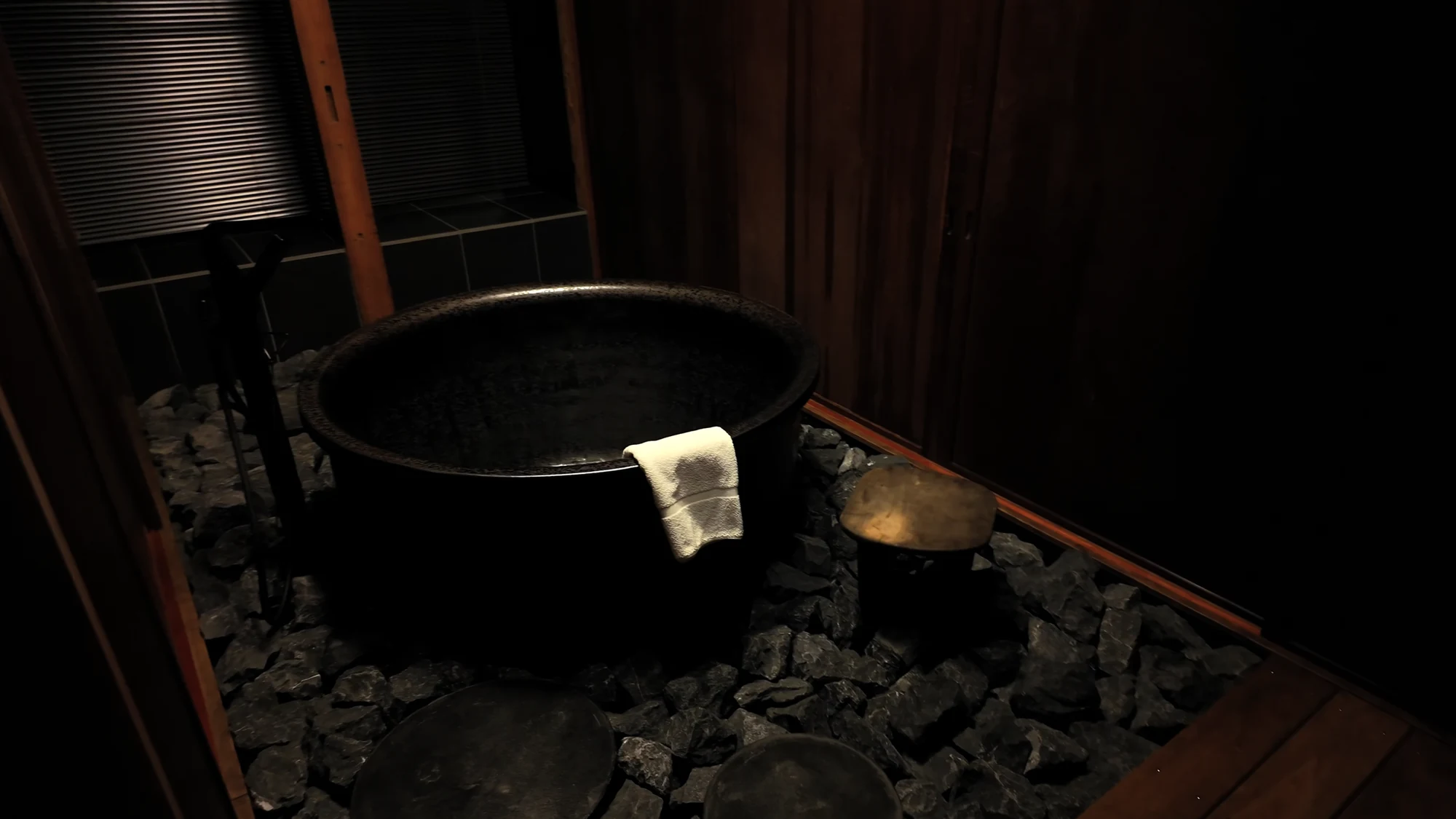
The houses that do it well treat the tub as furniture rather than as a facility.
Who actually needs private bathing in Kinosaki
Be honest with yourself here, because this town changes the calculus. Tattooed travelers, who drive much of the private-onsen demand nationally, need nothing special in Kinosaki: all seven sotoyu admit tattoos without conditions, which is precisely why we call it Japan's most welcoming onsen town. Shy first-timers often find the sotoyu the gentlest possible introduction, busy enough to be anonymous, ritualized enough to copy. The cases where private genuinely wins: couples who want the experience together (public baths separate by gender, kashikiri does not), families with small children, travelers with mobility needs the public houses cannot meet, and anyone for whom the private tub at midnight IS the holiday. For that last group, this is money well spent, and the suites sell out first in crab season for a reason. One more group belongs on the "genuinely wins" list: anyone celebrating something. The town's structure splits couples at every public door — men's side, women's side, meet on the bridge after — which is charming for a circuit and wrong for an anniversary hour. The kashikiri slot is the town's answer, and at ¥1,000–3,000 (about US$7–20) it is the cheapest private-onsen hour in any famous hot-spring town in Japan, precisely because the ordinance keeps it a sideline rather than the main product. The reverse list matters equally: solo travellers, first-timers curious about onsen culture, and anyone on one night almost never need the premium — the circuit is the show, and the kashikiri exists for the specific hour it serves.
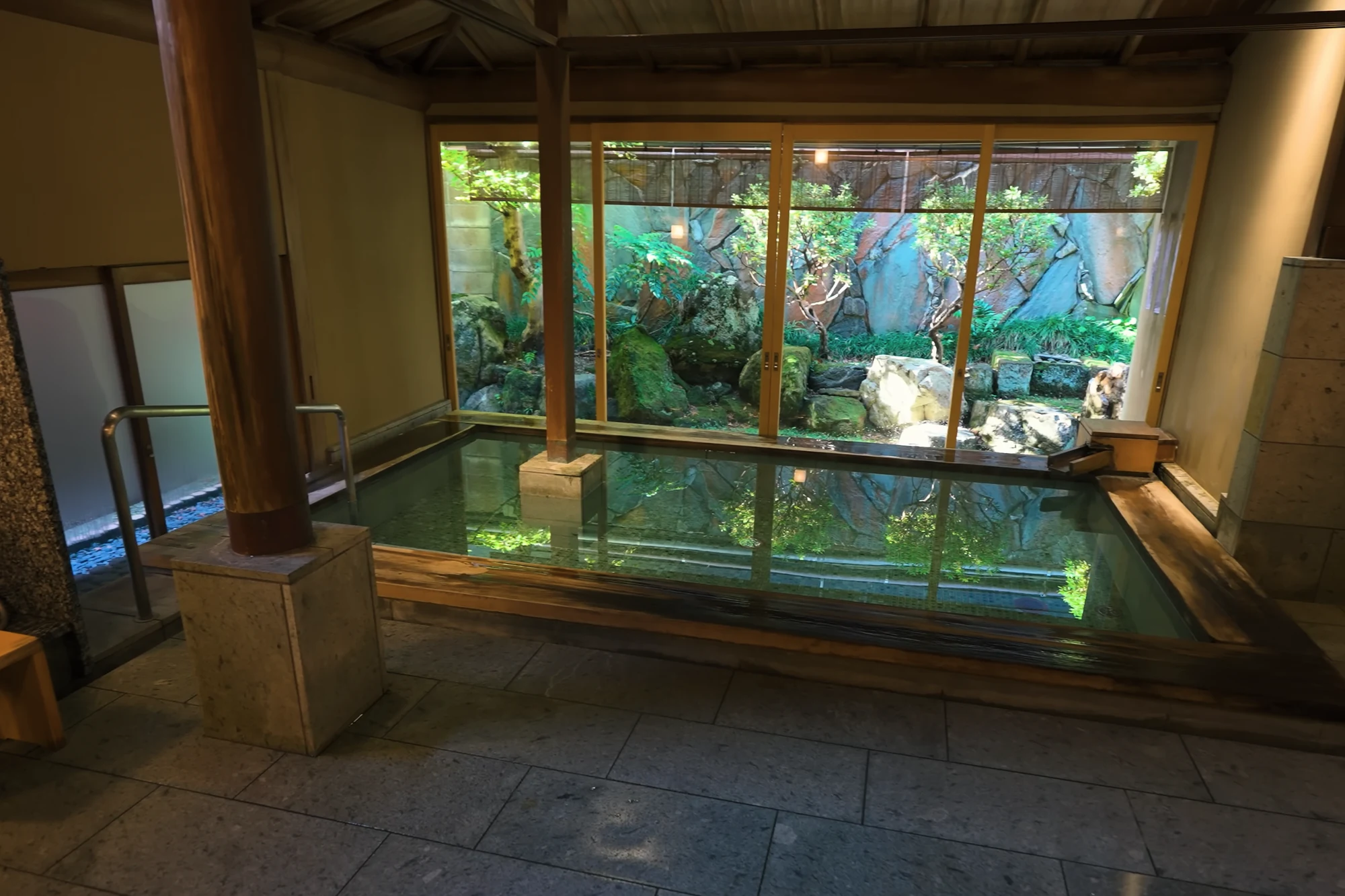
Most visitors do not need one: all seven public baths admit tattoos, which removes the usual reason.
How to book it without disappointment
Three practical rules. First, book the room type explicitly: "rotenburo-tsuki" (with open-air bath) rooms are specific inventory, and a generic booking at the right inn does not guarantee one. Second, reserve kashikiri slots at check-in, before dinner claims the evening; the good hours go fast in season. Third, remember the pass: every stay still includes the yumepa and the seven public baths, so the smart Kinosaki itinerary uses both, the circuit by evening, your private tub at night. The combination is the whole argument for paying the premium here rather than in a town with nothing else to offer. The room-type vocabulary, since it is the reliable signal across every booking channel: 露天風呂付き客室 (rotenburo-tsuki kyakushitsu, "guest room with open-air bath") is the premium format; 貸切風呂 (kashikiri-buro) or 家族風呂 (kazoku-buro, family bath) is the by-the-hour format. Search the Japanese terms even on English platforms — they appear in room names verbatim — and treat any listing that shows only a photo of a tub without the words as a question to ask, not an assumption to book. A fourth rule for winter: confirm whether the room's outdoor tub is usable in January — a private rotenburo in falling snow is the format's crowning experience, and the houses that offer it say so plainly, while a fair-weather tub advertised with a summer photo is a different product. Ask the season question directly and the answer sorts the inventory for you — the winter-capable rooms are the ones the town's own photographers shoot, and the inns know exactly which those are.
Book in-room rotenburo three to six months out for crab season. Kashikiri slots go at check-in.
The evening that uses both systems
The complete Kinosaki private-bath evening, timed: reserve the kashikiri slot at check-in for the last pre-dinner hour, soak it together at 17:00 while the day visitors drain toward the station, then dinner, then the public circuit under the lanterns — separately by gender for two houses, reunited on the bridges between. The private hour and the public evening are different pleasures in the same water, and doing both in one night is the whole argument for this town's version of "private onsen." For overnight guests with a room bath, invert it: circuit in the evening when the houses are liveliest, and save your own tub for the hour the town has none to offer — midnight, or the pre-dawn quiet before the 7:00 houses open. That timing is the one thing the room premium buys that no pass can: the water entirely on your own clock. In crab season, when the evening belongs to a long dinner, the midnight private soak stops being indulgence and becomes logistics — the circuit compresses, and the room bath absorbs what the schedule squeezed out. Both versions end the same way, which is the point of this page in one sentence: in Kinosaki, private bathing is the garnish and the town is the meal — order both, in that proportion, and you have gotten the rare thing this ordinance-shaped town actually sells. (Both timings assume the current five-house circuit; when Kou-no-yu reopens, its garden rotenburo rejoins the public half of the evening and the plan only improves.)
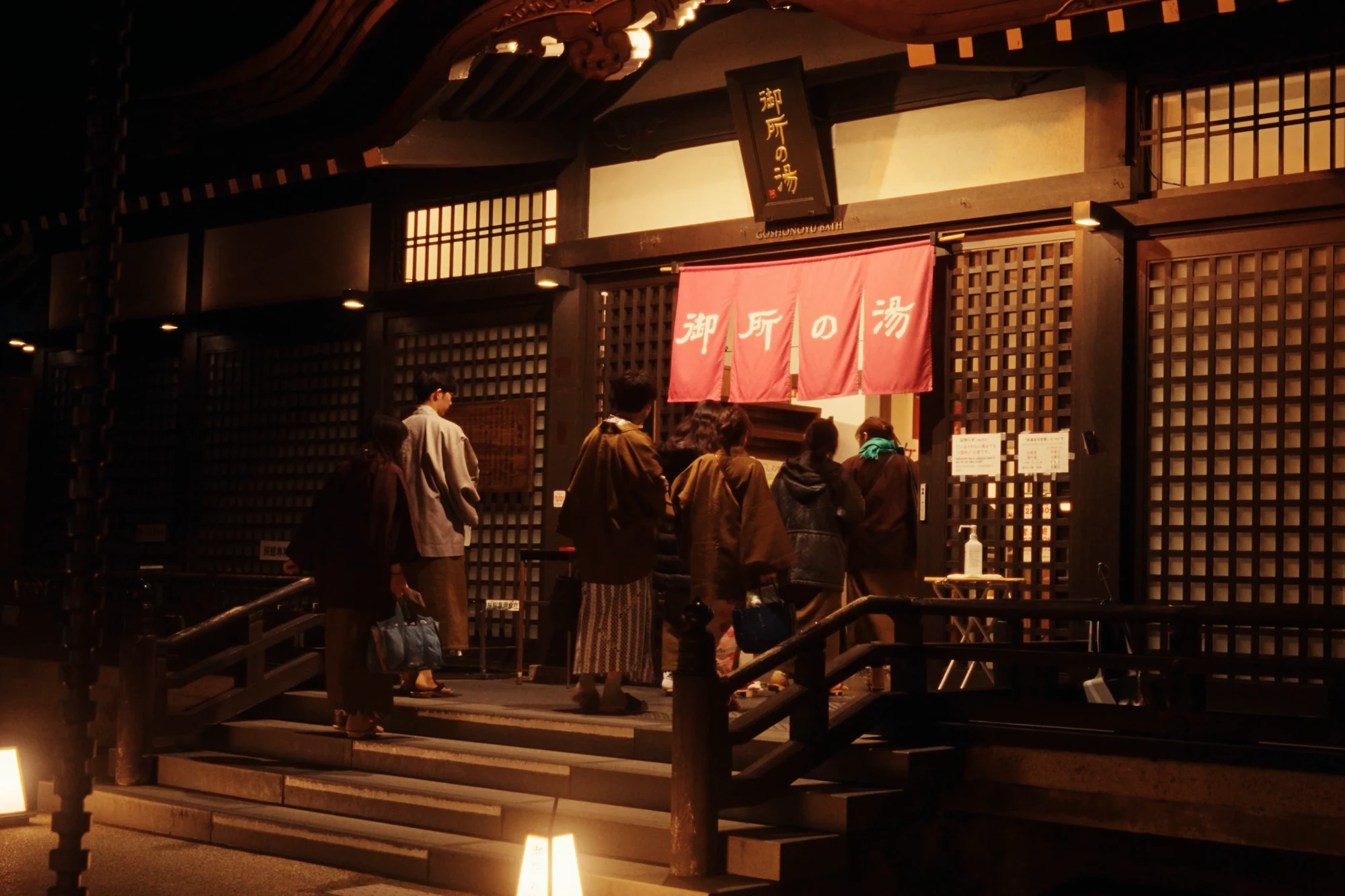
The best evening uses both systems: the private tub before dinner, the public circuit after it.
What a Kinosaki private bath actually looks like
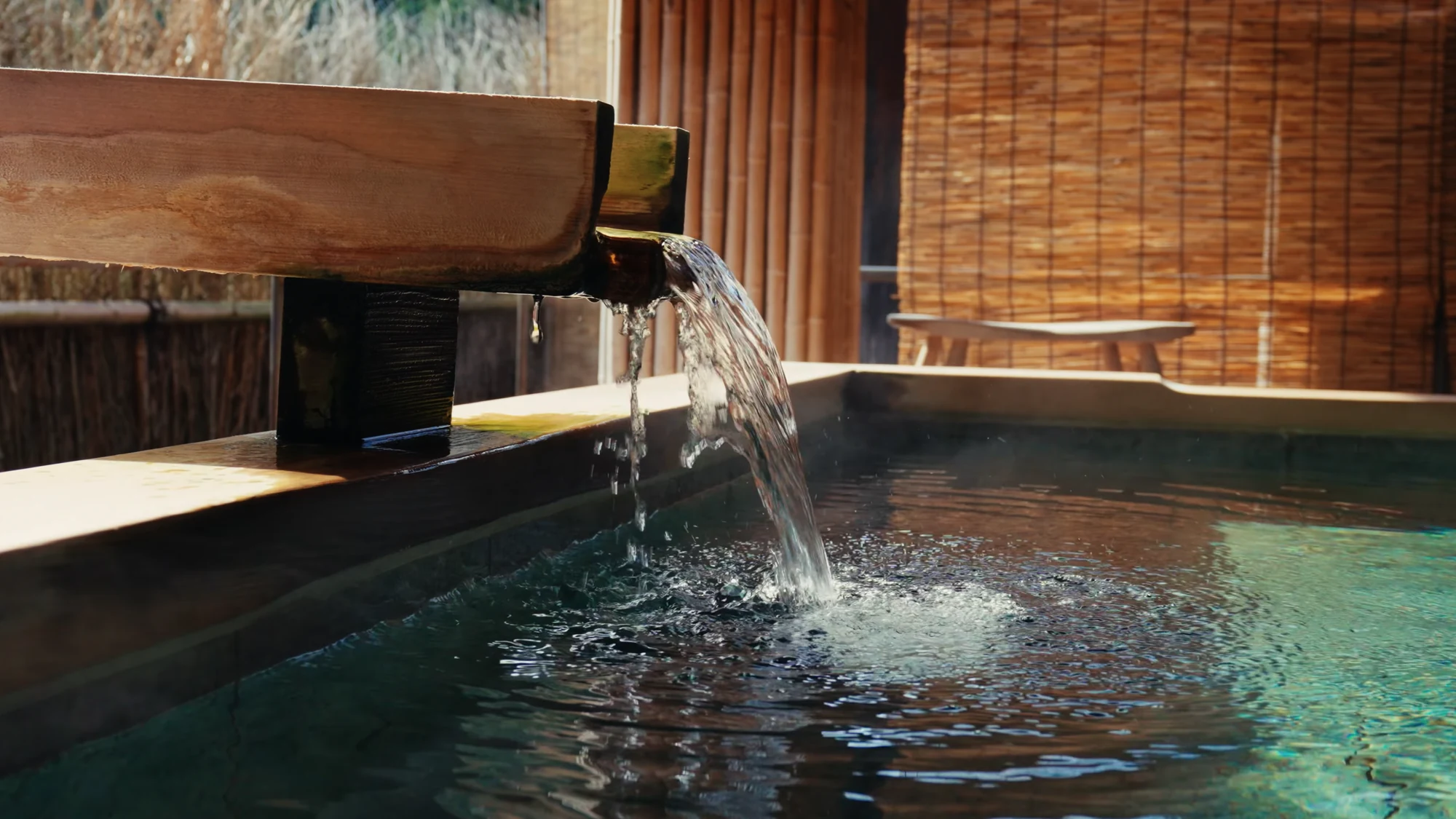
Set the visual expectation, because the photographs from other onsen towns will mislead you here. A Kinosaki private bath is a tub, not a pool: hinoki cypress or stone, built for two people sitting close, on a balcony or garden edge with the town's rooflines or a walled garden beyond. The ordinance's size cap means nobody's private bath is panoramic, and the framing in honest inn photography is tight for a reason. What the small scale delivers instead is intimacy the grand formats cannot: water at your own temperature, conversation at whisper distance, and — in winter — snow falling into steam a hand's reach away. Season shapes the experience more than room category does. The winter private soak is the format's masterpiece and the reason the premium peaks in crab season: cold air, hot water, and the town's quietest hours entirely yours. Summer inverts the appeal — the private tub becomes the cool-down option while the public circuit supplies the heat — and the shoulder seasons split the difference at the year's gentlest prices. If the private bath is the point of your booking, aim it at the season that flatters it; the tub is identical in July and January, but the memory is not. And whatever the season, take the last slot of the evening if it is free: the town's noise curfew is the bathhouse closing hour, and a private tub at 23:30 sits inside a silence the daytime town never offers. The scale that first reads as a limitation is, by the second soak, the entire charm — nobody ever remembered a pool the way they remember a small hot tub in cold air with the right person across it.

One tub, a few square metres of terrace, and a screen. That is what the ordinance permits.
Frequently asked questions
Which Kinosaki ryokan have rooms with a private onsen?
How much does a private onsen cost in Kinosaki?
Do I need a private onsen if I have tattoos?
Can couples bathe together in Kinosaki?
Is a private bath worth it when the seven public baths are free?

Verified by The Japan Onsen Society
Drafted June 12, 2026; the ordinance framing and family-bath status verified September 22, 2026. Primary Japanese sources:
外湯めぐり発祥の地!温泉天国★城崎温泉 — 豊岡市観光公式サイト (Toyooka City Official Tourism Site — the 内湯 size cap that shapes this page): [https://toyooka-tourism.com/recommend/onsen/kinosaki_sotoyu/](https://toyooka-tourism.com/recommend/onsen/kinosaki_sotoyu/)
外湯 — 城崎温泉観光協会 (Kinosaki Onsen Tourism Association — Ichi-no-yu / Jizō-yu family baths and suspension status): [https://kinosaki-spa.gr.jp/about/spa/](https://kinosaki-spa.gr.jp/about/spa/)