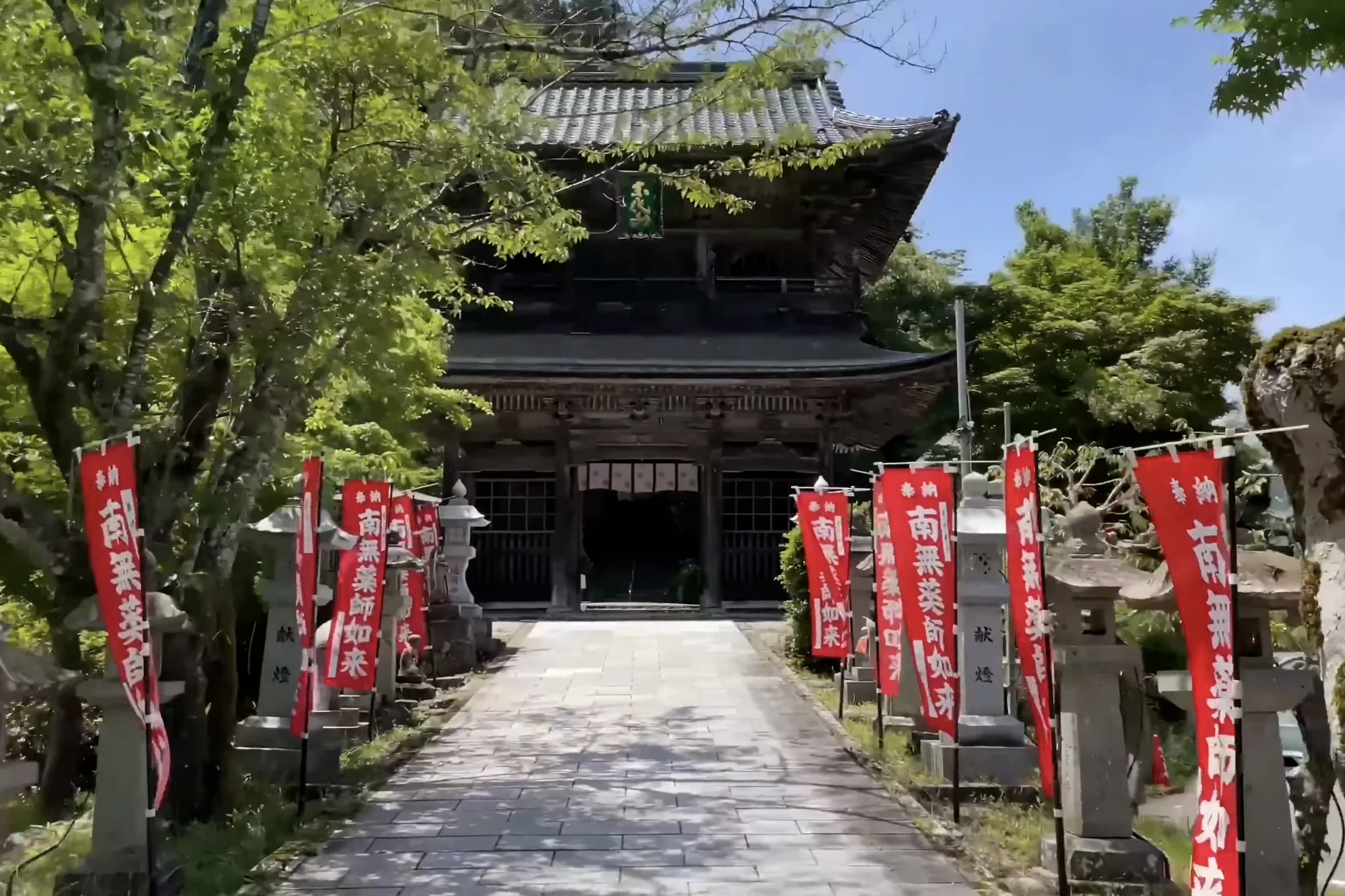
Overview
Kinosaki tells its origin in two registers, a dated monastic tradition and an older animal legend, and the town publishes both without collapsing one into the other. This page keeps them straight, adds the temple's own account of how it came to exist, and follows the thread that runs underneath all of it: people came here to take the cure, and the town was built around that fact.
The monk and the thousand days
The tourism association's history hub tells the founding with dates attached, which is rarer than it sounds for a Japanese onsen origin story. In 717, a travelling monk named Dōchi Shōnin came to Kinosaki. He had taken a vow of *shujō saido* (衆生済度) — the salvation of all living beings — and had been moving through the provinces in its service. At Kinosaki he received a dream-oracle from the Shisho Myōjin (四所明神), the four guardian deities of the place, and it set him a task. For a thousand days he performed austerities. At the end of them, in 720, hot water rose from the ground. The spot where it rose is the site of Mandara-yu (まんだら湯), which is still a working public bathhouse on a street you can walk down this afternoon. That is an unusually direct line between a founding legend and a building with opening hours, and it is worth taking seriously as a piece of travel: most origin stories point at a hillside or a vanished shrine. This one points at a door, a locker, and a bath you can get into for ¥800 (about US$5.30). The town counted its 1,300th anniversary from 720, marking *kaiyu 1300-nen* in 2020 — the phrase means "1,300 years since the opening of the hot water," and the counting is from the spring, not from the town or the temple. The distinction matters for how Kinosaki understands itself. The water came first and everything since has been arranged around it, which is also, eventually, the argument of the ordinance that governs the baths today. A note on the dates, because precision here is the whole point of this page: 717 and 720 are the association's own published years, given in the Japanese era system as Yōrō 1 and Yōrō 4. They are a tradition with a fixed calendar, not a modern estimate, and the temple independently gives the same sequence. Where this page says "tradition," read it as *the account the town and the temple both publish*, not as *what a historian has proven*.
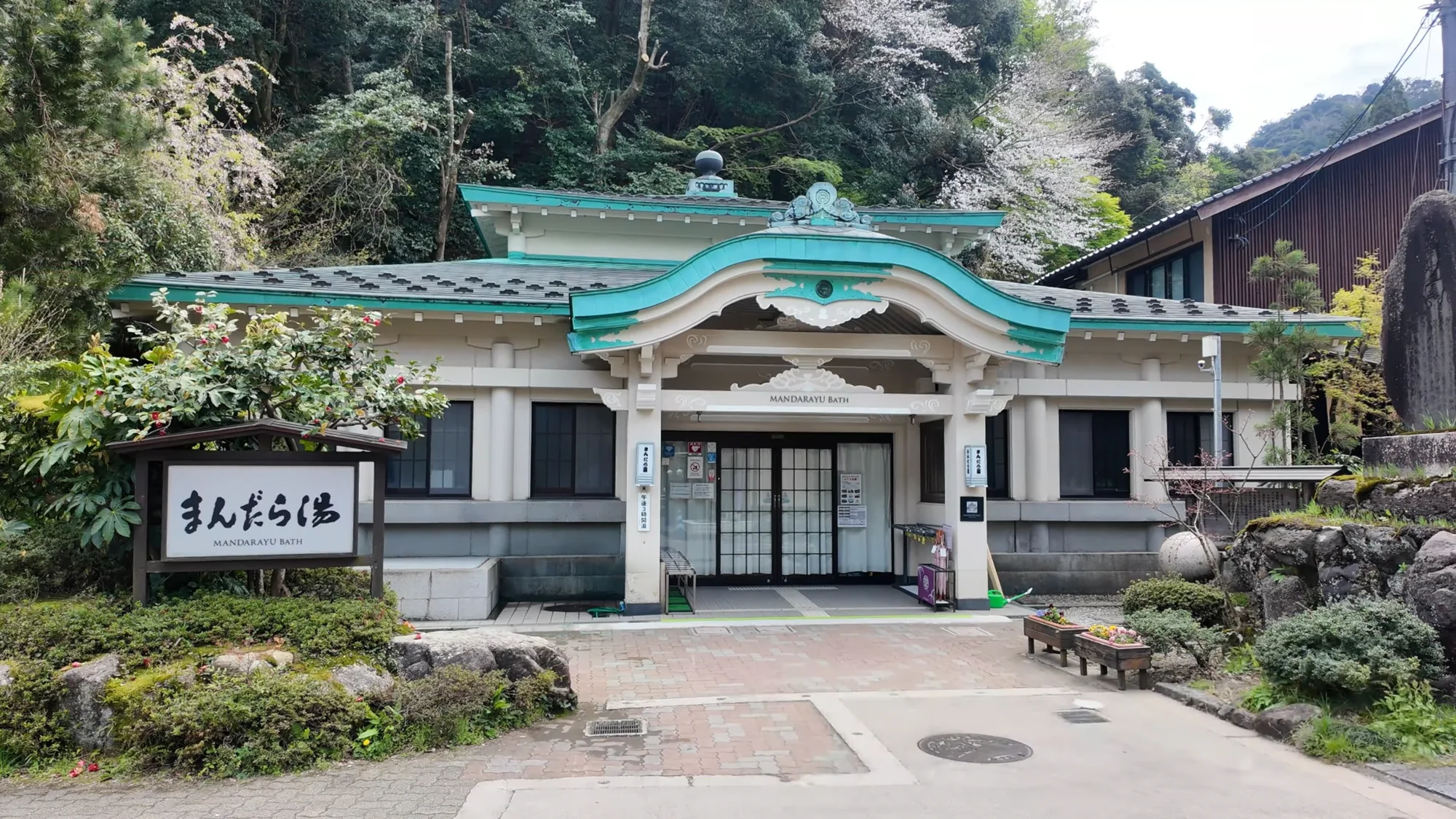
Mandara-yu marks the site where the spring is said to have answered a thousand days of austerities in 720.
738: the temple, and the name an emperor gave it
Eighteen years after the water came, Dōchi founded a temple above the town. Onsenji's own site gives the year as 738 — Tenpyō 10 — and that single click resolves a date that circulated for years in English without a primary source behind it. The temple is Kōyasan Shingon-shū (高野山真言宗), the Shingon school headquartered at Mount Kōya, and it holds the rank of *bekkaku-honzan* (別格本山), a special head temple. Its principal image is an eleven-faced Kannon (十一面観音). And its full name carries something most temple names do not: 末代山温泉寺, Matsudaisan Onsenji, was conferred by Emperor Shōmu, who designated it 城崎温泉の守護寺 — the guardian temple of Kinosaki Onsen. Sit with what that means. The emperor who commissioned the Great Buddha at Tōdai-ji, in the same decades he was doing it, named a temple in a remote valley on the Japan Sea coast and defined its job as looking after a hot spring. Kinosaki was not an obscure place being indulged. It was a resource the state thought worth guarding, and it was guarded in the way the eighth century guarded things — by giving a temple the responsibility in writing. The temple has held that role, by its own reckoning, for around thirteen hundred years since. The continuity is not unbroken in any simple sense; the town below it burned down in living memory. But the arrangement itself — a temple above, the water below, and a formal relationship between them — survived every century that has tried it, and it is the reason the climb up to Onsenji is not an optional extra on a Kinosaki visit. It is the other half of the thing you came for.
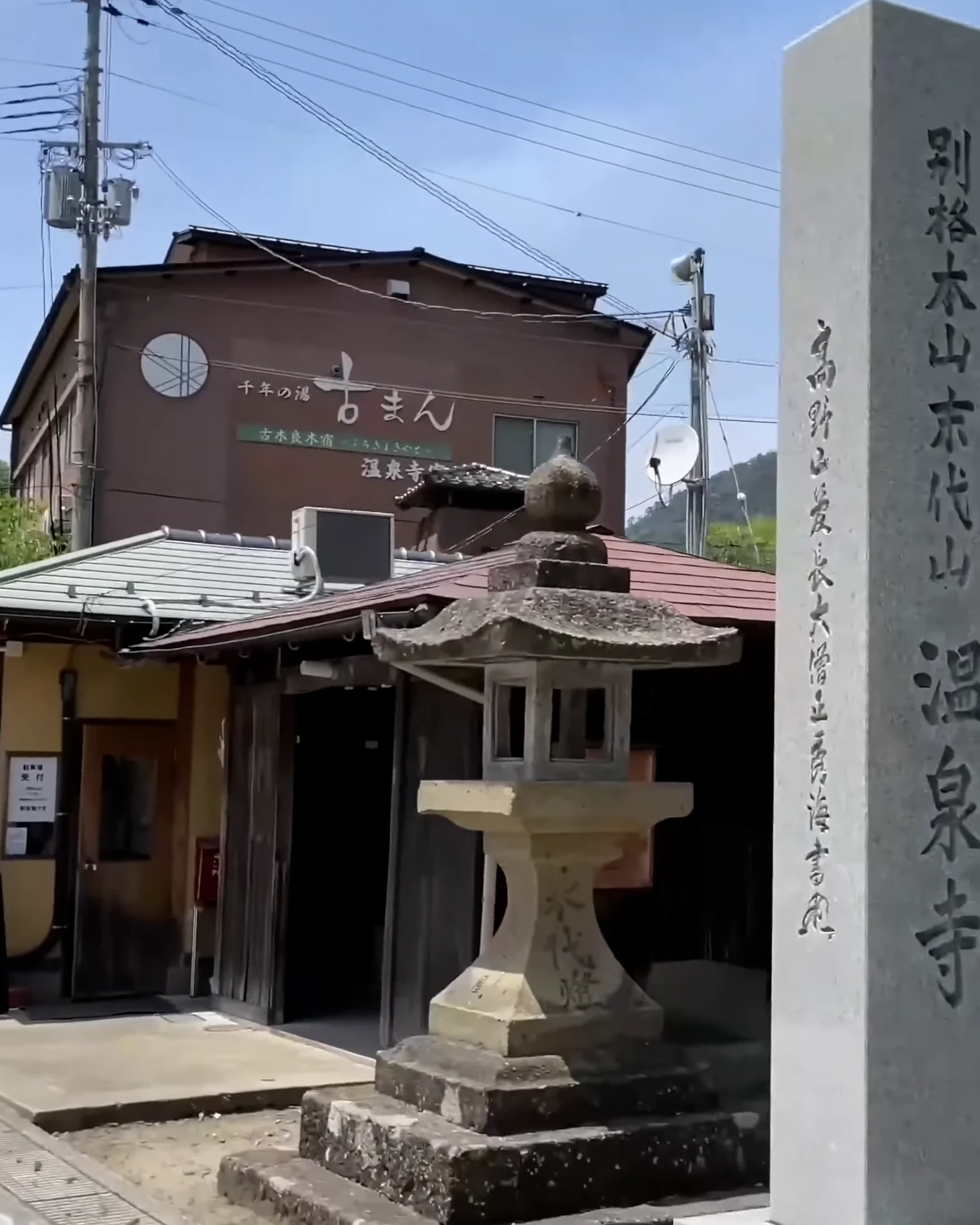
Onsenji was founded in 738; its mountain-name and temple-name were conferred by Emperor Shomu.
The sculptor, the sea, and the image that came back
The temple keeps a founding legend of its own, and it is the best story in this town that almost nobody writing in English has told. In the Nara period, a sculptor named Keibunkai (嵆文会) was commissioned to carve the eleven-faced Kannon for Hasedera in Yamato — the great image, two *jō* six *shaku* tall, roughly eight metres (about 26 feet). He completed it. Then he began a second image from the same wood, and could not finish it. Whatever the reason, he gave the attempt up and cast the unfinished figure into the sea. Years later, Keibunkai came to Kinosaki for *tōji* (湯治) — to take the cure in the hot water, the practice this whole valley exists to serve. And near the mouth of the Maruyama River, at a place called Taiyushō (田結庄), he found the image he had thrown away, washed ashore. He read it as a karmic return. He finished the carving he had abandoned, invited Dōchi Shōnin to the site, and together they founded the temple around it. That image is Onsenji's *honzon*, its principal object of worship, and it is why the association's line about the Kannon "sharing wood and maker with Hasedera's" is literally true rather than a piece of temple flattery. The legend is preserved in a painting, the *Onsenji engi-zu* (温泉寺縁起図), by Kaihō Yūchiku (海北友竹), a mid-Edo painter and the grandson of Kaihō Yūshō. It is a designated cultural property of Kinosaki town, and it reads in an unusual order — beginning at the top, running along the bottom edge, up the right side, and ending in the middle. Keibunkai himself, the temple notes, was one of a family of Nara master sculptors — his father Bunkun (文勲) and brother Shukun (首勲) among them — naturalised Tang Chinese living at Kasuga in Kawachi, credited by tradition with principal images at Hōryū-ji and other ancient temples. Notice what the story turns on. Not a vision, not a miracle of water. A craftsman came to Kinosaki *to take the cure*, and while he was here the thing he had abandoned came back to him. Tōji is not a later use that grew up around the town's religion. It is inside the founding legend, at the exact hinge of the plot.
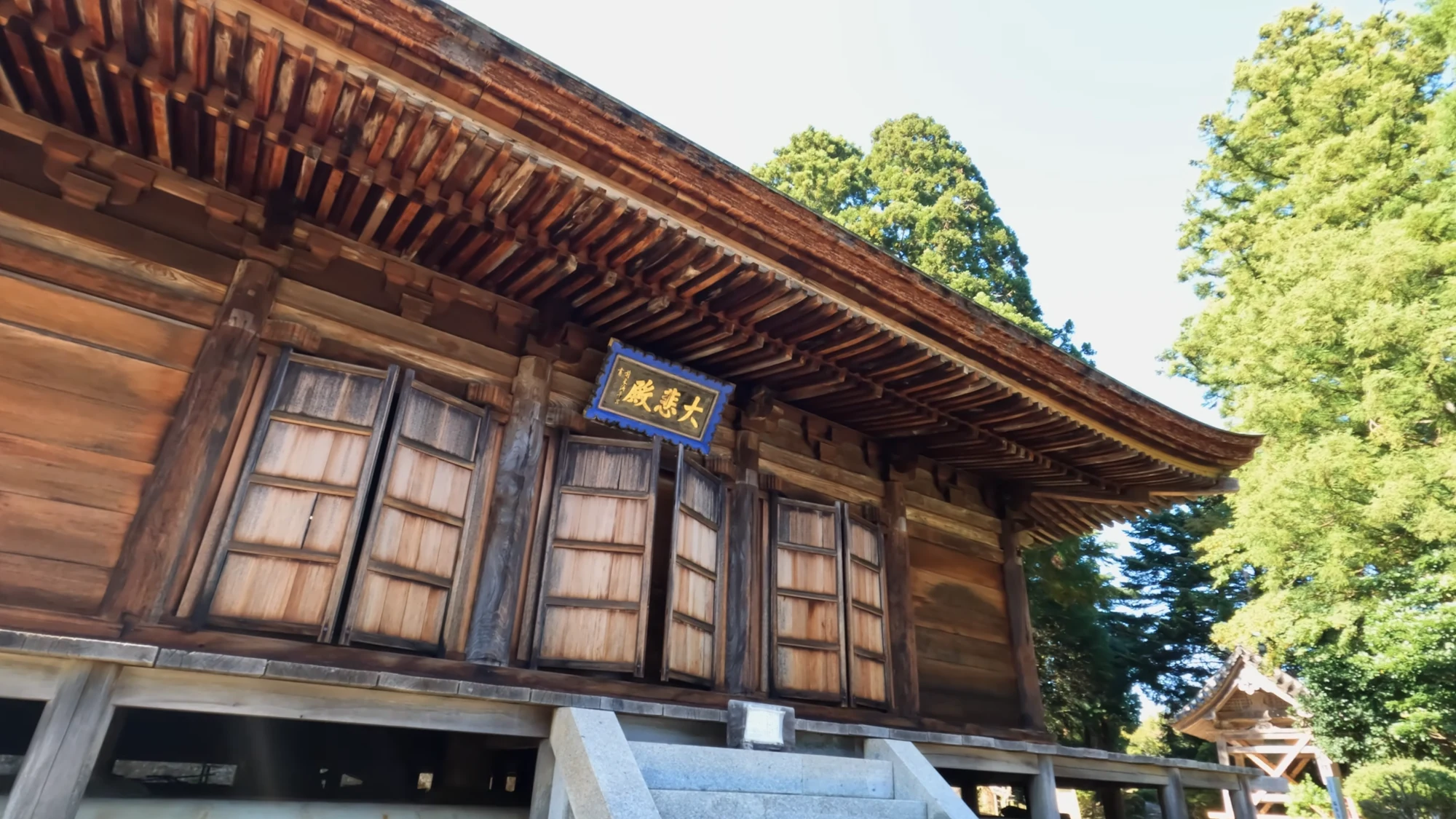
The hall is dedicated to Yakushi Nyorai, the healing buddha the source spring is named for.
The stork, older and hedged
Beneath the dated tradition runs a story that claims to be older, and the association carries it in the legend register rather than the historical one. Some fourteen hundred years ago, in the era of Emperor Jomei — who reigned from 629 — villagers noticed an injured *kōnotori*, an Oriental white stork, returning again and again to the same spot to stand in warm water seeping from the ground. Its wounded leg healed. Where the bird had bathed, people bathed, and that place became Kō-no-yu (鴻の湯), the stork's bath. It is traditionally the bath for *furō chōju* (不老長寿, long life) and *fūfu enman* (夫婦円満, marital harmony), and it is known as the bath that invites happiness. Two things are worth saying plainly about this story. The first is that it is legend, and the association treats it as legend. The reign date of Emperor Jomei is real; the dating of the stork to it is not evidence of anything. If the two accounts are read as competing claims about which came first, the question is unanswerable and the town does not try to answer it. The second is that the bird is not a metaphor here. The Oriental white stork went extinct in the wild in Japan in 1971, and Toyooka — the city Kinosaki belongs to — has spent decades running the reintroduction programme that brought it back. Storks now nest and forage in the rice fields a short drive from the bathhouse named after one. A legend about a healing stork sits in a valley that spent forty years healing the species. Nobody planned that, and it is the kind of rhyme that a place either earns or does not. ⚠️ Current status: Kō-no-yu is closed for *chōjumyōka kōji* (長寿命化工事, life-extension works), with reopening scheduled for November 2026 per the springs authority. This is a works closure with a stated end date, not an indefinite suspension. Confirm before travel.
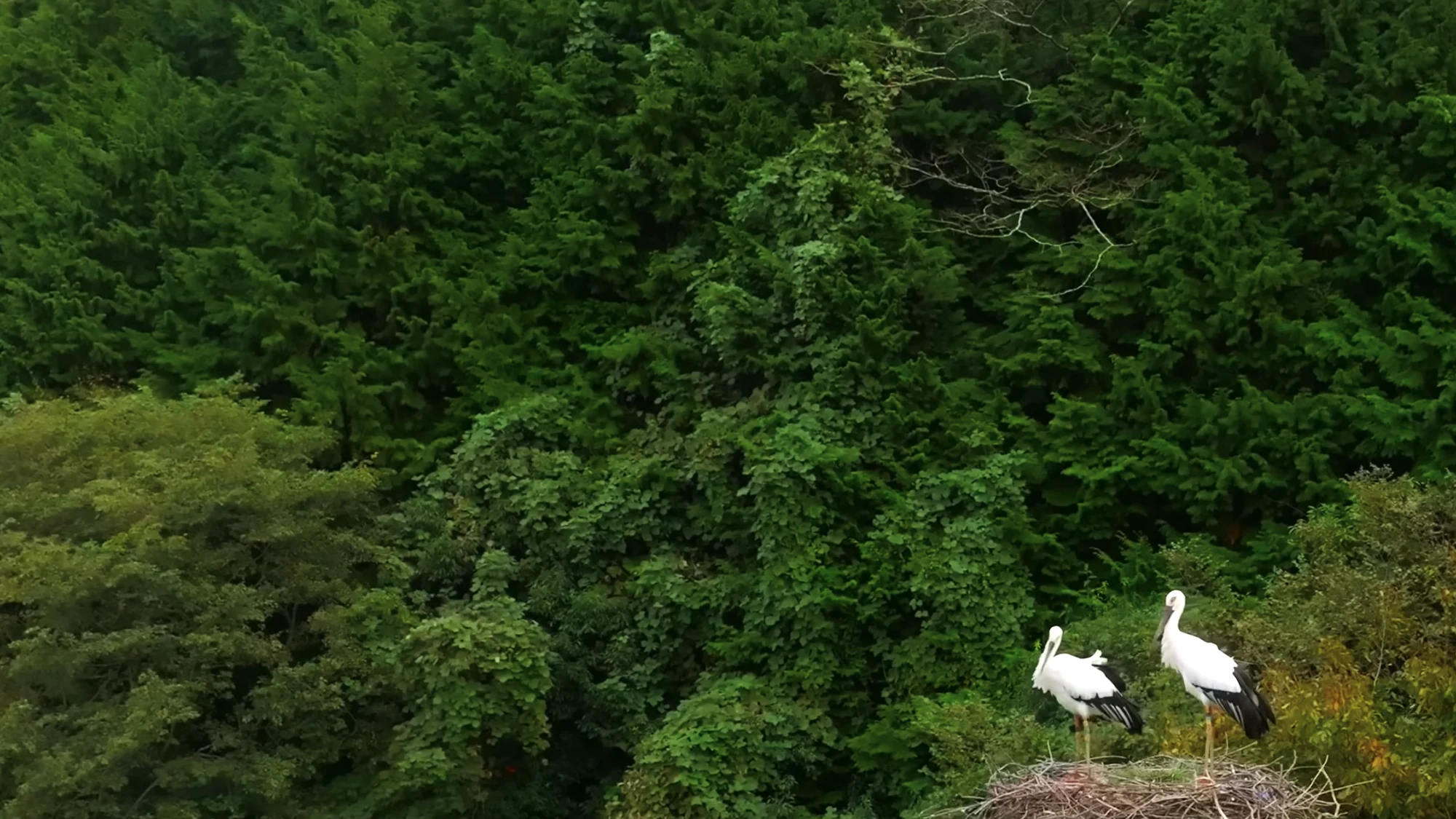
The bird went extinct in the wild in Japan in 1971. Toyooka released the first captive-bred pair in 2005.
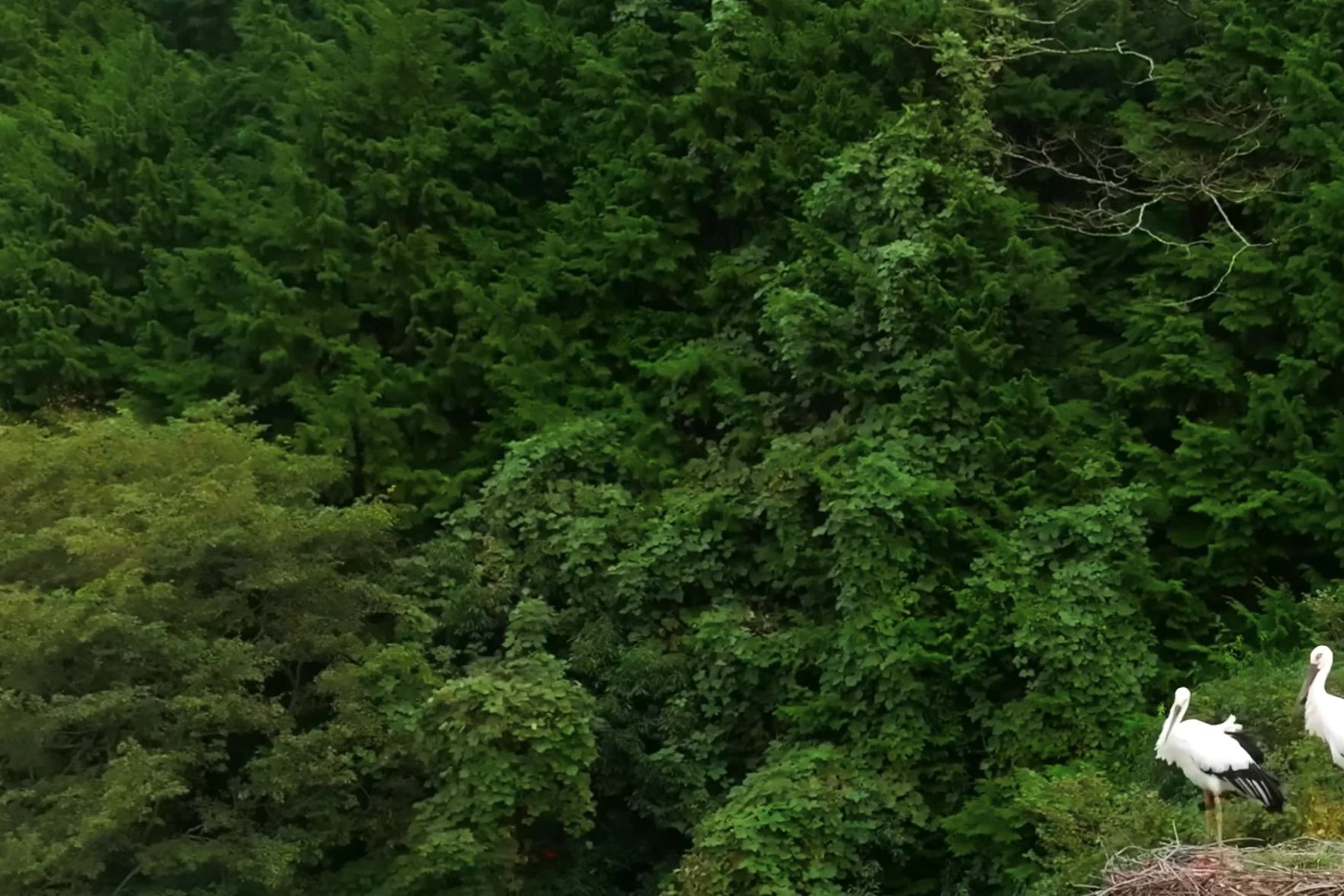
The stork legend is older and less firmly dated than the monk's. We print it as legend, not record.
The ritual the temple kept
The old order of operations at Kinosaki was not the one visitors use today, and it is worth knowing because it explains the shape of the town. A *tōji* visitor, arriving to take a cure that might last weeks, did not go straight to the water. They climbed to Onsenji first. There they prayed, and the priest gave them two things: a wooden ladle, the *yushaku* (湯杓), and instruction in the *koshiki nyūtō sahō* (古式入湯作法), the old formal method of entering the bath. Only then did they come down to the spring. The sequence encodes a proposition — that the water is a thing you are granted access to rather than a thing you buy — and the temple still maintains a dedicated account of the rite. It is not a reenactment for visitors; it is a practice the temple has continued to document. The modern echo is easy to miss and easy to feel. Kinosaki's bathing culture is unusually formal for a leisure destination: you change into a *yukata* supplied by your inn, you walk to the baths through public streets in it, you carry a small towel and a bag, you follow a known etiquette inside, and you move between seven houses over an evening rather than settling into one. The ladle is gone. The idea that bathing here has a correct form is entirely intact. For a visitor who wants to do this properly, the old sequence is also simply the better itinerary. Take the ropeway or the path up to Onsenji in the afternoon, see the Kannon, then come down into the town as the light goes and start the circuit. You will be doing, roughly, what people have done here since the eighth century, and the walk downhill into a lit street full of people in yukata is one of the great arrivals in Japanese travel.
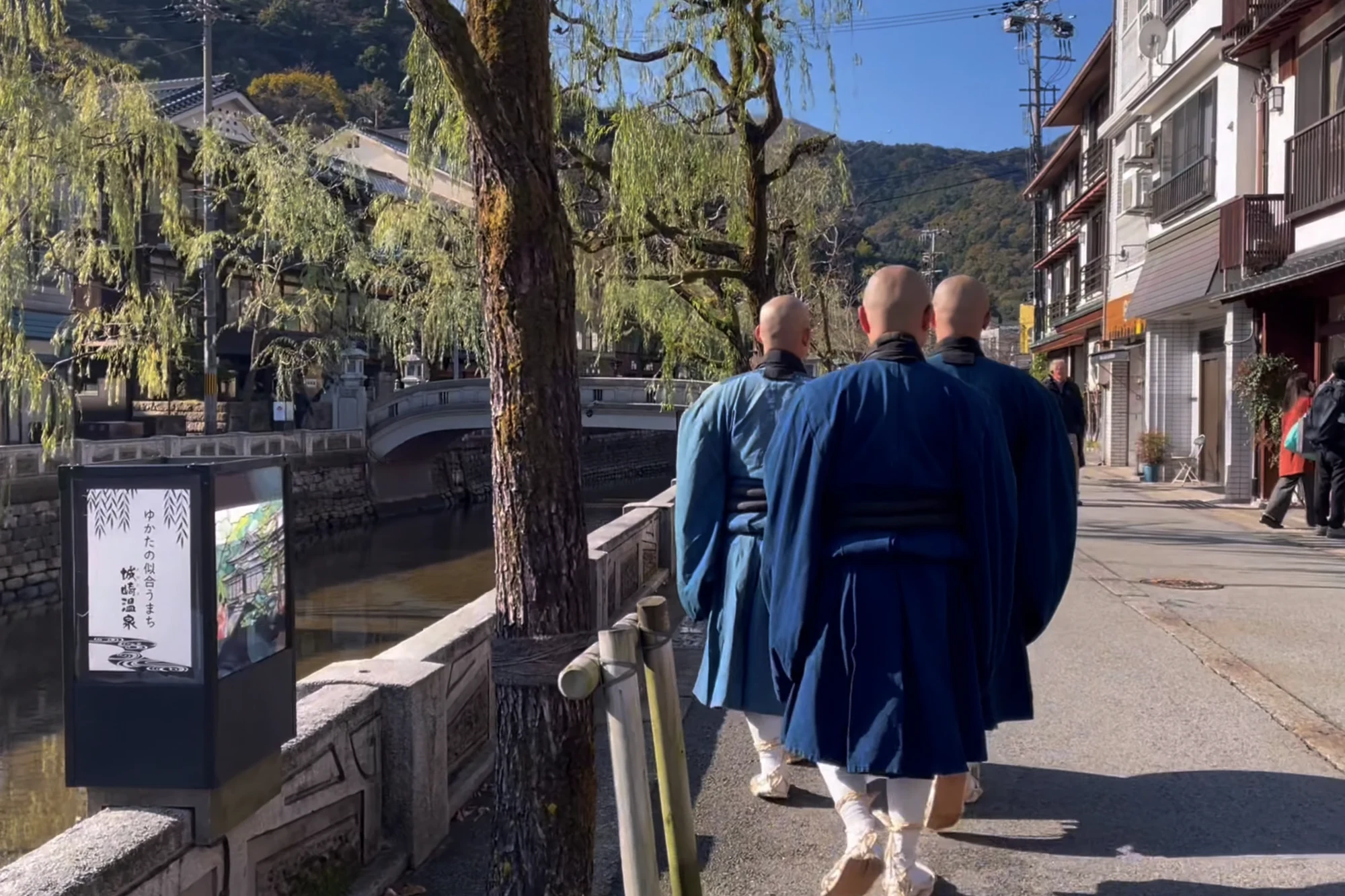
Onsenji still holds the rite that governed bathing here long before the town sold rooms.
1925: the founding's second act
Every origin story in this town passes through one modern gate, and it is not optional. On 23 May 1925 the Kita-Tajima earthquake — magnitude 6 or above — struck the coast, and the fires that followed destroyed Kinosaki. Not damaged: destroyed. The wooden town that had grown up around the springs over twelve centuries was gone in a day. The springs survived. And the decision the town made next is the reason there is anything here to visit. Under mayor Nishimura Sahei (西村佐兵衛), Kinosaki rebuilt *sotoyu-first* — the public bathhouses before the private buildings. Six sotoyu were rebuilt between 1926 and 1932. A land readjustment reorganised the streets around them. By 1935 the framework of the townscape you walk through today was complete. Ichi-no-yu (一の湯) was rebuilt in reinforced concrete, deliberately, as a firebreak — a lesson from the fire built into the fabric of the replacement. The building standing there now is a 1999 rebuild that keeps that façade. The continuity this page is really about is therefore not a building. Nothing standing in Kinosaki is thirteen hundred years old. What is continuous is the spring, and a decision repeated across centuries about what the spring is for: a resource held in common, bathed in publicly, arranged around by everything else. A monk received it in 720. An emperor assigned a temple to guard it in 738. A mayor rebuilt the public baths before the private houses in 1926. The ordinance that caps how large an inn's private bath may be is the same decision, made again, in administrative language.
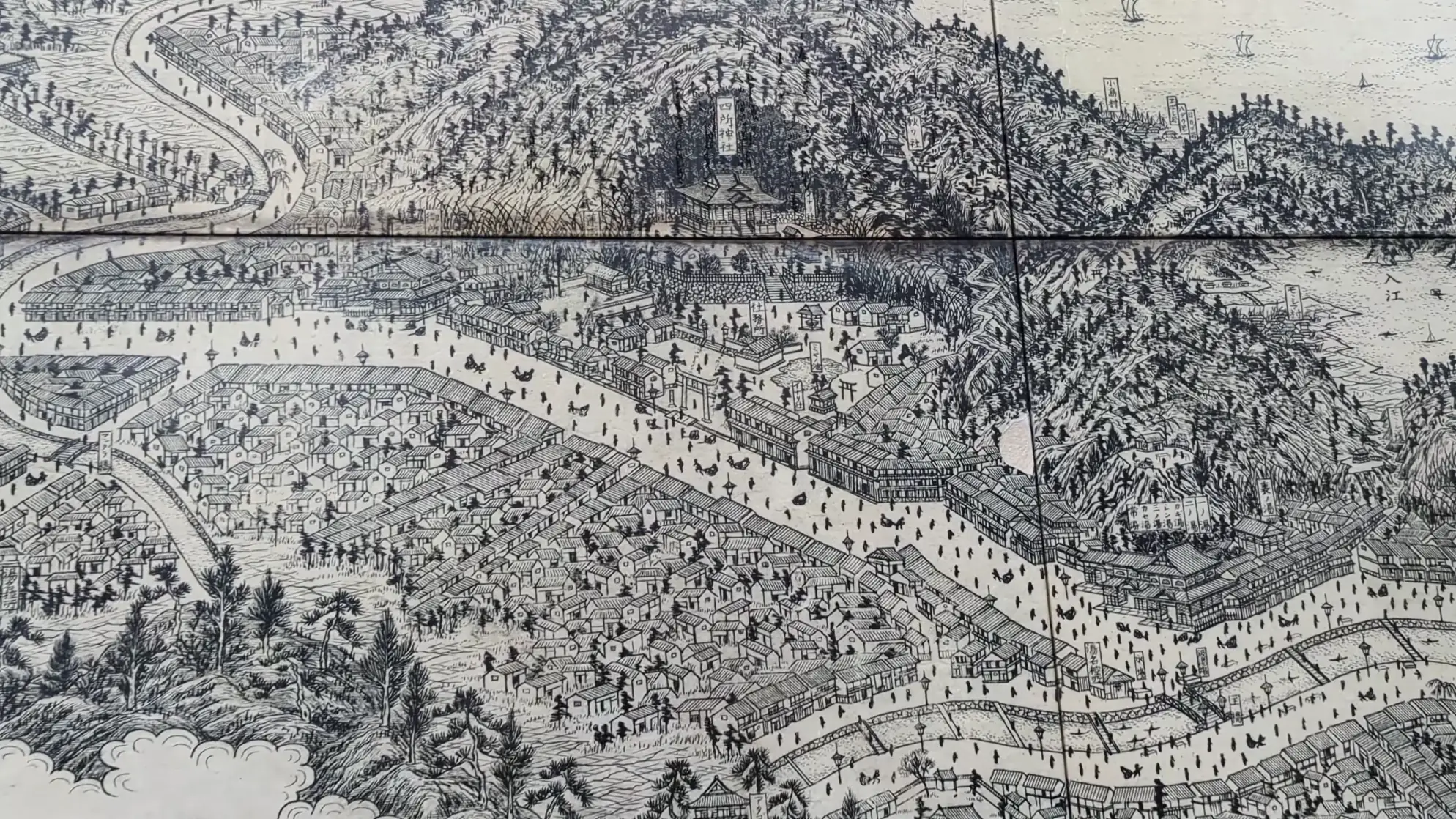
The rebuild after 1925 is the founding's second act: six bathhouses went up between 1926 and 1932.
What you can stand in front of today
The founding is unusually visitable here, which is not true of most Japanese origin stories. Mandara-yu is the site where the water rose in 720. It is a working bathhouse, one of the seven, open from 15:00 (⚠️ hours and closing days are perishable — confirm on the day). You can get in. Onsenji sits above the town, reachable on foot or by the Kinosaki Onsen Ropeway. The eleven-faced Kannon is the image from the legend. The *engi-zu* painting is the town-designated cultural property that tells it. Kō-no-yu stands at the quiet upper end of the main street, where the stork is said to have healed. During the works closure you can stand in the forecourt, which is worth doing anyway — it is the least commercial corner of the town. The Shisho Shrine (四所神社) honours the guardian deities whose oracle set Dōchi his thousand days. It is also where the autumn festival is held each October, with the float clash at the Ō-bashi bridge in front of Ichi-no-yu. Walk those four in that order and you have walked the founding: the oracle, the water, the temple, and the older story underneath all three.
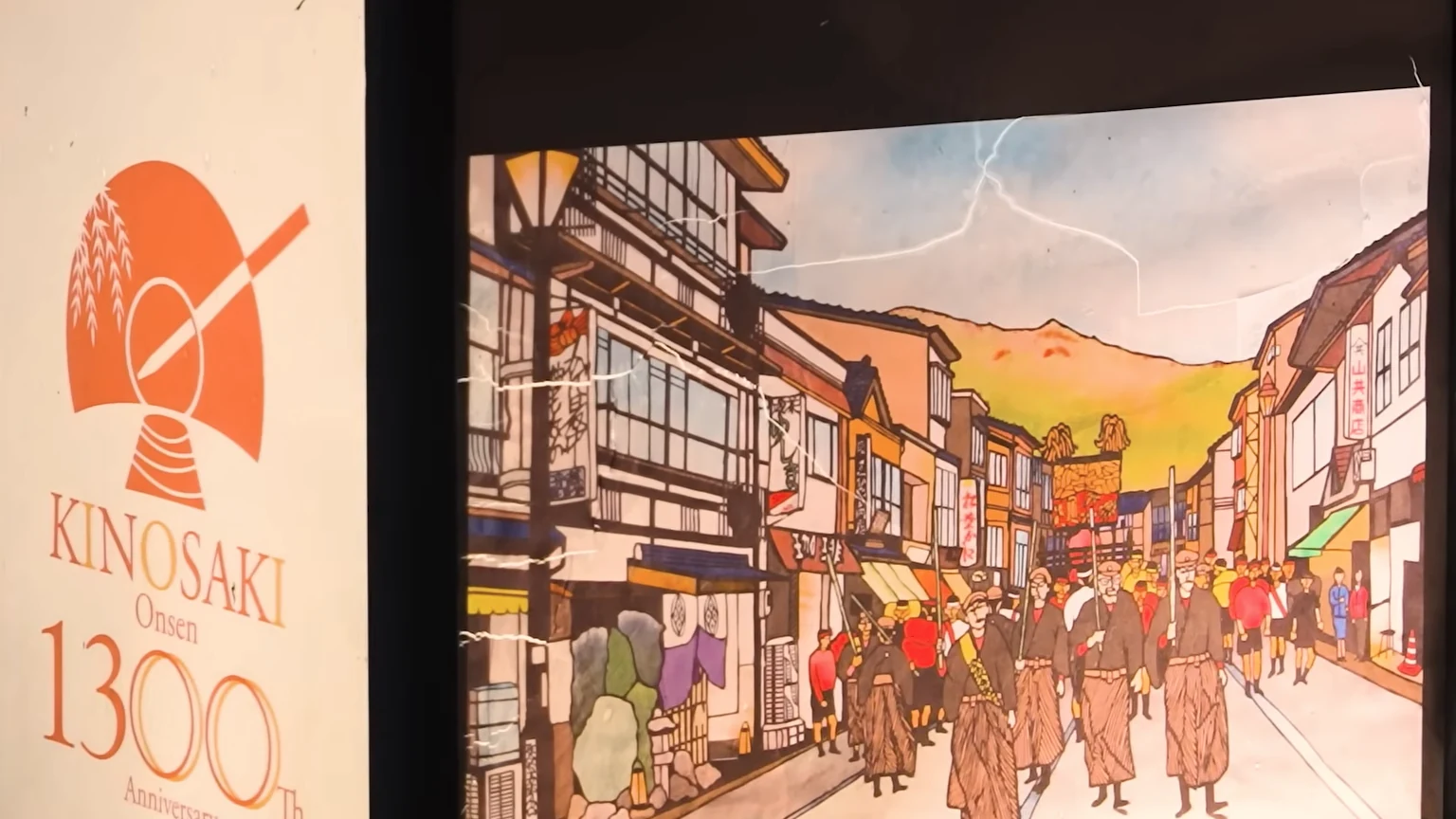
The town marked 1,300 years since the spring opened in 2020, dating itself from the 720 tradition.
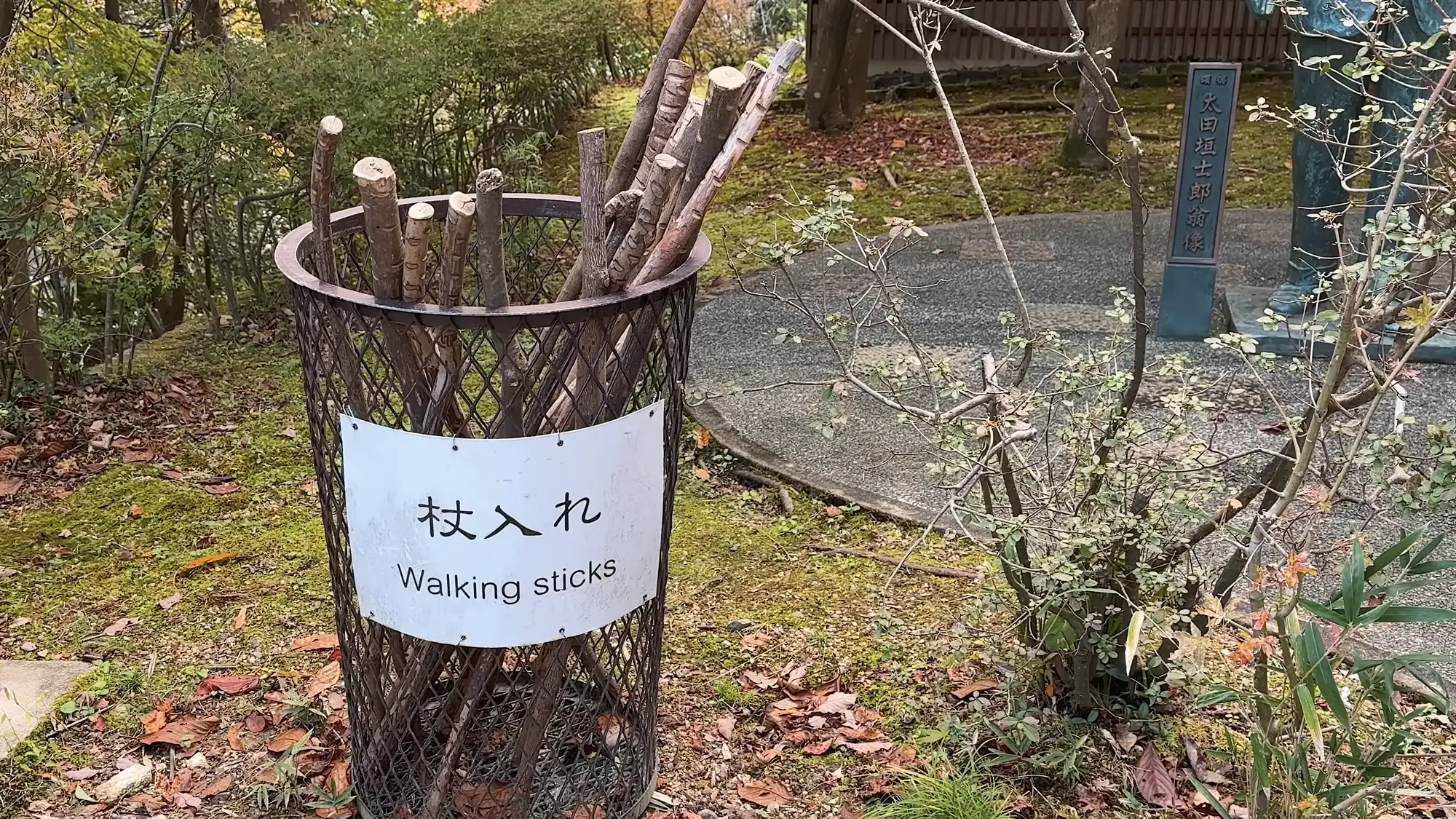
The temple lends sticks for the climb; the path from town takes about twenty minutes on foot.
Tips
**Do the temple before the baths**, once. It is the historically correct sequence and it makes the evening circuit land differently.
**Mandara-yu opens at 15:00**, later than the morning houses — plan the founding site into an afternoon, not a dawn start. ⚠️ Confirm hours and closing day on the day.
**Kō-no-yu is closed for works until an expected November 2026 reopening.** The forecourt is still worth the walk. ⚠️ Confirm before travel.
**Toyooka's living storks** close the loop the legend opened — the conservation park is a straightforward add-on for anyone who finds the Kō-no-yu story sticks with them.
**Read the sotoyu-system page after this one.** The founding and the 1925 rebuild are one argument told twice, three centuries apart.

Verified by The Japan Onsen Society
Show all sources
717/720 Dōchi tradition · thousand days · Shisho Myōjin oracle · Mandara-yu site · 2020 = 1300th · Onsenji founding and the Hasedera Kannon link → 城崎の歴史 (城崎温泉観光協会, Kinosaki Onsen Tourism Association) → [kinosaki-spa.gr.jp/about/history/](https://kinosaki-spa.gr.jp/about/history/) → verified July 7, 2026
Stork legend, Jomei era, Kō-no-yu lore → 城崎温泉の伝説 (城崎温泉観光協会) → [kinosaki-spa.gr.jp/about/history/beginning-part1/](https://kinosaki-spa.gr.jp/about/history/beginning-part1/) → verified July 7, 2026
Onsenji 738 founding · 末代山温泉寺 conferred by Emperor Shōmu · 高野山真言宗別格本山 · eleven-faced Kannon · the Keibunkai engi legend · 温泉寺縁起図 by 海北友竹, town-designated cultural property · 古式入湯作法 → 温泉寺について (高野山真言宗別格本山 温泉寺, official) → [kinosaki-onsenji.jp/about/](http://www.kinosaki-onsenji.jp/about/) → clicked and read September 23, 2026
Tōji bathing-ritual tradition and the 湯杓 ladle → 飲泉 (豊岡市観光公式サイト, Toyooka City tourism) → [toyooka-tourism.com/recommend/onsen/kinosaki_insen/](https://toyooka-tourism.com/recommend/onsen/kinosaki_insen/) → verified July 7, 2026
1925 Kita-Tajima earthquake · sotoyu-first rebuild 1926–32 · land readjustment · 1935 townscape · Ichi-no-yu reinforced-concrete firebreak and 1999 rebuild → 外湯巡り発祥の地 (豊岡市観光公式サイト) → [toyooka-tourism.com/recommend/onsen/kinosaki_sotoyu/](https://toyooka-tourism.com/recommend/onsen/kinosaki_sotoyu/) → verified July 7, 2026
Kō-no-yu life-extension works and November 2026 reopening · Sato-no-yu closure from April 1, 2024 → 城崎町湯島財産区 (Kinosaki-chō Yushima Zaisanku, the springs authority) → [kinosaki-onsen.wixsite.com/kinosaki-onsen](https://kinosaki-onsen.wixsite.com/kinosaki-onsen/) → clicked and read September 23, 2026
*Verified July 7 – September 23, 2026.*
Related guides
The Town and Its Baths
The sotoyu system
The whole town is one ryokan. That is not a slogan about atmosphere. It is a description of the law.
The Town and Its Baths
The 7 bathhouses
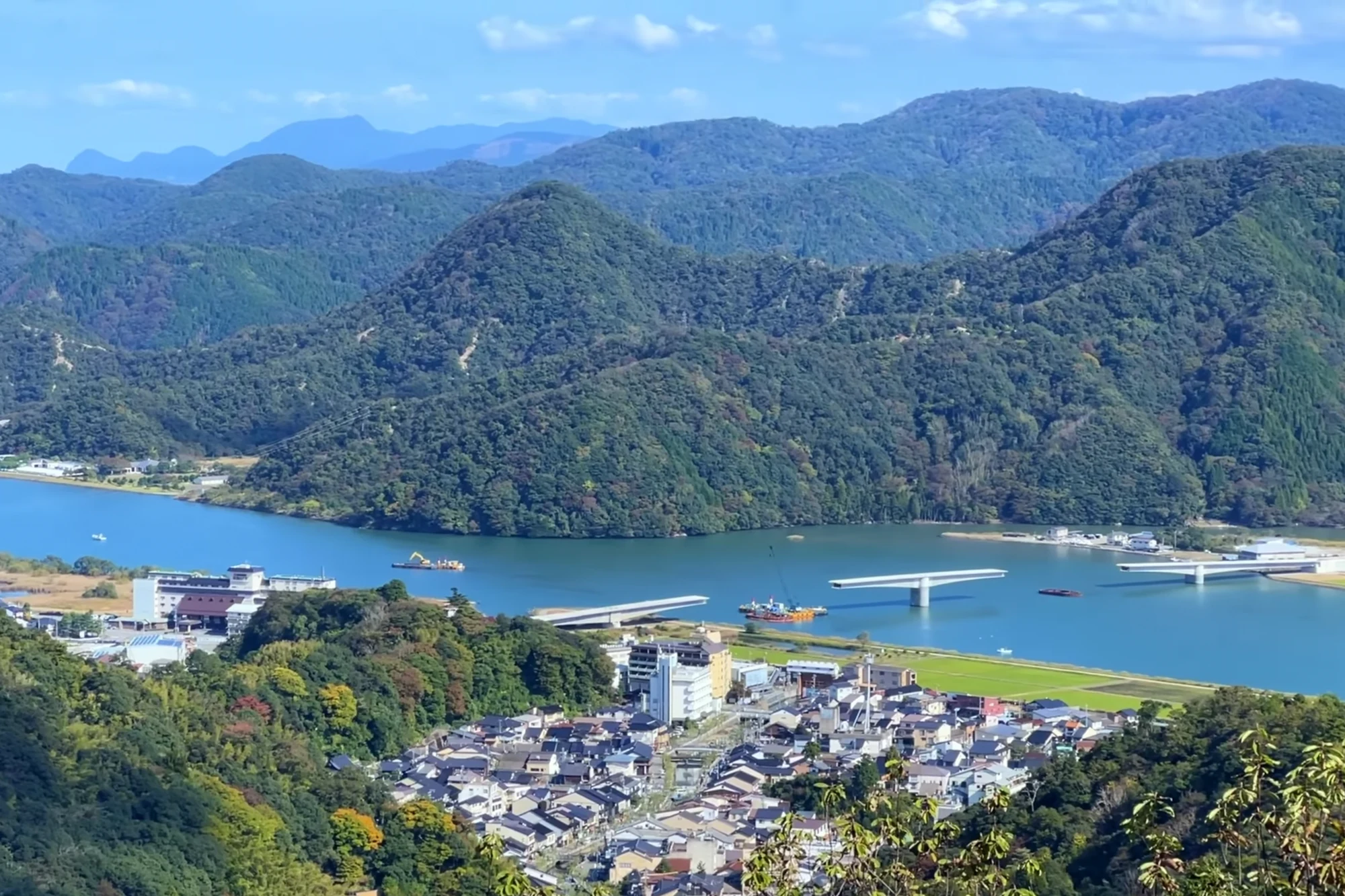
Same water in all seven houses. What changes is the room, the story, and the blessing on the door.
The Town and Its Baths
The water
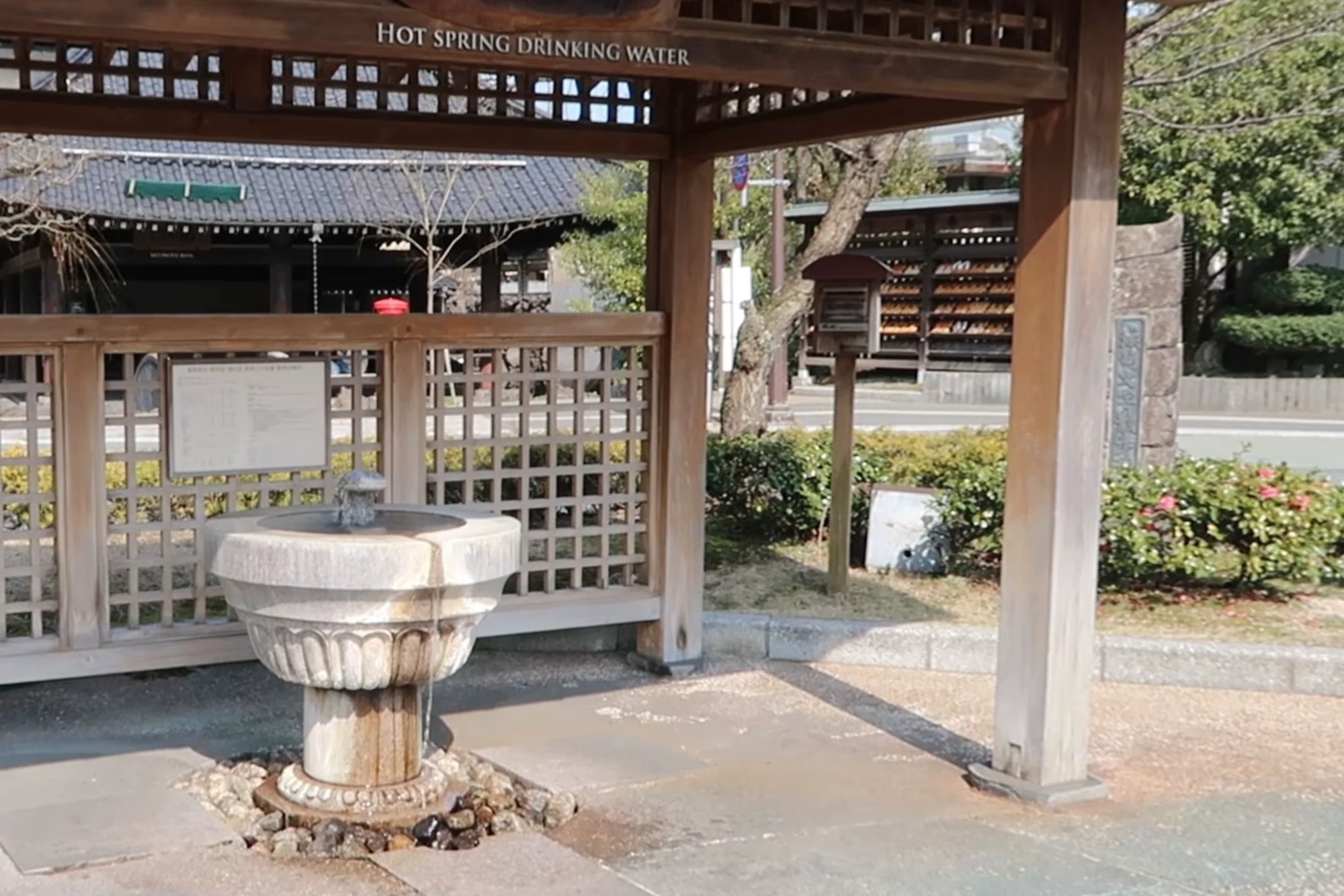
One spring feeds all seven baths, five footbaths and three fountains you can drink from. Nothing else.
The Town and Its Baths
Things to do
Beyond the baths: a ropeway, a mountaintop temple, a literary museum and a stretch of wild coast.
The Town and Its Baths
Literary Kinosaki
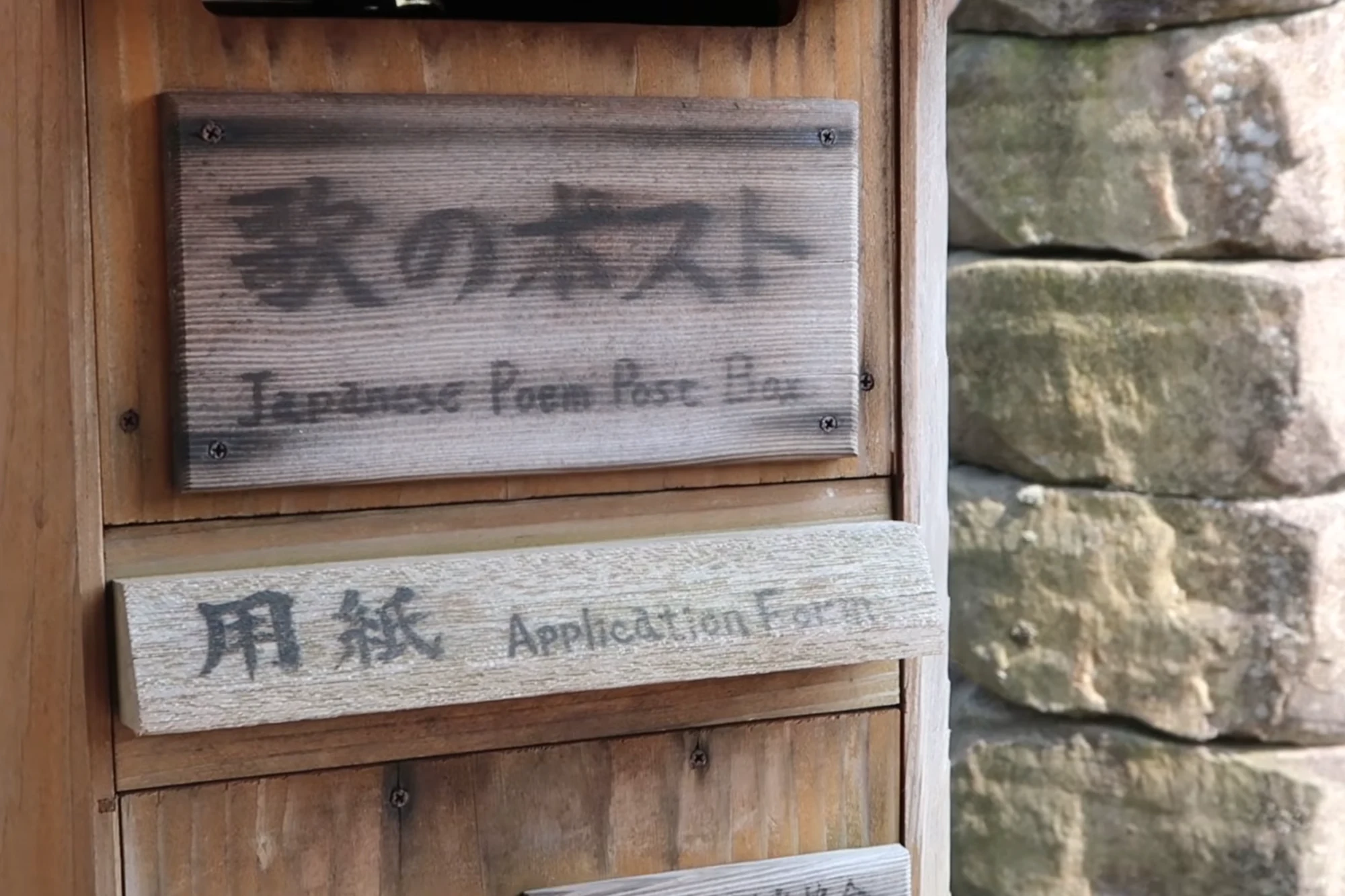
Twenty-three stone monuments and one novelist's accident. This has been a town of writers for centuries.
The Town and Its Baths
Day trips
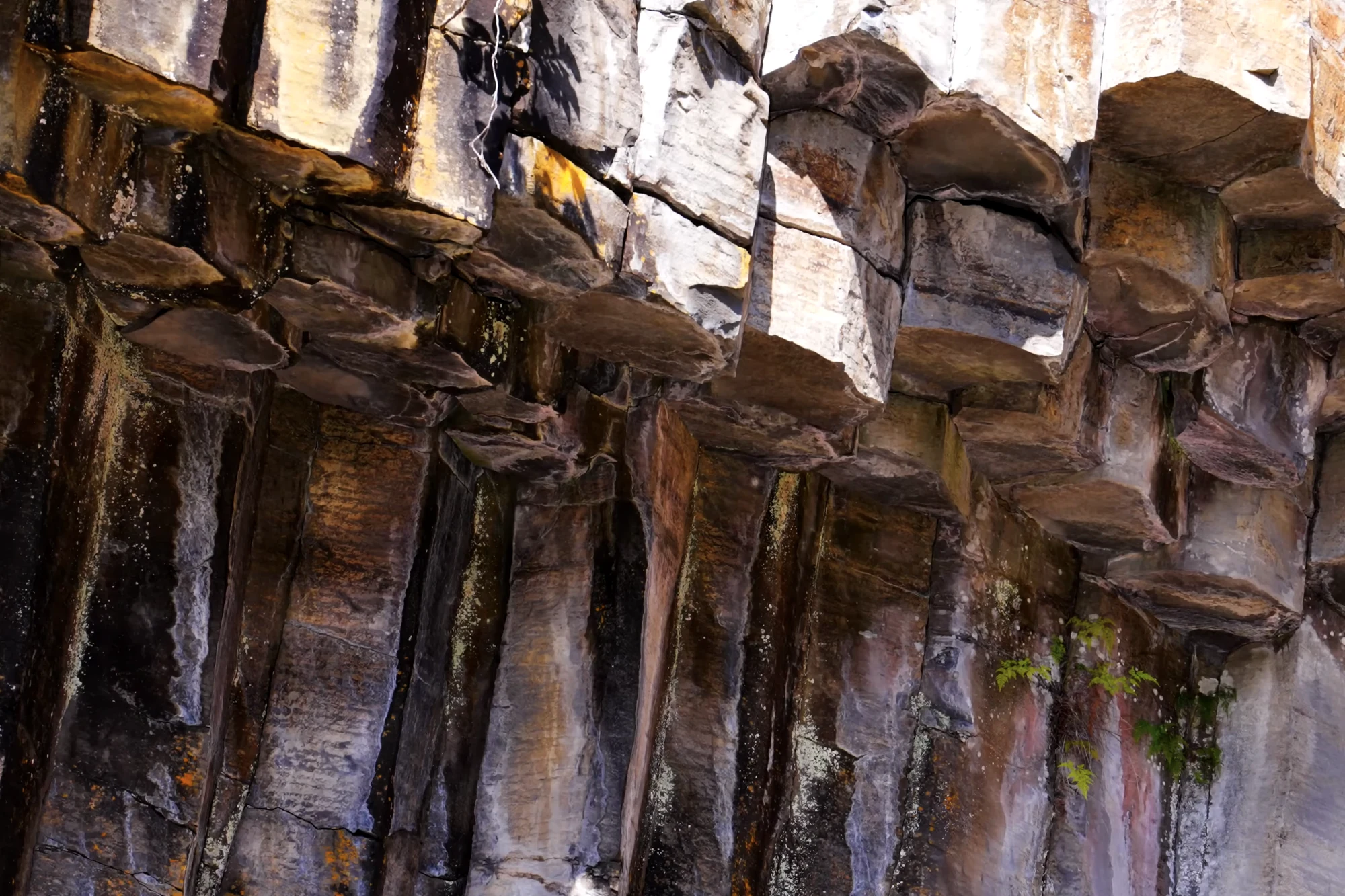
Izushi for soba, Genbudo for basalt caves, Takeno for the sea. All within an hour of the station.