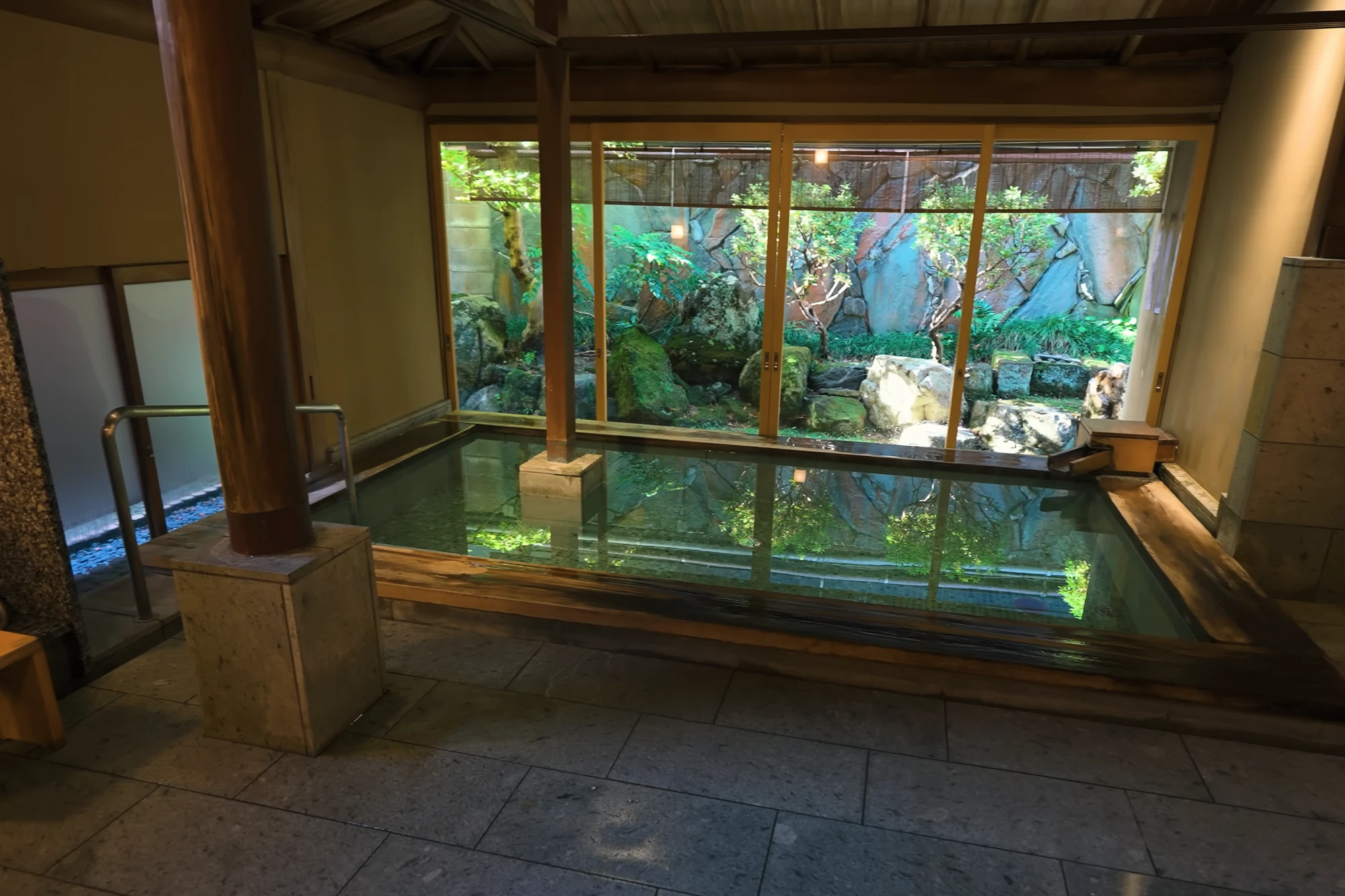
Overview
Japan's tattoo-and-onsen problem is real and historically rooted: bathhouse bans arose to exclude organized crime, and the rule outlived its target so successfully that millions of inked travelers now plan whole itineraries around it, stickers in pocket, scanning policies bath by bath. Kinosaki's answer is the cleanest in the country, and it is structural rather than charitable. The town decided, openly and as policy, that its seven public baths welcome tattooed bathers exactly like everyone else. This guide explains what that means in practice, where the remaining edge cases are, and how to bathe here with zero stress and zero stickers. The structural root is worth understanding, because it explains why the policy is trustworthy. Kinosaki's seven bathhouses are civic institutions — the water is municipally supplied, the houses are the town's, and their centrality is protected by the ordinance that caps every inn's private bath. That means one town-level decision could open all seven doors at once, and it did. In most onsen towns there is no one to make that decision: each bath belongs to a different private operator, each weighing the same tired risk calculation alone, which is why "tattoo-friendly Japan" is usually a patchwork of individual exceptions. Kinosaki is the rare place where the baths had a single owner with a long memory and a public mandate — and the owner said yes. It also means the policy survives staff turnover, renovations and ownership changes — it is not one sympathetic manager's kindness, and it does not need re-verifying every season the way individual bath policies elsewhere do.
What the policy actually covers
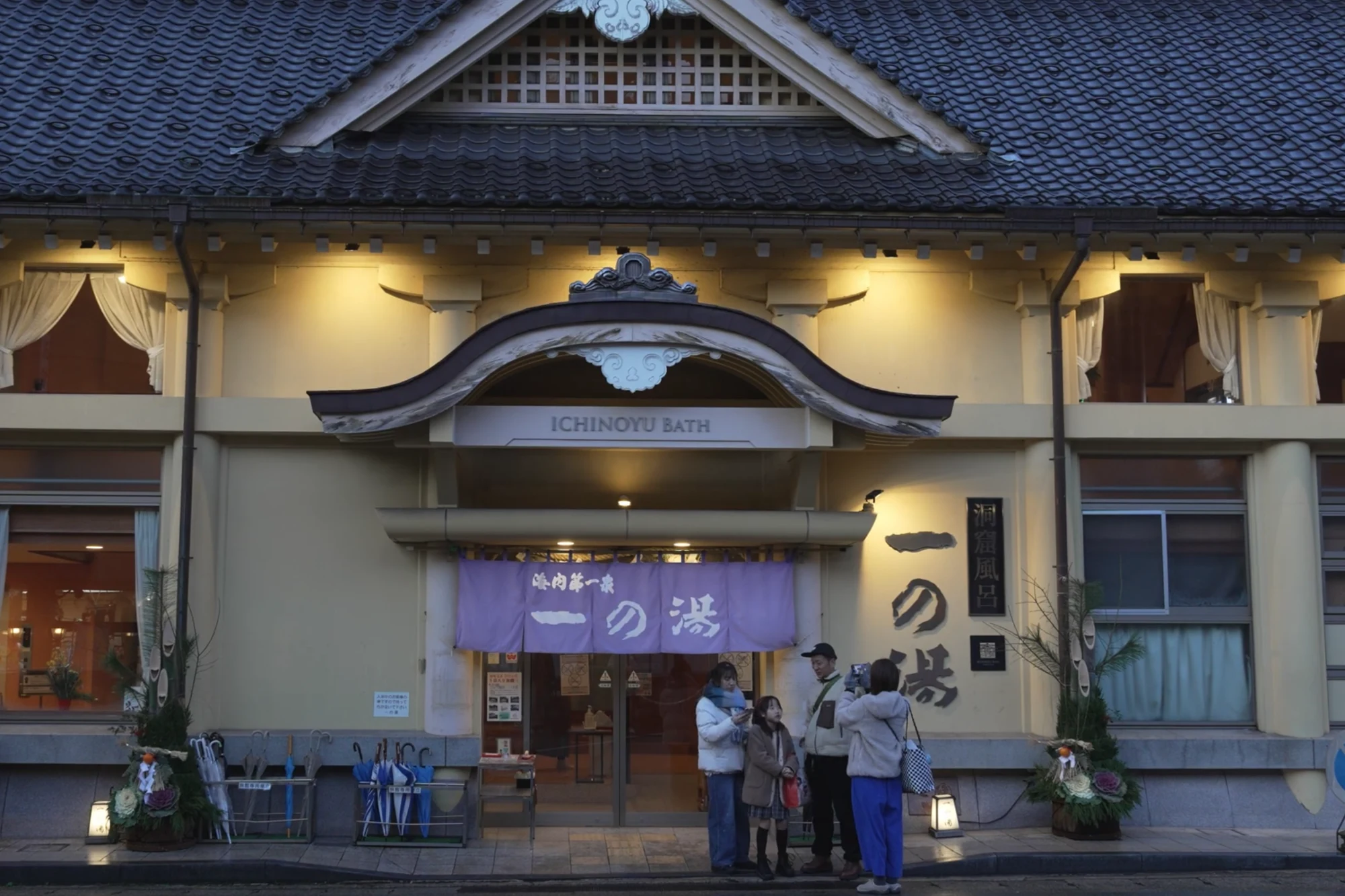
The seven sotoyu, Satono-yu, Jizo-yu, Yanagi-yu, Ichino-yu, Goshono-yu, Mandara-yu and Kou-no-yu, are the heart of the Kinosaki experience, and every one of them admits tattooed bathers without conditions. Full sleeves, back pieces, hand and neck work: the door price (or your pass) is the only requirement. There are no covering stickers to buy, no "tattoo hours" to schedule around, no discretionary refusals at the desk. The policy applies equally to overnight guests on the free yumepa pass and day visitors on the ¥1,500 pass, and the town promotes it in its own official materials, which matters: you are not relying on a blogger's anecdote but on the destination's stated rules. Why here? Pragmatism with a long memory. Kinosaki has hosted international visitors for a century, its bathing culture is communal by design, and as overseas tourism grew the town concluded, publicly, that a rule built for 20th-century gangsters should not bar 21st-century guests. The decision made it a pilgrimage destination for tattooed travelers, which the town has noticed and embraced. Two current practicalities complete the picture. With Kou-no-yu closed for renovation (reopening ~November 2026) and Satono-yu closed since April 2024, the policy currently applies across the five operating houses — the welcome is unchanged; the count is smaller. ⚠️ Check the association's live status page for reopenings. And the policy needs no paperwork on your side either: no advance notice, no registration, nothing to explain at the desk. You buy the pass or show the wristband, exactly like the untattooed bather behind you, which is the entire point.
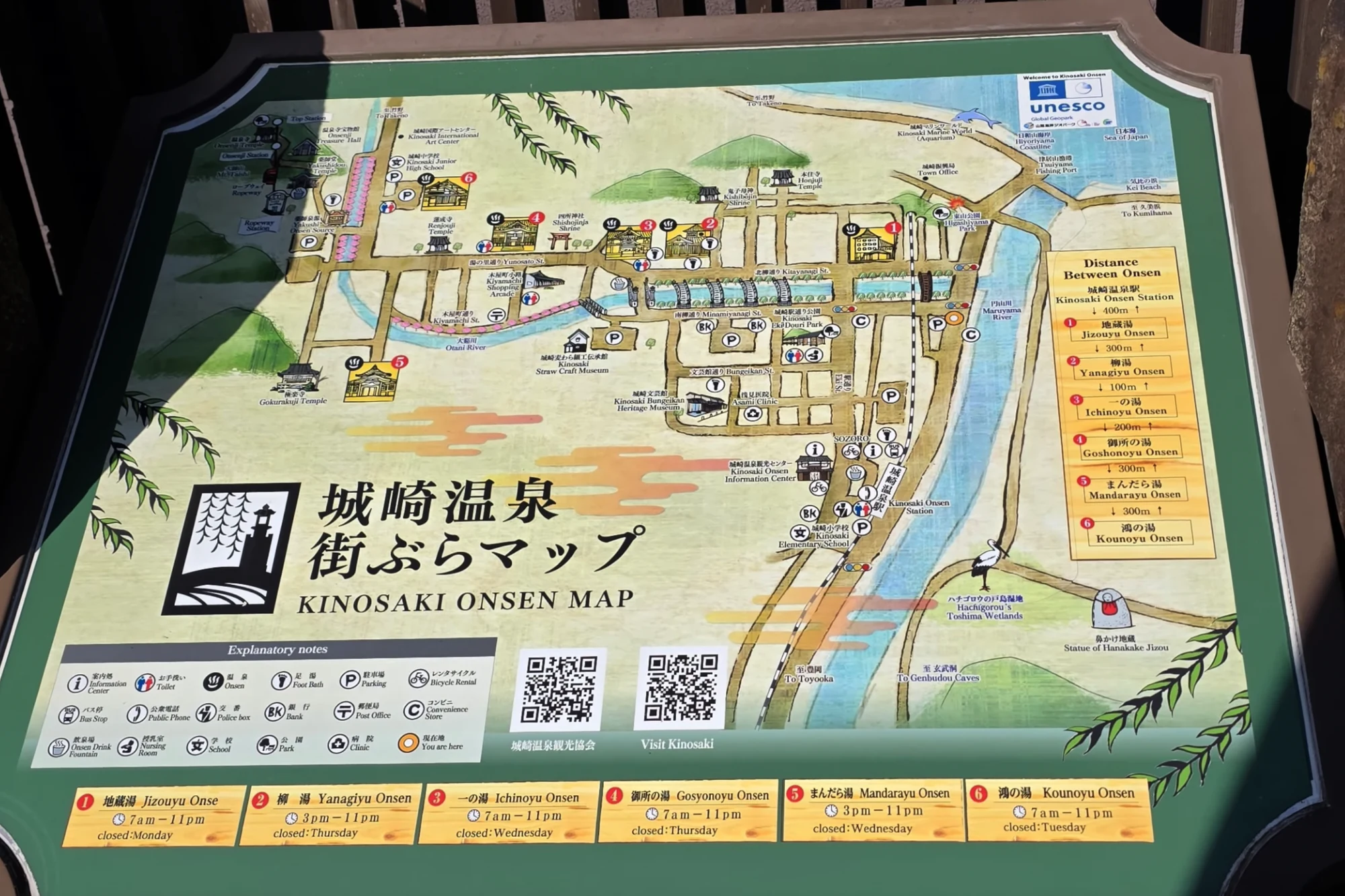
The policy covers all seven public houses. It does not bind the inns, which set their own rules.
The one nuance: inside your ryokan
The sotoyu policy does not automatically extend to the private baths inside each ryokan, where owners set their own rules. In practice most Kinosaki inns are relaxed, many explicitly so, but policies vary, and the polite move is one line at booking: "I have tattoos; is your in-house bath OK?" Inns would far rather answer than be surprised. Two structural workarounds make this nuance nearly painless. First, the whole point of Kinosaki is bathing OUT, in the seven public houses; many guests never use the in-house bath at all. Second, most inns rent kashikiri private baths by the hour (roughly ¥1,000–3,000 / about US$7–20, sometimes free), which are yours alone, policy-proof by definition. Our private onsen guide covers those in detail. ⚠️ verify kashikiri bands. If you want the booking line ready-made, this is the whole message, in either language: "I have tattoos — is your in-house bath OK?" or タトゥーがありますが、お風呂を利用できますか (Tatū ga arimasu ga, o-furo o riyō dekimasu ka). Every inn in an internationally practiced town has answered it before, and the answer arrives without drama either way. One more future option worth knowing: two of the public houses, Ichi-no-yu and Jizō-yu, keep family baths of their own — private reservable rooms inside the public system — though both are suspended pending major repairs (利用休止中) as of September 2026. ⚠️ If they return, they add a public, policy-proof private option that skips the inn question entirely. And if an inn does say no, nothing of consequence is lost: the seven-house circuit plus one kashikiri hour covers every bathing need the town can generate, without the in-house bath ever entering the plan.
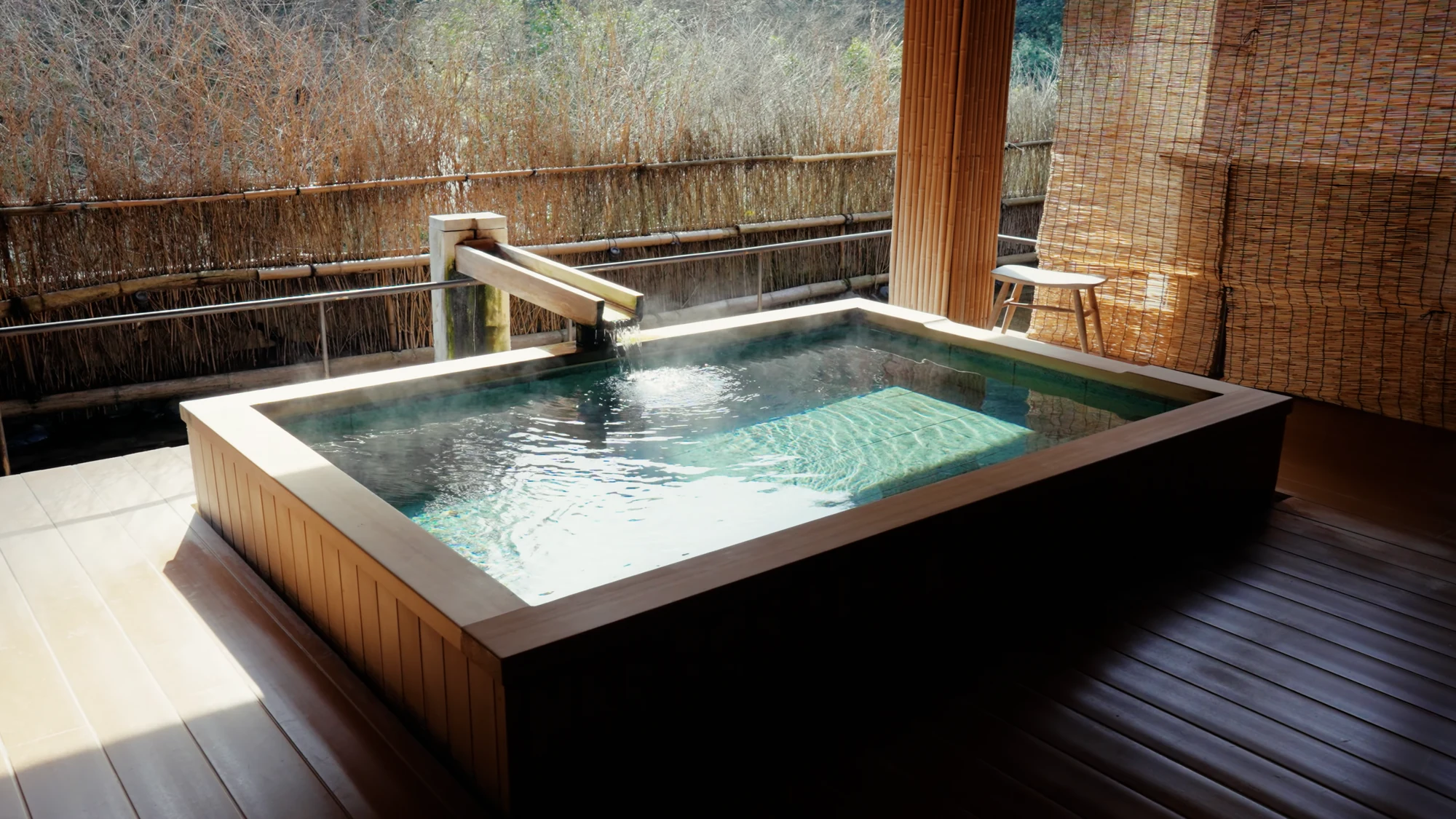
If an inn's own bath is restricted, a kashikiri booking solves it — roughly ¥1,000–3,000 an hour. ⚠️
Bathing with tattoos: the etiquette that actually matters
None of it is tattoo-specific, which is the point. Wash thoroughly before entering, keep your small towel out of the water, tie long hair up, no photography anywhere near the baths, and soak quietly. Tattooed bathers sometimes report feeling watched in Japan; in Kinosaki the honest report from years of travelers is indifference, the locals have seen everything, and the other tourists are too busy decoding the bath stamps. If you have spent your Japan trip half-covered at the beach and apologizing at hotel pools, your first unhurried walk into Goshono-yu's open-air bath, ink in the open air, is a small, genuine liberation. The deeper reassurance is who you will be bathing with. The sotoyu are the town's own baths — the person in the next tub is as likely a Toyooka grandmother as a tourist — and communal bathing culture here runs on a strict, liberating indifference: nobody's body is anyone else's business, which has covered scars, birthmarks and age for centuries and covers ink just as easily. The one behaviour that genuinely draws glances in a Japanese bath is the same for everyone: skipping the wash station. Scrub thoroughly, visibly, first — it is the entire social password, and a tattooed bather who washes properly reads as more correct than an unmarked one who does not. Perform the short list above and you are, in the only sense the bathhouse cares about, a correct bather — the tattoos are as relevant as your haircut.
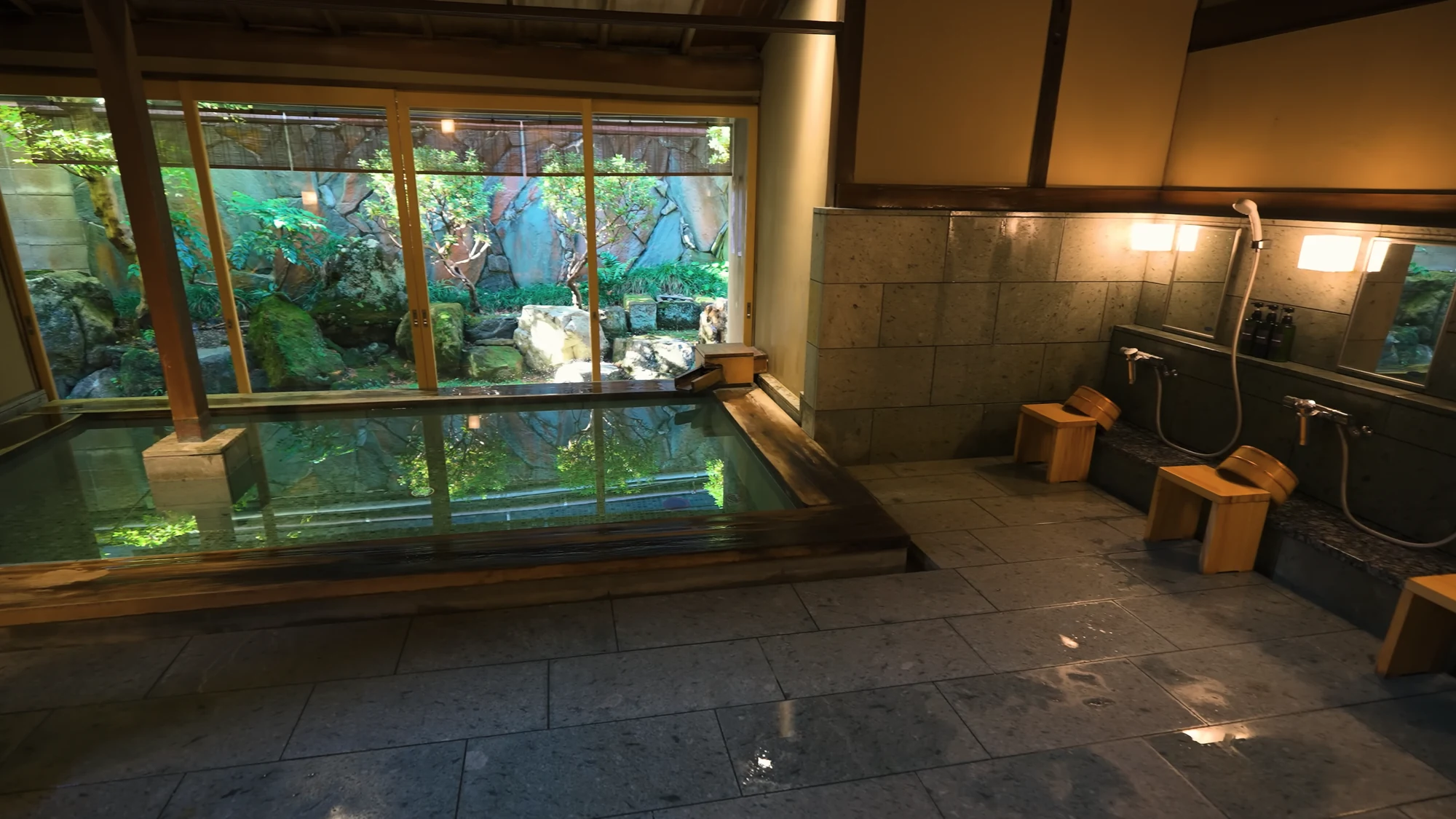
The etiquette that matters is the same for everyone: wash first, small towel out of the water.
Building a tattoo-proof Kansai itinerary around Kinosaki
Kinosaki solves itself; the rest of your route may not. The practical pattern travelers use: base the onsen portion of the trip here (one or two nights, the full seven-bath circuit, zero policy anxiety), and in tattoo-stricter destinations elsewhere, default to private kashikiri baths and rooms with their own tubs rather than gambling on public facilities. Kyoto's bathhouses, for instance, remain mixed in policy ("tattoo friendly onsen kyoto" is one of the most searched phrases in Japanese travel for a reason); the simplest answer is to do your real bathing here, 2 hours 20 minutes away, where the question has been retired. The arithmetic favours the pattern strongly. Two nights here delivers ten or more unhurried public soaks with zero policy checks — more open-air onsen bathing than most tattooed travellers manage in an entire Japan trip of workarounds — and the researching time saved is real: no bath-by-bath policy audits, no sticker purchases, no backup plans. Two Kansai-specific notes complete the plan. Arima, the other famous onsen town of the region, decides tattoo policy facility by facility, so audit each bath individually if you go; and the city super-sento chains publish their policies online, which makes the pre-trip check quick for everything that is not Kinosaki — where no check is needed at all. The pattern, once seen, is hard to unsee: one town in the itinerary requires zero tattoo planning, and it happens to be the one with the most baths.
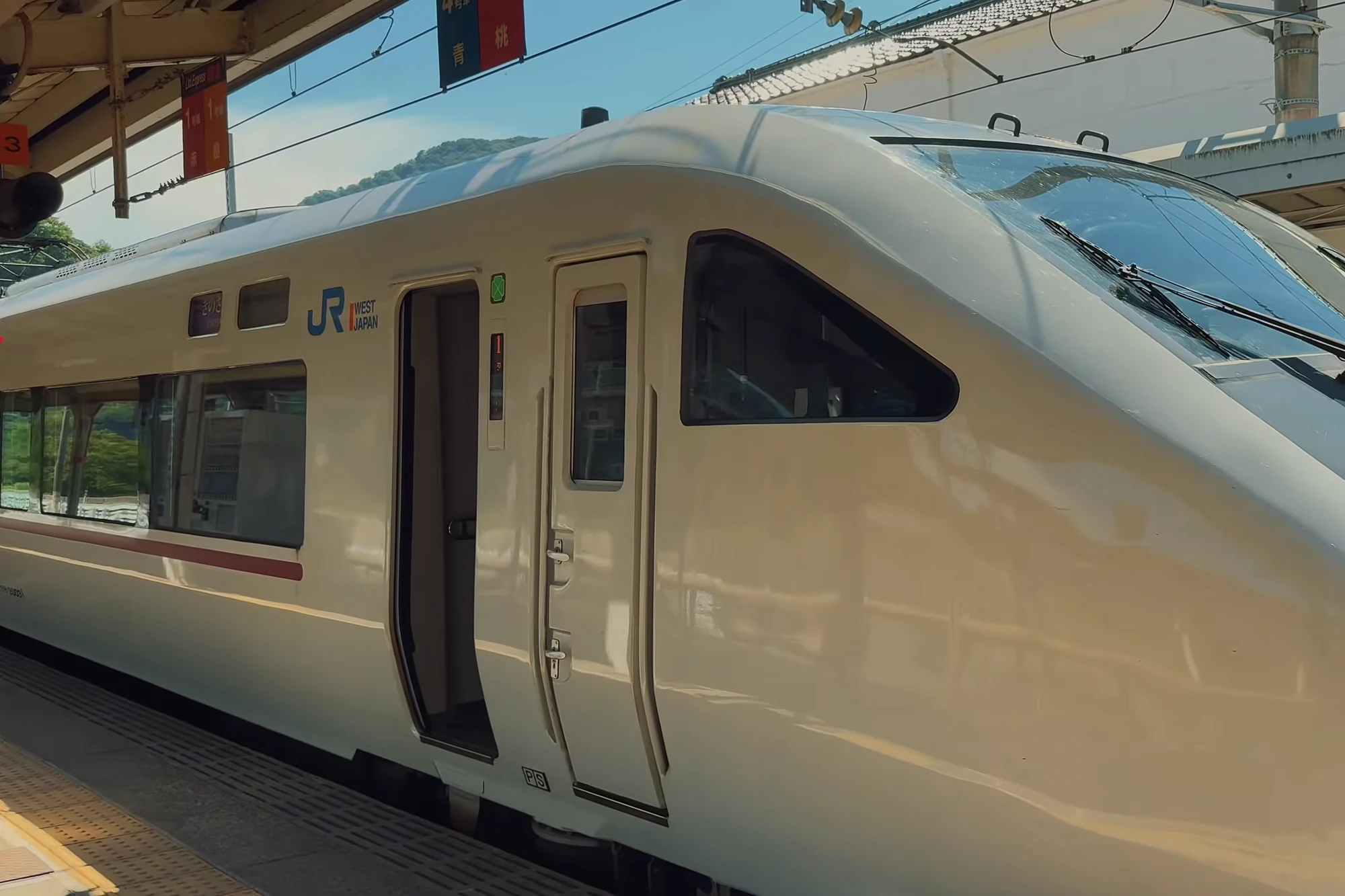
Kinosaki is about 2 h 40 min from Shin-Osaka, which makes it the practical anchor for a tattoo-friendly Kansai trip.
Why Kinosaki could retire the rule, and other towns cannot
The national picture makes Kinosaki's position clearer. Japan's tattoo bans are private-property rules, not law — each bathhouse, hotel and gym decides alone, which means change happens at the speed of ten thousand separate risk assessments. A famous resort with one grand bath per inn cannot make a town-wide promise; there is no town-wide anything to promise with. The structure that makes Kinosaki different is the same one this site keeps returning to: the ordinance that caps inn baths keeps the seven public houses the centre of bathing life, the houses run on one municipal water supply under one collective system, and so the town could make one decision and mean it everywhere that matters. History set the stage for that decision. Kinosaki has been receiving guests — including, for over a century, international ones — as its core industry, and its bathing culture was engineered to be shared: the 1925 reconstruction rebuilt the public baths first, ahead of private interests, because the town understood which asset was the town. A place with that lineage reads a tattooed traveller as a bather, not a risk category. The consequence for you is a difference in kind, not degree. Elsewhere, "tattoo-friendly" means an exception someone might revoke, a sticker if it's small, an off-peak hour if you ask nicely. Here it means the default rule of the town's central institution, stated in its own materials, stable because the structure beneath it is stable. Plan on it the way you plan on the trains running. (That stability is also why this page can be written declaratively rather than hedged — the policy is load-bearing town identity, not a promotion.)
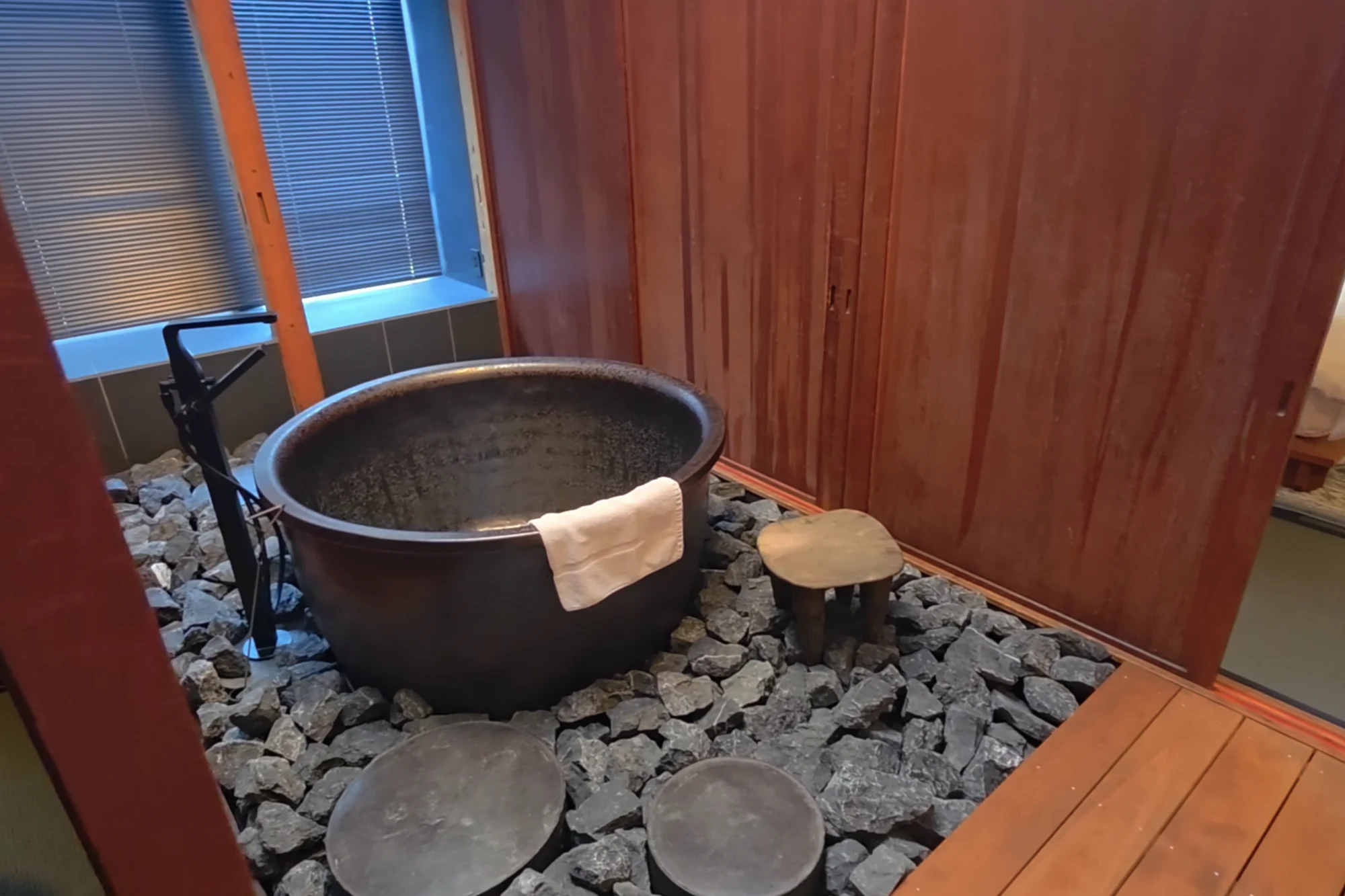
Towns where bathing is private can keep a rule quietly. A town where bathing is public has to decide in the open.
Tips
One line at booking settles the only nuance: "I have tattoos — is your in-house bath OK?"
Most inns rent kashikiri private baths by the hour (~¥1,000–3,000, sometimes free) — policy-proof by definition.
Base the onsen portion of a Kansai trip here and default to kashikiri baths in stricter destinations.
Etiquette is the same for everyone: wash first, towel out of the water, no photography near the baths.
Kinosaki needs no tattoo logistics at all — spend the planning time on the rest of Kansai, where policies run facility by facility.

Verified by The Japan Onsen Society
Show all sources
Drafted June 12, 2026; the structural argument and current closures verified September 22, 2026. Primary Japanese sources:
外湯めぐり発祥の地!温泉天国★城崎温泉 — 豊岡市観光公式サイト (Toyooka City Official Tourism Site — the ordinance and the civic sotoyu system behind the policy): [https://toyooka-tourism.com/recommend/onsen/kinosaki_sotoyu/](https://toyooka-tourism.com/recommend/onsen/kinosaki_sotoyu/)
外湯 — 城崎温泉観光協会 (Kinosaki Onsen Tourism Association — current closures, family-bath status): [https://kinosaki-spa.gr.jp/about/spa/](https://kinosaki-spa.gr.jp/about/spa/)
「鴻の湯」の長期休館について — 城崎温泉観光協会 (closure notice, May 11, 2026): [https://kinosaki-spa.gr.jp/news/28289/](https://kinosaki-spa.gr.jp/news/28289/)
Related guides
The Town and Its Baths
The 7 bathhouses
Same water in all seven houses. What changes is the room, the story, and the blessing on the door.

The Town and Its Baths
Etiquette
Wash before you get in, keep the small towel out of the water, and nobody will look at you twice.
The Town and Its Baths
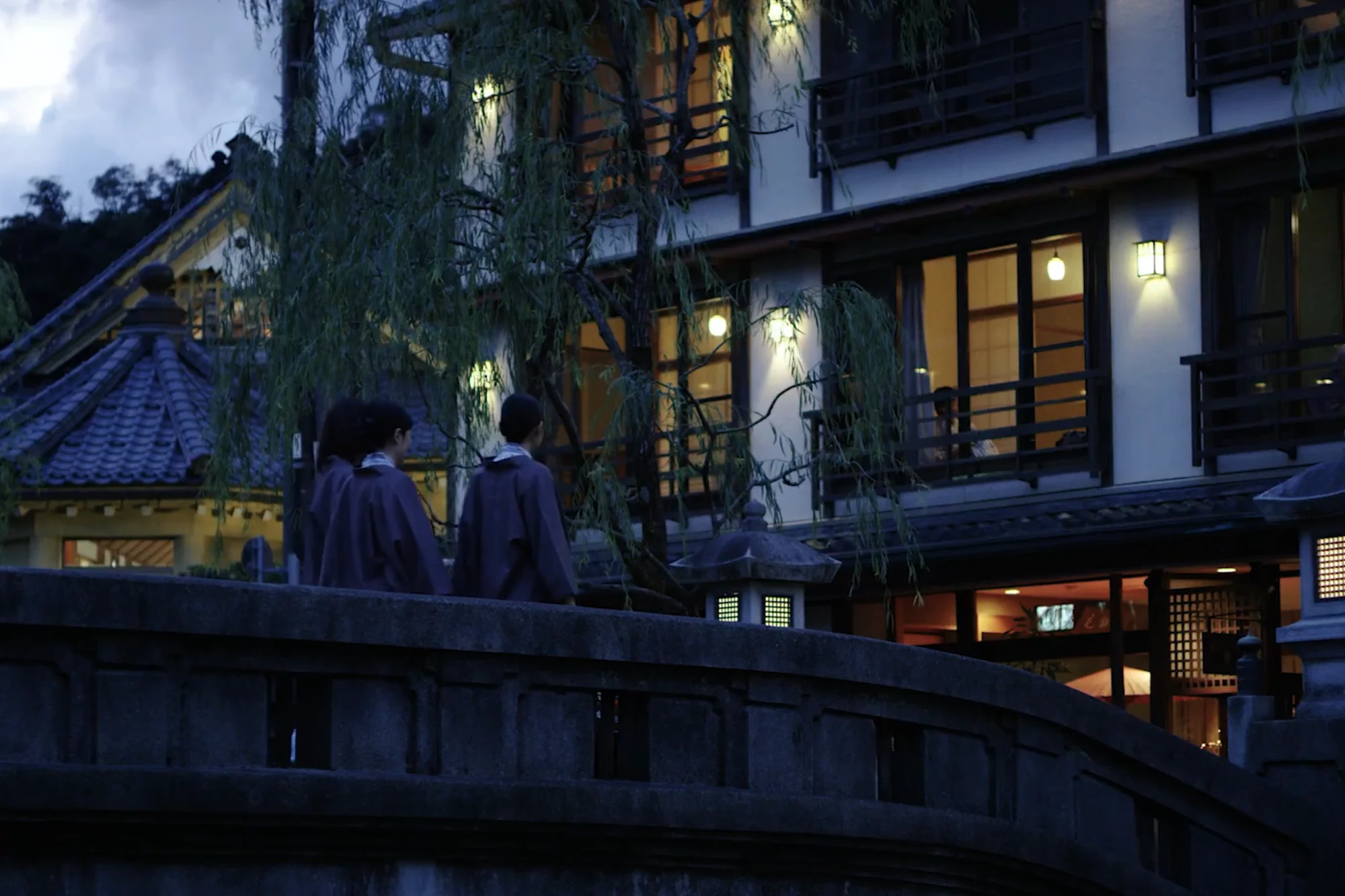
Kinosaki complete guide
Seven public bathhouses, one shared spring, and a law that keeps them the centre of town. Start here.