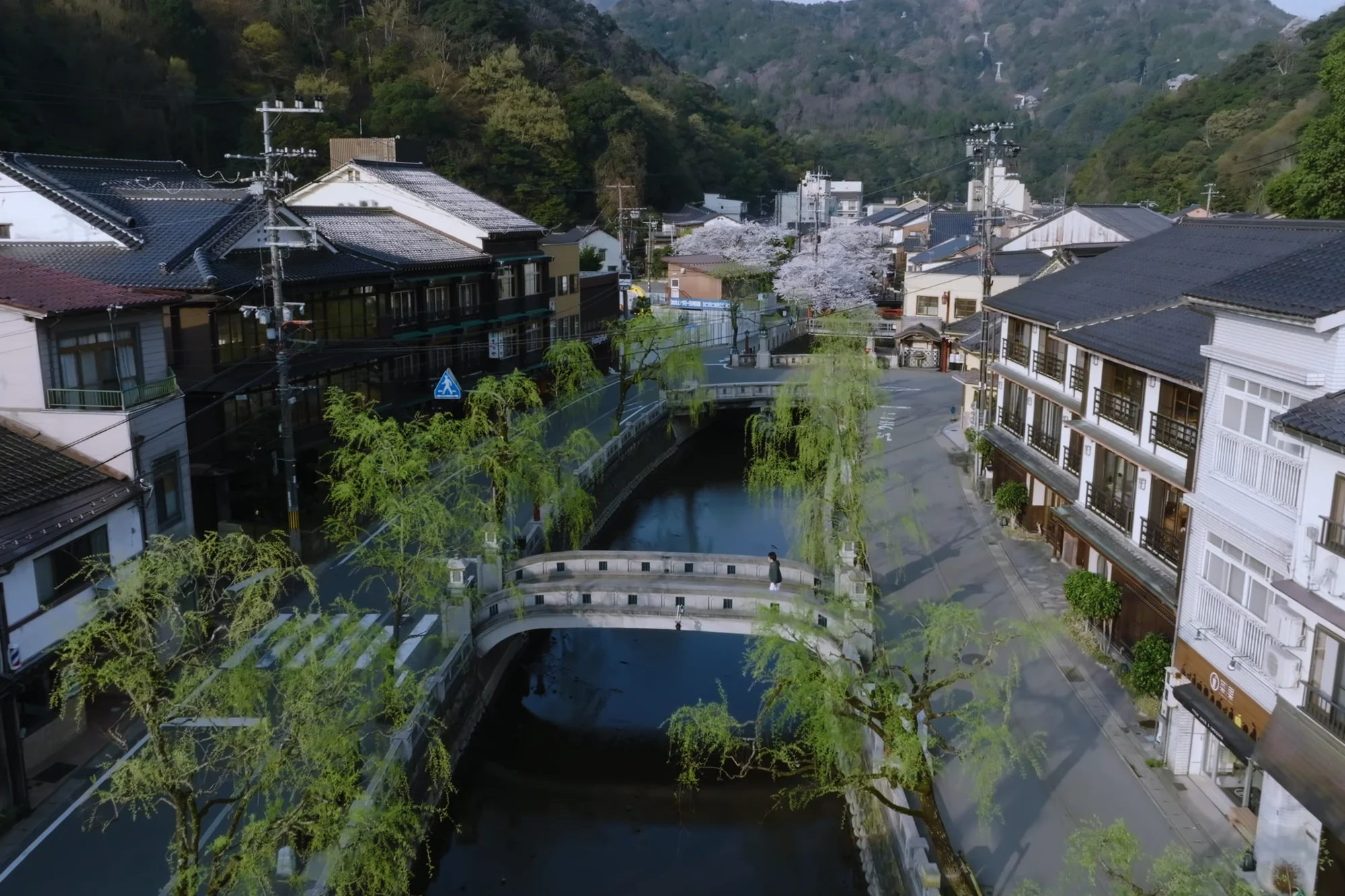
Act one: the blossom week
For roughly one week in early April, Kinosaki's canal performs its most famous trick: the cherry trees along the Ōtani-gawa (大谿川, the Ōtani River) flower over the water, the stone bridges collect petals, and the town's standing postcard — willows, lanterns, stone — gains its annual pink layer. It is the single most photographed week of the town's year, and unlike the snow it competes with, it arrives on approximately bookable dates. ⚠️ Forecast-dependent; the bloom window shifts by a week or more year to year — flexible travellers should watch the regional forecast from mid-March. The town extends the week after dark: through the blossom period the association runs 夜桜月間 (yozakura gekkan, the night-cherry month), lighting the canal's trees so that petals, lantern light and bathhouse steam share one frame — as close as spring comes to matching winter's poster, and the argument for scheduling at least one unhurried evening bridge-stand into the stay. The morning counterpart is quieter and arguably better: the 7:00 (7 am) bath followed by the canal at 7:40, petals on dark water and nobody on the bridges. Booking the week requires only modest foresight: a few weeks' lead for the famous houses, less for the mid-range, with rates gentler than winter throughout — the blossom is the year's photogenic bargain. The one positioning tip that matters: request a canal-side room if the view is the point, because "in town" and "over the water" are different products in blossom week, and only one of them wakes up inside the photograph.
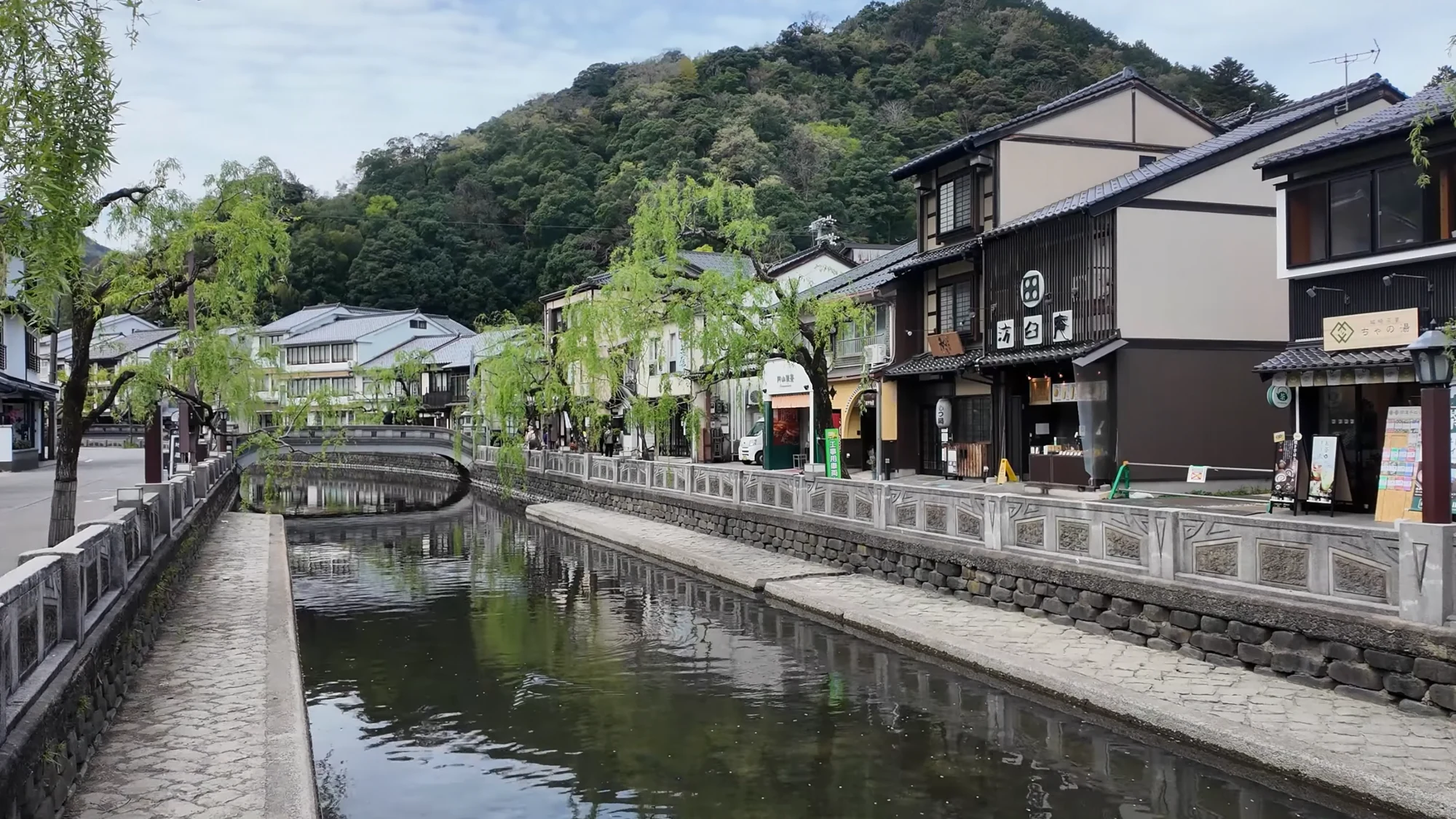
Once the petals drop, the willows take over — the townscape at its most painterly, and nobody on the bridge.
Act two: the festival for the water
Two or three weeks after the petals drop, the town holds its founding celebration, and the dates never move: April 23–24, the 開山忌 (kaisanki, founder's memorial) of 道智上人 (Dōchi Shōnin), the monk whose thousand-day prayer the town credits with summoning its spring. The 温泉まつり (Onsen Matsuri) fills the lanes with a water-blessing rite, a children's procession in period dress, and street stalls — a local's festival at local scale, unbothered by tour buses, and the one weekend of the year when Kinosaki formally celebrates the water itself rather than what swims in it or falls on it. For visitors the festival's charm is its proportion: it decorates a stay rather than dominating one. The bath circuit runs normally, the stalls add an hour's grazing, the rite adds a scene you will not see in any other season, and the booking window stays soft — the dates land after the blossom crowds and before Golden Week, in one of the calendar's gentlest pockets. Our dedicated festival guide carries the full story and the day-plan; the planning takeaway here is simply that late April holds a fixed, quietly excellent reason to choose it. The festival also completes spring's little arc of meaning, for travellers who like their trips to add up: act one is the town at its prettiest, act two is the town explaining why it exists — the monk, the prayer, the spring at Mandara-yu — and the walk from one to the other passes the drinking fountains where the celebrated water is literally on tap. Few destinations sequence their own story this legibly; spring is when Kinosaki does.
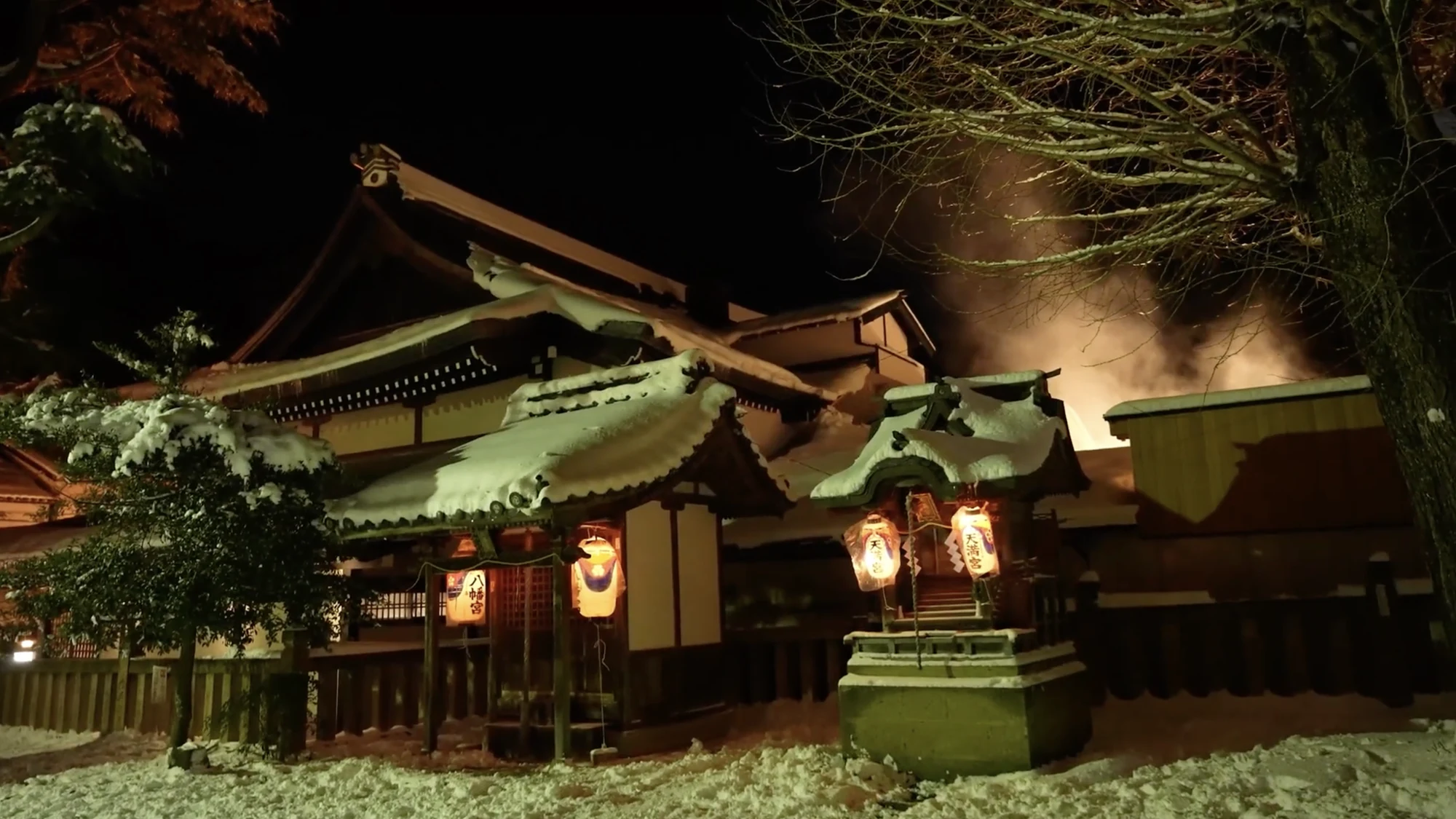
The Onsen Matsuri falls on April 23–24 every year — the founder's memorial, not a moveable festival.
Act three: the green weeks
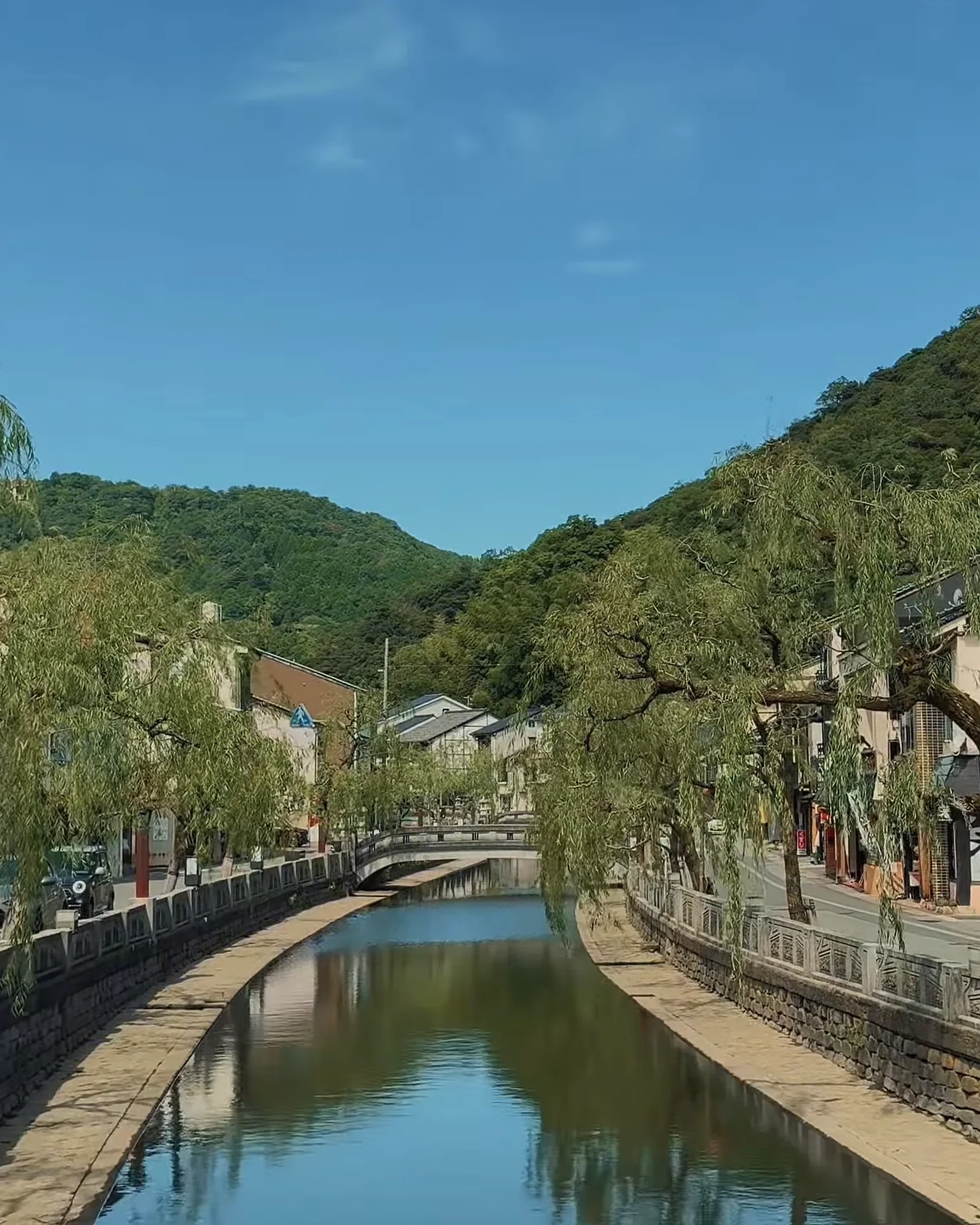
After Golden Week clears, the season's sleeper begins. May's willows — the town's true signature trees — run their fresh green over the water, the light lengthens, and Kinosaki settles into the calmest stretch of its year: full experience, softest crowds, rates at the annual floor's edge, rooms on days' notice. The painterly version of the town — green over dark water, yukata colour moving across stone — belongs to these weeks, and photographers who missed the blossom often return preferring them. The bathing hits its spring stride here too. Evenings stay cool enough that the water keeps its welcome, the circuit runs unhurried at every hour, and the 15:00 (3 pm) afternoon openings at Mandara-yu and Yanagi-yu slot naturally into days built around long lunches and the season's first beach-curious excursions — Takeno's sand is walkable now, swimmable soon, one train stop away. Early June extends the same virtues until the rainy season's soft grey arrives to water the green without much harming a town whose product is warm and indoors. The honest asterisk on the whole act is Golden Week itself, the late-April-to-early-May national holiday chain that imports Japan's domestic crowds and prices for roughly ten days: book far ahead or avoid deliberately, and treat the flanking weeks as the actual product. That aside, the green weeks are this site's standing answer for travellers who want Kinosaki with the least negotiation — no premium, no lottery, no lead time — and are willing to trade the headline scenes for the town at its most its own.
Rates settle back to normal once the blossom drops, and stay there until the crab opens.
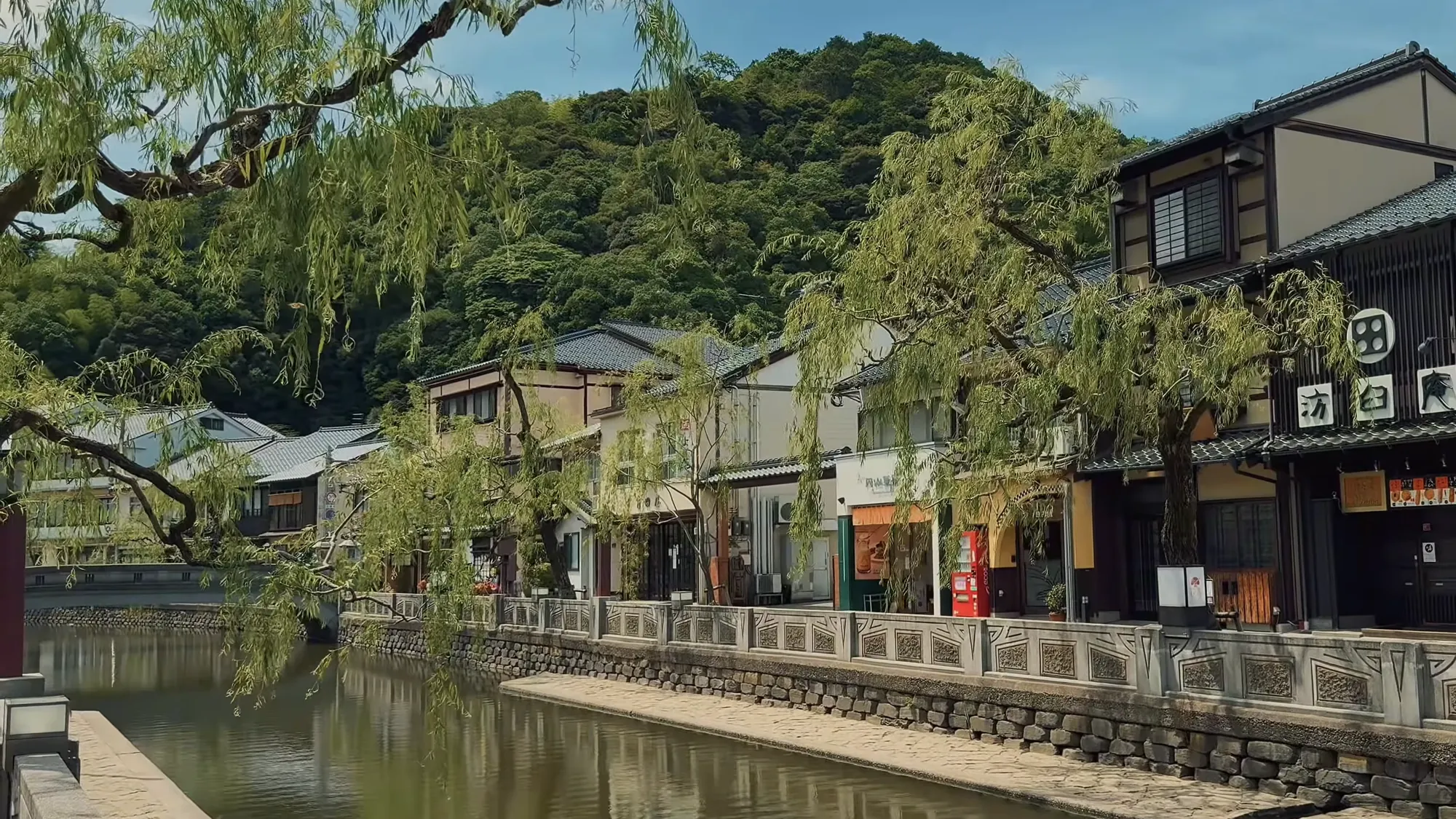
The green weeks in May are the townscape at its most painterly, and nobody competes for the bridge.
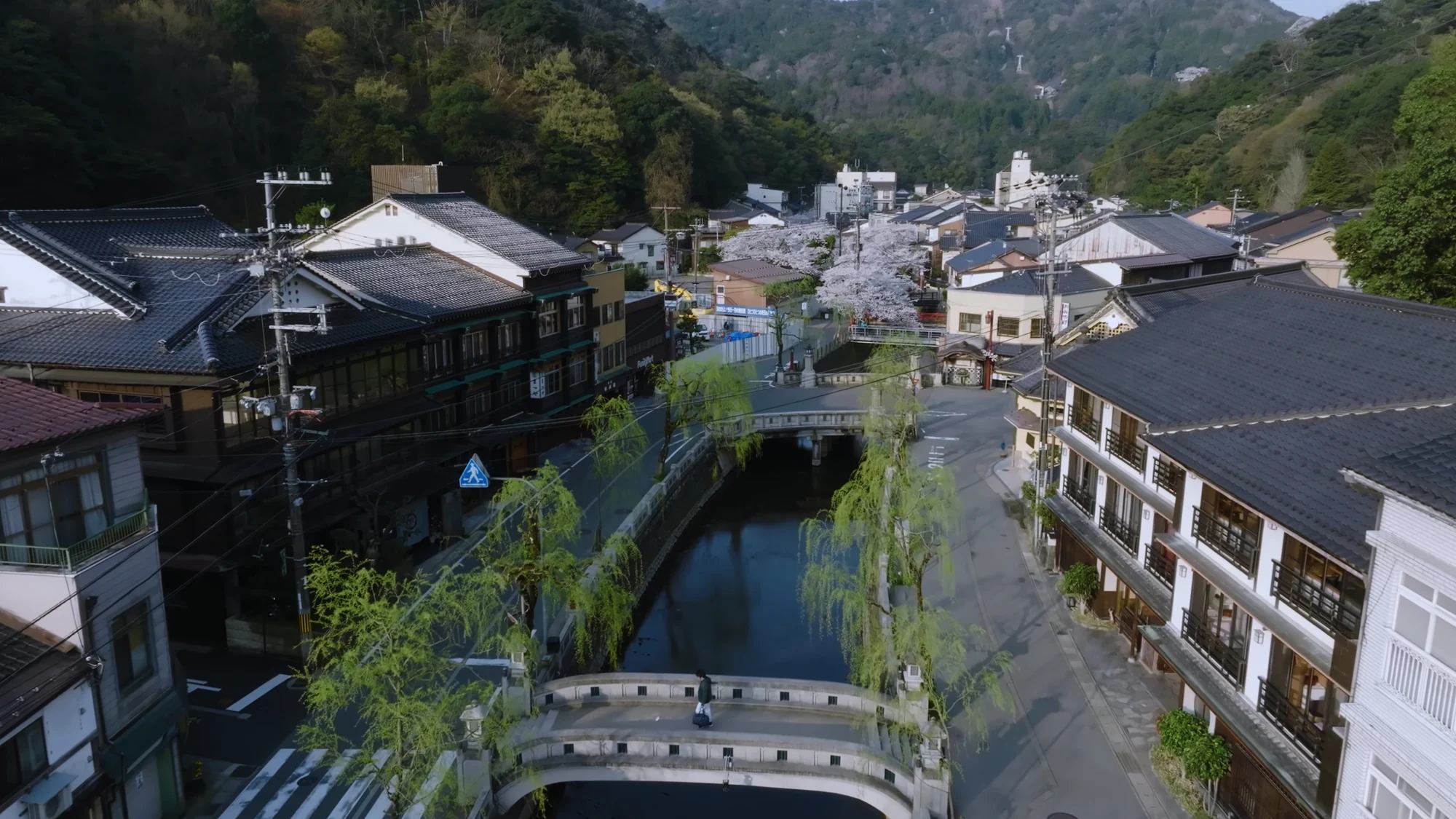
Golden Week imports Japan's domestic crowds for ten days; the weeks flanking it stay calm and cheap.
Spring bathing, wardrobe and rhythm
Spring runs the yukata system at its friendliest settings. The cotton alone handles April days, the haori jacket covers the lantern hours, and by late May even the jacket is optional — the season asks nothing of your suitcase but the standard advice: one discreet base layer for cool early-April evenings, hair ties for the baths, and shoes you can abandon happily at the genkan. Geta and dry spring stone are the easiest pairing of the year for first-time wooden-sandal walkers. The circuit rhythm is the standard three-or-four-houses with one seasonal note: spring's crowds concentrate hardest in blossom week's evenings, when the canal draws photographers as well as bathers, so that week inverts the usual advice — take the marquee houses at the 7:00 (7 am) opening, when the blossom-hour crowds are still asleep, and give the evenings to the smaller houses and the bridges. Festival days ask the same flexibility for different reasons; the green weeks ask none at all. Health-and-comfort notes stay minimal in the gentle season: hydrate at the fountains as always, expect pollen if you are susceptible (the region's cedar season tapers through April ⚠️ seasonal generalisation), and enjoy the one season where neither cold nor heat ever argues with the walk between houses. Spring is the circuit with the difficulty settings off — which is exactly why this site recommends it to first-timers, families, and anyone whose picture of onsen travel involves ease rather than epic. The winter masterpiece and the summer negotiation both have their partisans; spring simply has no counterargument, and the guest who learns the circuit here carries the easy version of every habit into whatever harder season they return for.
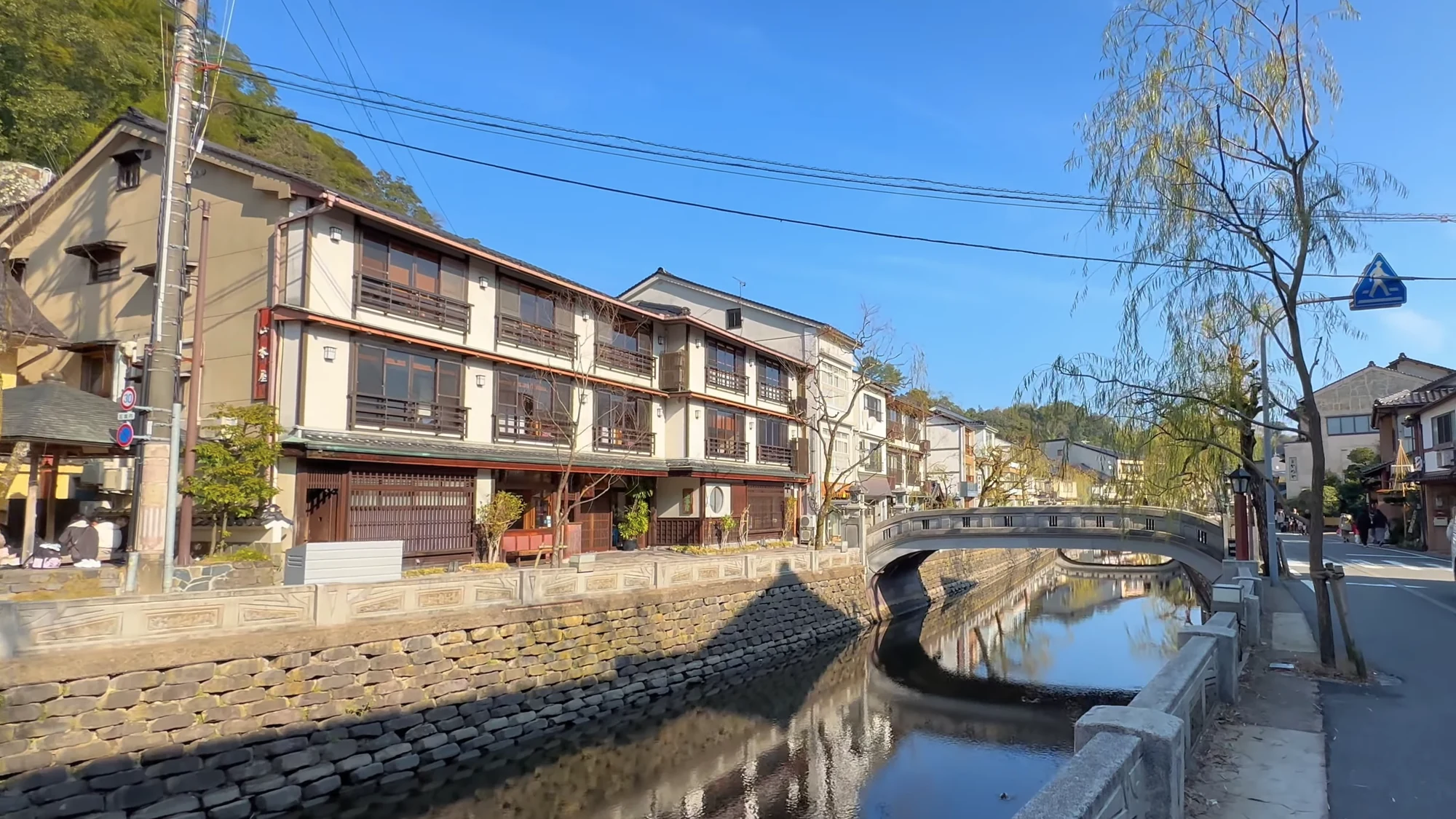
Warm enough that the walk between baths is a pleasure, cool enough that the water still earns its welcome.
What spring pairs with
Spring is also the season when Kinosaki's surroundings pull their weight, and the pairing logic deserves its own minute. The day-trip roster from our dedicated guide comes fully online as the weather opens: Izushi's castle town does its best work under blossom and fresh green, Genbudo's basalt caves regain their river-boat approach, and by late spring Takeno's beach — one train stop away — is walkable for picnics weeks before it is swimmable. Each remains lunch-shaped rather than day-shaped, returning you for the 15:00 (3 pm) bathhouse openings, and each slots naturally into the green weeks when the town's own calendar runs quiet. The stork detour earns a special spring mention: the Toyooka basin's reintroduced コウノトリ (kounotori, white storks) are nesting through the season, the observation facilities are at their most rewarding, and the bird's connection to the town's founding legend — the wounded stork that first revealed the healing water — makes the excursion a themed one rather than generic wildlife tourism. ⚠️ Facility details per current notices; the day-trips guide carries the practical file. For longer regional itineraries, spring's soft pricing makes Kinosaki an easy two-night anchor: the Kansai cities' blossom crowds are at their most punishing exactly when the town's are gentlest, and travellers who invert the standard route — Kyoto's blossoms at dawn, then escape to Kinosaki's canal version by evening — report the best of both without either's queue. The transport guides carry the connections; the point here is simply that spring is the season when adding Kinosaki to a Japan trip costs the least and relieves the most.
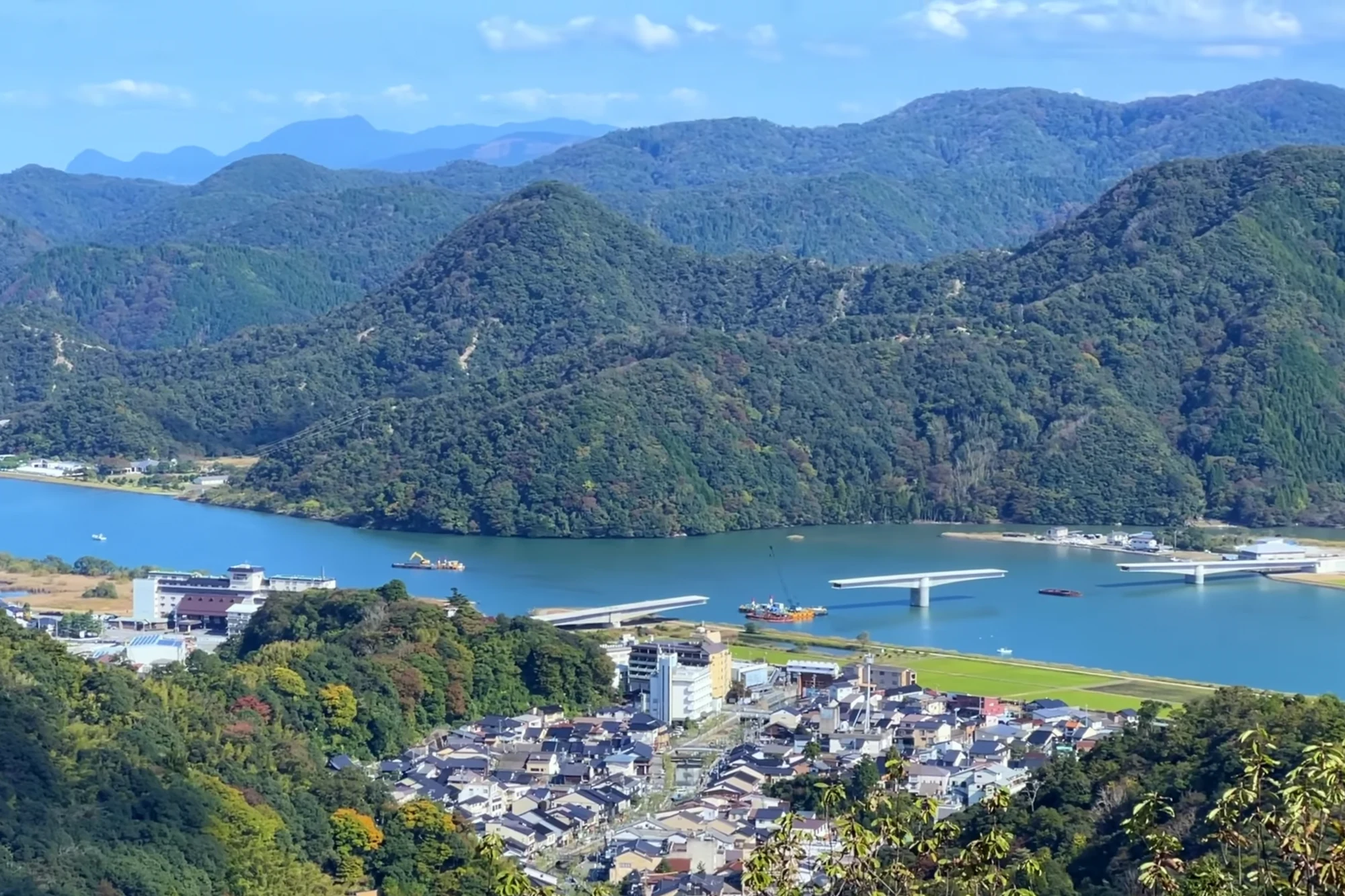
Spring pairs well with the coast: Takeno's beach is one stop down the line.
The spring booking playbook
Three windows, three strategies. Blossom week (early April): book a few weeks out, canal-side if the view is the point, and hold dates loosely if the photograph is the whole mission — the bloom moves, and flexible beats early. Festival window (April 23–24): book normally, a fixed and underpriced pleasure; pair it with the season's tail-end blossom luck in early-bloom years. Green weeks (post-Golden-Week May through early June): book casually, days ahead, and spend the saved premium on the room upgrade — which, in the one town where every tier shares the same baths, is the upgrade you will actually feel. The one red-letter avoidance is Golden Week itself unless deliberately chosen and booked months out; the one cross-season note is that spring's end abuts the summer calendar — the しょうぶ湯まつり (shōbu-yu matsuri, the iris-bath festival) and the early-summer events the best-time guide lists — so late-spring trips can borrow the next season's first acts free. ⚠️ All event dates re-set yearly; check the association's calendar. And for the canal-side room request, spring is the season it matters most: blossom week and the lit yozakura evenings happen outside that window, and the premium for the view is smallest exactly when the view is best. And the meta-note, mirroring autumn's: spring is the season Kinosaki does most things at once — prettiest week, founding festival, calmest value stretch — without any single headline dominating. Travellers who want one iconic scene should take winter's snow lottery or the blossom's short window; travellers who want the town itself, legible and unhurried, with its story told in order and its prices at ease, should take spring and let the three acts run.
Tips
Watch the bloom forecast from mid-March and book flexibly — the week moves
In blossom week, invert the circuit: marquee houses at 7:00 (7 am), evenings for the bridges
Request canal-side explicitly at booking if the blossom view is the mission
Aim April 23–24 for the festival — fixed dates, soft prices, no tour buses
Post-Golden-Week May: book days ahead and spend the savings on the room upgrade

Verified by The Japan Onsen Society
Show all sources
Verified July 7–16, 2026; event calendar and founding sources verified September 2026. Primary Japanese sources:
イベント情報 — 城崎温泉観光協会 (Kinosaki Onsen Tourism Association — the event calendar: Onsen Matsuri, autumn festival, Crab Kingdom season events): [https://kinosaki-spa.gr.jp/event/](https://kinosaki-spa.gr.jp/event/)
温泉まつり — 城崎温泉観光協会 (the Onsen Matsuri official page — April 23–24, the founder's memorial and water-blessing rite): [https://kinosaki-spa.gr.jp/event/onsen-matsuri/](https://kinosaki-spa.gr.jp/event/onsen-matsuri/)
城崎の歴史 — 城崎温泉観光協会 (Kinosaki Onsen Tourism Association — the 717/720 founding tradition and Onsenji): [https://kinosaki-spa.gr.jp/about/history/](https://kinosaki-spa.gr.jp/about/history/)
外湯めぐり発祥の地!温泉天国★城崎温泉 — 豊岡市観光公式サイト (Toyooka City Official Tourism Site — the sotoyu system, ordinance, prices): [https://toyooka-tourism.com/recommend/onsen/kinosaki_sotoyu/](https://toyooka-tourism.com/recommend/onsen/kinosaki_sotoyu/)
Related guides

When to Visit
Onsen Festival
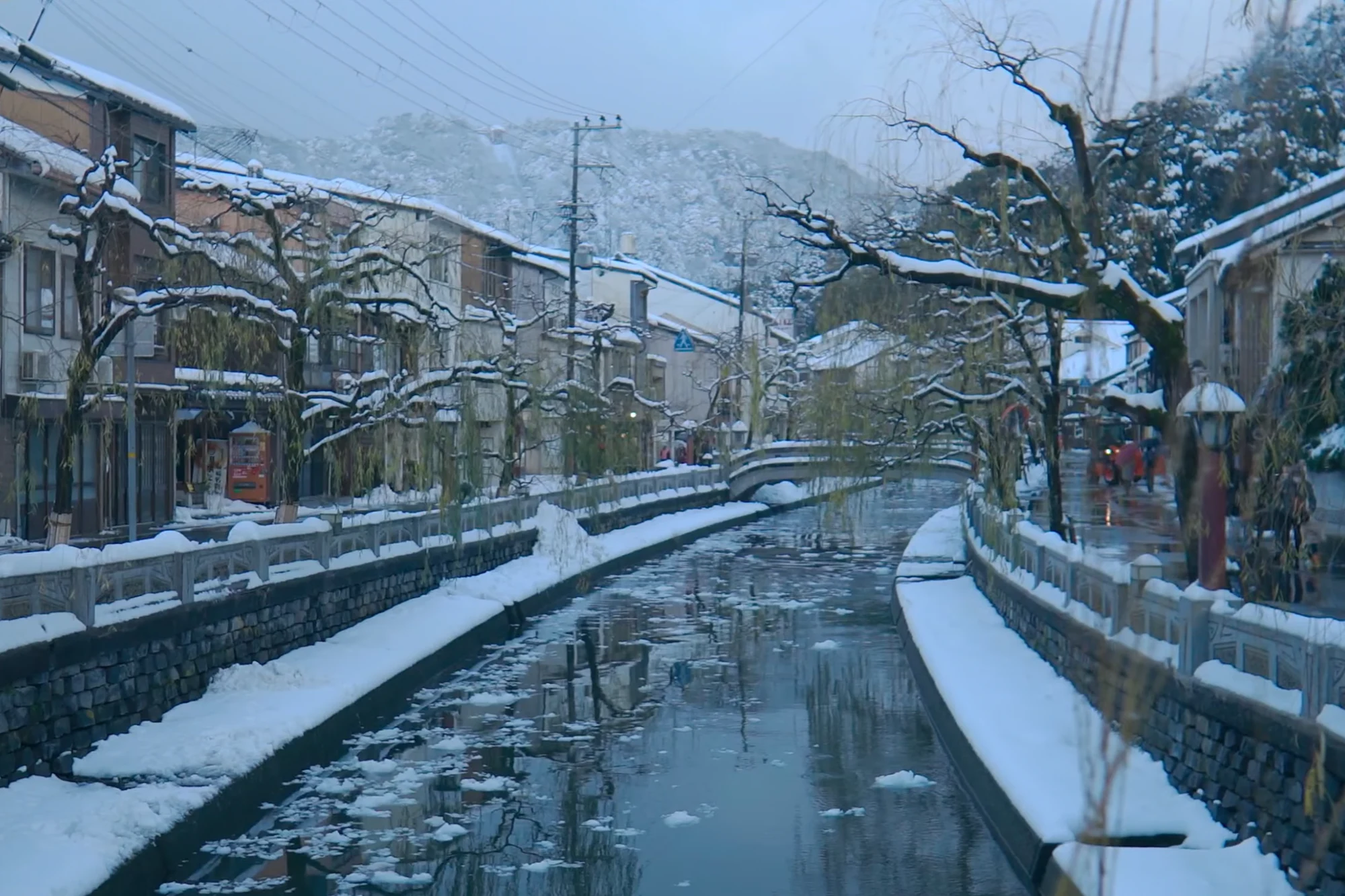
Every April 23 and 24 the town holds a festival for its own hot water. Almost nobody plans around it.
When to Visit
Best time to visit
Crab from November, snow in January, willows in April. There is no wrong month, only different ones.
When to Visit
Day trips
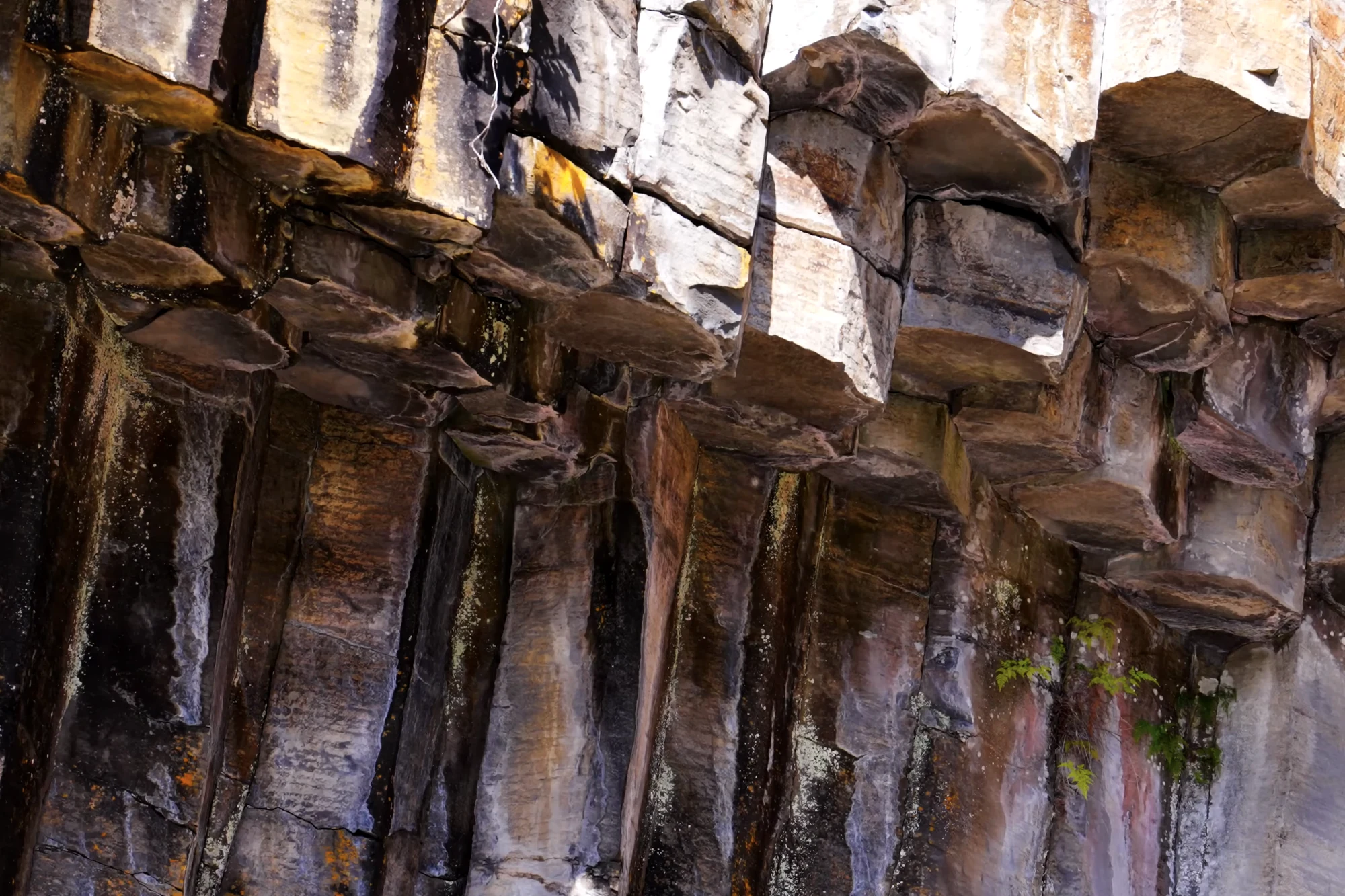
Izushi for soba, Genbudo for basalt caves, Takeno for the sea. All within an hour of the station.
When to Visit
Wearing yukata
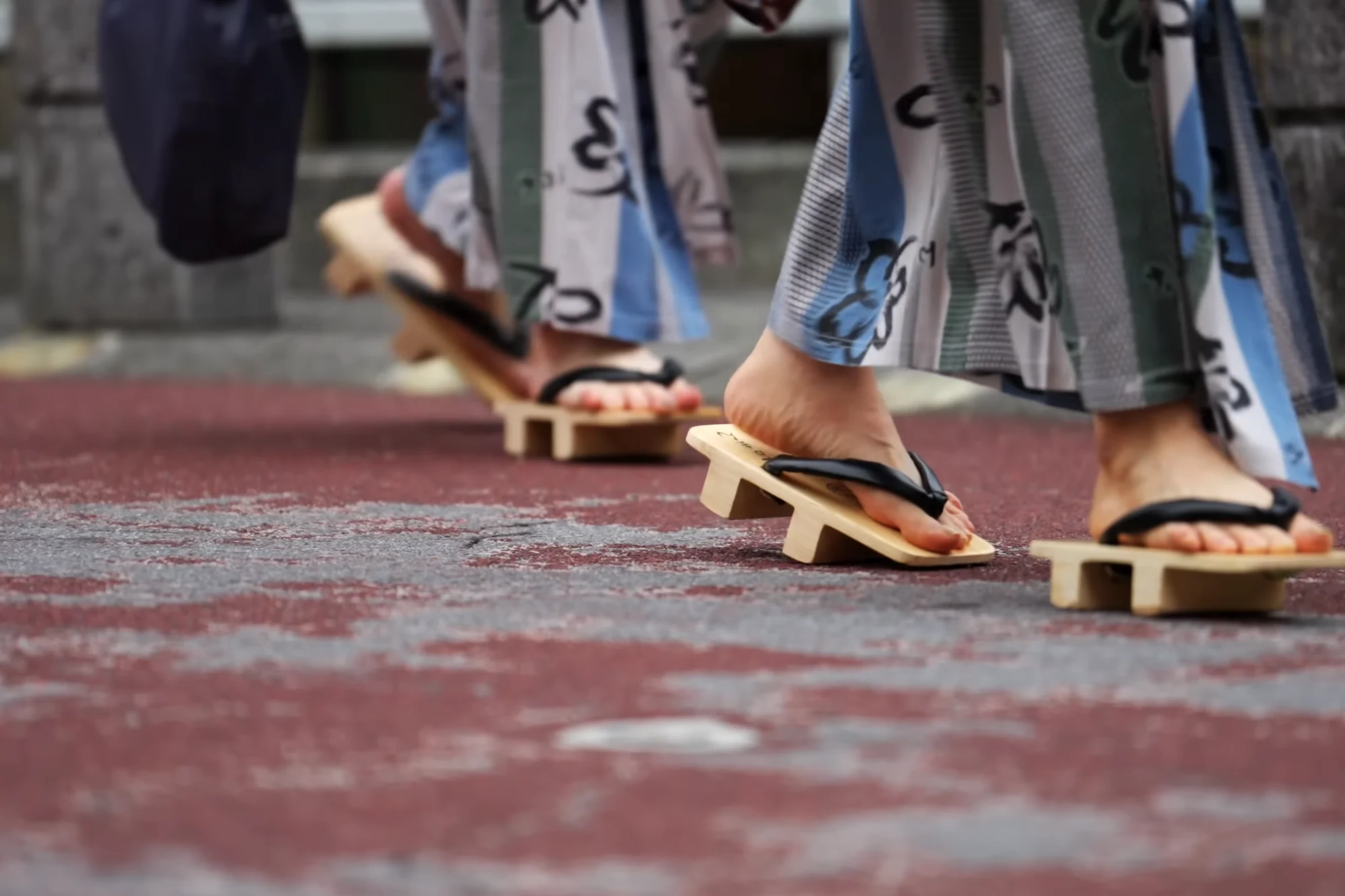
Yukata are worn in the street here, not only inside your room. Here is how to tie one and walk in it.