
It's the question everyone asks quietly at check-in, usually while holding the folded yukata like an exam they haven't studied for. The answer is reassuringly boring, and then usefully detailed — and in Kinosaki Onsen, where the yukata is effectively town dress and guests live in one from check-in to checkout, it's worth getting the details right. Kinosaki is the right town to answer it from, because nowhere else runs the experiment at this intensity: guests here live in a yukata from check-in to checkout — street, dinner, bathhouses, sleep — and the town's circuit can mean getting in and out of the garment seven times in one evening. Whatever survives that schedule is the correct answer, and it is the one below. The word itself gives the game away: yukata began as 湯帷子 (yukatabira), the bathing robe — this was never formal wear with secret under-layers, and treating it simply is historically correct, not lazy. One reassurance before the details, because the anxiety is universal and the town has watched it nightly for generations: nobody is checking. The inn staff who dress you have seen every possible under-layer decision and reacted to none of them; the only visible verdicts are the collar and the wrap direction, and both take three seconds to get right. The sections below exist so you can stop thinking about the question entirely — which is, in the end, what wearing a yukata well actually looks like: not thinking about it, on a bridge, on the way to a bath.
The short version
Underwear. At a ryokan, the yukata functions as loungewear, sleepwear, and — in onsen towns — streetwear, and ordinary underwear beneath it is normal and expected. Nobody is auditing further than that. Women who prefer more coverage often keep a camisole or slip; men are fine as they are. The only real rules are the visible ones: nothing showing at the collar, and the left panel closed over the right. Two practical notes complete the short answer. The inn launders every yukata between guests, and your underwear is what keeps that system comfortable for everyone — so wearing it is a courtesy, not a concession. And the only self-check that matters happens at the mirror on the way out: nothing visible at the collar, left panel over right, hem roughly at the ankle. Pass those three and you are dressed correctly by any standard the town will apply. What NOT to wear underneath is the shorter list: nothing bulky (the line shows), nothing high-necked (the collar shows), and nothing you would be slow to remove at a bathhouse door — jeans under a yukata is the error the changing rooms see nightly, and it defeats the entire design. The garment was engineered to be the fastest-changing clothing in Japan; everything you add underneath is a tax on the evening's seven changes, paid in full at every single changing-room bench between here and the last bath. Simple wins, seven times a night, and it is always the simplest-packed travellers who finish the circuit first.
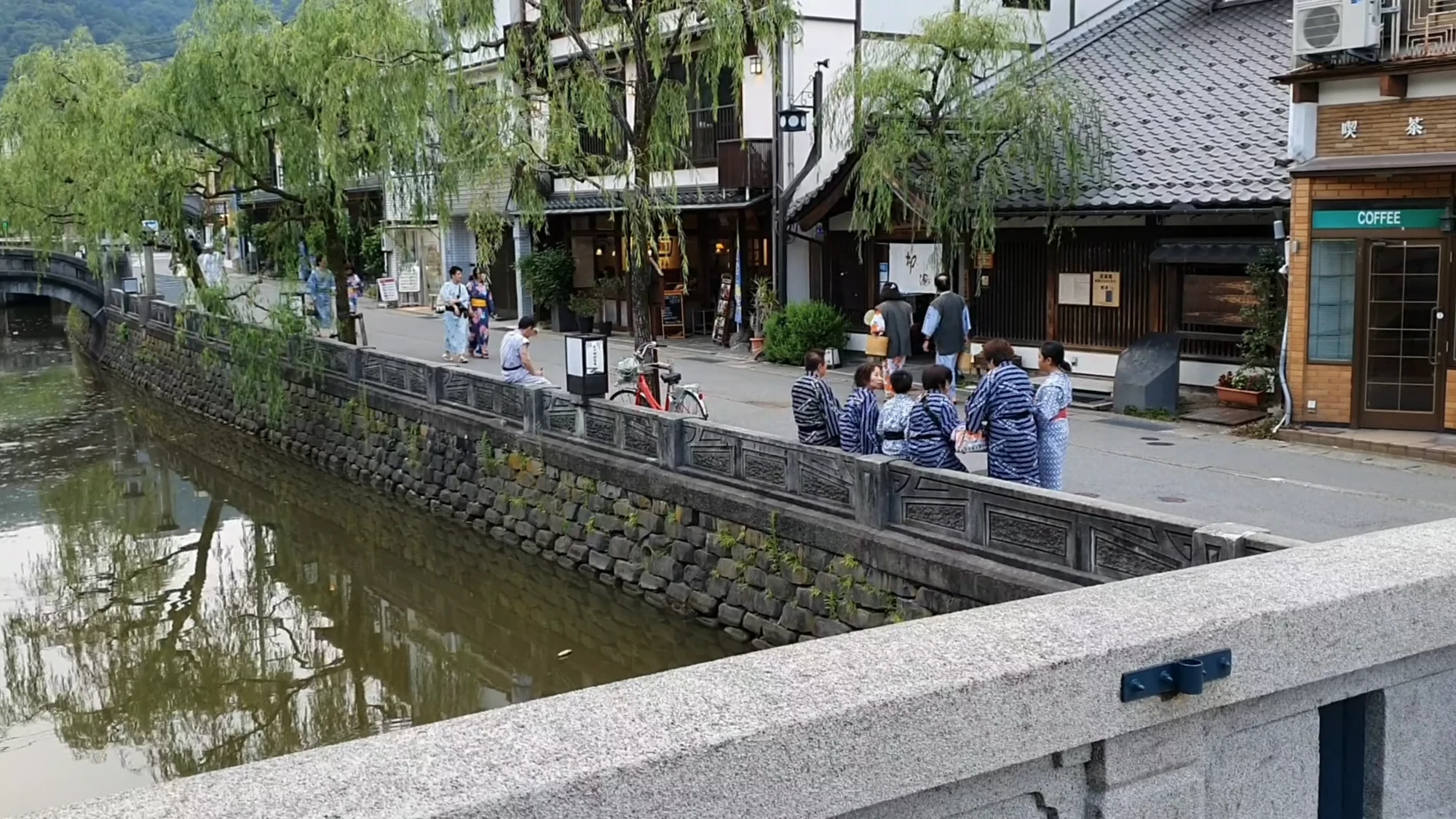
Ordinary underwear is normal and expected. Nobody is checking, and nobody can tell.
The traditional version, if you want it
The classical under-layer is the hadajuban — a thin cotton undershirt, sometimes with a matching wrap skirt (susoyoke) for women — worn to keep the yukata clean and to smooth its line. Ryokan don't usually supply one ⚠️, and for a night or two at an inn nobody expects it. If you buy your own yukata in Kinosaki's shops to take home, a hadajuban is the accessory worth adding: it makes the cotton hang better and launder less. The full classical stack, for the curious: the 肌襦裢 (hadajuban, skin-layer undershirt), the 裾除け (susoyoke, wrap underskirt) for women, and above them the garment itself — a system built for silk kimono and borrowed downward to protect cotton. Modern thin thermals do the hadajuban's winter job in a fraction of the bulk, which is why the tradition survives mainly among people who own their own yukata and want it to hang and launder well. If you do buy one in Kinosaki's shops to take home, add the hadajuban to the purchase; it is the difference between a garment that drapes and one that clings, and it halves how often the cotton needs washing. The classical stack is also self-limiting in exactly the way modern travellers want: two thin layers, no fasteners, nothing the bathhouse basket cannot swallow in one motion — one of the rare cases in Japanese dress where tradition and convenience turn out to be the same instruction, written down twice, by two different centuries, that never once expected to agree.
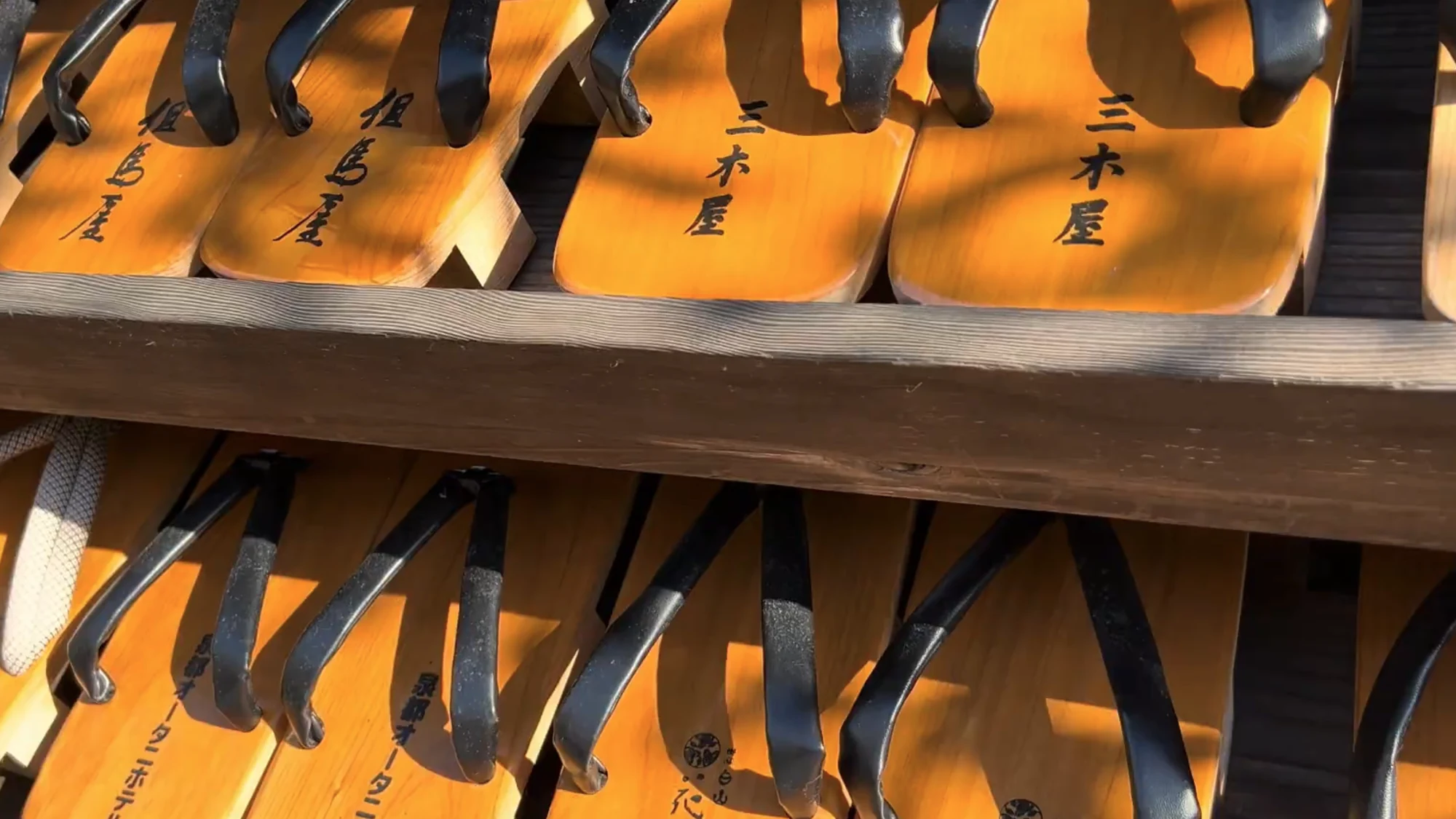
The traditional hadajuban under-layer exists mainly to keep body oils off the garment.
Cold weather: the Kinosaki reality
The yukata is a summer garment drafted into year-round service in onsen towns, and Kinosaki's bathhouse stroll happens in January too — along a canal, off the Sea of Japan, in air that sits near freezing (around 0 °C / 32 °F on winter evenings). The system that keeps everyone functional:
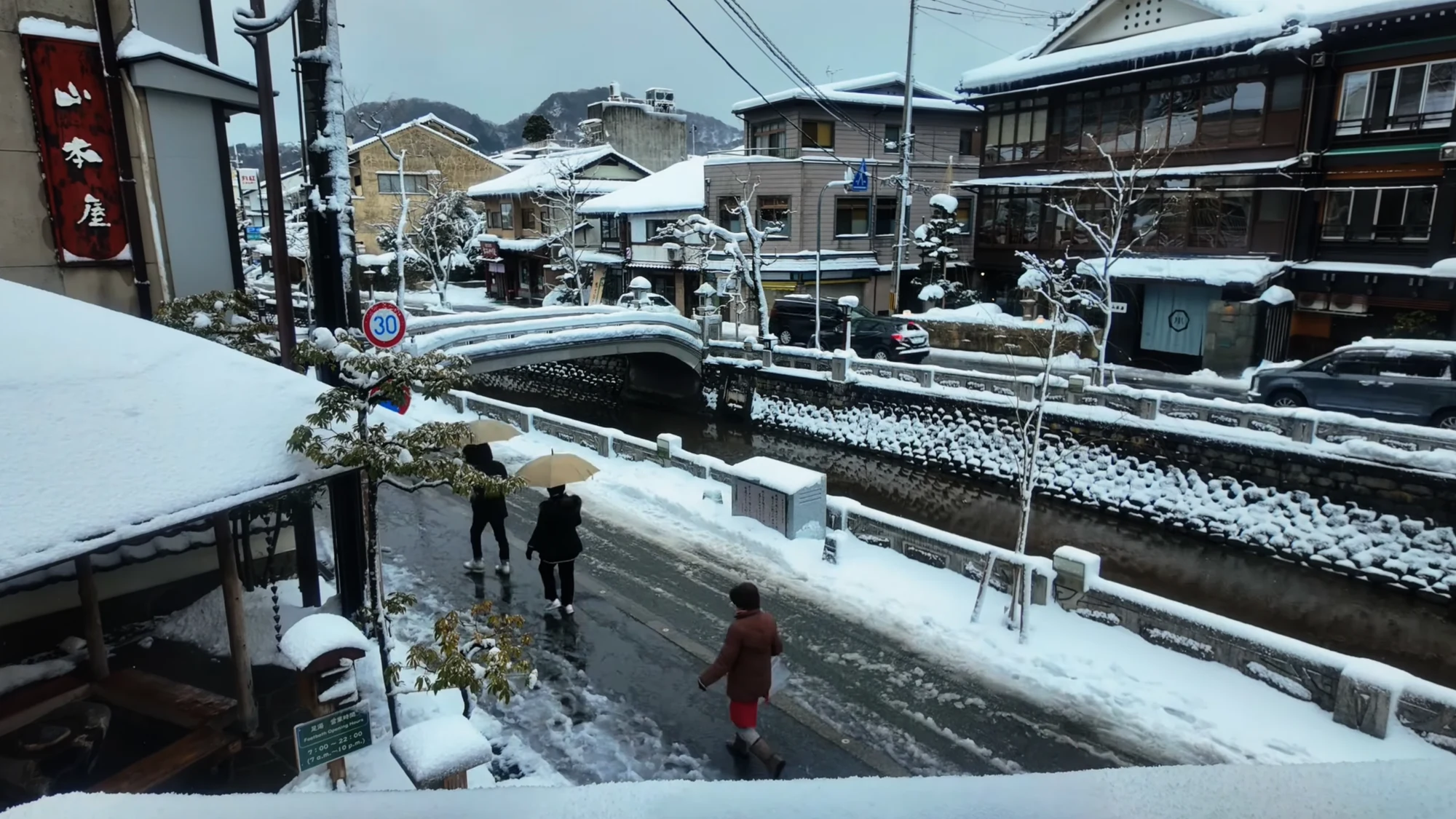
January evenings sit near 0 °C (32 °F). A thermal base layer under the yukata is the local solution. ⚠️
A discreet base layer. A plain T-shirt or thin thermal top under the yukata is completely acceptable as long as the collar stays invisible — scoop necks beat crew necks. Same for leggings under the hem.
The tanzen. In winter your inn provides a padded over-kimono (tanzen or dotera) worn open or belted over the yukata — this is the actual insulation, and yes, you wear both.
The haori. The lighter jacket layer, fine for spring and autumn evenings.
Socks with geta are permitted by everyone who has ever been cold. Tabi socks are the traditional option; regular socks happen constantly in January and the town does not blink.
Between bathhouses, remember you'll be undressing completely at each stop — the practical winter skill in Kinosaki is choosing under-layers you can get in and out of seven times in an evening without ceremony. Order the stack correctly and it works from the inside out: base layer first, yukata closed left over right, obi, then the tanzen worn open or belted — never a bulky layer jammed underneath, which breaks the line the whole system is designed to keep clean. Warmth belongs on top, invisibility underneath.
How to wear it: the five rules that matter
1. Left over right. Always. Fold the right panel against your body first, then close the left panel over it. Right-over-left is how the dead are dressed for funerals — it's the one genuine mistake, and the one everybody in town will privately notice. 2. Snug at the waist, relaxed above. Wrap firmly enough that walking won't work it open; the chest can stay comfortable. 3. Obi height differs. Men tie the sash low, on the hip bones — it should sit below any stomach, not on it. Women tie at the natural waist, higher and usually with a neater bow, worn to the back or side. 4. Adjust length with the wrap, not the hem. Ryokan yukata come in S/M/L; ask the front desk for your size rather than engineering something. Ankle-ish is right for men; a touch longer reads elegantly for women. 5. For sleeping, loosen everything. It doubles as pajamas — retie it loosely and stop worrying. A sixth, unofficial rule from the bathhouse changing rooms: retie the obi properly after every bath rather than approximating it — the forty seconds it costs is why the last stroll of the evening looks as good as the first. The rules read as many; in practice they collapse into one — left over right — plus common sense, which is why the town teaches them in ninety seconds, nightly, to guests of every nationality and every age, and in thirteen centuries of receiving bathers nobody has ever failed the course.
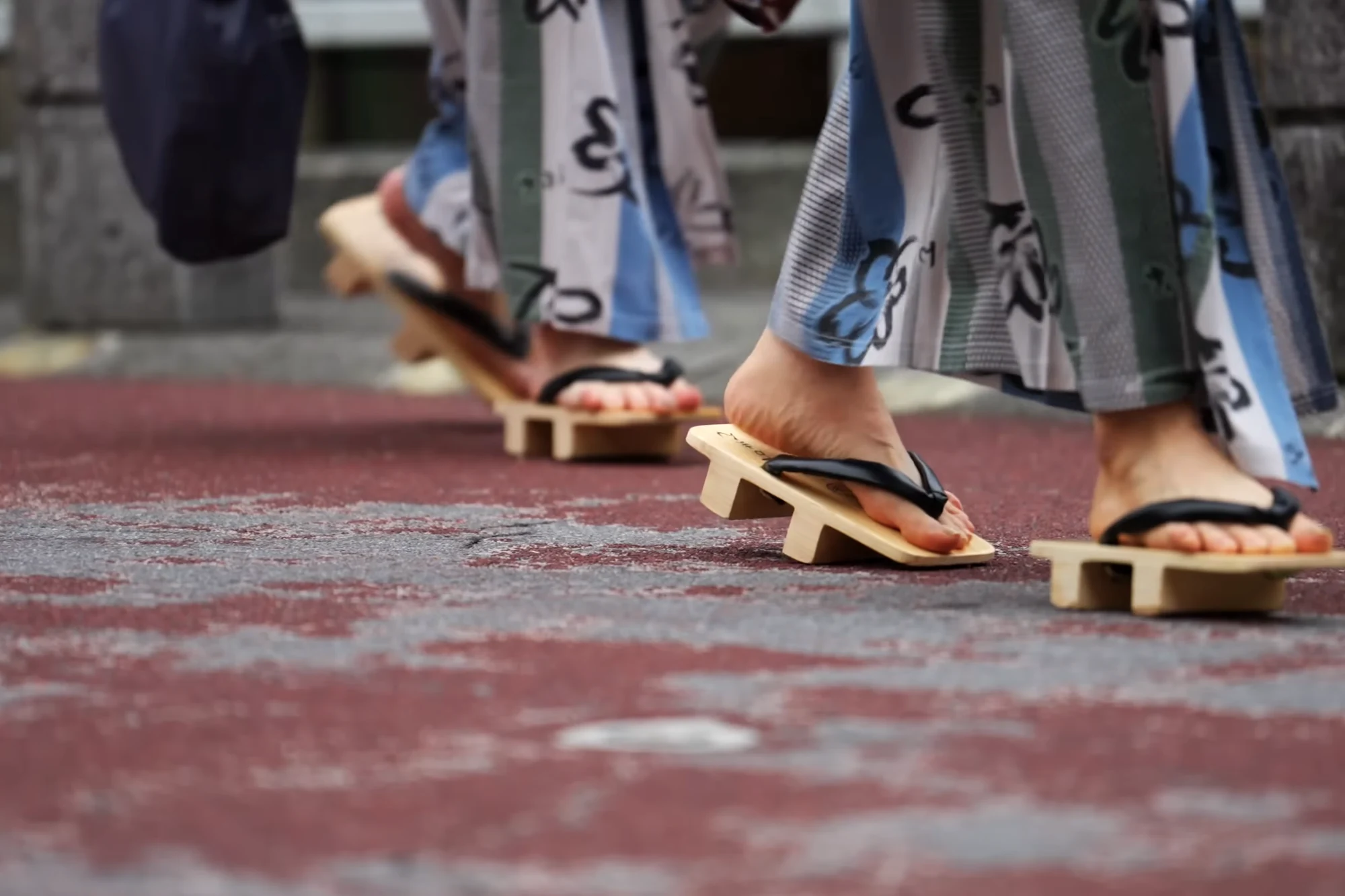
Left over right, hem to the ankle, obi below the waist for men and at it for women.
Men's yukata, specifically
Men's yukata are the simpler machine: straight lines, one sash, no bow to negotiate. The three things that separate wearing one well from wearing one like a bathrobe: keep the collar pulled back and low at the nape rather than choking up; tie the obi on the hips with the knot shifted slightly off-center to the right or back; and take smaller steps than you think — the garment sets your stride, not the reverse. Sizing runs on height: if you're between sizes, take the longer one, since a yukata that ends mid-shin reads as a costume. Kinosaki's rental and purchase shops carry larger sizes for Western frames ⚠️, and the town's inns are used to the request. Cold-weather men's specifics, since the questions come mostly in winter: a plain thermal with a wide neck disappears completely under the collar, dark colours stay invisible through pale cotton where white paradoxically shows, and the haori-plus-tanzen combination over the top means the under-layer only has to take the edge off, not do the whole job. Tall and broad-framed travellers should ask for the largest house size at check-in rather than mid-stay — inns are used to the request, and the longer hem transforms the look. If the wrap gapes at the chest on a broad frame, that is almost always a wrap-tension issue rather than a size issue — snug the first fold before blaming the garment, and let the obi hold the fix rather than your posture doing it all evening.
At the baths themselves
Under-layers stop at the bathhouse door. Kinosaki's seven sotoyu, like all onsen, are bathed naked — the yukata and everything beneath it goes in the changing-room basket, you wash at the taps, and the small towel stays out of the water. The yukata's whole logistical genius reveals itself here: no buttons, no buckles, dressed again in forty seconds and on to the next bath. The changing-room flow rewards a system: basket or locker for everything, small towel in hand, valuables in the coin lockers most houses provide near the entrance rather than in the basket. Dressing again afterward is where the yukata shows off — no buttons, no zips, closed and tied in under a minute — and the between-bath state, warm skin under loose cotton in the night air, is the sensation the whole tradition was engineered to deliver. Practise the retie once at the inn before the first bath and the evening runs itself. By the third house the wrap is muscle memory; by the fifth you understand why the town never modernised the outfit. There was nothing to fix. One timing habit completes the system: hit the changing room slightly damp rather than towelled bone-dry — the yukata's cotton finishes the job on the walk, which is the traditional function of the garment and the reason the between-bath walk, warm skin under cool cotton in the night air, feels so much better than dressing fully indoors ever could — ask literally anyone walking a stone bridge at nine in the evening.
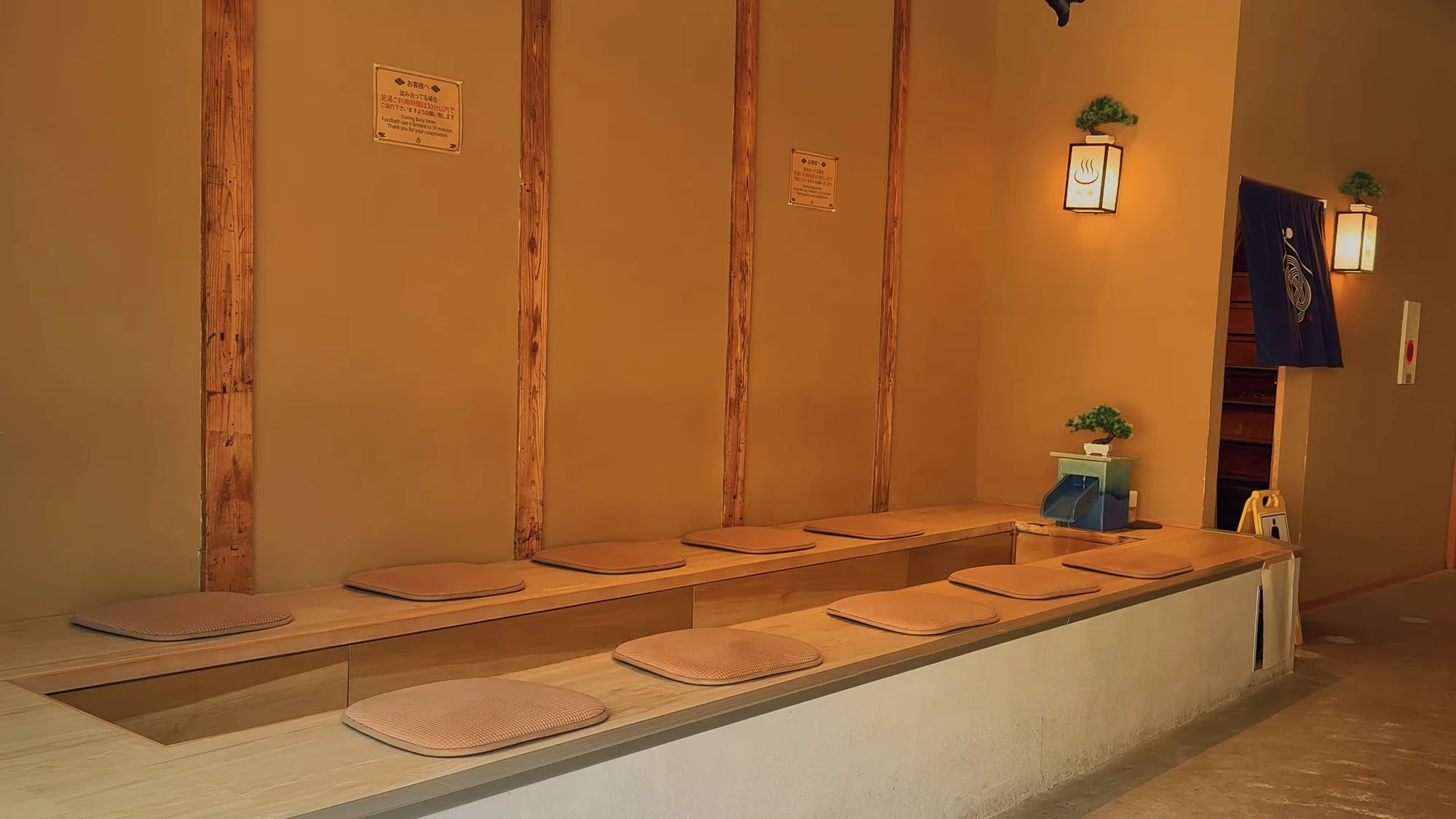
Everything comes off at the bath. The yukata goes in the basket with the towel on top.
Buying a yukata to take home
Kinosaki is a better place to buy a yukata than almost anywhere, for the unglamorous reason that you will have worn one for a day before you shop — you know your size, your pattern taste and whether you want the garment at all, which no city department store can offer. The main-street shops sell them alongside the obi, and the inn's front desk will happily show you the folding technique before you pack it. ⚠️ We name categories, not shops; stock and sizing vary. Three buying notes from the town's own logic. Take the sizing you learned at the inn, not the one the label suggests — you have empirical data most yukata buyers never get. Add the 肌襦裢 (hadajuban) under-layer if the garment is for real use rather than the wall. And buy the geta only if you have made peace with them; the yukata travels well, but wooden sandals on a hardwood floor at home are a different negotiation with the household than they were on Kinosaki's stone. The honest postscript: most take-home yukata become dressing gowns, and that is fine — it is the garment returning to its original job. The word began at the bath, and on the far side of your Kinosaki trip, so did yours. Wash it cold, hang it to dry, skip the iron — cotton this simple forgives everything except the tumble dryer, which will shrink a year's worth of good memories by a full size in forty warm humming minutes.
Shops along the main lane sell yukata to take home, generally from around ¥5,000. ⚠️
Tips
Choose scoop-neck base layers in winter — nothing may show at the collar.
Ask the front desk for your size (S/M/L) rather than engineering the hem.
Men: obi low on the hip bones, knot shifted off-center; between sizes, take the longer one.
Pick under-layers you can get in and out of seven times in an evening — the bath-crawl is the real dress rehearsal.

Verified by The Japan Onsen Society
Show all sources
Drafted July 2, 2026; depth pass September 22, 2026. The dress conventions here are standard practice as taught nightly at Kinosaki's inns; town-structure claims rest on primary Japanese sources:
外湯めぐり発祥の地!温泉天国★城崎温泉 — 豊岡市観光公式サイト (Toyooka City Official Tourism Site — why the yukata is street dress: the sotoyu system): [https://toyooka-tourism.com/recommend/onsen/kinosaki_sotoyu/](https://toyooka-tourism.com/recommend/onsen/kinosaki_sotoyu/)
外湯 — 城崎温泉観光協会 (Kinosaki Onsen Tourism Association — the seven-bath circuit the under-layer system serves): [https://kinosaki-spa.gr.jp/about/spa/](https://kinosaki-spa.gr.jp/about/spa/)
Related guides
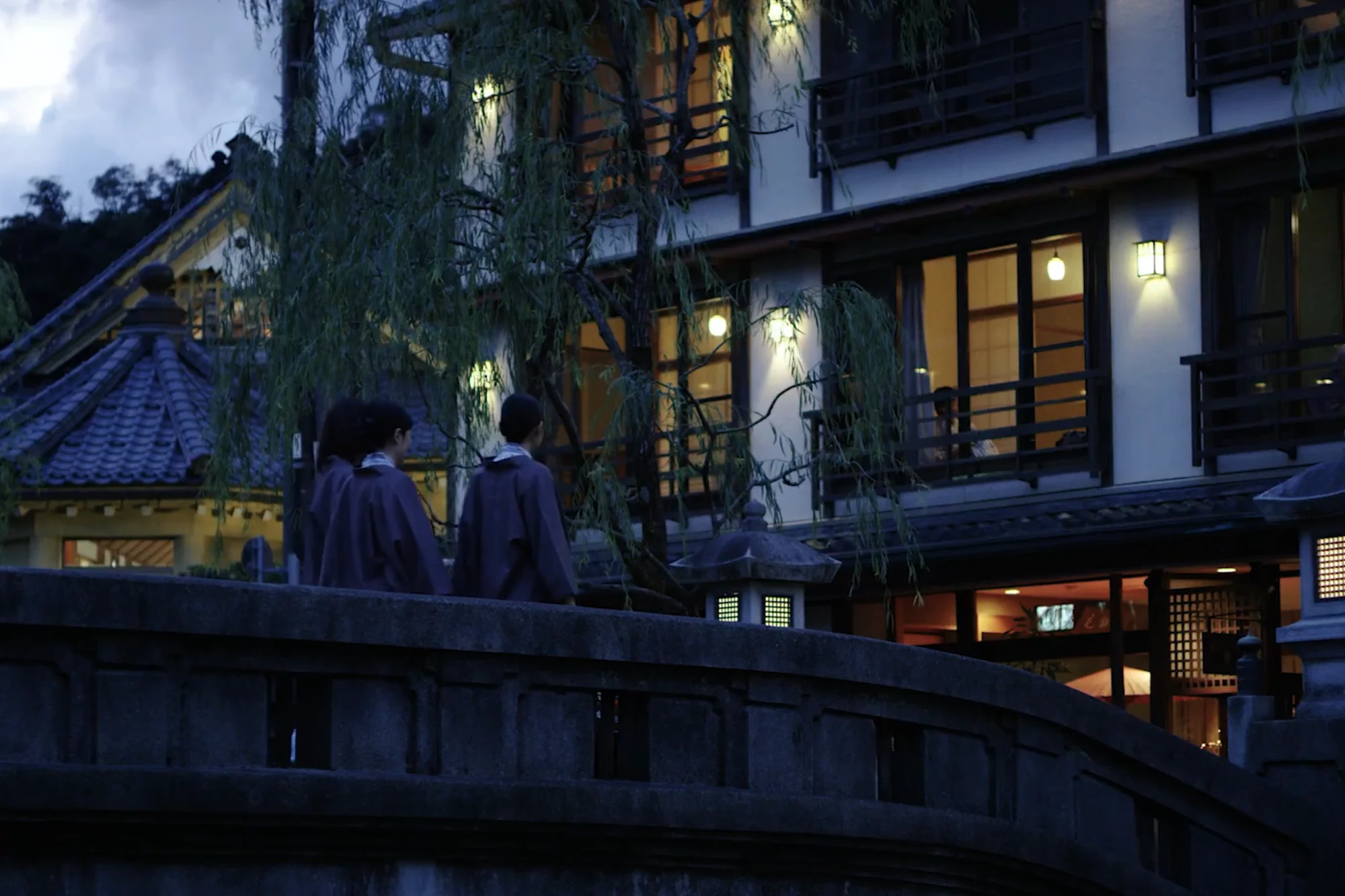
The Town and Its Baths
Kinosaki complete guide
Seven public bathhouses, one shared spring, and a law that keeps them the centre of town. Start here.
The Town and Its Baths
Wearing yukata
Yukata are worn in the street here, not only inside your room. Here is how to tie one and walk in it.
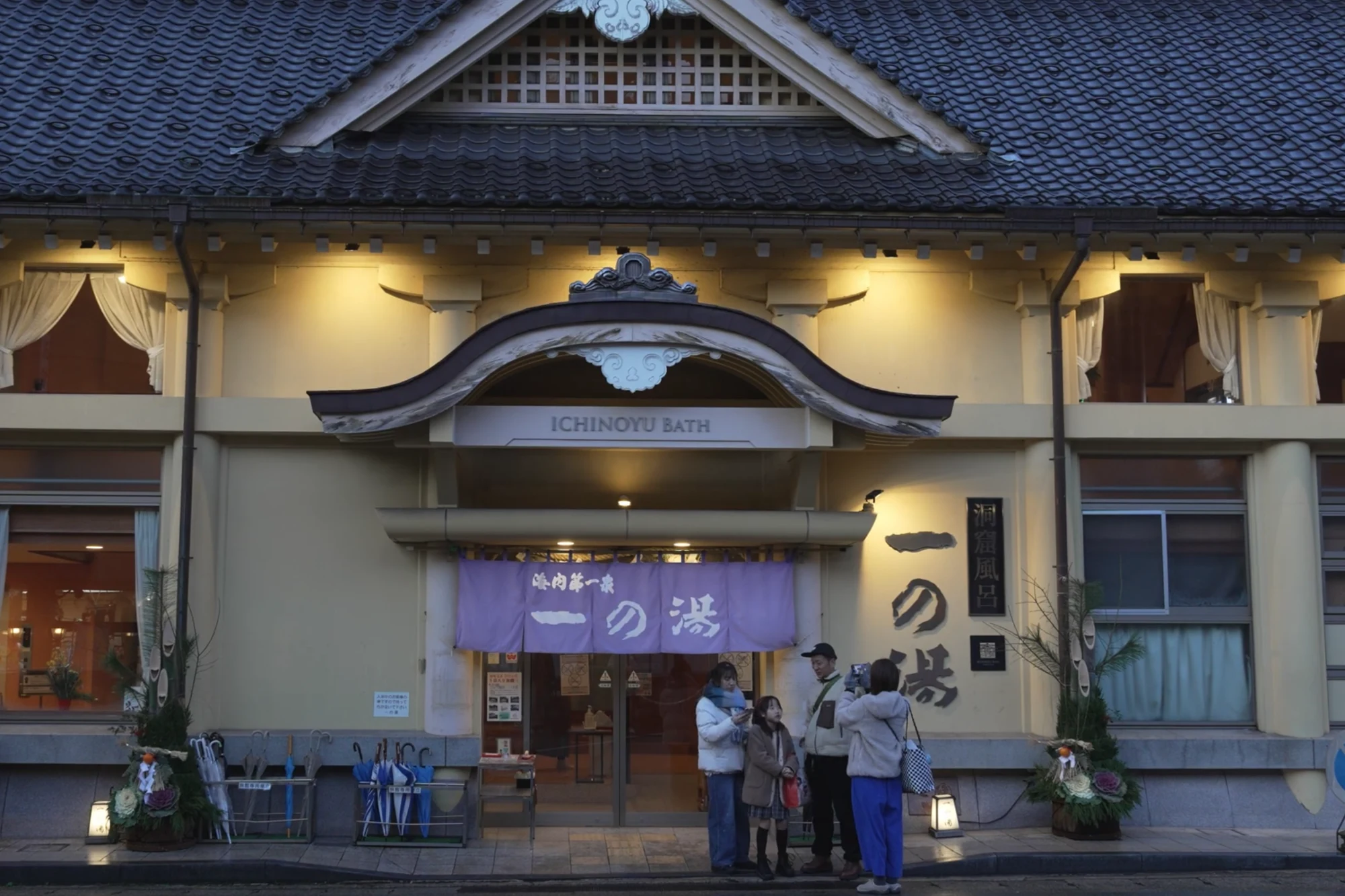
The Town and Its Baths
The 7 bathhouses
Same water in all seven houses. What changes is the room, the story, and the blessing on the door.
The Town and Its Baths
2-day itinerary
Two days and one night, hour by hour, built around the hours the seven bathhouses actually keep open.
The Town and Its Baths
Etiquette
Wash before you get in, keep the small towel out of the water, and nobody will look at you twice.