
Every guide to Japan prints the same onsen rules, and most first-timers still arrive braced for a test they might fail. Kinosaki is the reassuring place to sit that test. The town has welcomed novices for over a century, its bathhouses are signed in English, and its whole design, seven public baths visited in supplied pajamas, assumes you are new here. What follows is the standard protocol with the Kinosaki-specific parts made explicit, in the order you'll meet them. One reframe before the protocol, because it changes how the whole page reads: in Kinosaki, most of the etiquette has been transferred from your shoulders to the town's infrastructure. The pass replaces the negotiation, the supplied yukata replaces the dress decision, the English signage replaces the guesswork, and the wash-station layout physically walks you through the one rule that matters. What follows is therefore less a test syllabus than a tour of a system designed so you cannot easily fail it. Use the page accordingly: first-timers should read the sotoyu routine and the dinner section before arrival and skim the rest; returning Japan travellers can jump straight to the Kinosaki-specific parts — the pass mechanics, the tattoo exception and the closing section on how this town automated its own manners. Either way, the page's promise is the same: nothing below requires memorisation, because the town itself will prompt you, in signage or in person, at every single step that actually matters — which frees the reading below to be interesting rather than urgent.
At the ryokan: the first thirty minutes
Shoes come off at the genkan, the recessed entry floor, and go into the rack or the staff's hands; the step up marks the boundary, and socks or bare feet take it from there. Slippers provided at the step are for corridors, never for tatami rooms, and the separate pair inside the toilet stays inside the toilet, the single most common slipper error in Japan. Tea will likely appear, and so will two questions worth answering precisely: dinner time, which is a kitchen commitment rather than a suggestion, and your yukata size. Change into the yukata before anything else; wearing it marks you as a guest of the town, not just the inn. The check-in rhythm rewards surrender: let the staff sequence you — shoes, slippers, tea, questions, yukata — rather than trying to anticipate. The choreography is theirs, it runs nightly, and the guest's only real job in the first half hour is to answer the dinner-time question honestly against their train reality rather than optimistically. Luggage has its own small protocol worth knowing: bags are handed over or pointed at, not hauled to the room yourself, and anything you need before evening — chargers, medication, the book — is worth extracting at the genkan rather than excavating mid-ritual. The half hour runs smoothest for guests who arrive with pockets organised and hands free, and the whole check-in ritual repays that small surrender, with compound interest, well before the first dinner course ever reaches the table.
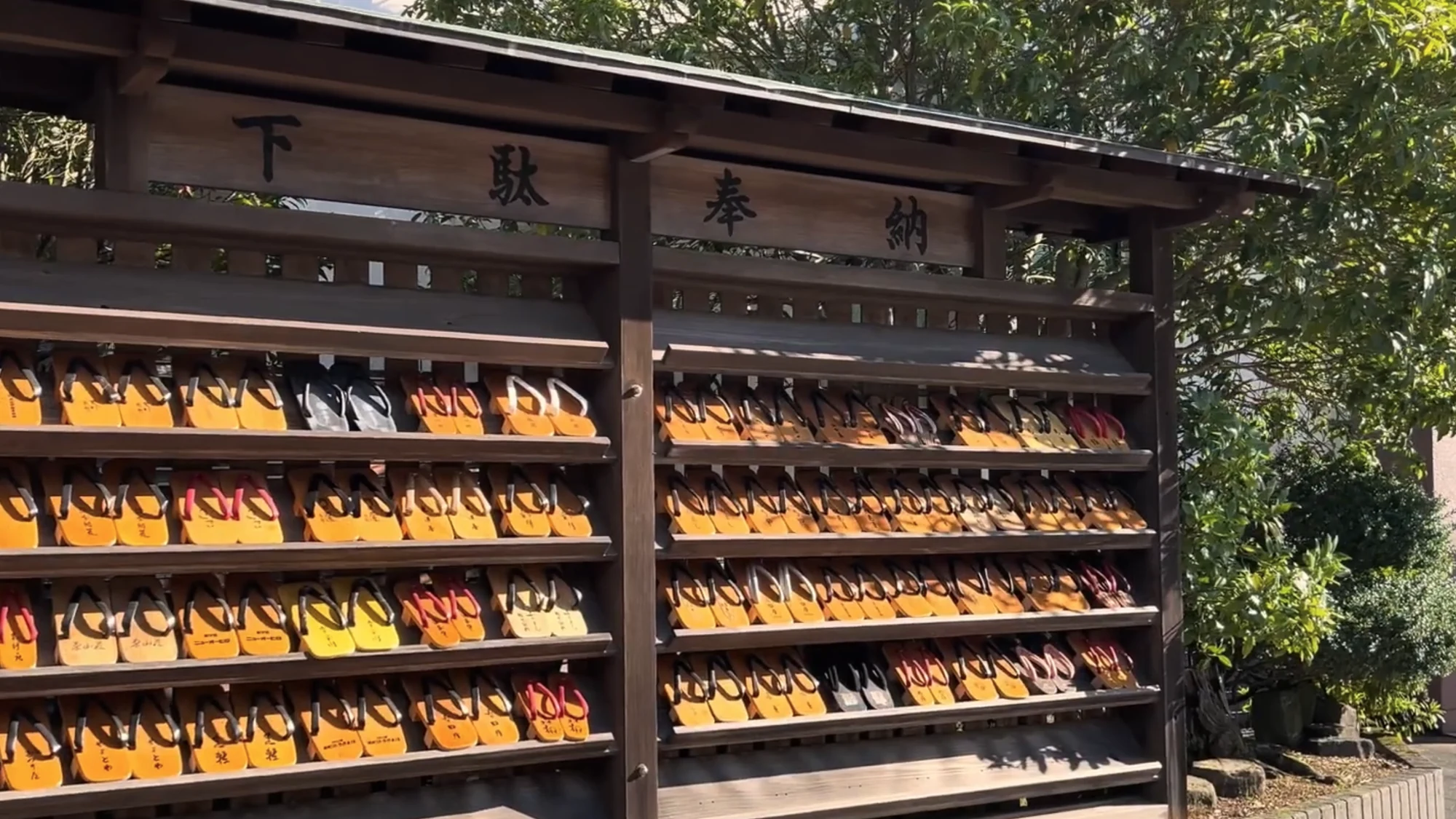
Shoes come off at the inn door. From there to the bath and back, geta are the only footwear you need.
Yukata rules, the short version
Close the left panel over the right, always; the reverse dresses the deceased. Tie the sash at the hips for men, the waist for women. Wear it to dinner, to the baths, to bed, and down the street, since Kinosaki's public dress code is the whole point of the place. Underwear beneath is normal, discreet layers in winter are sensible, and the padded tanzen coat the inn provides goes over everything in cold months. The complete garment briefing, including the men's specifics, is in our yukata guides. The town-specific corollary is the confidence rule: a yukata worn plainly and confidently reads correct, while one fussed over reads costume — and the fastest route to confidence is the front desk's ninety-second lesson plus one mirror check. Weather adjustments are pre-authorised, which first-timers rarely realise: the haori jacket in cool evenings, the tanzen over everything in winter, plain socks with geta when it is cold — all standard local practice, none of it a faux pas. The only actual errors remain the two the page opened with: right over left, and visible collar layers. Everything else is preference wearing a rulebook's costume, and the town retired that costume generations ago. Dress once with the desk's help, check the mirror's three items, and spend the anxiety somewhere it earns interest.
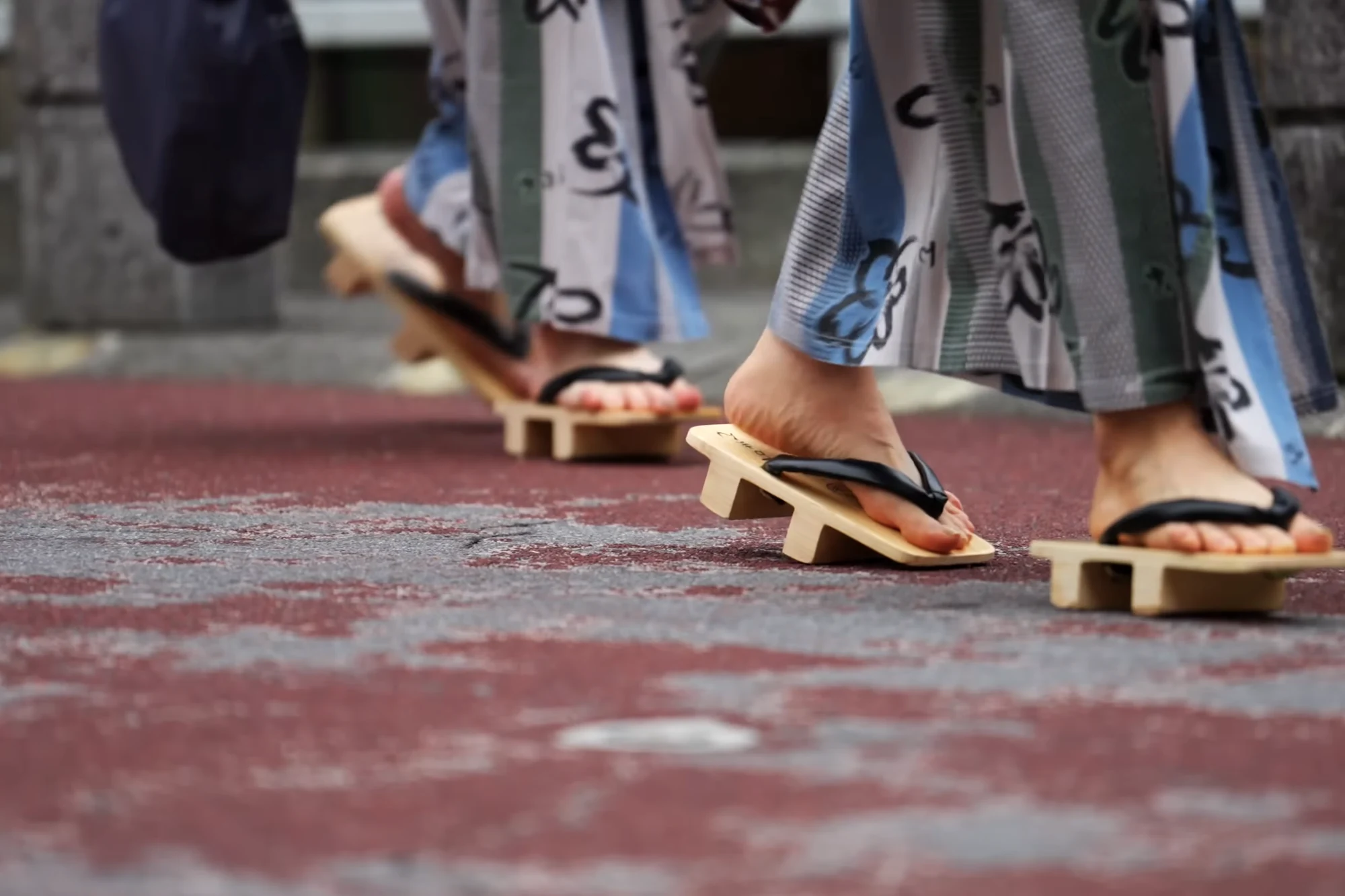
Left panel over right, always. Right over left is how the dead are dressed.
The sotoyu routine, step by step
Overnight guests receive the town's bathhouse pass from their inn ⚠️ (mechanics vary by inn; day visitors buy the one-day pass or pay per bath). At each of the seven doors the sequence is identical: 1. Shoes into the entry lockers, pass shown or scanned at the counter. ⚠️ 2. Undress fully in the changing room, everything into a basket or coin locker, valuables in the lockers where provided. ⚠️ Swimwear never enters a Japanese onsen; the water is shared, so bodies arrive clean and bare. 3. Wash seated at the taps. Soap, shampoo, full rinse, every time, even between baths on the same evening. Kinosaki's bathhouses provide soap and shampoo ⚠️; the seated posture keeps spray off neighbors. 4. Enter the water gradually. The small towel stays out of the bath: fold it on your head or set it aside. Long hair gets tied up. Ease in, since some tubs run hot, and cooling at the edge is normal practice. 5. Soak, don't swim. Conversation at low volume is fine and local; laps, splashing, and photography are not. Phones stay in the locker, a rule the changing room enforces socially and instantly. 6. No rinse-off needed afterward unless you prefer it; onsen minerals are traditionally left on the skin. Pat down with the small towel before re-entering the changing room, so the mats stay dry. Repeat up to seven times, which is where Kinosaki quietly teaches the deeper etiquette: pacing. Hot water compounds. Two or three baths an evening with water breaks and a soft-serve between them beats an endurance run, and the town's snack street exists precisely to punctuate the circuit. One routine note the numbered list hides: the sequence gets faster every time you run it. First bath, allow twenty minutes of figuring out; by the third house the undress-wash-soak-dress cycle runs on rails, and the seven-changes evening that sounded exhausting on paper reveals itself as the point — the yukata was engineered for exactly this loop.
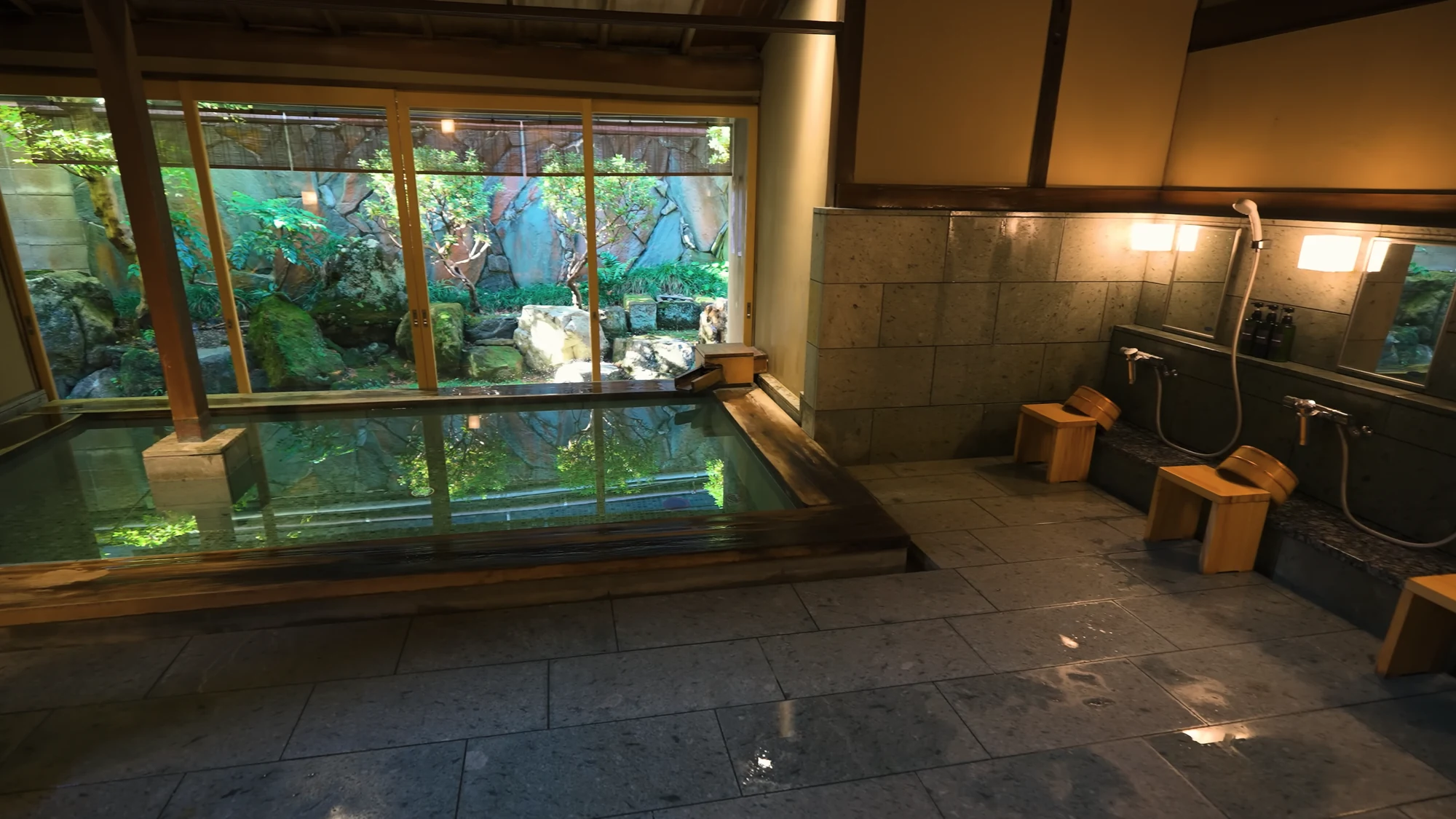
Wash before you get in, not after — the minerals are traditionally left on the skin when you leave.
Tattoos: the Kinosaki exception
Nationally, tattoo policies at baths range from prohibition to tolerance, and first-timers with ink often arrive anxious. Kinosaki settled the question: all seven public bathhouses admit tattooed bathers as formal town policy, no covers required. Ryokan in-house baths set their own rules, so tattooed guests planning to use an inn's private facilities should ask at booking, or read our tattoo guide for the full landscape. The seven sotoyu themselves ask nothing of you but soap. The etiquette corollary of the policy deserves stating: since the town has settled the question, re-asking it locally is unnecessary — no explaining at the counter, no checking with other bathers, no covering "to be safe." The correct tattooed-bather etiquette in Kinosaki is identical to everyone else's, which is precisely the dignity the policy exists to provide. For mixed groups the exception matters doubly: families and friend groups that elsewhere split at the bathhouse door bathe together here without arrangement, which quietly fixes the most common group-trip friction Japanese bathing produces. It is the difference between a policy that tolerates and a policy that includes, and Kinosaki's is the second kind. The etiquette chapter of tattooed Japan travel — normally its longest — reduces here to a single booked-in-advance sentence about one inn's private bath, which is as close to closed as that chapter gets anywhere in the country.
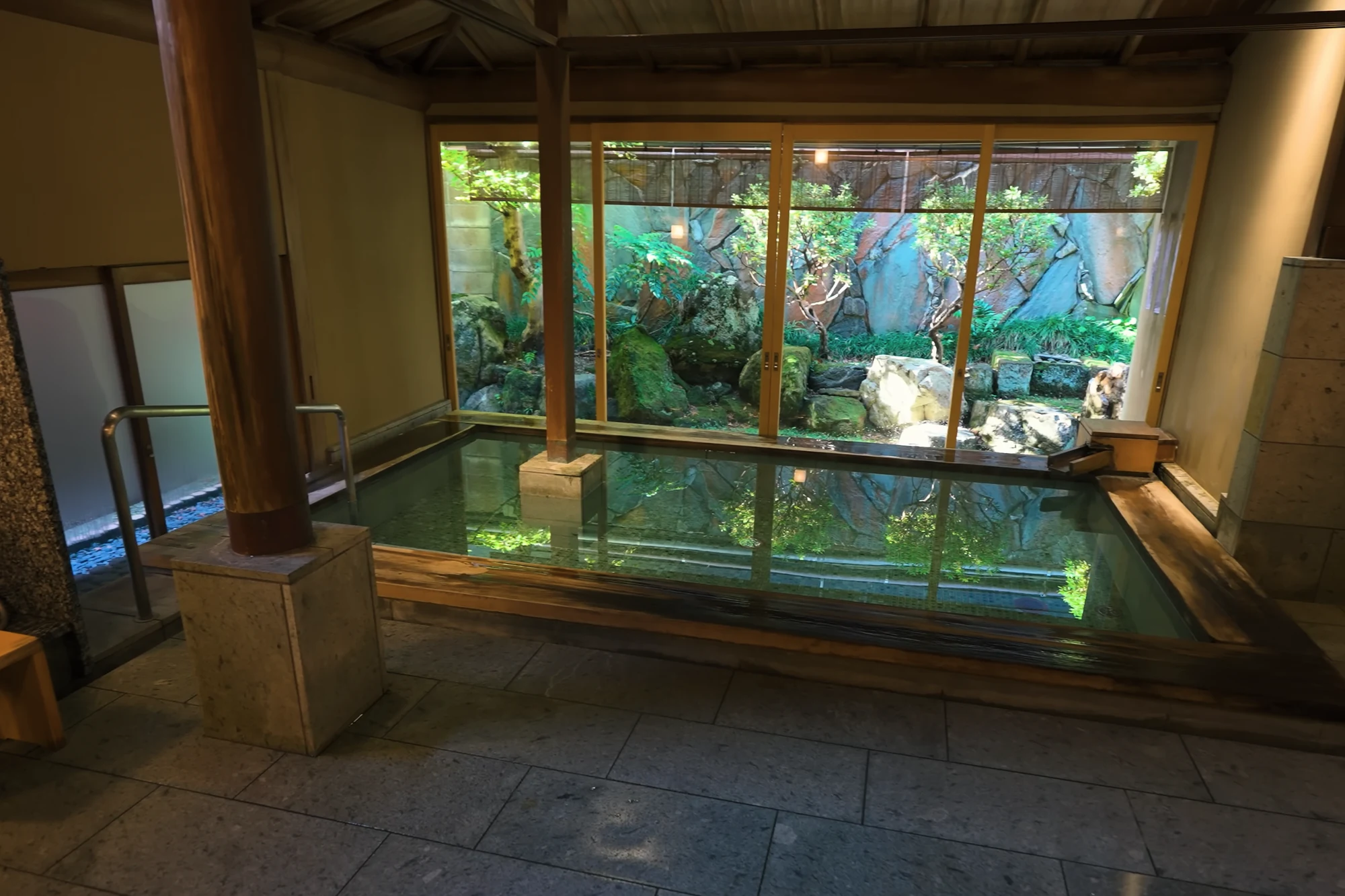
All seven public baths admit tattooed bathers as stated policy — rare enough in Japan to be the reason some people come.
Dinner and the inn evening
Kaiseki dinner, in-room or in a dining room by inn, arrives at the agreed hour as a sequence of small courses; the correct etiquette is to be present, roughly on time, and unhurried. A missed dinner hour is the one genuine offense available to a ryokan guest, since the kitchen cooked to your clock. Dietary needs belong in the booking message days ahead, not at the table. Nobody expects chopstick perfection or Japanese; they expect the yukata, which you're already wearing. While you eat, staff may lay out the futon, and finding your room transformed is part of the theater rather than an intrusion. Quiet hours run early by resort standards. The lanes empty gently after ten, the sotoyu close for the night ⚠️ (align closing time with pillar), and a town that starts bathing at dawn goes to bed accordingly. Two small dinner graces travel well: say いただきます (itadakimasu) before and ごちそうさまでした (gochisōsama deshita) after — the two phrases every kitchen hears and appreciates — and if a course defeats you, leave it neatly rather than engineering it; kitchens read plates, and a tidy pass is a message they receive without offense. Timing works the same way in reverse at breakfast: the hour is agreed, the spread is laid to it, and the guest who wanders in forty minutes late meets cold rice and a politely invisible sigh. Between the two meals the inn asks almost nothing of you — which is the actual etiquette bargain of the ryokan: precision at the table hours, freedom everywhere else.
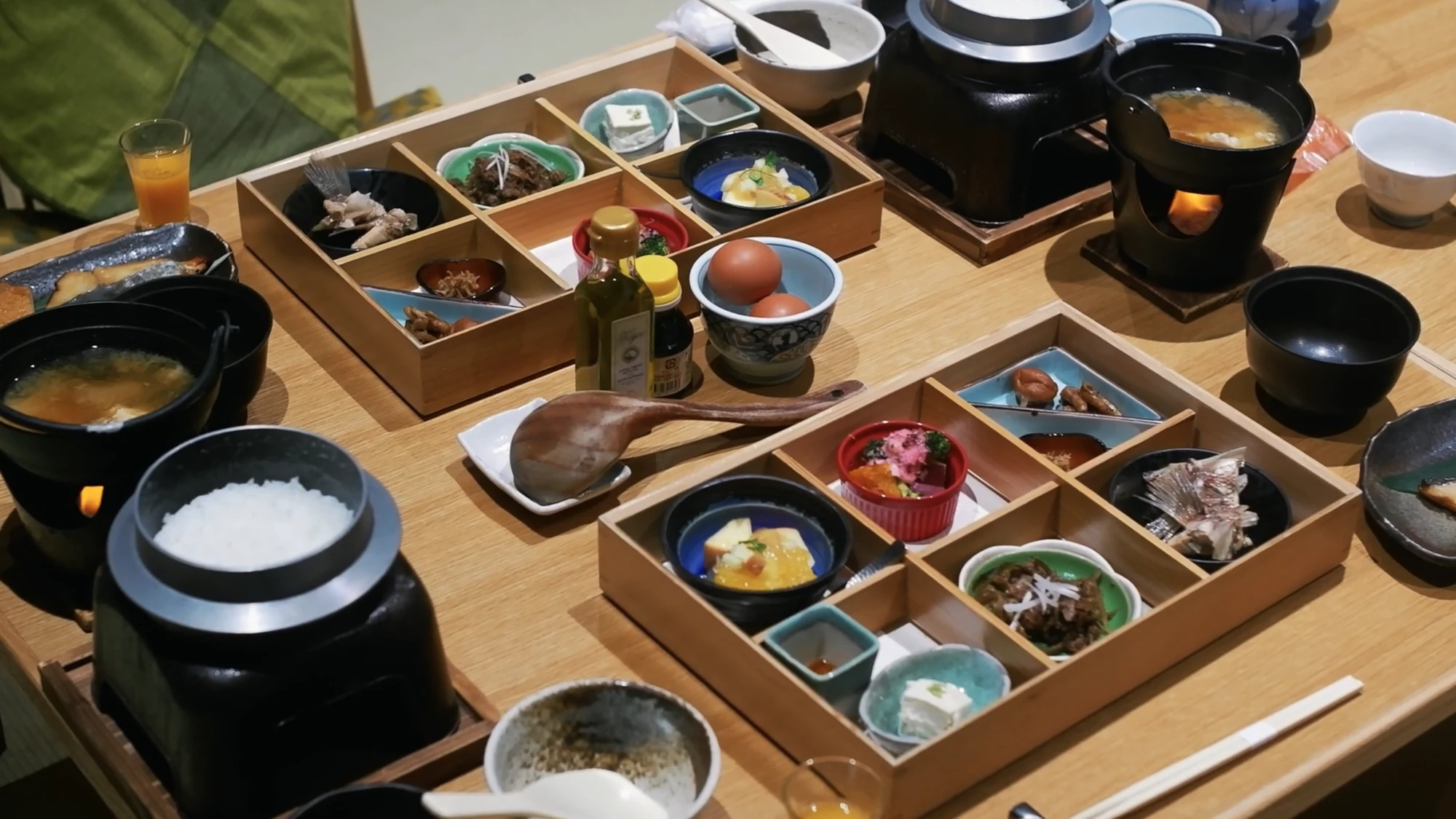
Dinner is served early by design, so the evening circuit still has hours left in it.
The health traditions, and one plain sentence
Japanese bathing culture frames each spring's character through tekiōshō, conditions the waters are traditionally taken for, such as fatigue, poor circulation, and minor skin and joint complaints, and kinkishō, the traditional cautions, including acute illness, uncontrolled heart conditions, and pregnancy, alongside universal sense: don't bathe drunk, don't bathe immediately after a large meal, hydrate between soaks, and shorten sessions if you feel faint. Kinosaki's sodium-calcium chloride waters are gentle and beginner-friendly by reputation. ⚠️ None of this is medical advice; travelers with health conditions should ask their physician, not a bathhouse sign. The practical translation for the seven-bath town: hydrate deliberately (the drinking fountains and every vending machine are part of the circuit's design), cap your soaks at the length where you still feel like walking, and treat lightheadedness as the signal to sit on the changing-room bench rather than push through. Alcohol deserves its own plain sentence in a town of sake cups and seven hot tubs: the pleasant beer between baths is local custom; the bath after serious drinking is the one combination every tradition and every physician agree in refusing. Sequence the evening — bathe, then drink, or drink lightly and late-bathe modestly — and both halves of the town's pleasures — the cups and the tubs — stay reliably on your side through the whole lantern-lit evening, exactly as the town intends them to.
The mistakes that don't matter
Perspective, in closing. Wearing the toilet slippers into the corridor, bowing at odd moments, fumbling the yukata sash, entering the wrong changing room door and retreating at speed: the town has seen every one of these daily for generations, and the response is help, not judgment. The only rules with real stakes are the water rules, soap before soaking, towel out of the bath, no swimwear, and Kinosaki posts those at every door. Arrive willing and the etiquette takes care of itself by the second bathhouse. And one meta-rule closes the list: when in doubt anywhere in town, copy the nearest local, slowly. The whole culture is optimised for demonstration over instruction — it is why the town works without language — and the watcher who copies is not cheating; they are participating exactly as the system intends. By the second evening you will notice someone copying you, which is the moment Kinosaki considers your onboarding complete. (File the changing-room phone rule in the matters column, though: even a glance at a screen in a room of undressed strangers reads badly everywhere in Japan, and Kinosaki is no exception. Lock it away with the clothes and the evening improves anyway — the circuit is one of the last places in travel where two hours pass unphotographed, and regulars will tell you that unphotographed hour is half the therapy the water usually gets the credit for. Consider that one rule a gift dressed in a prohibition's clothes, and accept it in the spirit intended.)
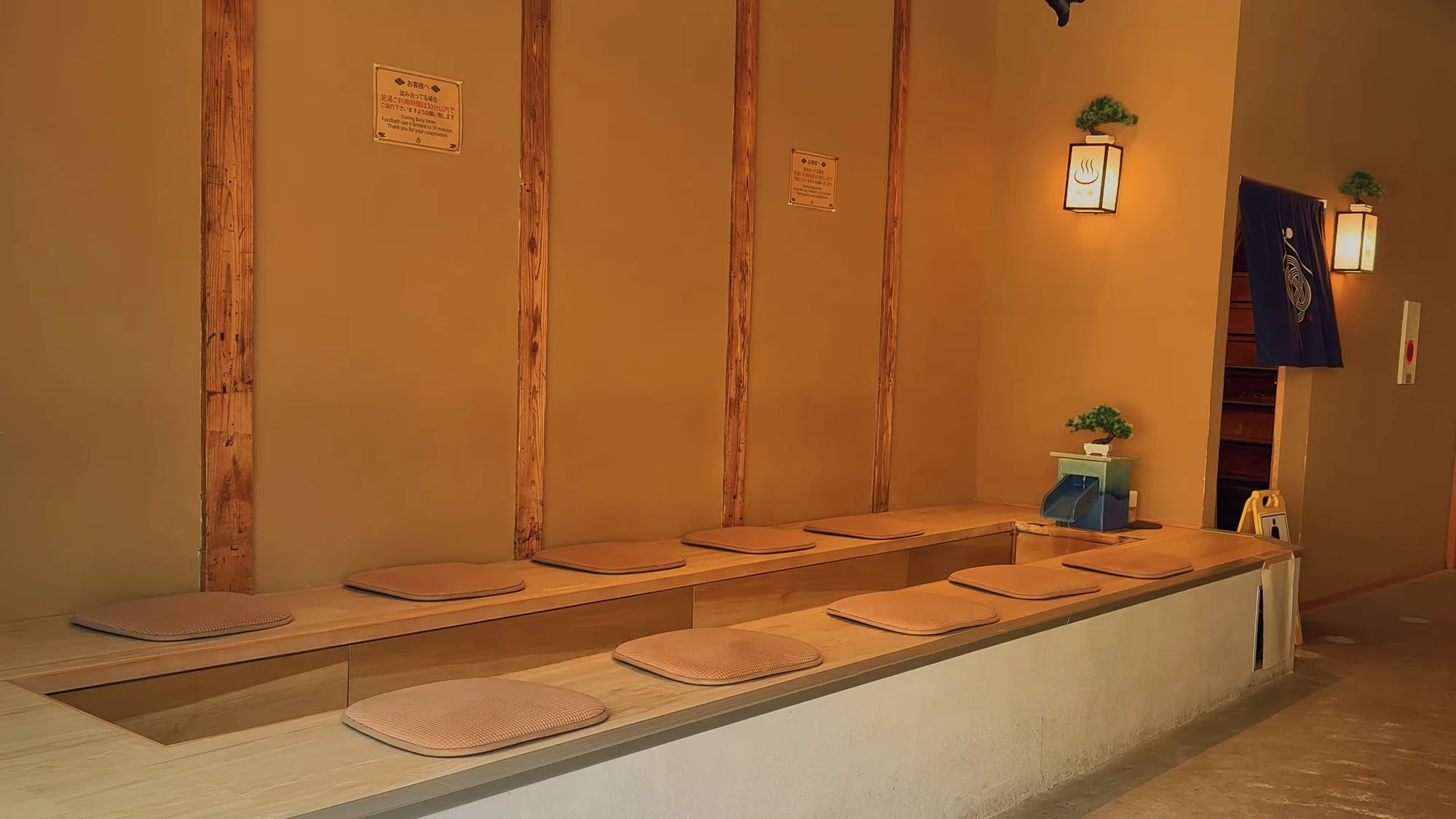
The toilet slippers, not the bath, are where most first-timers slip up. The separate pair never leaves the room.
The etiquette the town built into its architecture
Kinosaki's deepest etiquette lesson is that most of it is not carried by people at all; it is carried by the town's structure, and reading the structure explains the customs better than any rule list. The ordinance that caps inn baths created the seven-house circuit; the circuit created the pass, the supplied yukata and the signage; and each of those artifacts quietly absorbed a rule that elsewhere lives in your head. You cannot wear the wrong thing (the inn dressed you), cannot pay wrong (the pass), cannot miss the wash station (the architecture routes you through it). The town did not lower its standards for visitors; it embedded them where visitors cannot trip over them. The historic root runs deeper still. The town's oldest recorded etiquette is the 入湯作法 (nyūtō sahō, the formal bathing rite): tōji pilgrims first called at 温泉寺 (Onsenji), the temple above town, received a 湯杓 (yushaku, wooden ladle) and instruction from the priest, and only then approached the water — the bath treated as something you are introduced to, correctly, by an institution. ⚠️ Custom details per the association's history pages. Today's version is secular but structurally identical: the town, not the bather, owns the protocol, and the bather's job is simply to accept the introduction. Which is why the honest advice to an anxious first-timer is almost disappointingly short: show up, hand yourself to the system, wash first. Everything else — the dress, the sequence, the pacing, even the bows — the town will conduct. A destination that legislated its bathing into a shared public ritual necessarily became expert at inducting strangers into it, and thirteen centuries of practice shows. You are not entering a culture that hopes you know the rules; you are entering one that built the rules into the floor plan.
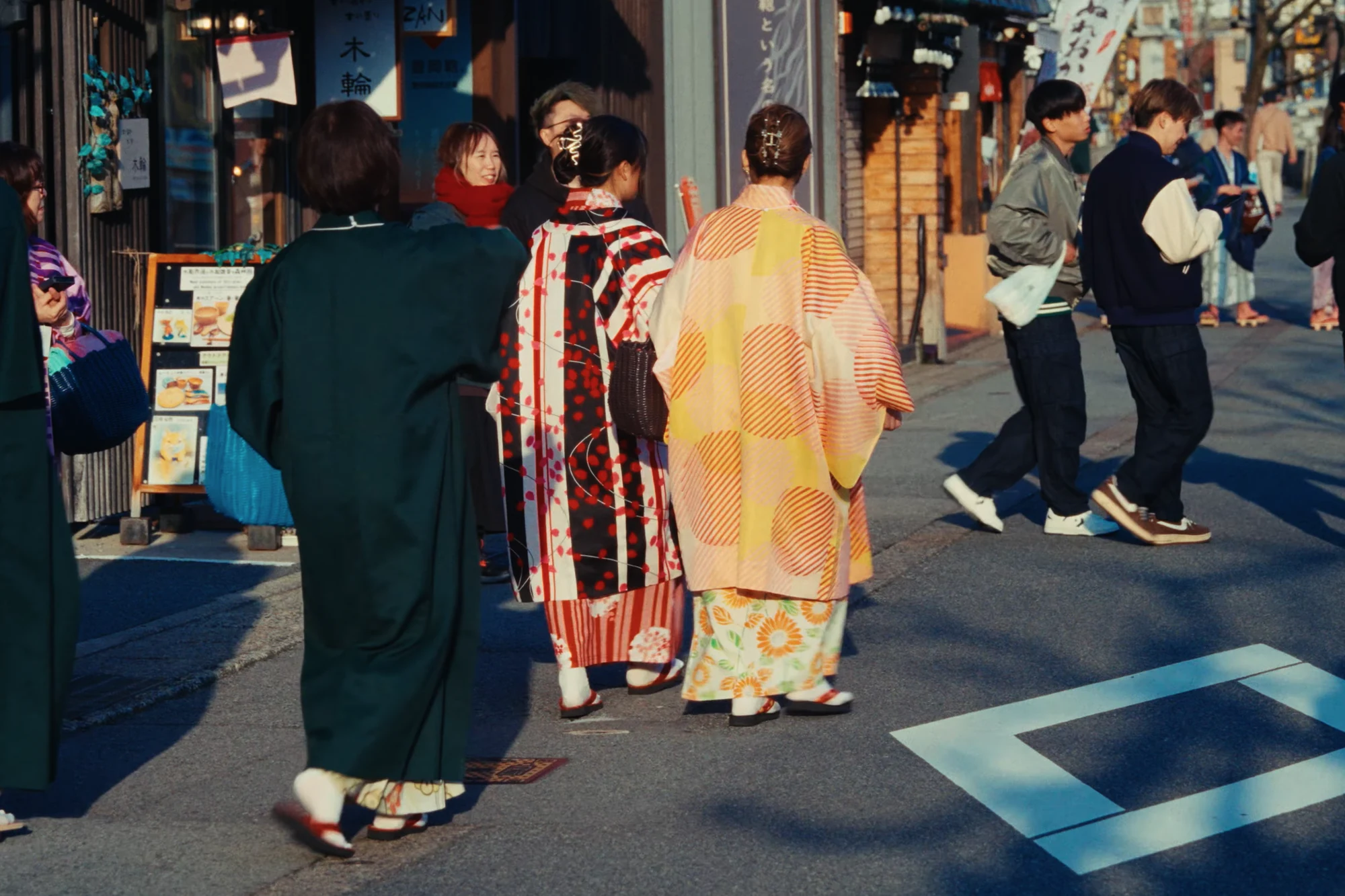
The architecture does the teaching: a town with no private baths has to agree on how to share.
Tips
Answer two questions precisely at check-in: dinner time (a kitchen commitment) and yukata size.
Change into the yukata before anything else — it marks you as a guest of the town.
Pace the circuit: two or three baths an evening with water breaks and a soft-serve between them.
Dietary needs go in the booking message days ahead, never at the table.
Only the water rules carry weight: soap first, no swimwear, towel and hair out of the bath.

Verified by The Japan Onsen Society
Show all sources
Drafted July 2, 2026; the structural-etiquette framing and the historic bathing rite verified September 22, 2026. Primary Japanese sources:
城崎温泉の【飲泉】 — 豊岡市観光公式サイト (Toyooka City Official Tourism Site — the 入湯作法/湯杓 tradition, hydration register): [https://toyooka-tourism.com/recommend/onsen/kinosaki_insen/](https://toyooka-tourism.com/recommend/onsen/kinosaki_insen/)
外湯めぐり発祥の地!温泉天国★城崎温泉 — 豊岡市観光公式サイト (the sotoyu system the "architecture" section describes): [https://toyooka-tourism.com/recommend/onsen/kinosaki_sotoyu/](https://toyooka-tourism.com/recommend/onsen/kinosaki_sotoyu/)
温泉地詳細〔城崎温泉〕 — 日本温泉協会 (Japan Spa Association — the 適応症/禁忌症 register): [https://www.spa.or.jp/search_p/detail_p/?F_ID=280880&pg=0](https://www.spa.or.jp/search_p/detail_p/?F_ID=280880&pg=0)
Related guides
The Town and Its Baths
Kinosaki complete guide
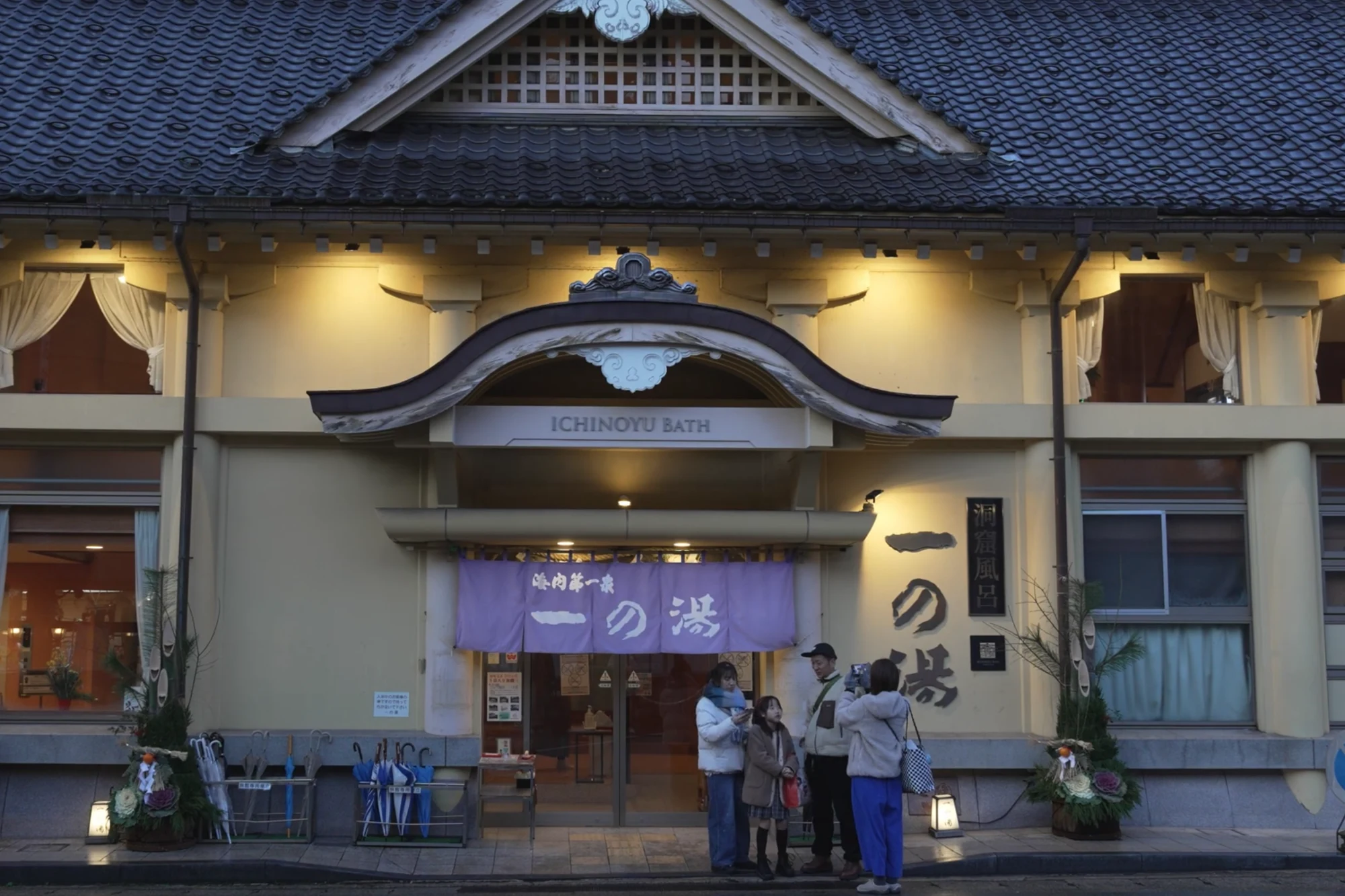
Seven public bathhouses, one shared spring, and a law that keeps them the centre of town. Start here.
The Town and Its Baths
The 7 bathhouses
Same water in all seven houses. What changes is the room, the story, and the blessing on the door.
The Town and Its Baths
Tattoo-friendly
All seven public baths admit tattoos, no cover-up required. Almost nowhere else in Japan does this.
The Town and Its Baths
Wearing yukata
Yukata are worn in the street here, not only inside your room. Here is how to tie one and walk in it.
The Town and Its Baths
Under a yukata
Under the yukata, the honest answer is less than you think and more than nothing. Details inside.