
What it is: a memorial dressed as a festival
Most Japanese towns hold festivals for their shrine, their harvest or their history. Kinosaki holds one for its plumbing — and once you know the town, that is not a joke but the most self-aware gesture on its calendar. The 温泉まつり (Onsen Matsuri, "hot-spring festival") is formally the 開山忌 (kaisanki), the memorial of the town's founding figure: 道智上人 (Dōchi Shōnin), the Buddhist monk whose thousand days of continuous prayer, the tradition holds, were answered when hot water rose at the spot where Mandara-yu now stands. The dates are the first thing to understand, because they explain the festival's character: April 23–24, fixed, every year — a memorial anniversary, not a tourism-board scheduling decision. This is the town keeping an appointment with its founder, and visitors are welcomed to it rather than targeted by it. The scale follows from that: no mega-crowds, no grandstands, no ticket. Priests, water, children in period dress, stalls, and a town going about the business of gratitude. For this site's purposes the festival is also the single best answer to a question every serious Kinosaki page circles: does the town actually believe its own story? Two days a year, it demonstrates that it does — publicly, liturgically, and with the spring itself as the honoree. It is the difference between a heritage claim maintained for brochures and one maintained for its own sake, and that difference is checkable by anyone standing on the street in late April. Travellers who want the full context should read this page alongside our founding-legend and sotoyu-system guides; travellers who just want to know whether to come — yes, and the planning section below says how.
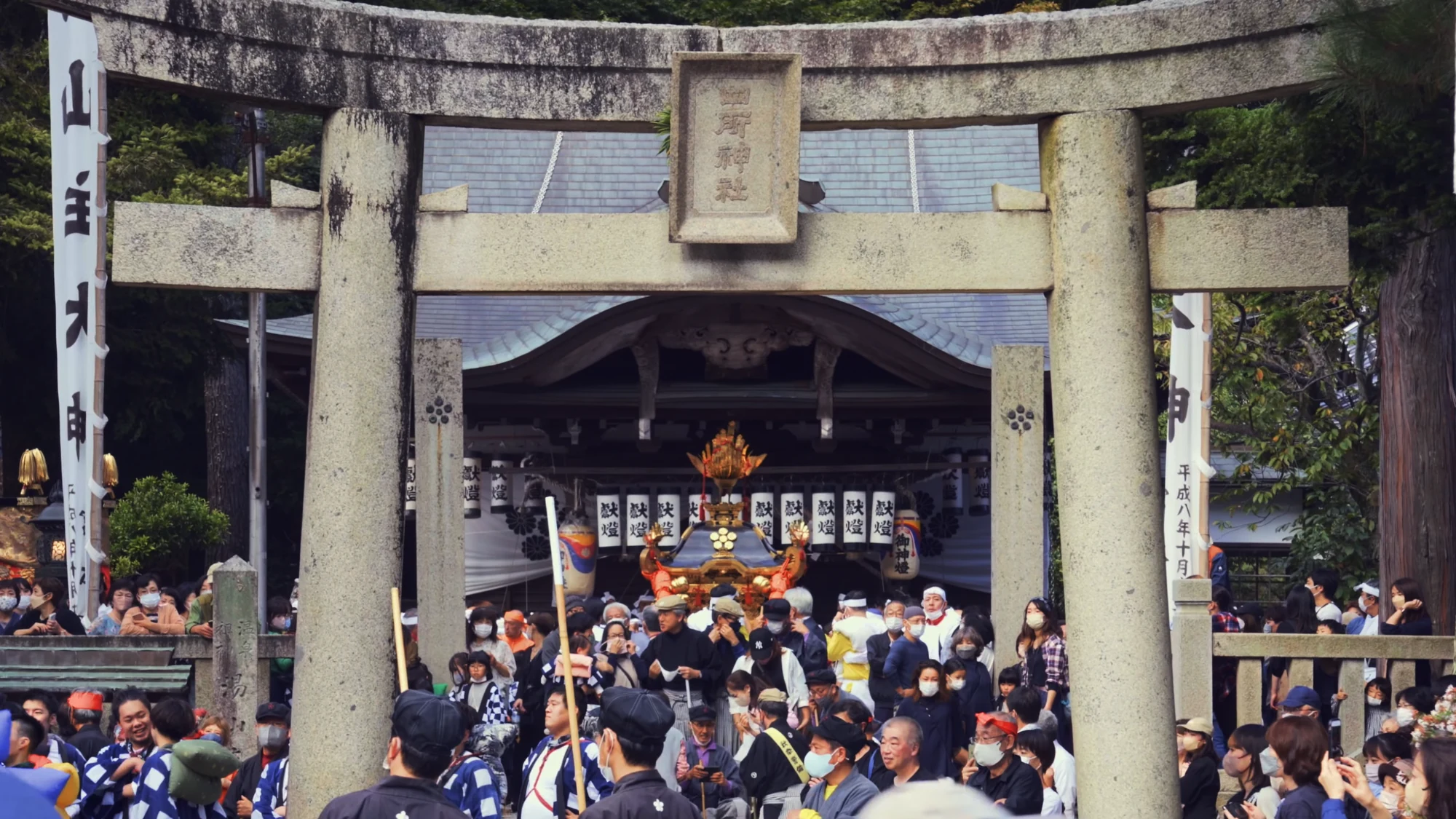
The spring festival on April 23–24 is a memorial for the town's founder, not a tourist event.
The story it commemorates, briefly
The founding tradition, compressed to what the festival enacts: around the years 717–720, Dōchi Shōnin came to this valley and undertook a thousand-day prayer for the healing of the people. On its completion, the tradition holds, hot water rose from the ground — the spring the town has bathed in ever since, at the site where まんだら湯 (Mandara-yu) now stands, the bathhouse named for the 曼荼羅 (mandara, mandala) of the prayer. The town counts its bathing history from that answer: 開湯1300年 (kaitō 1300-nen, thirteen hundred years since the waters opened), an anniversary it marked formally in the 2010s. ⚠️ Traditional dating; the town itself presents it as tradition rather than record. There is an older layer beneath the monk — the stork. The pre-Buddhist version has a wounded コウノトリ (kounotori, white stork) discovered healing its leg in the shallows, the animal testimony that the water worked. The town keeps both stories without embarrassment: the stork found the water, the monk secured it, and the festival honors the human half while the bird presides over the town's imagery — down to the storks on bathhouse signage and the living birds' return to the Toyooka basin around it. Whether a reader files this as history, legend or something in between, the festival's continuity is itself the fact that matters: a town that has held its founder's memorial across the centuries — through the 1925 earthquake that leveled it, through rebuilding, through every tourism era — is making a claim about what it thinks it is. Kinosaki's claim, on April 23 each year, is that it is the custodian of an answered prayer. The rest of this site documents how seriously it runs that custody.
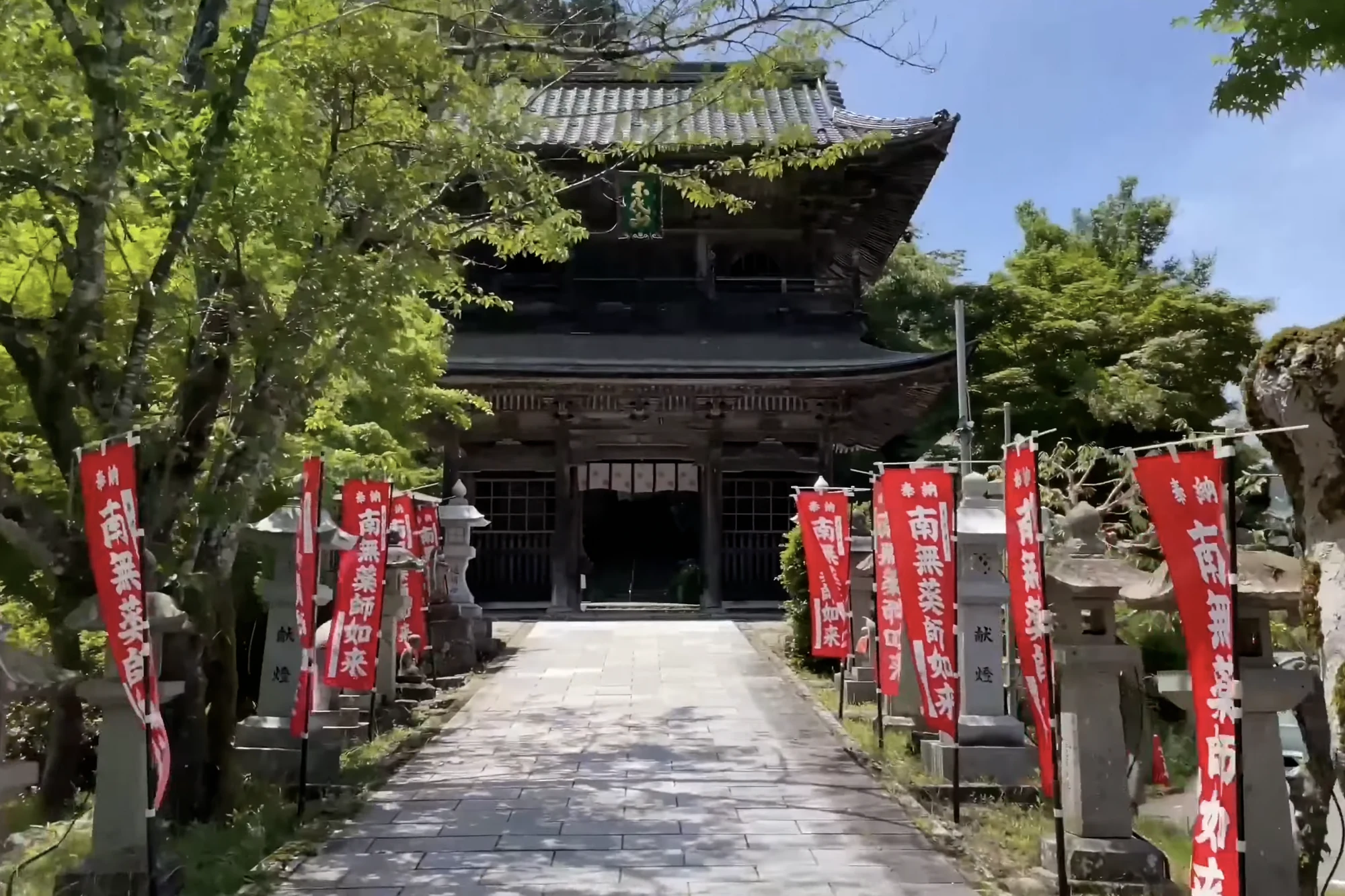
It commemorates Dochi Shonin, whose thousand-day prayer the spring is said to have answered in 720.
The two days, as a visitor experiences them
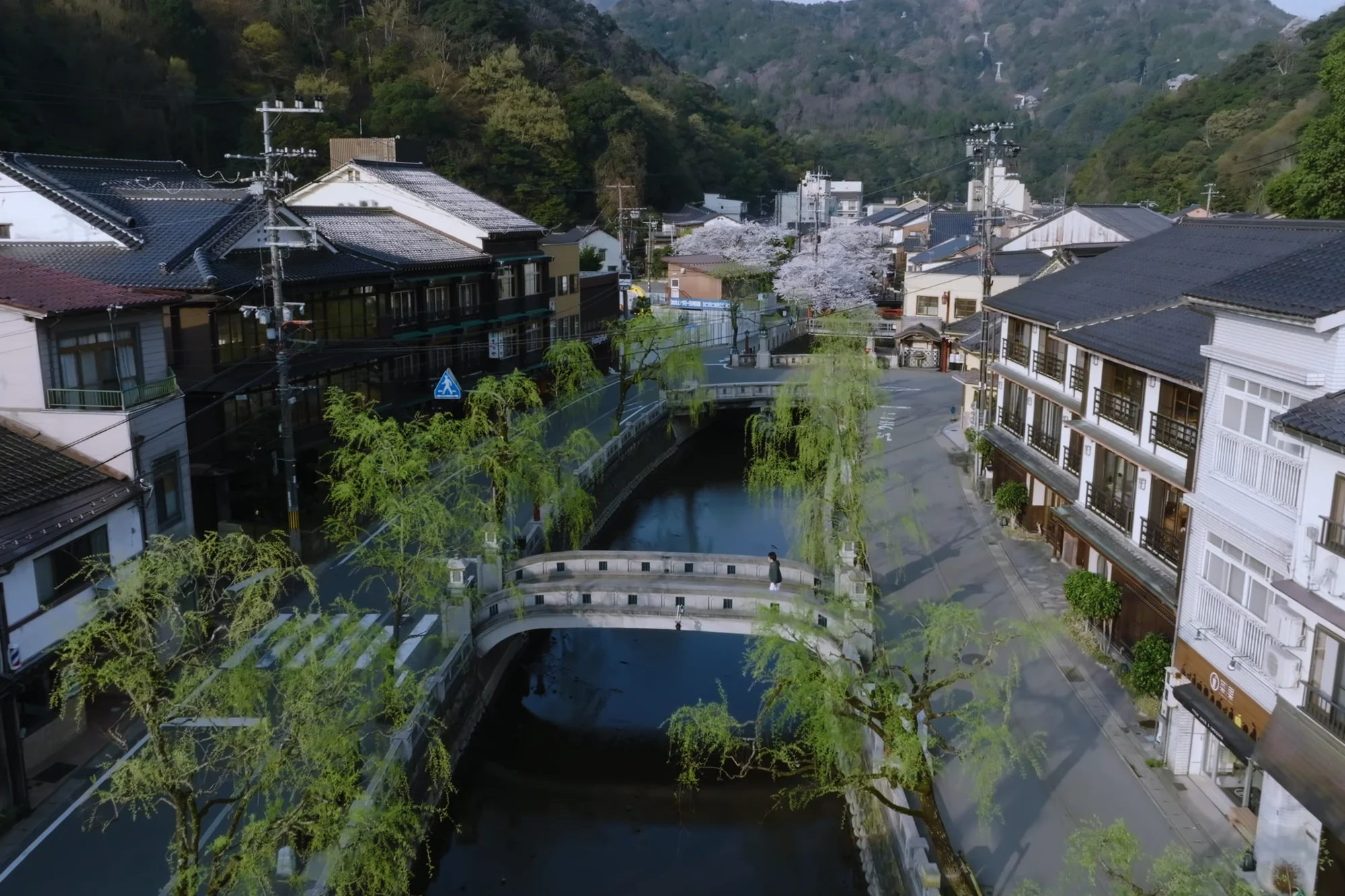
The festival's centerpiece is the 湯祈祷 (yu-kitō, the water-blessing rite): priests from 温泉寺 (Onsen-ji, the "hot-spring temple"), the temple that has stood over the town's water since its founding era, conducting prayers for the spring's continued flow and the town's prosperity — the same petition, in essence, that the founder is credited with making, renewed annually like a lease. The rite anchors the observance; around it the town adds the 稚児行列 (chigo gyōretsu, children's procession), local children in bright period dress processing through the lanes, which is the festival's photographic heart and its clearest signal that this is a community occasion first. Around the formal program, the familiar festival apparatus: street stalls along the main lanes, festival dress, and the town's usual evening — lanterns, canal, yukata traffic — running underneath it all, because the bath circuit does not pause for the celebration. That is the practical beauty of it for an overnight guest: you attend the festival in the gaps of a normal Kinosaki stay rather than instead of one. Watch the rite, follow the procession, graze the stalls, and still make three bathhouses and your kaiseki sitting. ⚠️ Program timing varies yearly; your inn will have the current schedule at check-in — ask at the desk, they will know it by heart. One scene deserves deliberate scheduling: the procession passing against the canal, period dress over dark water in spring light — late April's willows just greening behind it. It is the kind of frame the town produces casually and visitors plan whole trips around, and it costs nothing but standing in the right place. Ask the desk where the route runs; positions near the bridges do the work.
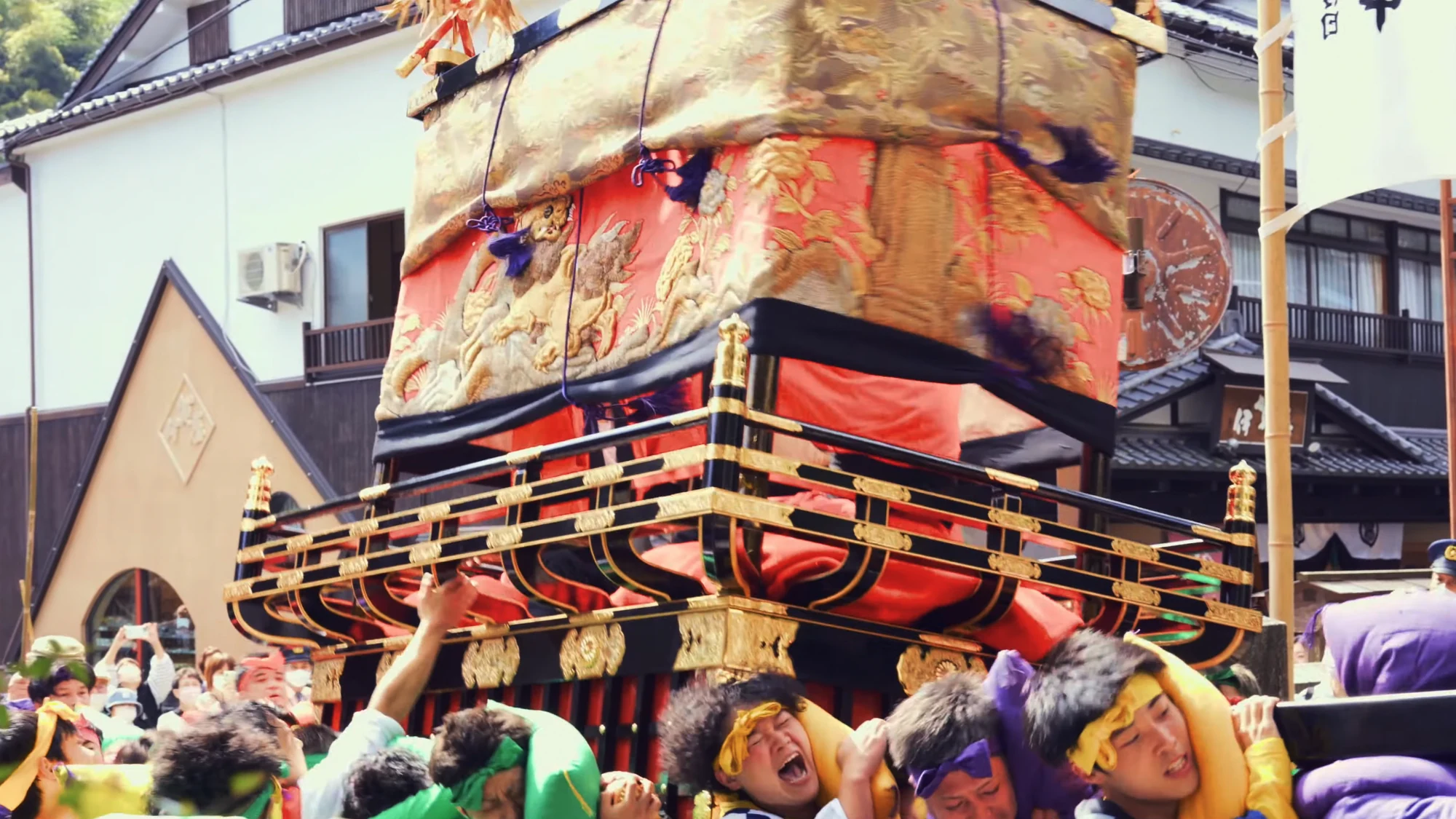
The floats are carried, not wheeled, for the final stretch to the bridge.
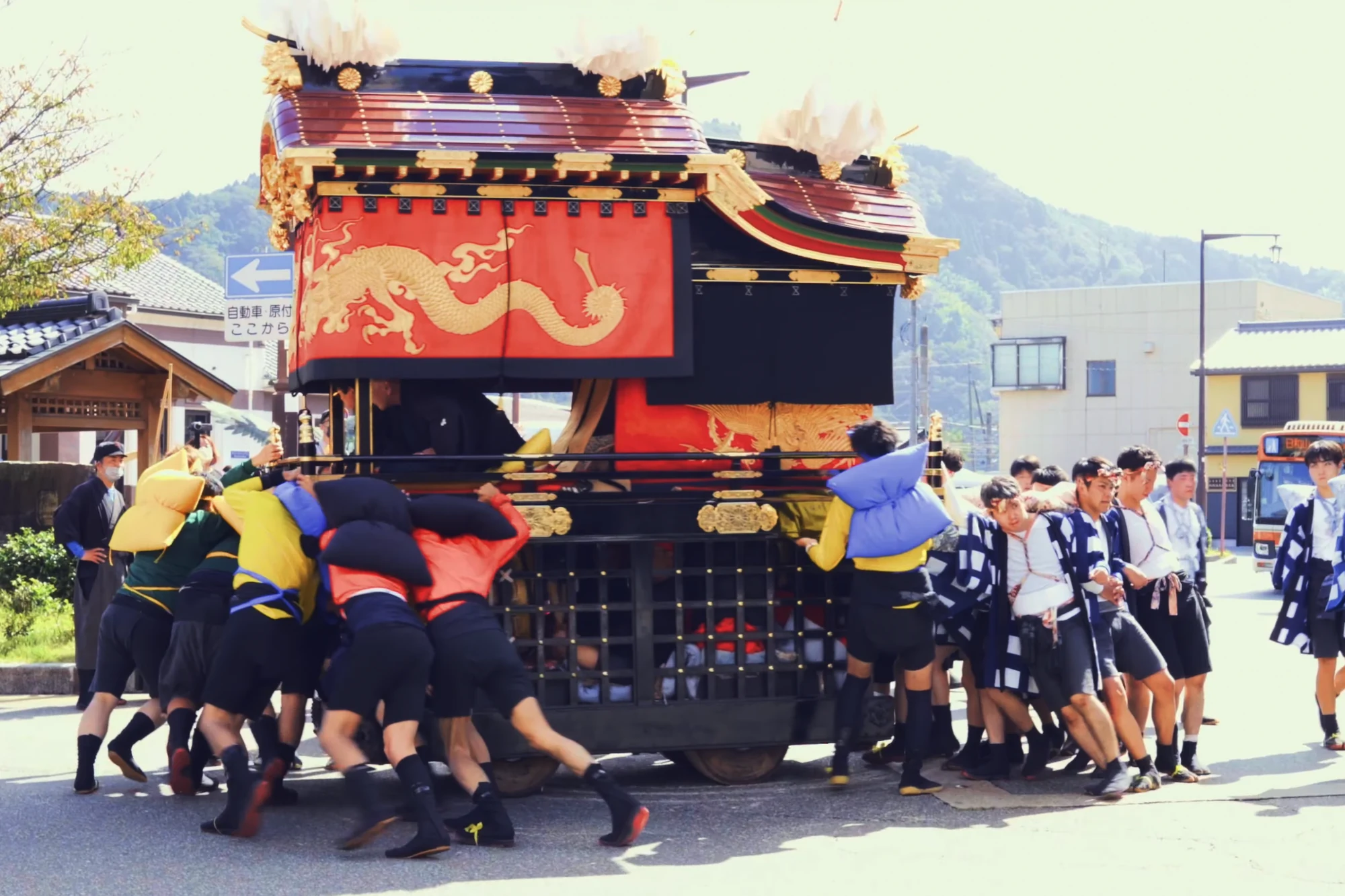
Traffic is closed for both days. The float clash at the bridge comes at sunset on the second.
Why a town would throw a festival for water
The skeptical reading of any tourist-town festival is marketing with incense, and this page owes the reader an honest answer to it. The evidence against that reading, in Kinosaki's case: the dates never move to catch weekends; the honoree is a memorial, not a mascot; the program's core is a religious rite conducted by the temple that has actually held the role for centuries; and the festival's scale has stayed local — the town has never inflated it into a headline event, though the tourism logic for doing so is obvious. This is a working observance that tolerates an audience, not a show that simulates one. The deeper answer is the one this site's moat pages document at length: Kinosaki's entire economy is organized around collectively held water. One spring source, distributed by the town to seven public bathhouses; an ordinance that keeps the inns small so the bathhouses stay central; a certificate on every bathhouse wall attesting the shared source. A town built that way has an annual thanksgiving built into its logic — the festival is simply the system's gratitude made visible, the civic structure celebrating its own foundation. Towns that privatized their water do not hold festivals like this, because there is no commons left to thank. That is why this page's dek calls the festival Kinosaki explaining itself. Two days a year, the town performs its own thesis: the water is a gift, held in common, tended by institutions older than tourism, and everything else — the inns, the crab, the lanterns — is downstream of it. A visitor who catches the rite and then walks the seven-bath circuit that evening has seen the argument and its proof in one day.
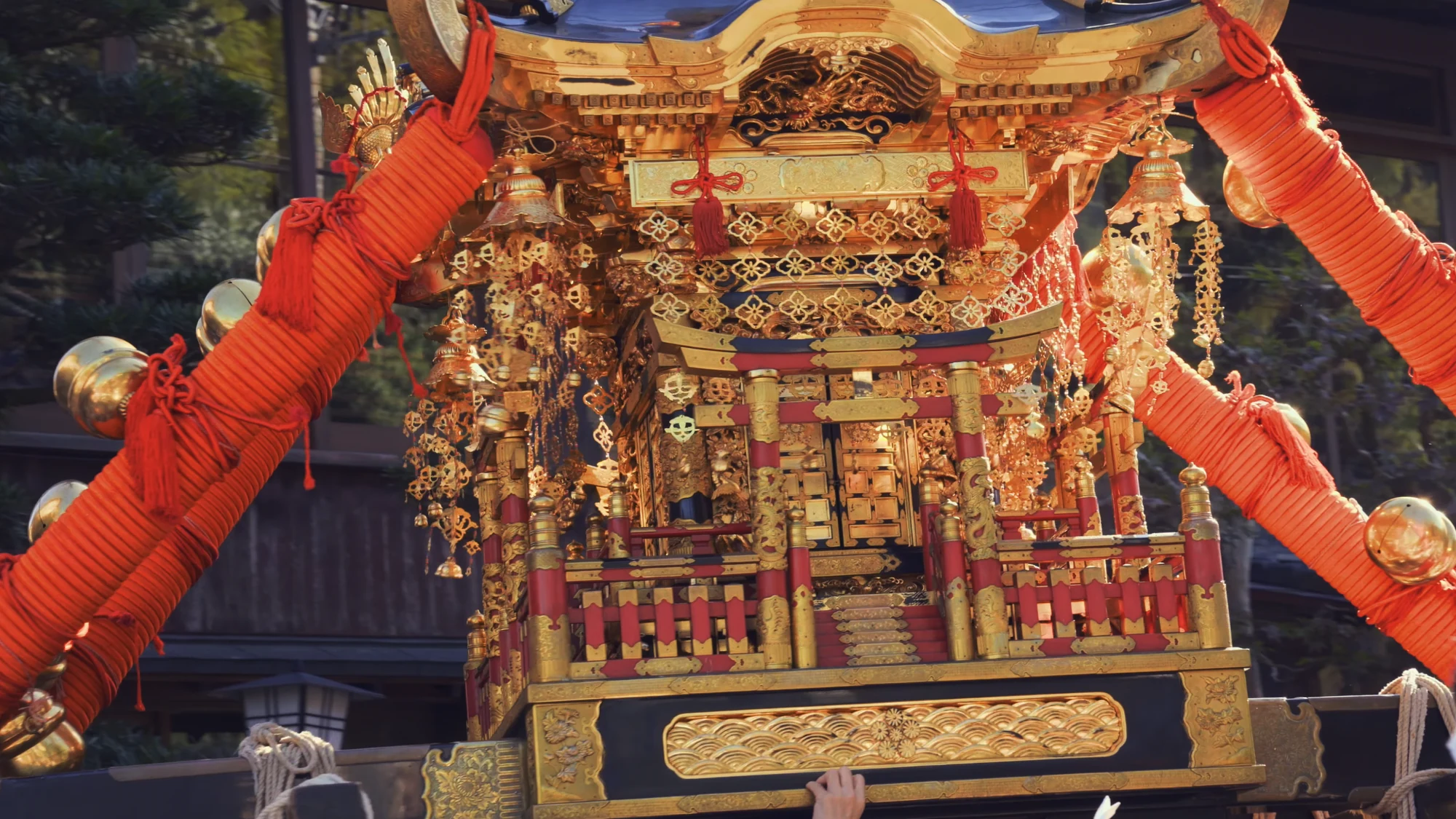
A town that legislated to protect its water eventually holds a festival for it.
Onsen-ji: the temple behind the rite
The institution conducting the festival deserves its own introduction, because it is the oldest working part of the whole system. 温泉寺 (Onsen-ji — literally "hot-spring temple") stands on the slope of Mt. Daishi above the town, founded in the same era as the spring itself and holding, across thirteen centuries, the formal role the festival dramatizes: spiritual custodian of the water. The tradition the town maintains is precise about the relationship — the temple was established by Dōchi Shōnin himself in the years after the spring answered his prayer, which makes the festival's officiants the direct institutional heirs of the man being memorialized. ⚠️ Founding-era details per the temple's and town's own materials. For visitors, the temple visit is the festival's natural extension and works in any season: the ropeway's mid-station stops at the temple grounds, or the mossy stair path climbs from town for those who prefer arriving warm. The main hall, the mountain setting and the view back over the roofs of the bathing town reward the half hour, and our things-to-do guide carries the practical file. During the festival itself the temple's role moves down the hill to the rite — the mountain institution descending to bless the street-level system it has watched over since both were founded. There is also a bathing-tradition detail worth knowing even when the festival is months away: the old custom held that pilgrims visited the temple before their first bath, receiving a small ladle as token of permission — the water formally granted, not merely purchased. The custom survives in attenuated forms and in the town's self-telling, and it explains the festival's underlying grammar: in Kinosaki, bathing has always been framed as something received. ⚠️ Custom details per the temple's and association's accounts.
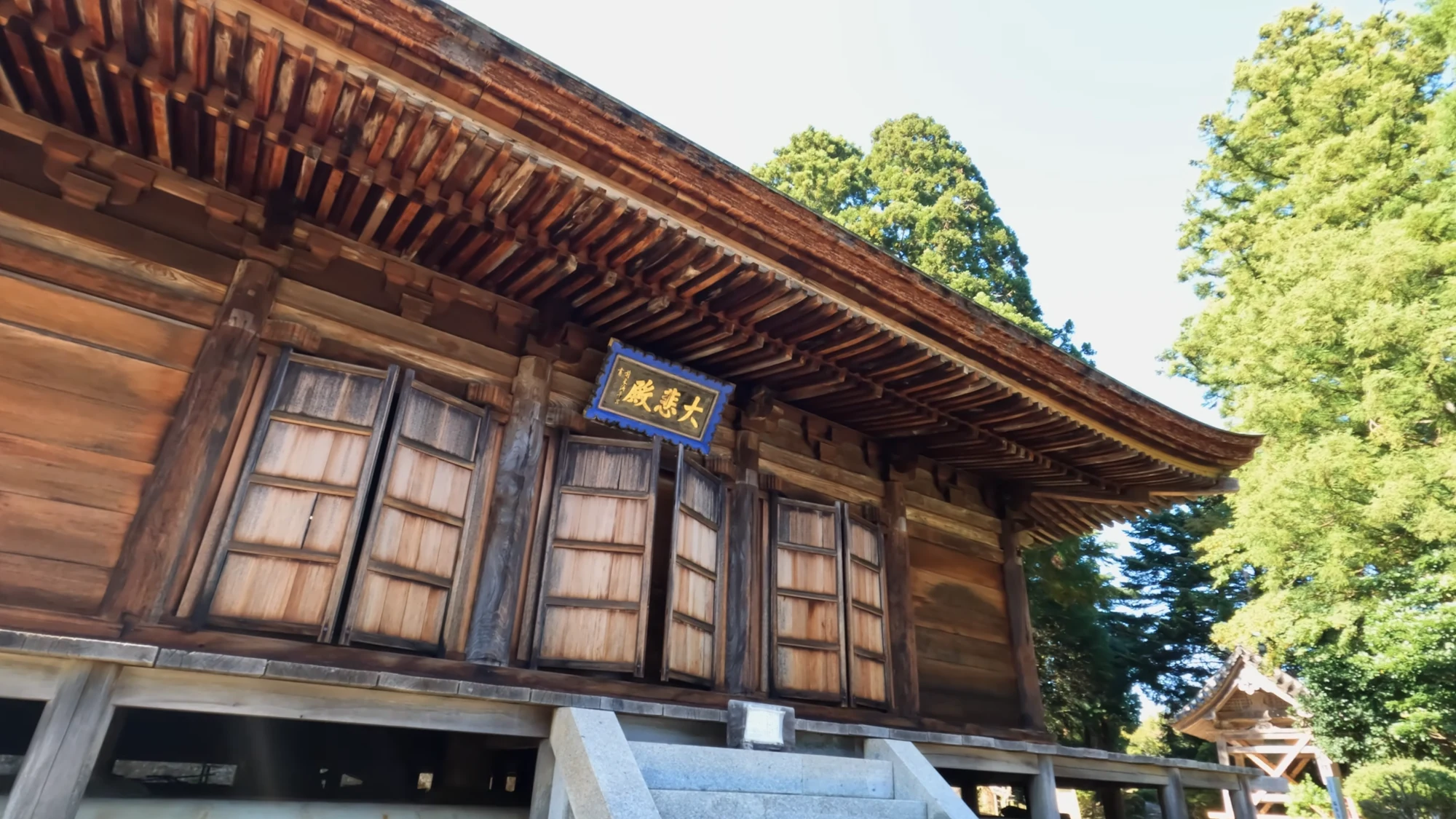
Onsenji holds the rite; the shrine holds the procession. The two split the year between them.
Planning around it
The booking picture is the gentlest of any Kinosaki event: April 23–24 lands after the cherry-blossom crowds disperse and before Golden Week's national holiday surge — one of the spring calendar's softest pockets — so rooms book on normal lead times and rates hold shoulder-season levels. The festival adds modest local demand, nothing like the crab weekends; book a few weeks out for choice, less for adequacy. In early-blossom years the tail of the bloom can even overlap the dates, a free bonus no one should plan on. ⚠️ Yearly variation. The two-day structure suggests the itinerary: arrive on the 22nd or the morning of the 23rd, run a standard one- or two-night stay, and let the festival program fill the midday hours the bath circuit leaves open anyway. Day-trippers can catch the rite and procession and be gone by evening — the program's public events run in day hours — but as everywhere on this site, the town's best material is the lantern evening, and the festival stay is no exception. The full spring context, including the blossom weeks before and the green weeks after, lives in our spring guide. Practicalities, briefly: dress is ordinary (yukata for guests, as always, once checked in); the rite is a religious observance, so the standing etiquette applies — keep respectful distance, no flash at the ceremony, follow the local crowd's lead; stalls run small-cash like the snack street; and children are not just tolerated but structurally central, which makes these two dates one of the easiest family windows on the calendar. No tickets, no reservations, no strategy. The town has been running this event for a very long time, and it shows.
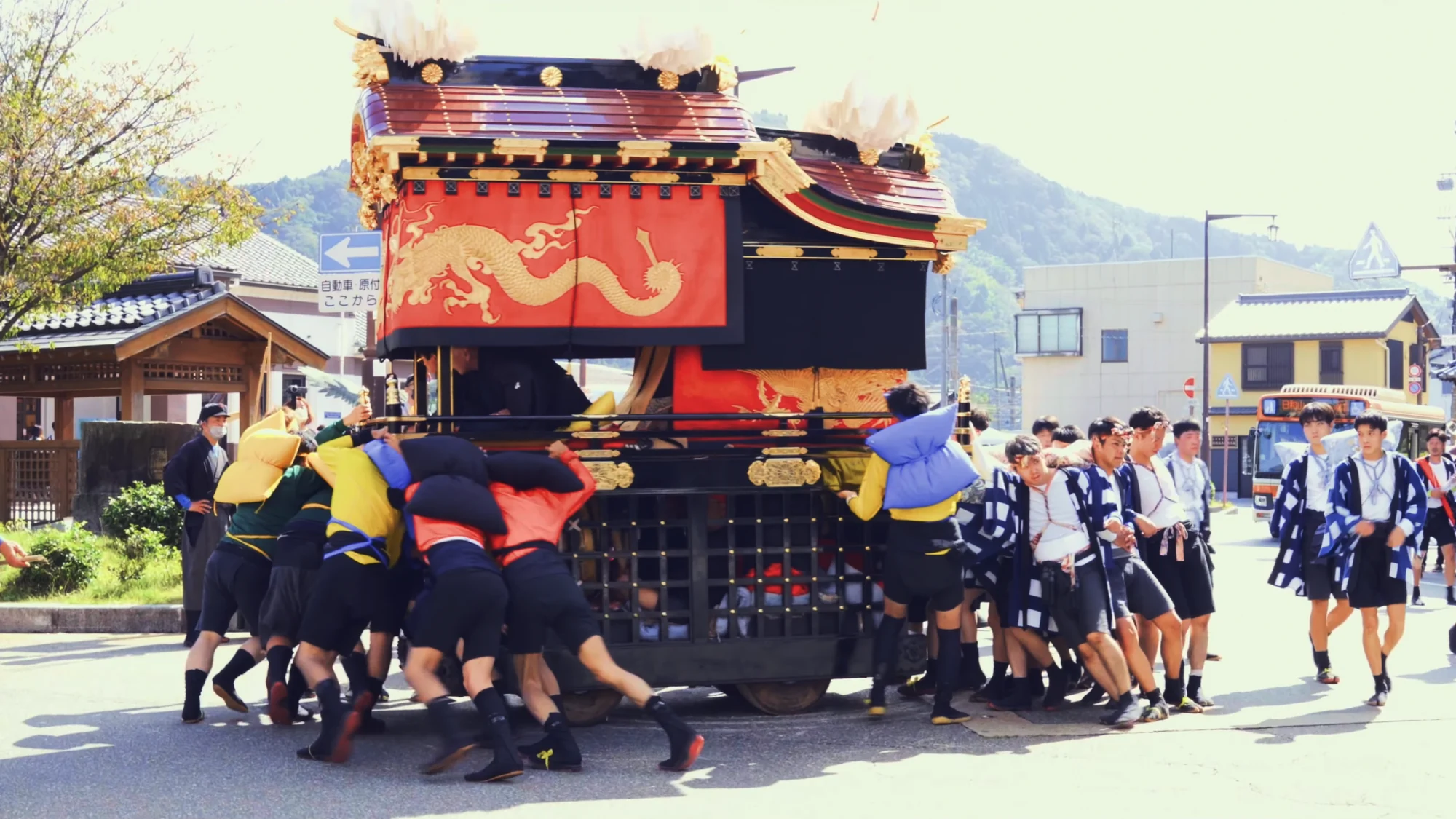
It lands in a soft booking window, which is the practical argument for planning around it.
Tips
Arrive the 22nd or early on the 23rd and let the festival fill the circuit's midday gaps
Ask your inn's desk for the current program and procession route at check-in — they know it by heart
Position near the canal bridges for the procession-over-water frame
Standard shrine-and-temple etiquette at the rite: distance, no flash, follow the local crowd
Pair with the spring guide's blossom or green-week windows for a fuller season plan

Verified by The Japan Onsen Society
Show all sources
Verified September 2026. Primary Japanese sources:
温泉まつり — 城崎温泉観光協会 (the Onsen Matsuri official page — April 23–24, the founder's memorial and water-blessing rite): [https://kinosaki-spa.gr.jp/event/onsen-matsuri/](https://kinosaki-spa.gr.jp/event/onsen-matsuri/)
イベント情報 — 城崎温泉観光協会 (Kinosaki Onsen Tourism Association — the event calendar: Onsen Matsuri, autumn festival, Crab Kingdom season events): [https://kinosaki-spa.gr.jp/event/](https://kinosaki-spa.gr.jp/event/)
城崎の歴史 — 城崎温泉観光協会 (Kinosaki Onsen Tourism Association — the 717/720 founding tradition and Onsenji): [https://kinosaki-spa.gr.jp/about/history/](https://kinosaki-spa.gr.jp/about/history/)
外湯めぐり発祥の地!温泉天国★城崎温泉 — 豊岡市観光公式サイト (Toyooka City Official Tourism Site — the sotoyu system, ordinance, prices): [https://toyooka-tourism.com/recommend/onsen/kinosaki_sotoyu/](https://toyooka-tourism.com/recommend/onsen/kinosaki_sotoyu/)
Related guides
When to Visit
Spring
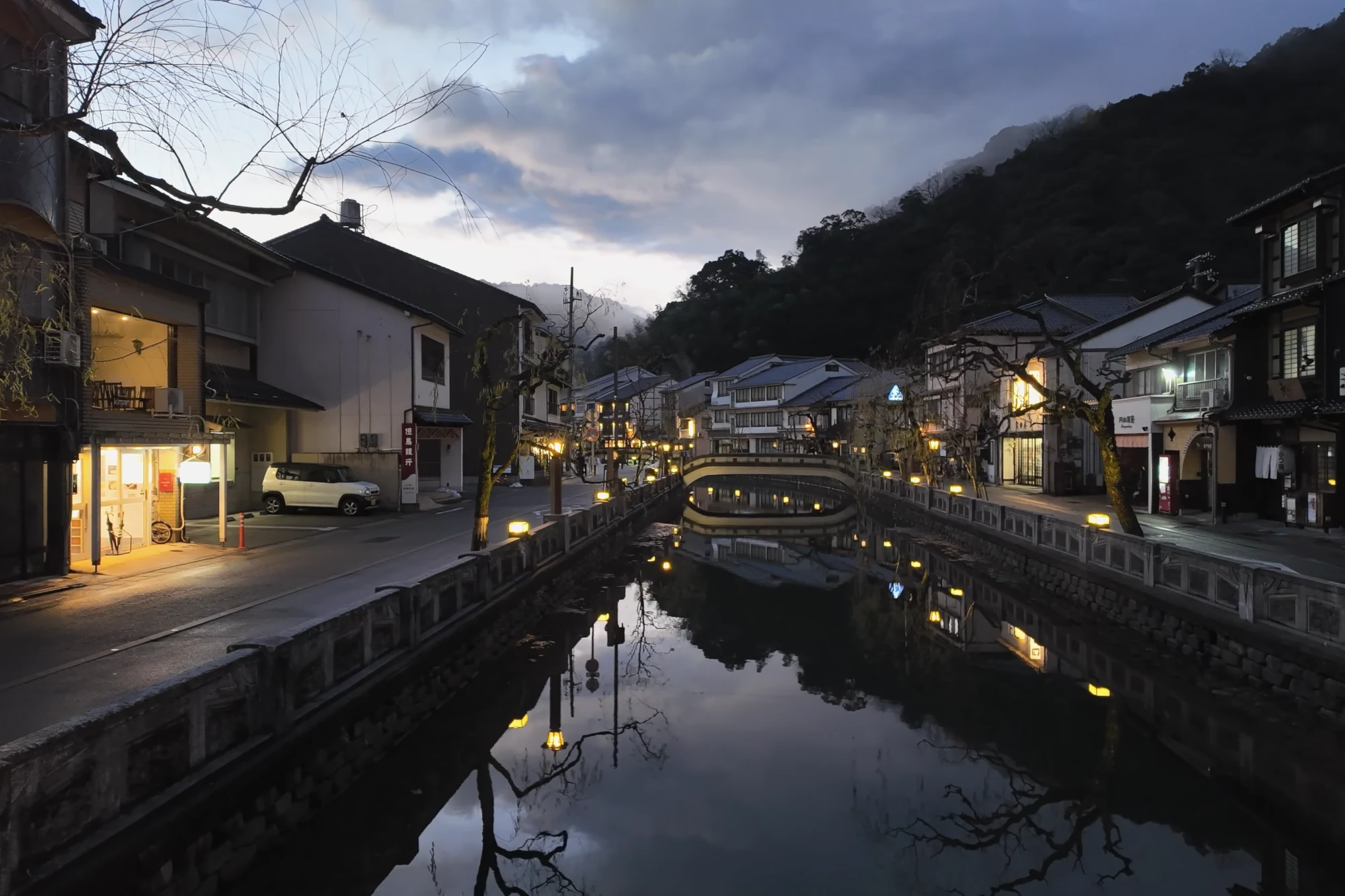
Cherry along the Ōtani canal, a festival for the water in April, and green weeks nobody books early.
When to Visit
Founding history
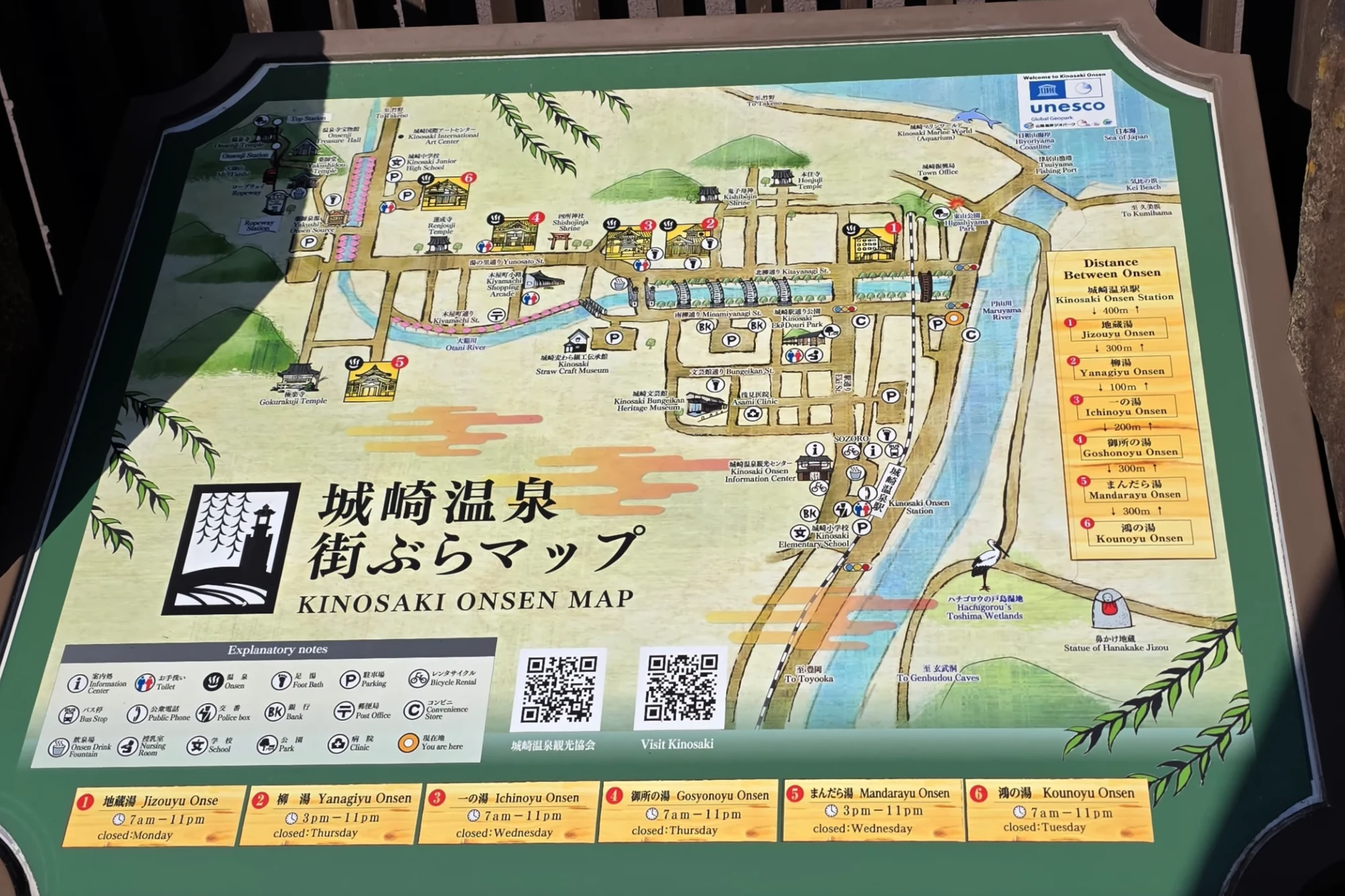
Two stories, both published by the town: a monk's thousand days in 717, and a stork that healed first.
When to Visit
The sotoyu system
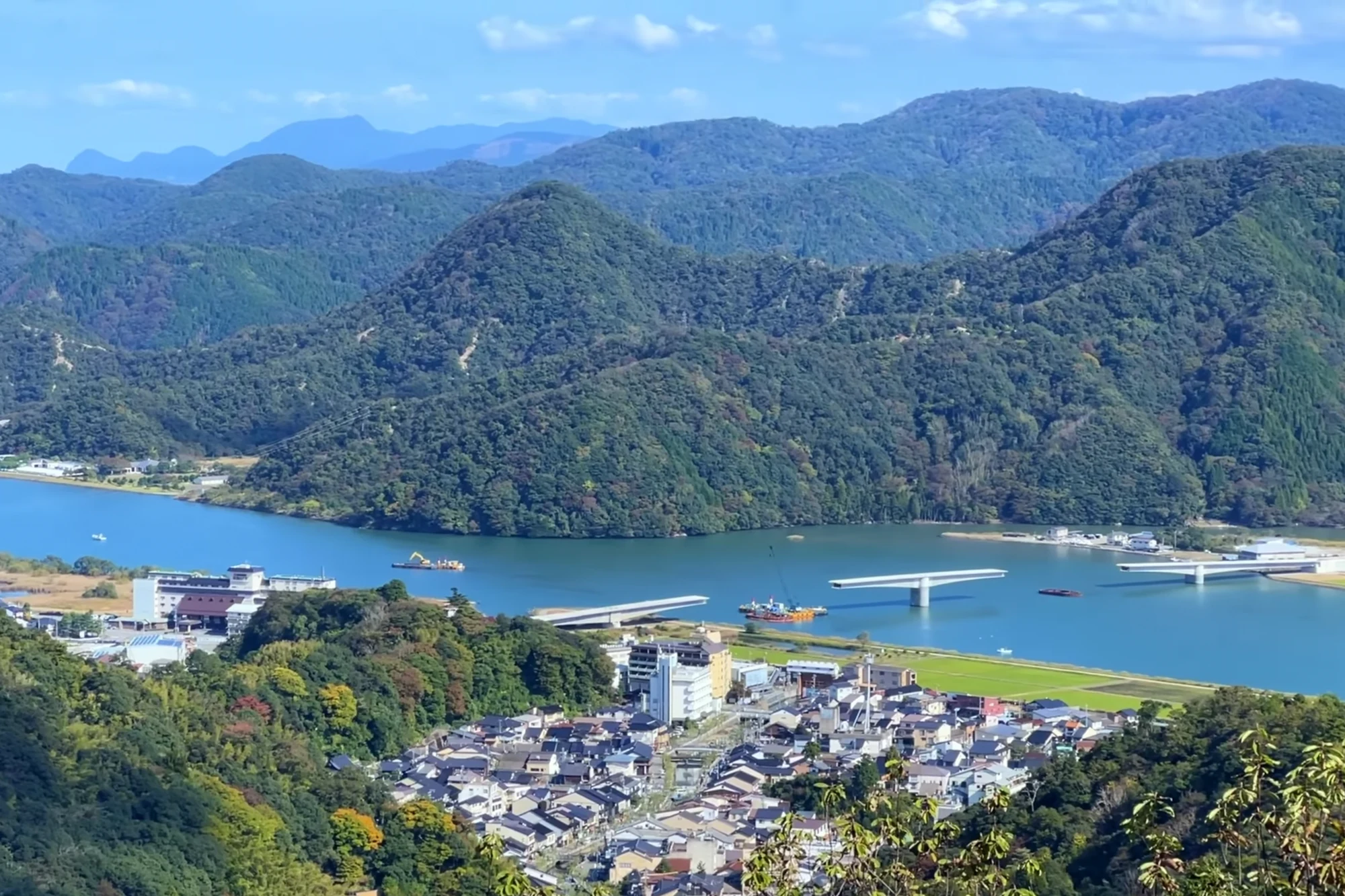
The whole town is one ryokan. That is not a slogan about atmosphere. It is a description of the law.
When to Visit
Things to do
Beyond the baths: a ropeway, a mountaintop temple, a literary museum and a stretch of wild coast.
When to Visit
1-Night Itinerary
One night in Kinosaki, hour by hour, from the train door to the last bathhouse before closing time.