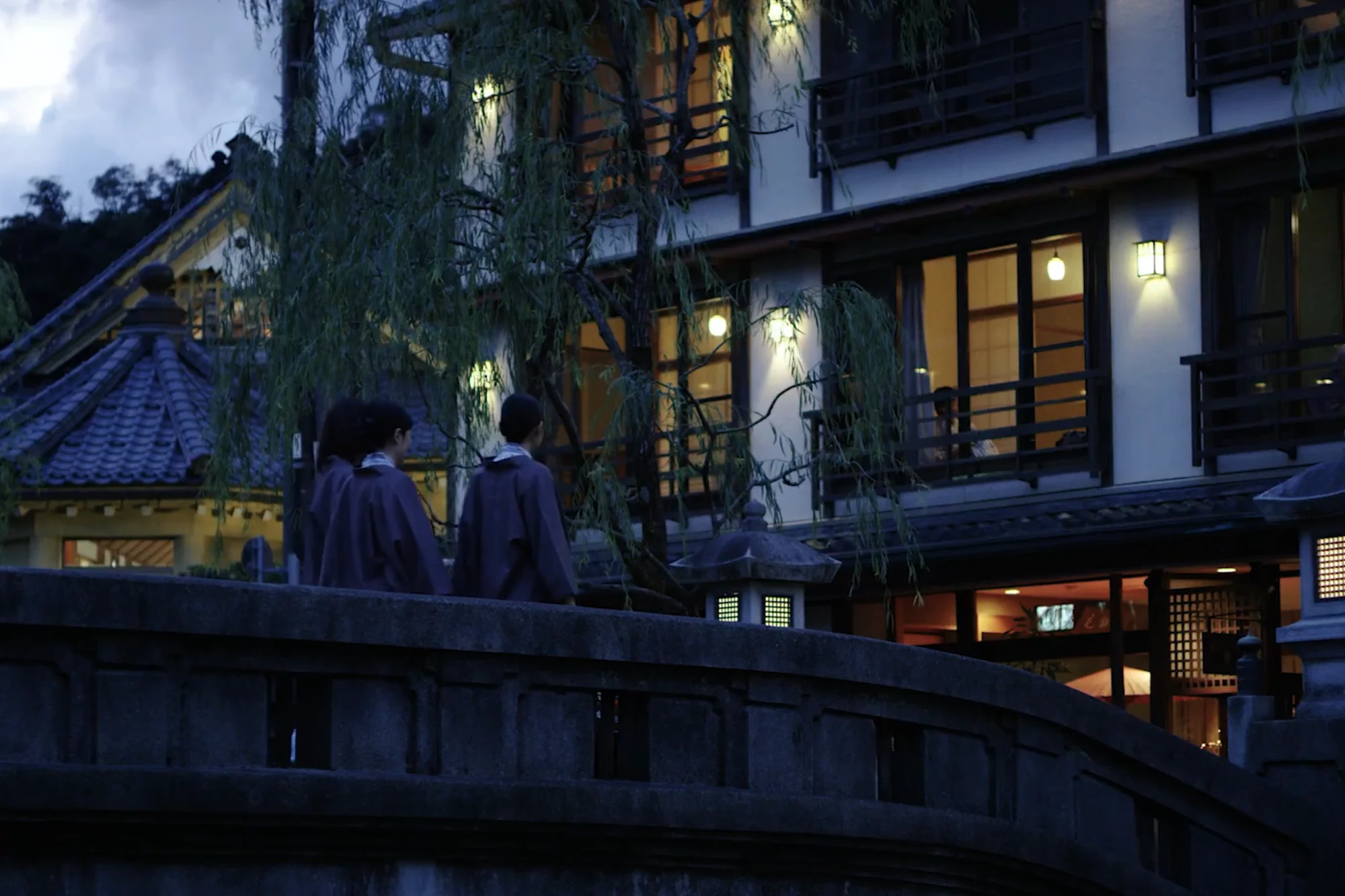
We hold small onsen towns to five tests: atmosphere, the bathing itself, food, access, and what the trip costs you in time and yen. Kinosaki passes all five — it is, by those criteria, the most complete onsen-town experience in western Japan — but how much of it you receive depends almost entirely on one decision, so let's make the verdict about that decision. A word on how we grade, because "worth it" is meaningless without a denominator. Atmosphere asks whether the place delivers a feeling you cannot get at home or in the cities you came through. Bathing asks about the ritual, not just the water. Food asks whether dinner is a reason to come or merely not a reason to leave. Access asks what the trip costs in hours and connections, honestly counted from Kyoto or Osaka rather than from a map. And cost asks what those hours and yen would have bought elsewhere — the comparison that actually decides itineraries. Kinosaki's scores on the first four are high and stable; the fifth is where the day-trip-versus-overnight decision does all the work, which is why this page keeps returning to it. Where a claim is seasonal or perishable we flag it inline, and everything structural rests on sources the town itself publishes. Grades follow at the end, once the evidence is on the table — hold us to all five; a town this confident can afford the audit. We would rather lose you honestly at this paragraph than win you into the wrong trip.
The case for Kinosaki
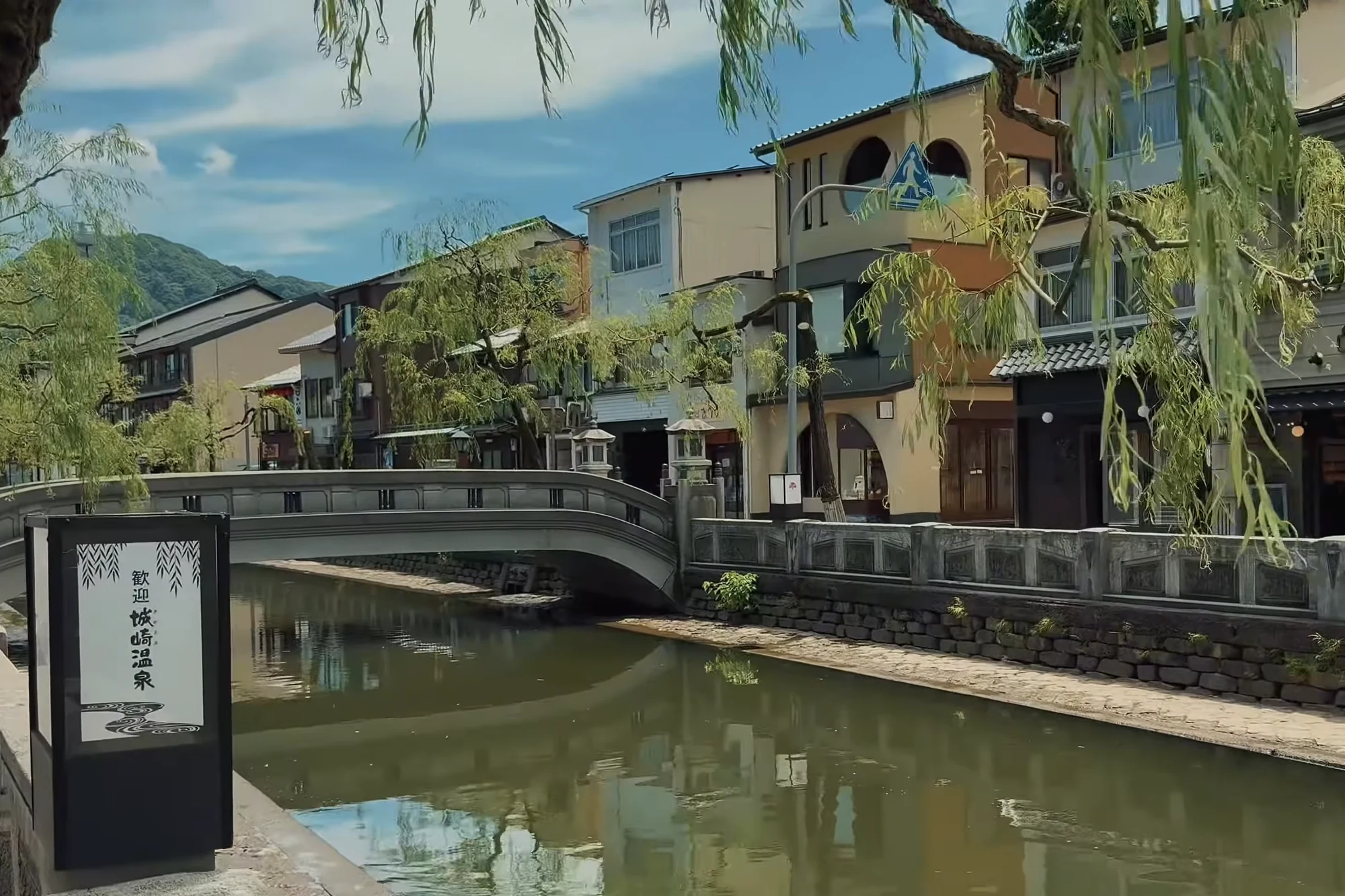
The town is a set piece that happens to be real: a shallow canal down the middle, stone bridges, willows, and seven public bathhouses (sotoyu) strung along a walkable kilometer — about half a mile — of streets where nearly everyone is in cotton yukata and wooden geta, because the town's inns dress their guests and send them out. The bathing ritual, the sotoyu meguri (外湯めぐり), is the point: not one bath but a stroll among seven, each different, taken at whatever pace the evening suggests. Three structural advantages set Kinosaki apart from its rivals. It is genuinely welcoming to tattooed bathers across all seven public baths — close to unique among famous onsen towns. It is flat and compact, which makes it one of the easiest onsen towns for less-mobile travelers. And in winter it holds a culinary trump card: matsuba crab (松葉ガニ, Matsuba-gani), the Sea of Japan snow crab landed at nearby ports, in season from November 6 to about late March — reason enough on its own for the dates to sell out. It is also, at dusk, simply beautiful in a way the photographs undersell: the canal goes black and glassy, the lanterns double themselves in the water, and the sound of the town is geta on stone — a percussion section of strangers in cotton, all walking to a bath. Plenty of destinations are prettier by day. Very few in Japan are better at eight in the evening, and that hour, repeated nightly for free, is the product.
The structural answer: it turns on a law, not the water
Strip the comparison to its frame and Kinosaki's case is unlike any rival's. Arima's argument is chemistry — the celebrated gold and silver waters. Kusatsu's is volume — by its own town's phrasing, Japan's largest natural free-flow. Kinosaki does not compete on water at all, and is disarmingly open about it: all seven public baths draw the same municipally managed sodium-calcium chloride spring, and the town says so. Kinosaki's argument is legal architecture. A municipal ordinance caps the size of the 内湯 (uchiyu, an inn's private bath) so that the seven 外湯 (sotoyu, public bathhouses) remain the centre of town life — which is why the whole town behaves like a single inn, with the station as the entrance, the streets as corridors and the bathhouses as the shared grand bath. That one legal fact is what you are actually weighing when you ask whether Kinosaki is "worth" 2.5 hours of train. It produces the yukata street, because inns dress their guests and send them out. It produces the free pass, because inns barred from grand baths compensate by buying you seven. It produces the evening, because the bathing happens in public, on foot, after dark — the thing day-trippers structurally cannot see. And it cannot be replicated by any resort, however lavish, because it is not an amenity; it is a governance choice a town made about itself and has defended for a century, through an earthquake that levelled it (the bathhouses were rebuilt first, 1926–1932) and into the present ordinance. So the honest comparison is not "which town has the best onsen" — on that framing, water purists can rank others higher, fairly. It is "which town IS the onsen," and there Kinosaki stands alone. If what you want from a Japanese hot-spring trip is one great bath, several towns can serve you nearer to Osaka. If what you want is the town — the ritual, the street, the shared evening — there is exactly one address, and it justifies the train.
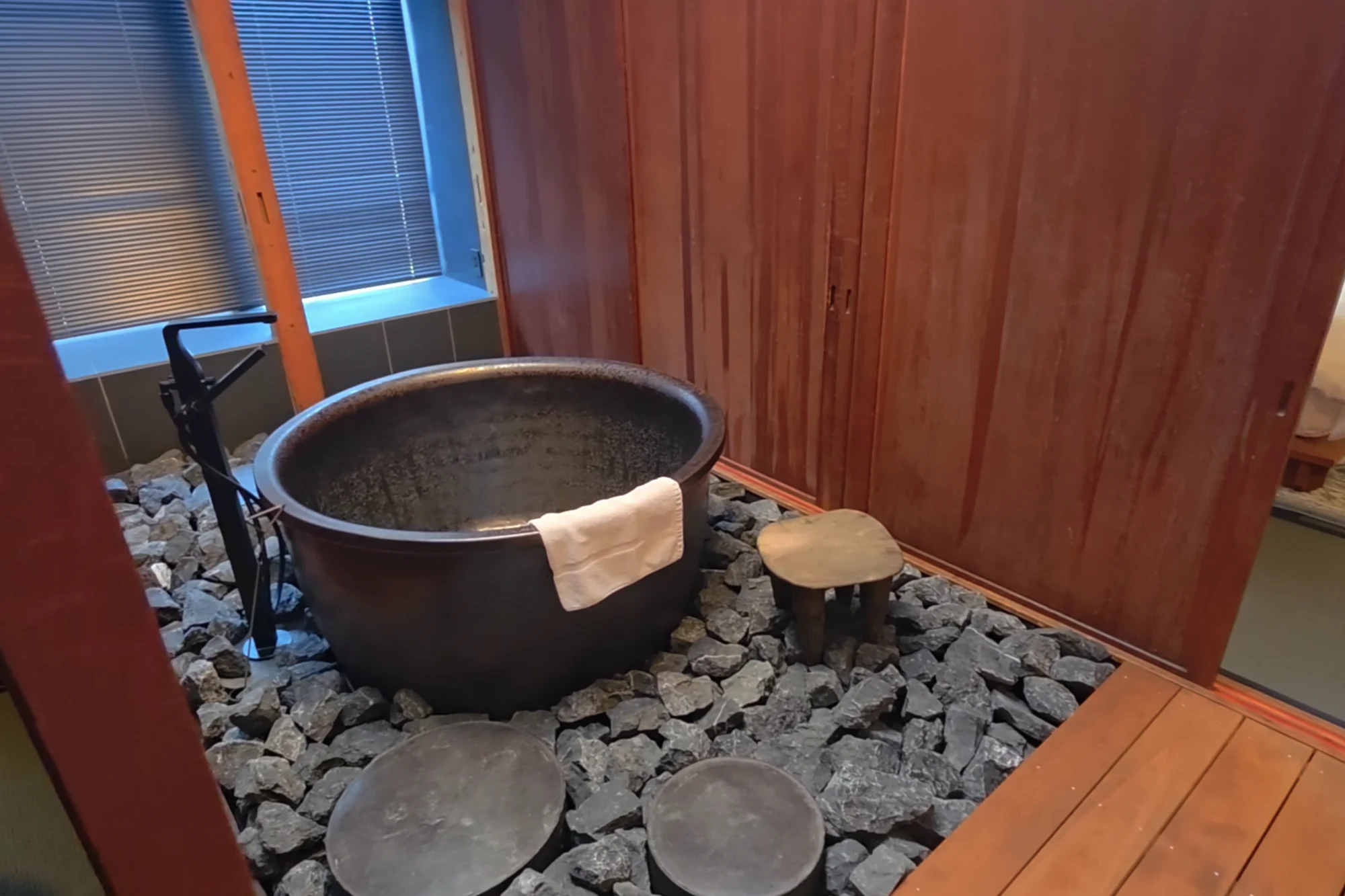
An ordinance caps the inn baths. That is the structural answer, and no other onsen town has it.
What an overnight buys you
The honest accounting of day trip versus overnight:
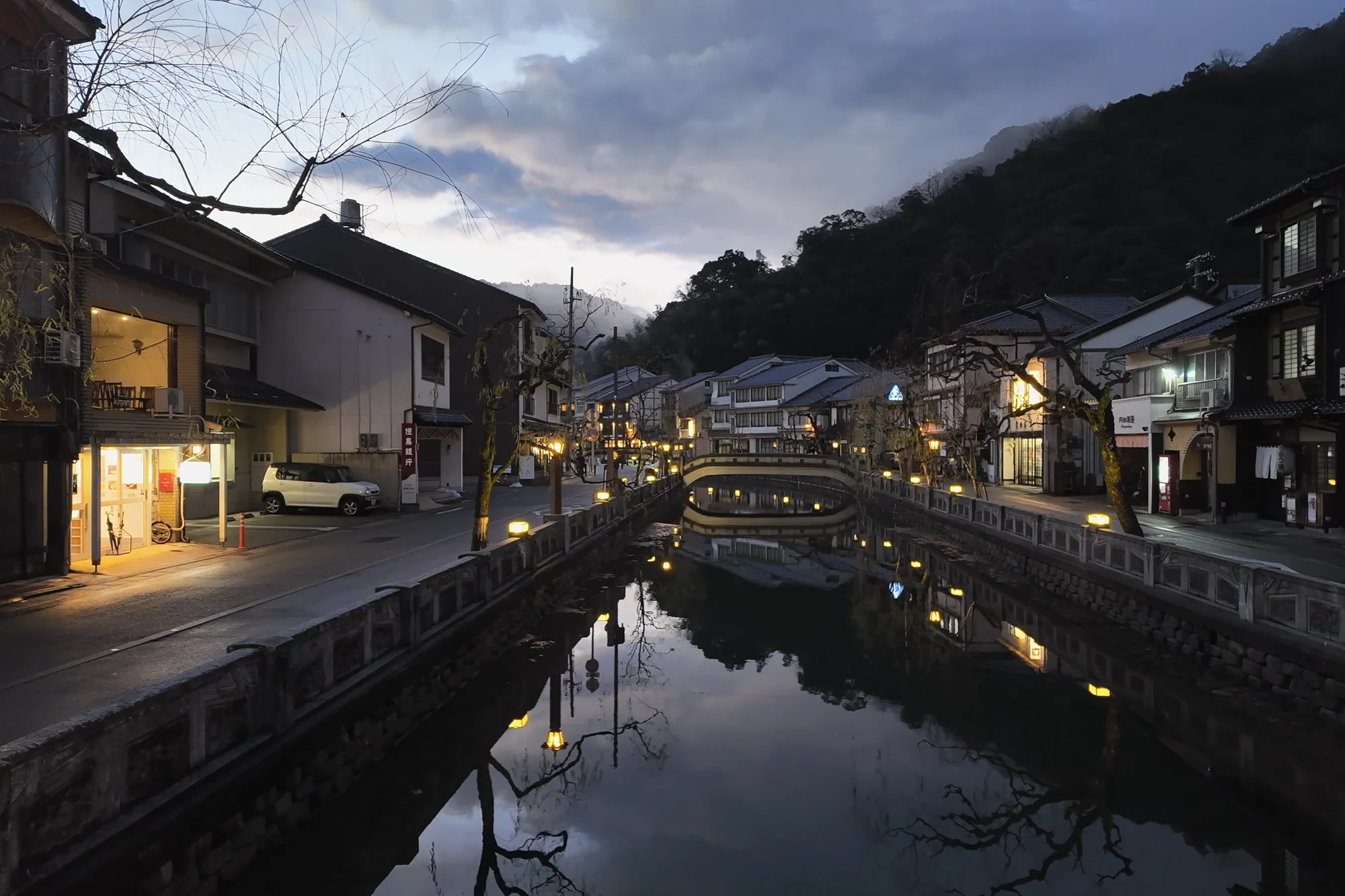
An overnight buys the yukata, the lantern circuit, and the seven-bath pass that comes free with the room.
The evening. The town at dusk — lanterns on the canal, geta on stone, bathhouse noren swaying — is the postcard. Day-trippers are on a train while it happens.
Free bathing, all seven. Overnight guests bathe the sotoyu free with their inn's pass ⚠️; day visitors pay per bath (around ¥800, about US$5–6, each) or buy the one-day pass (around ¥1,500, about US$10). ⚠️
The yukata. Inns dress you and the town expects it; day visitors can rent one ⚠️, but wearing your inn's yukata out into the town it belongs to is the experience itself.
Kaiseki and crab. The inns' dinners — crab in winter, Tajima beef year-round — are half the argument for the town, and they're served to guests.
The morning. Baths at 7 am, streets empty, steam on the canal. Nobody day-trips into that.
Sum the five and the pattern is plain: everything on the list happens before 10:00 or after 17:00, and a day trip spends exactly those hours on a train. The overnight is not a longer version of the same visit; it is a different product that happens to share a town. Price the difference honestly and the ¥15,000-and-up (about US$100-and-up) per-person night — dinner included — starts to look like what it is: the cheaper way to see the town per hour actually experienced. That is also why this page refuses to average the two into one rating — they are not points on a scale; they are different purchases.
When a day trip actually works
Unusually for this genre of town — and in sharp contrast to, say, Shibu Onsen in Nagano, whose baths are locked to non-guests — Kinosaki meets day visitors halfway. The one-day pass opens all seven sotoyu, the town rents yukata, lockers and day-use facilities exist, and the station is 300 m (a few minutes' walk) from the first bathhouse. A day trip earns its keep in three cases: you're passing through northern Hyōgo anyway (Amanohashidate, Tottori); your itinerary is genuinely full and the alternative is skipping Kinosaki entirely; or you're testing whether onsen bathing is for you before committing a night somewhere. Arrive by late morning, bathe three or four baths with a break for lunch, and leave after an early-evening soak — that's a good day, honestly described. What a day trip cannot do is justify itself from Kyoto or Osaka *purely* for the baths: five hours of round-trip train for an afternoon of bathing is a poor exchange rate when the same train fare buys the town at its best with one night added. One 2026 note for day visitors: with Satono-yu — the house beside the station — closed since April 2024, the station end has thinned, so start the circuit mid-canal and work outward. ⚠️ Re-check its status before you plan the day. The three-to-four-bath day also argues for a weekday: the day-pass crowd concentrates on weekends, and a Tuesday day-tripper gets something surprisingly close to the overnight guest's quiet. Check the closing-day rota before choosing which weekday — weekday plus rota check is the whole optimisation.
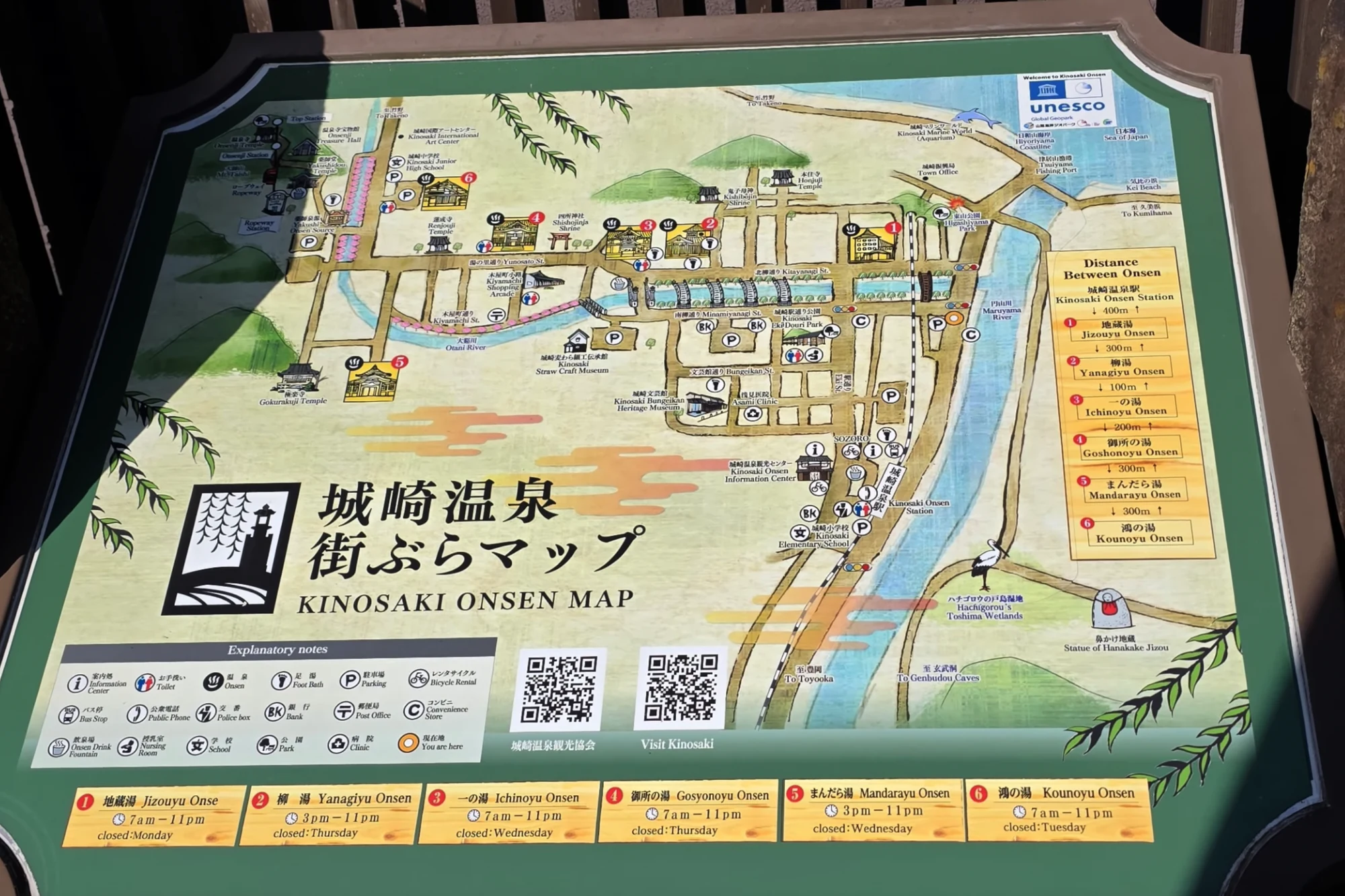
A day trip does work here, unusually: all seven admit non-guests on the ¥1,500 day pass. ⚠️
The travel-time math
From Kyoto or Osaka, the JR Limited Express (Kounotori from Osaka, Kinosaki from Kyoto) runs direct in roughly 2.5 hours; a reserved seat from Osaka runs about ¥6,140 (about US$40–45) each way in regular season. ⚠️ From Tokyo it's a half-day journey (shinkansen to Kyoto, then the express) — doable, but at that distance the overnight stops being advice and becomes arithmetic. Rail pass holders: the limited expresses are covered by the national JR Pass and relevant regional passes. ⚠️ Two route notes sharpen the math. From Himeji — a natural pairing, castle in the morning, baths by dusk — the same line runs direct in roughly 1 hour 50 minutes, making Kinosaki an easy continuation rather than a detour on the western Kansai run. ⚠️ And from Tokyo, treat the 5-to-6-hour journey as the argument for two nights rather than against one: at that investment the marginal night is cheap, and a single-night sprint spends more of its hours on rails than in water. Count the return honestly too: the direct expresses run into mid-evening, so even the overnight costs no working day on the back end — leave at midday, be in Osaka or Kyoto by late afternoon, Tokyo by night. Reserve seats in crab season — the expresses fill with the same people booking the inns — and take a window: the Maruyama river announces the town in the last ten minutes. For rail-pass holders every number in this section rounds to zero — few places in Kansai convert a pass into more value than this line does.
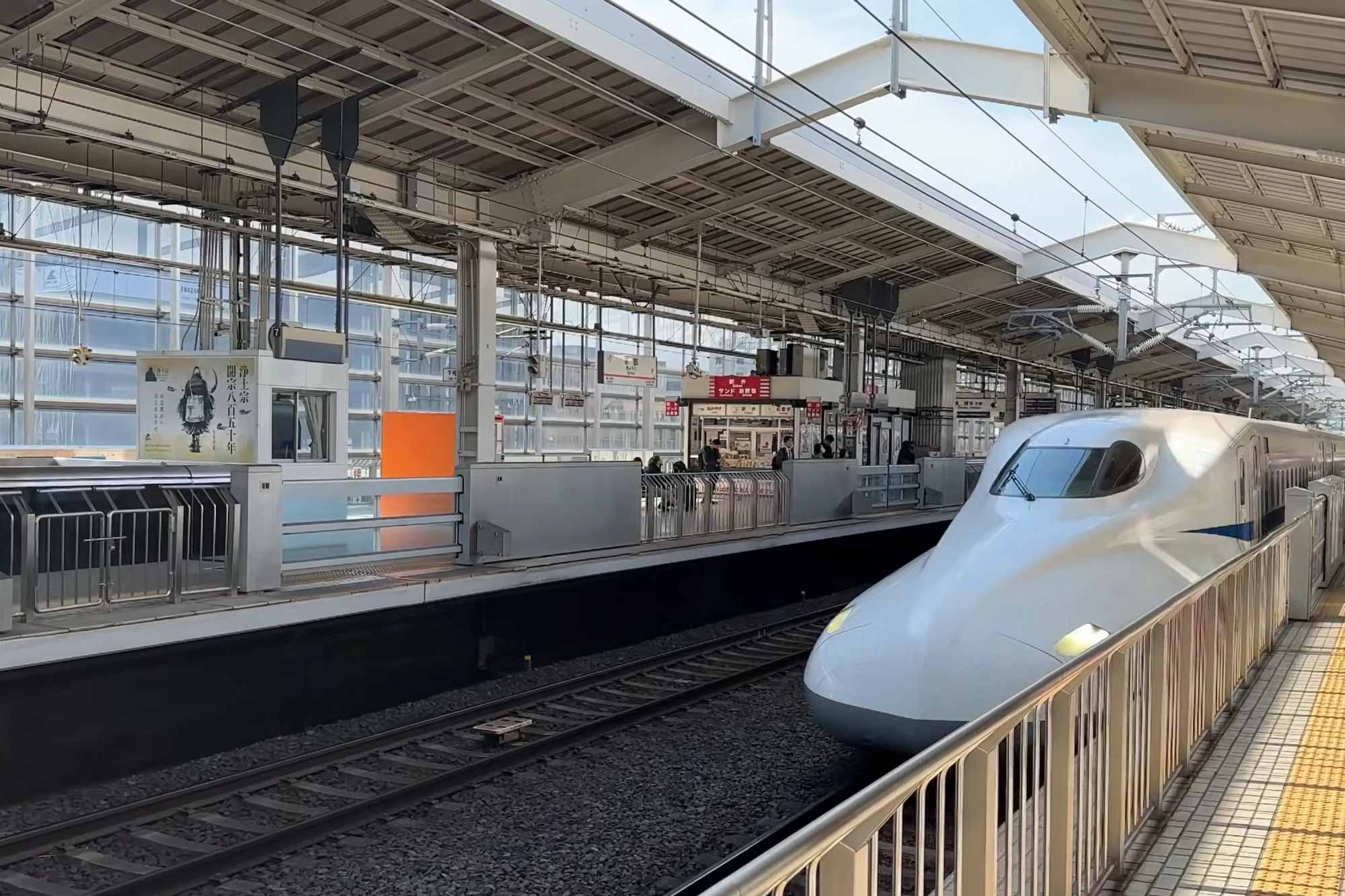
From Tokyo it is a shinkansen plus one express, about four and a half hours door to door. ⚠️
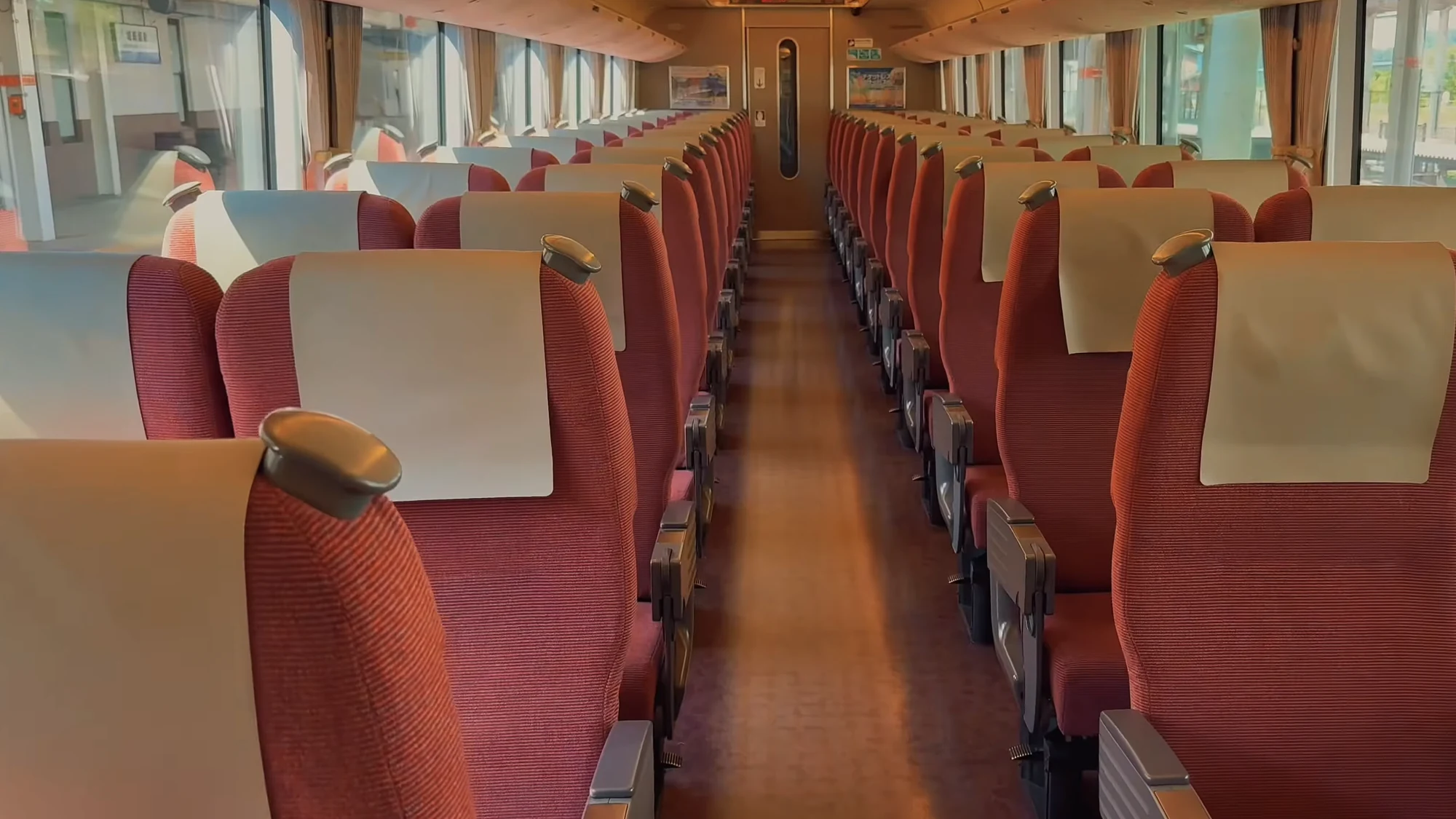
Reserve in crab season. The train fills from Osaka on winter weekends. ⚠️
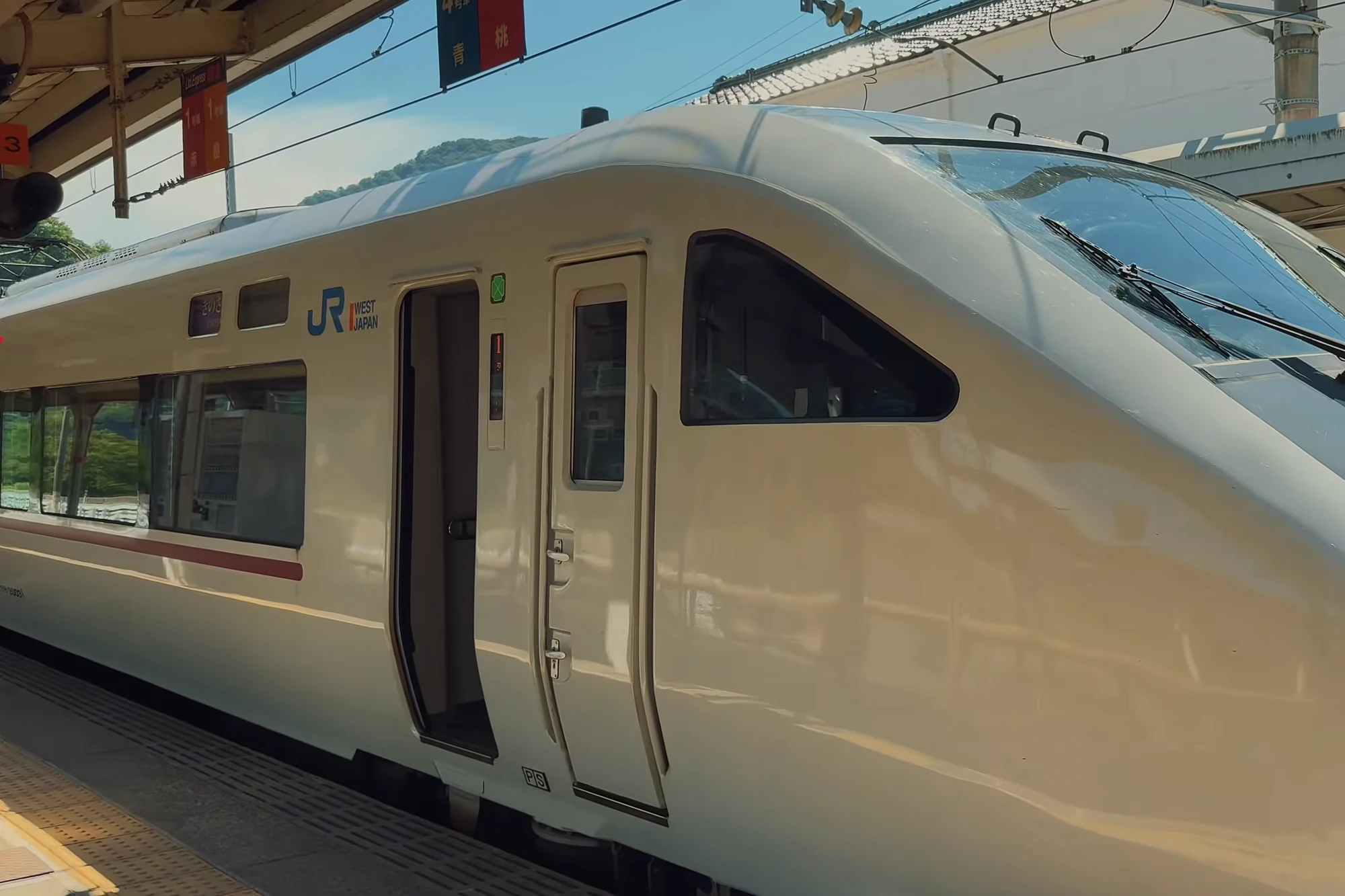
Two hours forty from Osaka each way — which is why the day trip is possible and still a half-truth.
Who should skip Kinosaki
Honesty over hype: skip it if bathing is not the trip — the town's non-bath sights (ropeway, temple, marine attractions nearby) are pleasant but wouldn't justify the journey alone. Skip it in favor of Shibu or Nozawa if what you want is mountain snowscape rather than canal-town charm — Kinosaki's register is willow and river, gentle rather than wild. And travelers chasing luxury-resort facilities — spas, pools, gyms — will find the town's inns traditional by design; that's a feature, but not everyone's. Two further honest exclusions. Onsen-chemistry purists — the travellers collecting distinctive 泉質 (senshitsu, spring qualities) — should know that Kinosaki's seven houses share one municipally distributed water, and that per-spring analysis certificates are not published: as a water destination it is one entry in your logbook, not seven. And travellers with fewer than about twenty hours to spend should default to somewhere nearer their base — Kinosaki done as a sprint returns a fraction of itself, and the same hours spent fully in Kyoto or Osaka return more. The town rewards exactly one currency, an unhurried overnight, and no other coin is accepted at full value. One more, kindly meant: travellers who need nightlife. The town's evening IS the entertainment — baths, bridges, a beer on a bench by the canal — and it winds down when the bathhouses do, at 23:00 (11 pm). If a destination has failed you the moment the last bar closes, Kinosaki will have failed you by half past eleven, and no ryokan upgrade fixes that. Everyone else tends to discover that the early night is the point: you are horizontal by midnight because the 7:00 bath is worth waking for.
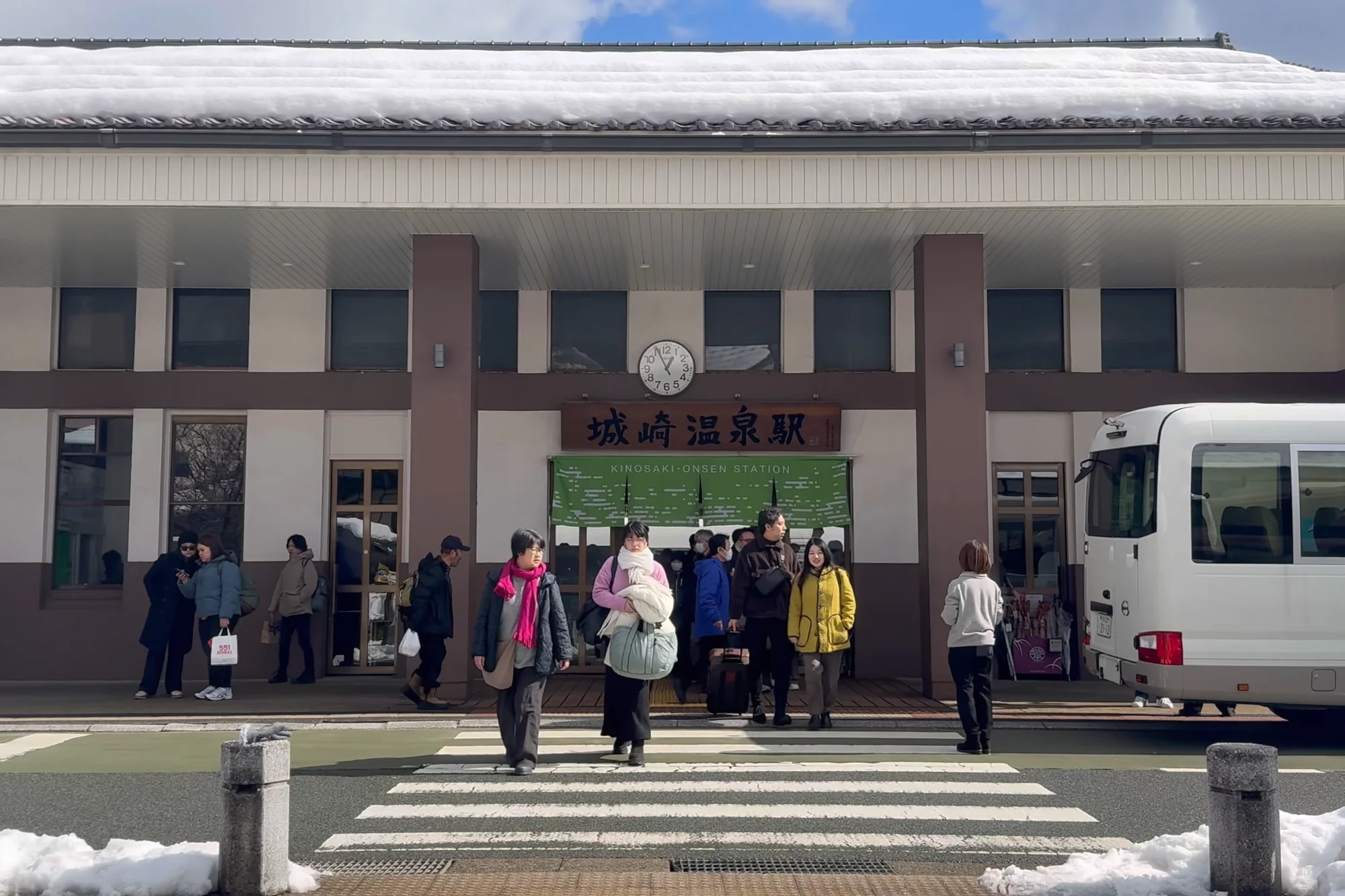
Skip it if you want a resort. This is a working town that happens to be built around bathing.
What the current closures mean for the verdict
An update an honest page owes you: as of this writing two of the seven houses are out of service — Kou-no-yu, closed for renovation works and expected to reopen November 2026, and Satono-yu, closed since April 2024, to the point that the association's own bath page currently lists six houses with Satono-yu absent entirely. The working circuit is five. Does that dent the verdict? Less than you would think, and it is worth being precise about why. The experience being graded here was never a checklist of seven; it is the ritual — yukata, geta, lanterns, the walk between houses — and five distinct houses sustain it fully at the intended pace of three or four baths a day. A one-night guest can now genuinely complete the open circuit without rushing, which was never quite true at seven. What is lost is specific: Kou-no-yu was the oldest house, the stork-legend bath with the garden rotenburo at the quiet western end, and its absence stings connoisseurs more than first-timers, who will not miss what they never metabolised. The planning consequence: first-timers should go without hesitation — the verdict below stands at five houses. Returning visitors and completists chasing the true seven-for-seven should watch the association's status page and time the trip to Kou-no-yu's reopening, treating it as the excuse for the second visit this town was always going to extract from them anyway. ⚠️ Closure status is perishable; re-check near travel. Five is the count to plan with; seven is the count to hope for.
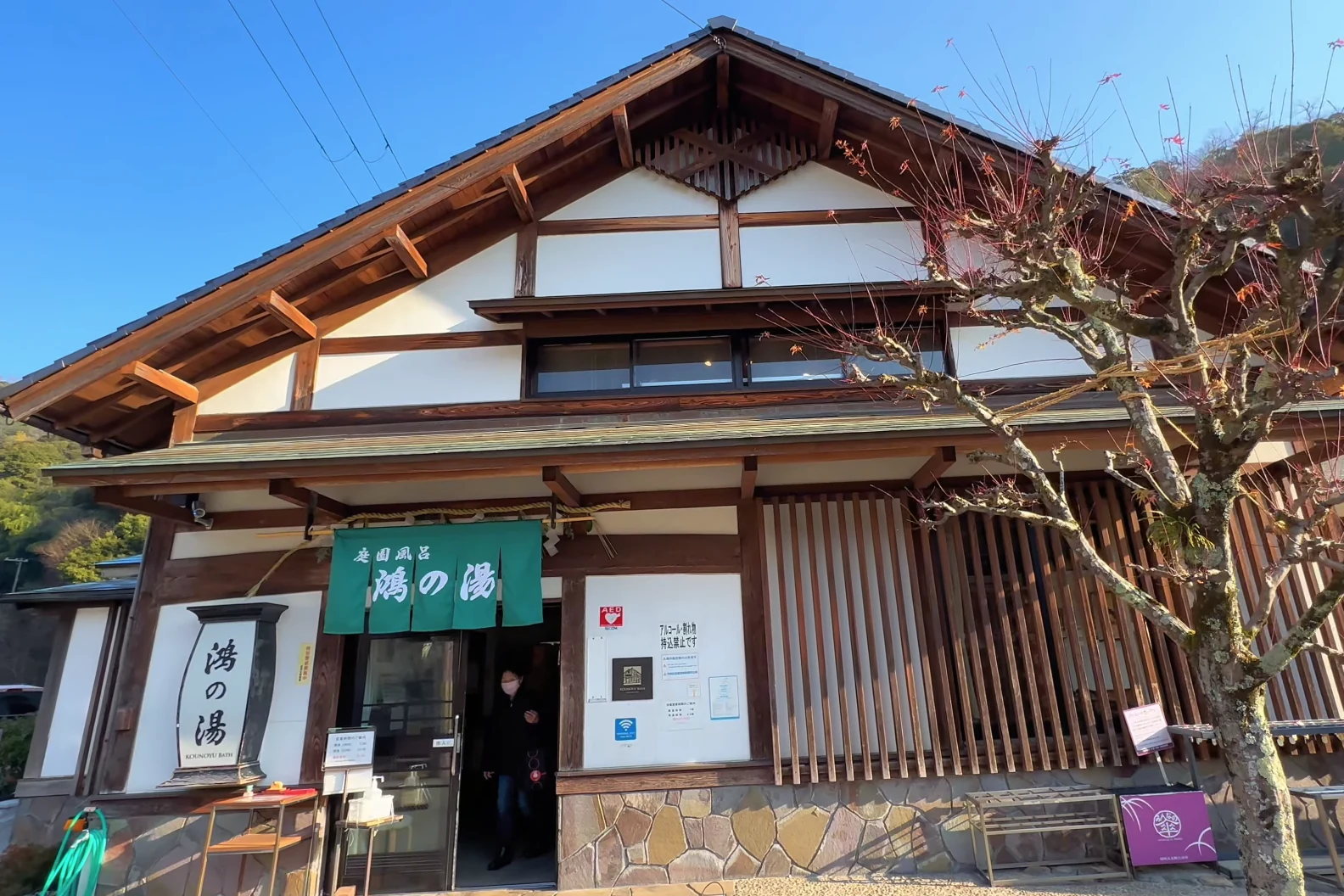
Two of the seven are shut. Five is still more public bathhouses than any comparable town offers. ⚠️
The value math against the alternatives
Run the alternatives honestly. Against an Arima day trip from Osaka: Arima is under an hour away and cheaper to reach, and for a between-meetings soak it wins on logistics alone. But it is a hillside resort of inns you stay inside — no circuit, no town-wide pass, no ordinance holding public baths at the centre — so what you buy there is a bath, where Kinosaki sells you a town. Against Kusatsu: a fair fight for Tokyo-based itineraries and no contest for Kansai ones — Kusatsu sits hours from either coast of a Kansai trip, and its drama is thermal rather than urban; you contemplate Kusatsu, you wear Kinosaki. The subtler comparison is against a second night in Kyoto, because that is the actual decision most itineraries face. Count what each yen buys. The Kyoto night purchases a hotel room; dinner, sights and atmosphere all bill separately, at Kyoto prices, among Kyoto crowds. The Kinosaki night — priced per person with kaiseki dinner, breakfast and the seven-bath pass included — bundles the room, the best meal of most trips, and the entire evening's entertainment into one line, in a town where the ordinance keeps the centrepiece un-billable. In crab season the same arithmetic simply moves upmarket: the dinner becomes the destination and the premium is the price of a course you could not eat anywhere better. And the train fare that looks like the cost of entry is covered entirely by the national JR Pass and the relevant regional passes, which for pass-holders converts "is it worth 2.5 hours" into "is it worth a seat reservation." At that exchange rate, the only trips that should still hesitate are the ones in the section above.
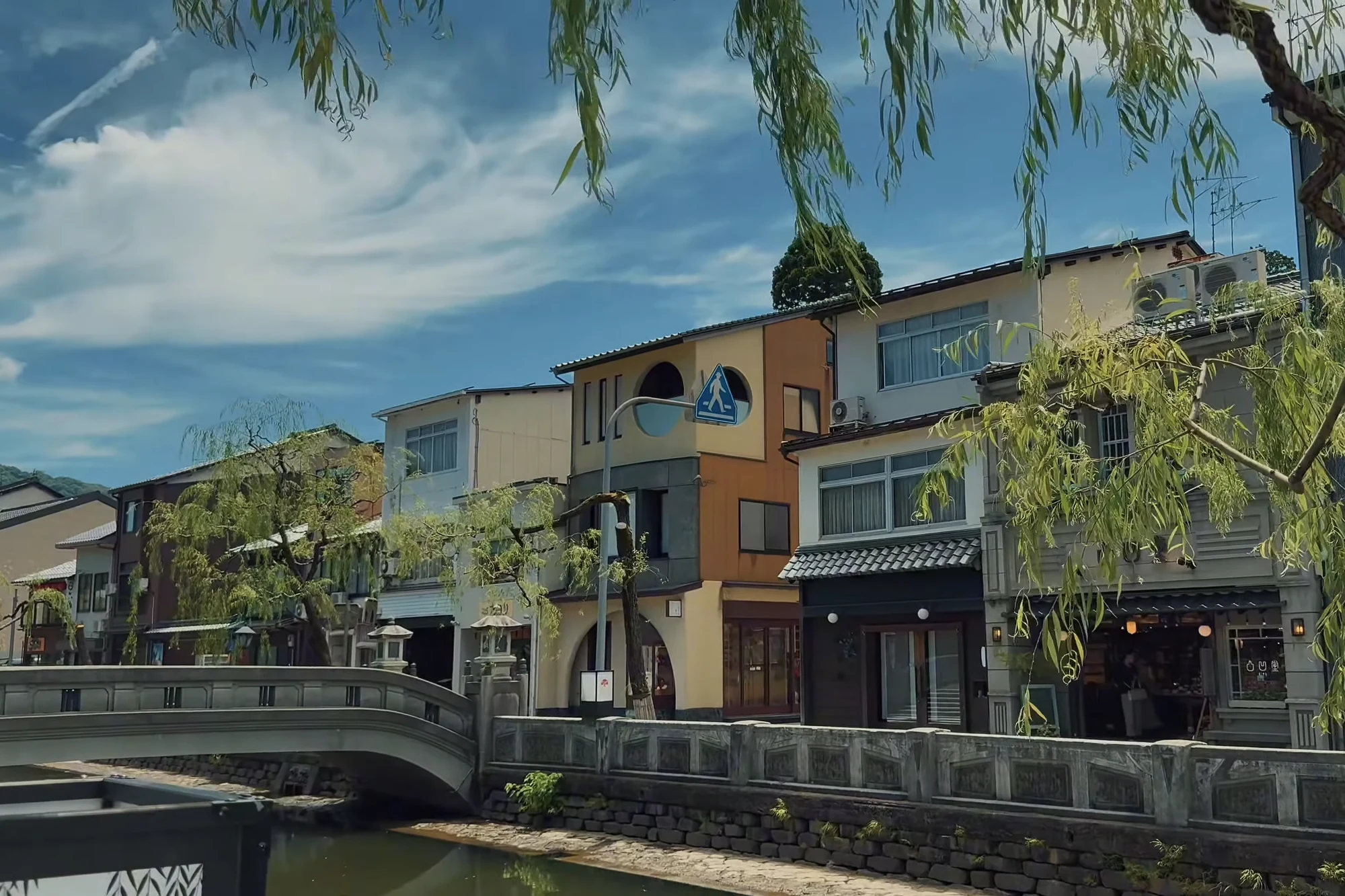
One flat kilometre, no cars to speak of, and every bath within ten minutes of every inn.
The verdict, restated
Worth it, decisively — as an overnight. One night captures the town almost completely; two nights in crab season is the connoisseur's version. As a day trip it's a pleasant, well-organized half-experience that the town, to its credit, actually accommodates — grade it a B where the overnight is the A. If the calendar allows one onsen overnight in a Kansai itinerary, this is the one. To put a bow on the five tests: atmosphere A, bathing A for ritual (graded as one water, honestly), food A in crab season and B-plus out of it, access B from Kansai, cost A as an overnight and C as a day trip. No other onsen town within reach of Kyoto and Osaka posts that card — and none of it depends on luck, weather or season, because the thing being graded is a structure, not a view. Verdicts age, so date this one: graded September 2026, five houses open, crab season weeks from opening, and the structural case — the ordinance, the pass, the street — not subject to weather. Re-grade after Kou-no-yu reopens; nothing else here is likely to move. And if this page talked you out of it — too far, wrong trip, bathing not the point — it did its job just as well. The towns that are worth it are the ones honest enough to tell you when they are not; the grades are opinions, but the structure they rest on is not, and the structure is what you are buying.
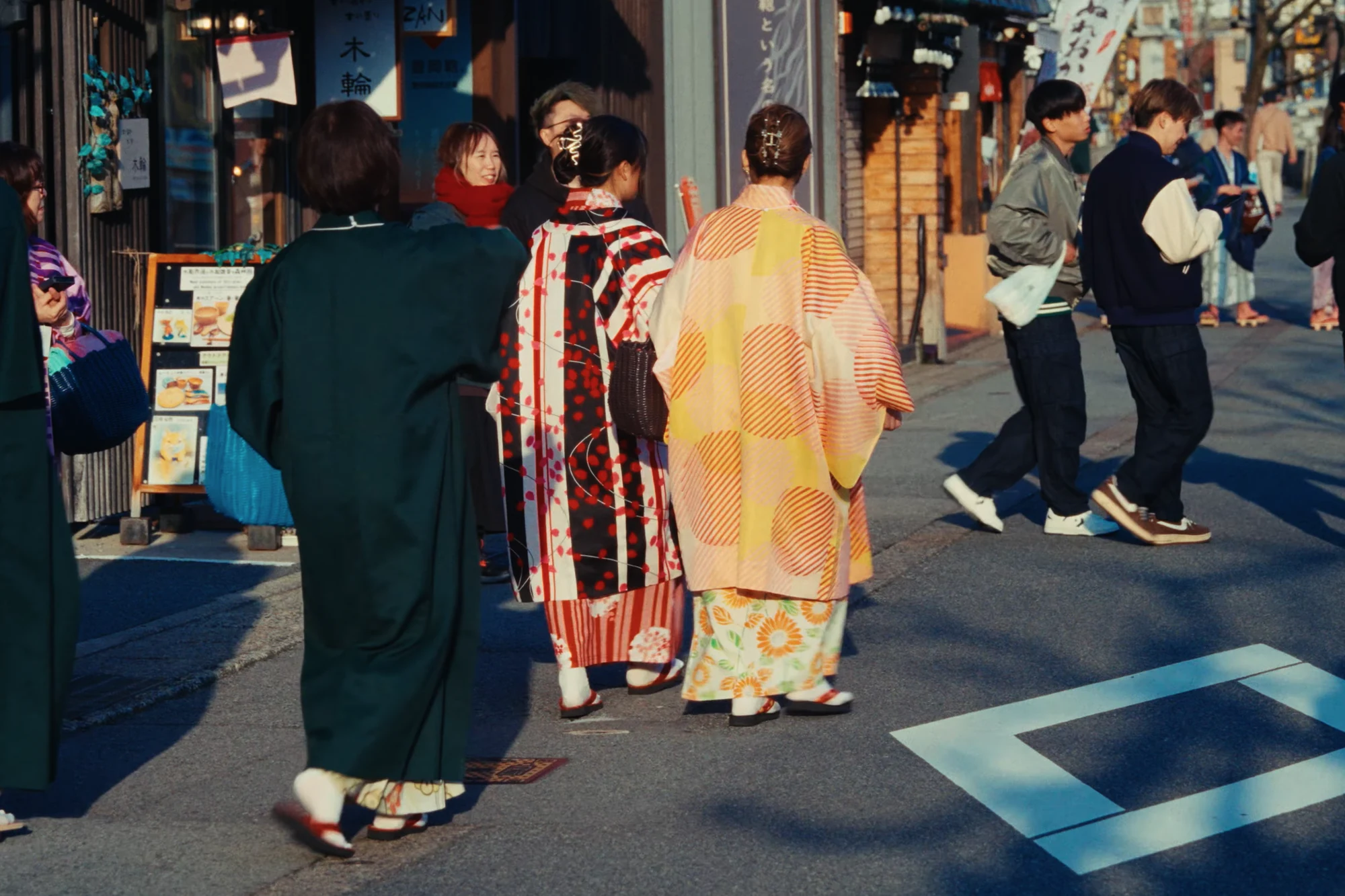
Worth it, on one condition: sleep here. The day-trip version is a different, smaller thing.
Tips
If a day is all you have: arrive late morning, bathe three or four houses with a lunch break, leave after an early-evening soak.
Don't day-trip purely for the baths from Kyoto/Osaka — five hours of trains for an afternoon is a poor exchange rate.
One night captures the town almost completely; two nights in crab season is the connoisseur's version.
Rail-pass holders: the limited expresses are covered — the overnight's marginal cost is just the room.
Weigh Kinosaki against a second Kyoto night, not against other onsen towns — that is the real decision, and the bundled kaiseki-room-and-pass night usually wins it.
Water-chemistry collectors: all seven houses share one spring — count Kinosaki as one magnificent entry, not seven.

Verified by The Japan Onsen Society
Show all sources
Drafted July 2, 2026; the ordinance framing, one-water fact and closure status verified September 22, 2026. Primary Japanese sources:
外湯めぐり発祥の地!温泉天国★城崎温泉 — 豊岡市観光公式サイト (Toyooka City Official Tourism Site — the 内湯 ordinance and the town-as-one-ryokan structure): [https://toyooka-tourism.com/recommend/onsen/kinosaki_sotoyu/](https://toyooka-tourism.com/recommend/onsen/kinosaki_sotoyu/)
外湯 — 城崎温泉観光協会 (Kinosaki Onsen Tourism Association — shared spring quality, prices, current closures): [https://kinosaki-spa.gr.jp/about/spa/](https://kinosaki-spa.gr.jp/about/spa/)
温泉地詳細〔城崎温泉〕 — 日本温泉協会 (Japan Spa Association — spring classification): [https://www.spa.or.jp/search_p/detail_p/?F_ID=280880&pg=0](https://www.spa.or.jp/search_p/detail_p/?F_ID=280880&pg=0)
「鴻の湯」の長期休館について — 城崎温泉観光協会 (Kinosaki Onsen Tourism Association — closure notice, May 11, 2026): [https://kinosaki-spa.gr.jp/news/28289/](https://kinosaki-spa.gr.jp/news/28289/)
Related guides
Plan Your Visit
Kinosaki complete guide
Seven public bathhouses, one shared spring, and a law that keeps them the centre of town. Start here.
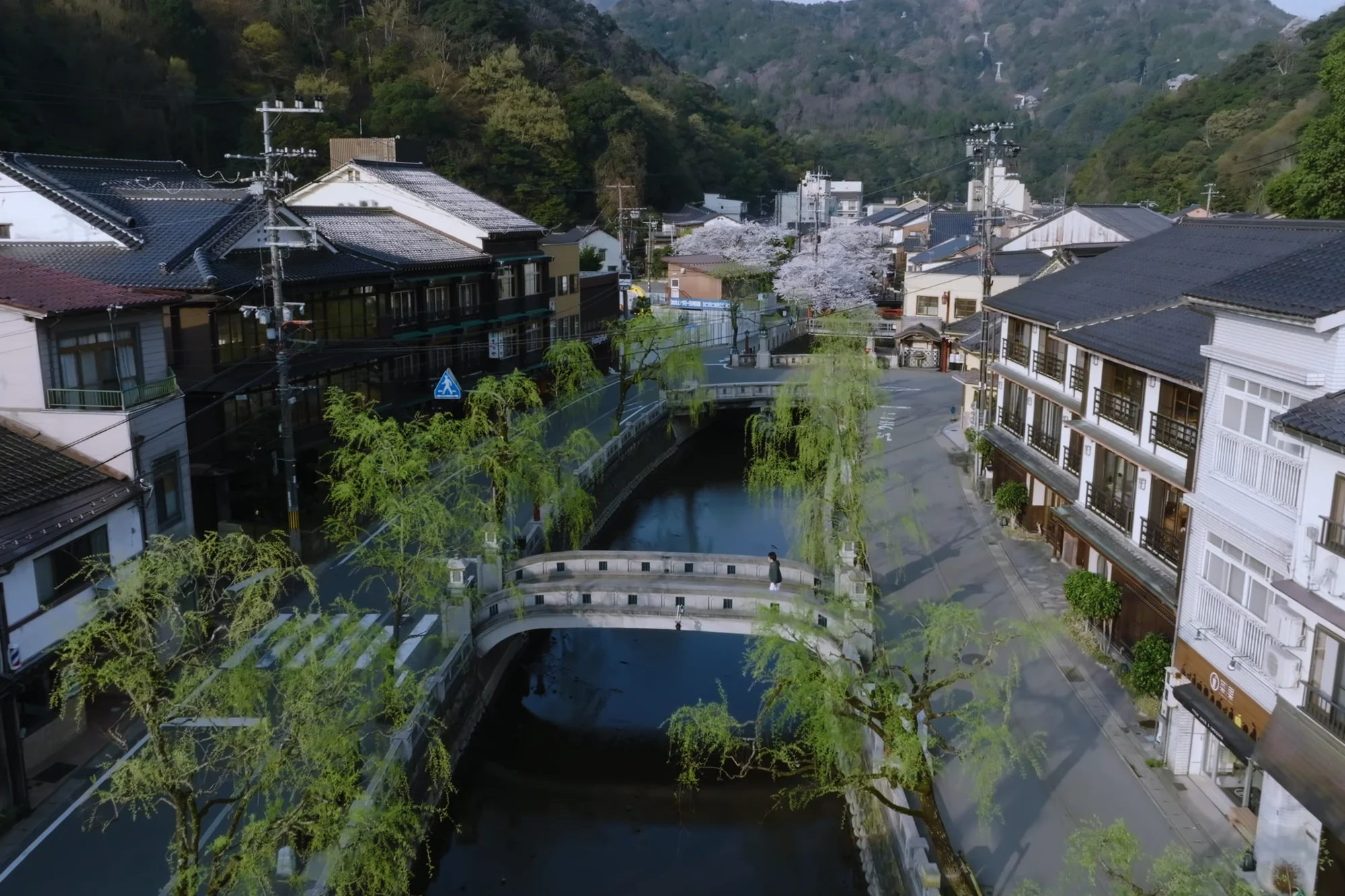
Plan Your Visit
2-day itinerary
Two days and one night, hour by hour, built around the hours the seven bathhouses actually keep open.
Plan Your Visit
How long to stay
One night works, and most people do exactly that. Two nights is when the town stops being a stop.
Plan Your Visit
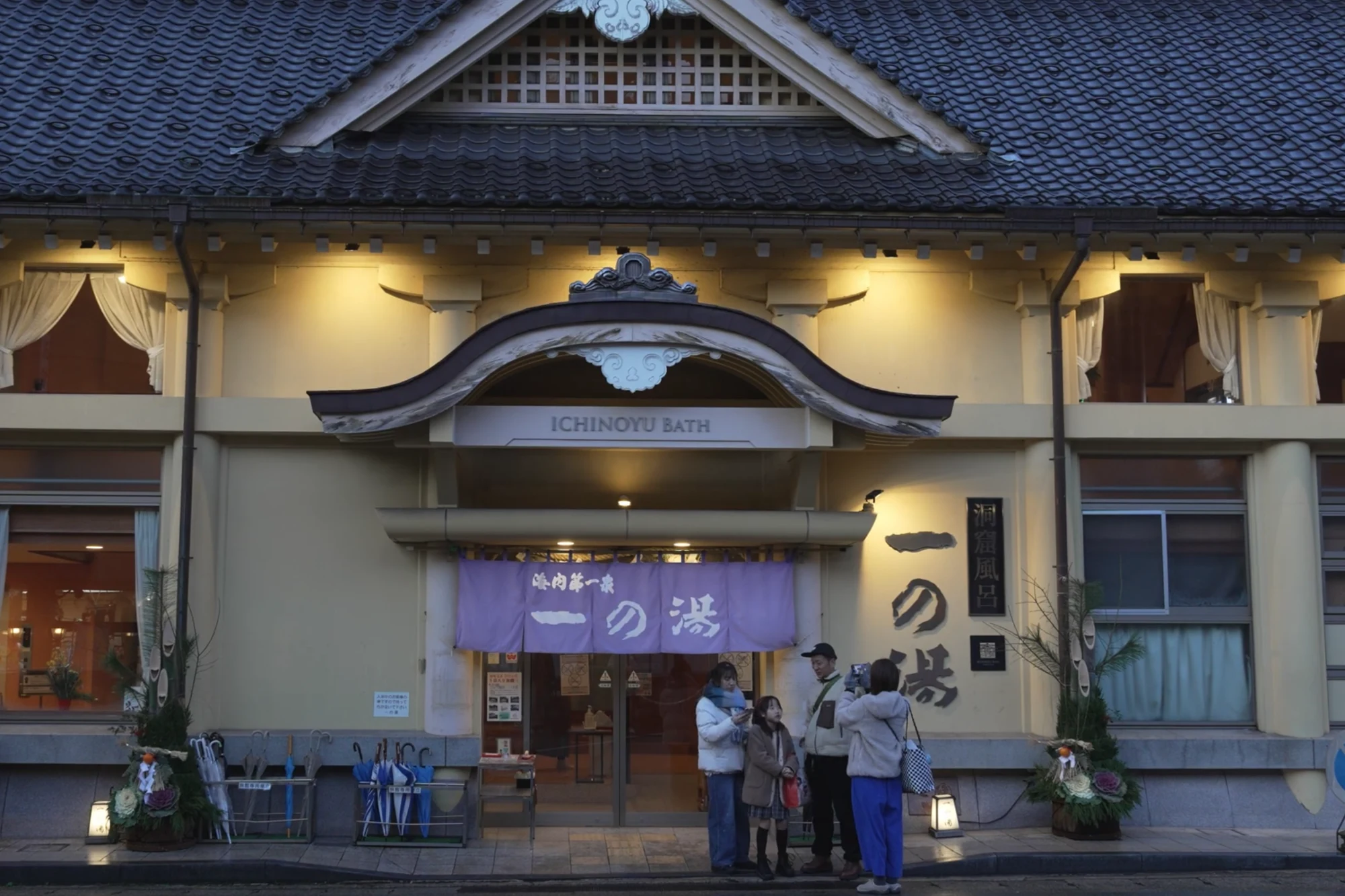
The 7 bathhouses
Same water in all seven houses. What changes is the room, the story, and the blessing on the door.
Plan Your Visit
Kinosaki vs Arima
Arima is older and sits closer to Kobe. Kinosaki is a town you walk through in a bathrobe. Pick one.